[0024] The present invention is described herein as it relates to the high temperature solution mining from discontinuous deposits of nahcolite contained in the nahcolitic
oil shale of the Piceance Creek Basin of Colorado. This deposit contains lenses, nodules, and the like, as well as intermixed nominally horizontal beds of nearly pure nahcolite within the host shale. The quantity of nahcolite within the Piceance Creek deposit of nahcolitic oil shale normally varies between 18% and 40% with some variation on either side of these values. This includes beds of nearly 100% pure nahcolite which normally occur in horizontal
layers and much leaner deposits of nahcolite embedded in the oil shale. These "lean nahcolitic oil shale deposits," for the most part, consist of lenses and nodules of nahcolite contained within the host oil shale rock, and include those nahcolitic deposits generally classified as embedded, nodules,
crystal aggregates, and disseminated. The nahcolite content of this portion of the deposit is about 17 to 37%. A significant
advantage of the present invention is that it is not limited to the
recovery of soda ash and bicarb from the beds of nearly pure nahcolite, but can be used to solution mine and recover these materials from the lean nahcolite deposits contained within oil shale.
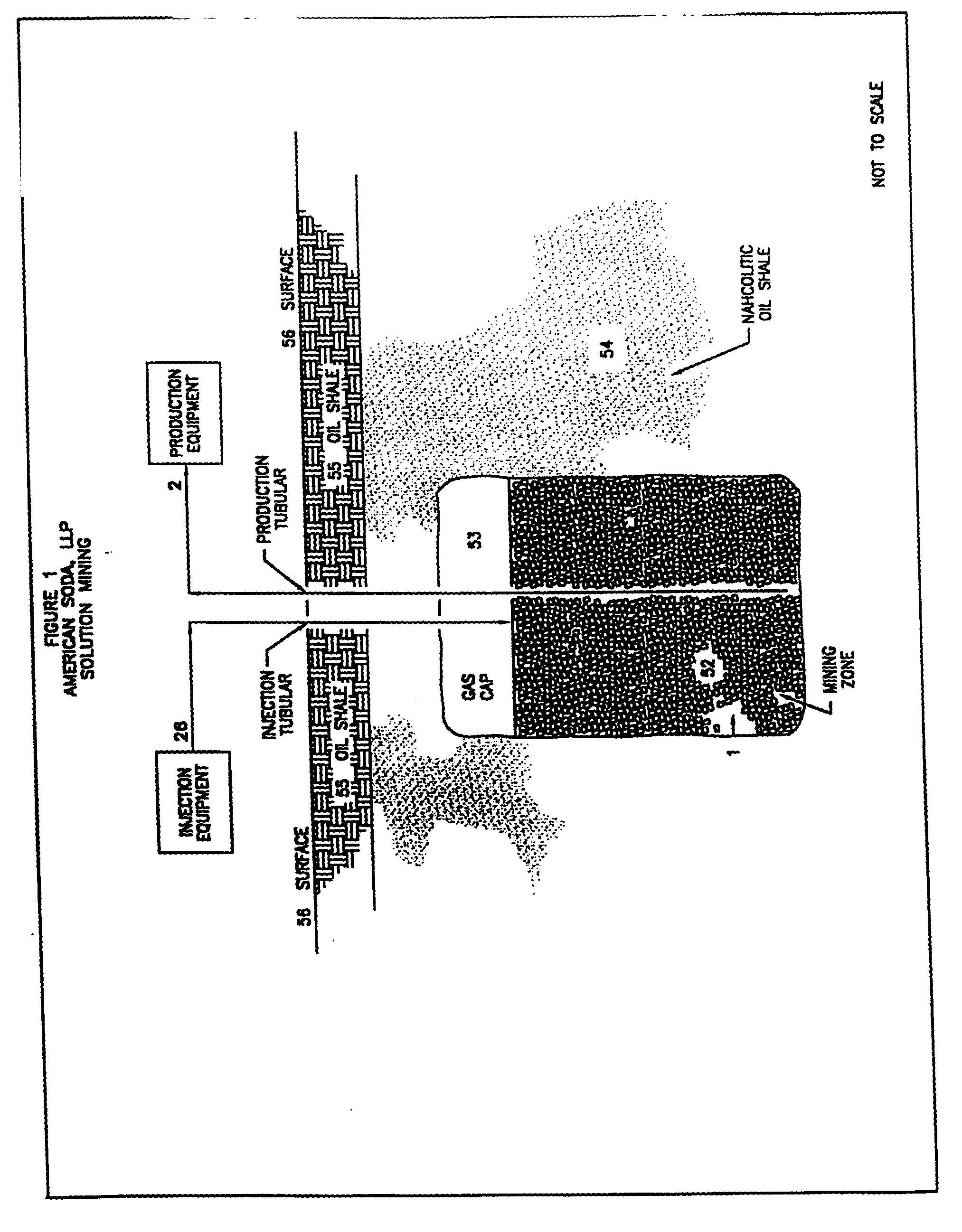
[0025] Unlike prior art processes in which solution mining generally occurs laterally, i.e., horizontally, between one or more wells operating within a
bed of pure nahcolite, solution mining via the present invention can be conducted vertically across a mining zone including one or more beds of pure nahcolite and / or
layers of lean oil shale. In the preferred embodiment of the invention, high temperature,
high pressure water (which may include recycled aqueous solution of bicarb and sodium carbonate) is injected in the top of the mining zone; the concentrated solution from the mining is recovered at a lower depth in the same well. Nahcolite is recovered from the beds of nahcolite and from the lean nahcolitic oil shale rock as the solution passes vertically downward and increases in concentration. As the mining continues, the mining area also expands laterally from the well.
[0026] While the foregoing describes a preferred mode of solution mining through a single well, the mining could also be conducted by adding the
injection solution to a lower level and recovering the production solution at a higher geological elevation. Also, the addition of the
injection solution and the
recovery of the production solution can be alternated periodically to aid the mining process. Injection and production may also occur via different, but adjacent, wells if permitted by the formation or the stage of the solution mining in the geological formations involved.
[0027] This form of solution mining nahcolite is contrary to current thinking that discontinuities, i.e., areas of lean nahcolite concentration, in the deposit would inhibit the solution mining of the nahcolite. We have now found, however, that solution mining with water can be carried out efficiently if performed at the elevated temperatures and pressures of the present invention. There are several reasons for this: (a) the
compressive strength of the host rock decreases with increasing temperatures; (b) the stress of the host rock increases with increasing temperatures; and (c) the
solubility of nahcolite is far greater than originally expected at elevated temperatures.
[0028] As a result of factors (a) and (b) the introduction of high temperature water fractures the nahcolite containing oil shale. (See FIG. 4.) With rising temperatures, the strength of the host rock decreases and the stress increases--each to a point at which the two stresses become equal. At temperatures above this point, host rock breakdown (fracturing and spalling) is likely to occur. With the fracturing and spalling of the host rock, the solution mining water can reach additional soluble nahcolite nodules, lenses, and beds within the deposit.
[0029] The relationship of
compressive strength and stress with temperature for one nahcolitic oil shale formation is shown in FIG. 4. At temperatures greater than about 175.degree. F., the stress on the shale becomes greater than the capability of the shale to withstand it and fracturing and spalling occur. When the shale fractures, the lenses and nodules of nahcolite within the shale can be more readily accessed by the solution mining water. Also, both the vertical and horizontal access to nahcolite in nominally horizontal beds within the shale is increased due to the fracturing. As illustrated in FIG. 4, as higher temperatures are used for solution mining, there is greater potential for shale fracture. The temperature at which the nahcolitic oil shale in the Piceance Creek Basin will start to fracture normally occurs between 175.degree. F. and 220.degree. F.



 Login to View More