
Support for hybrid epitaxy and method of fabrication
Patent Information
- Authority / Receiving Office
- US · United States
- Current Assignee / Owner
- Publication Date
- 2005-12-08
- Estimated Expiration
- Not applicable · inactive patent
Smart Images
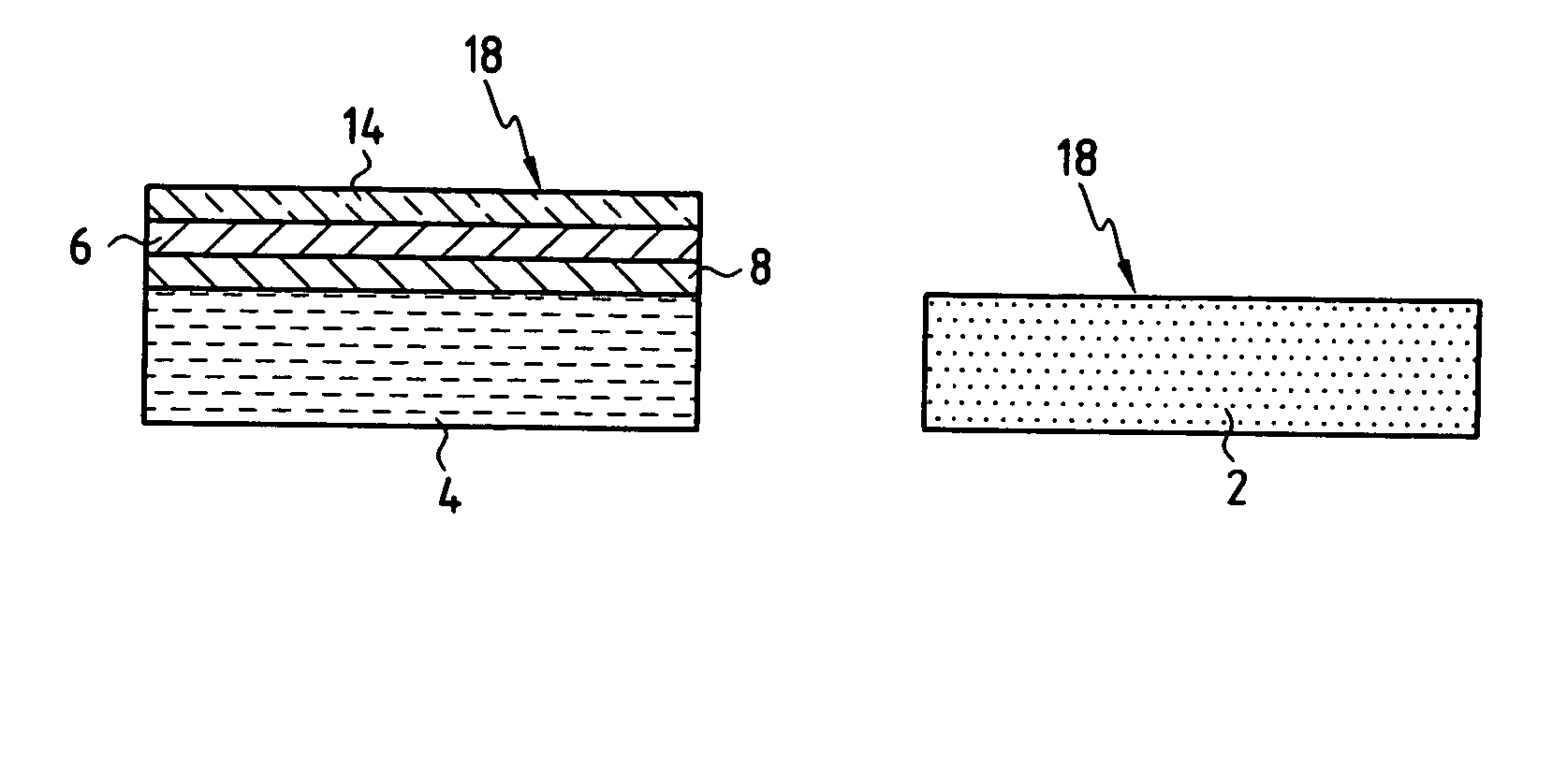
Figure 1 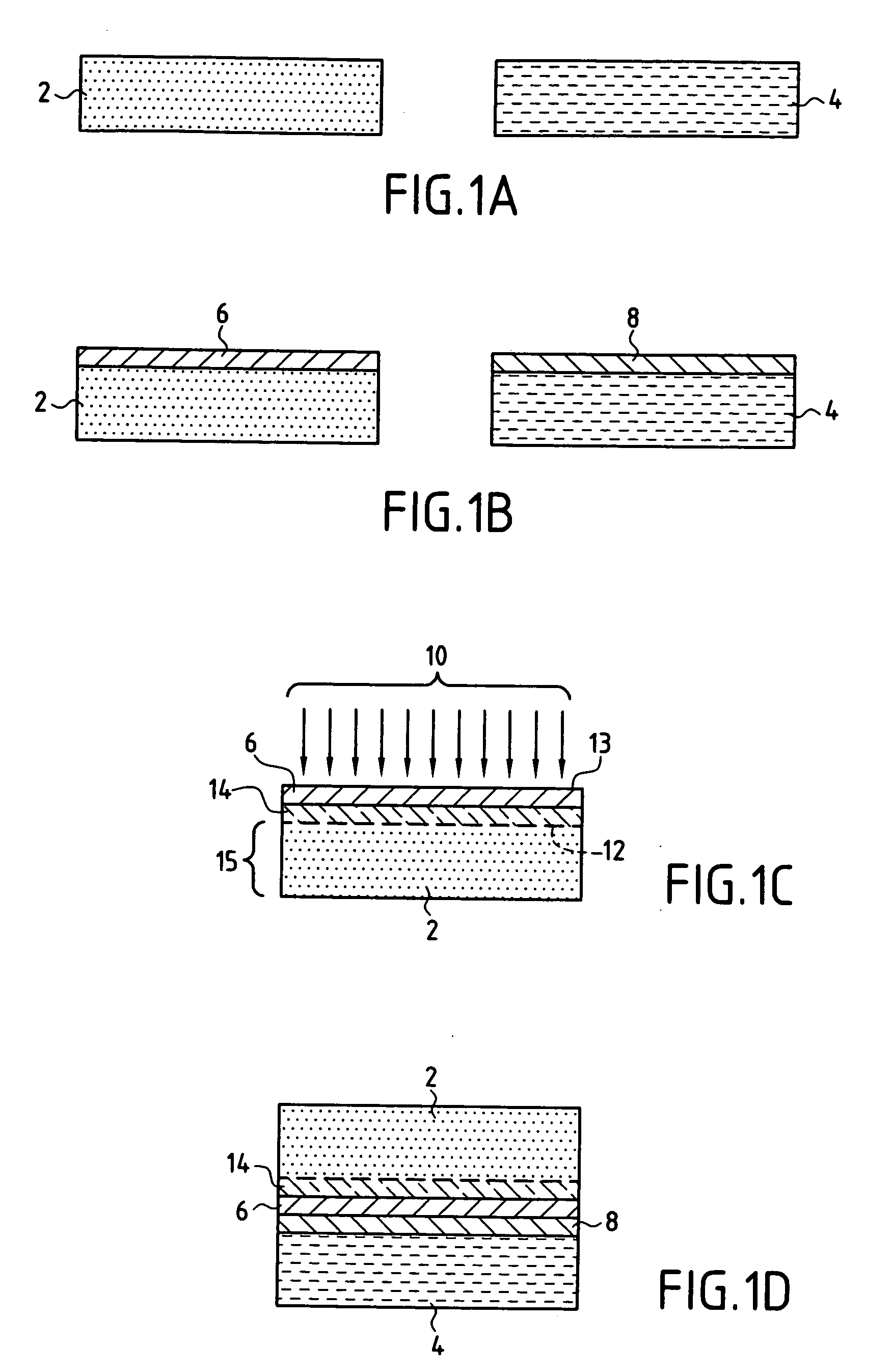
Figure 2 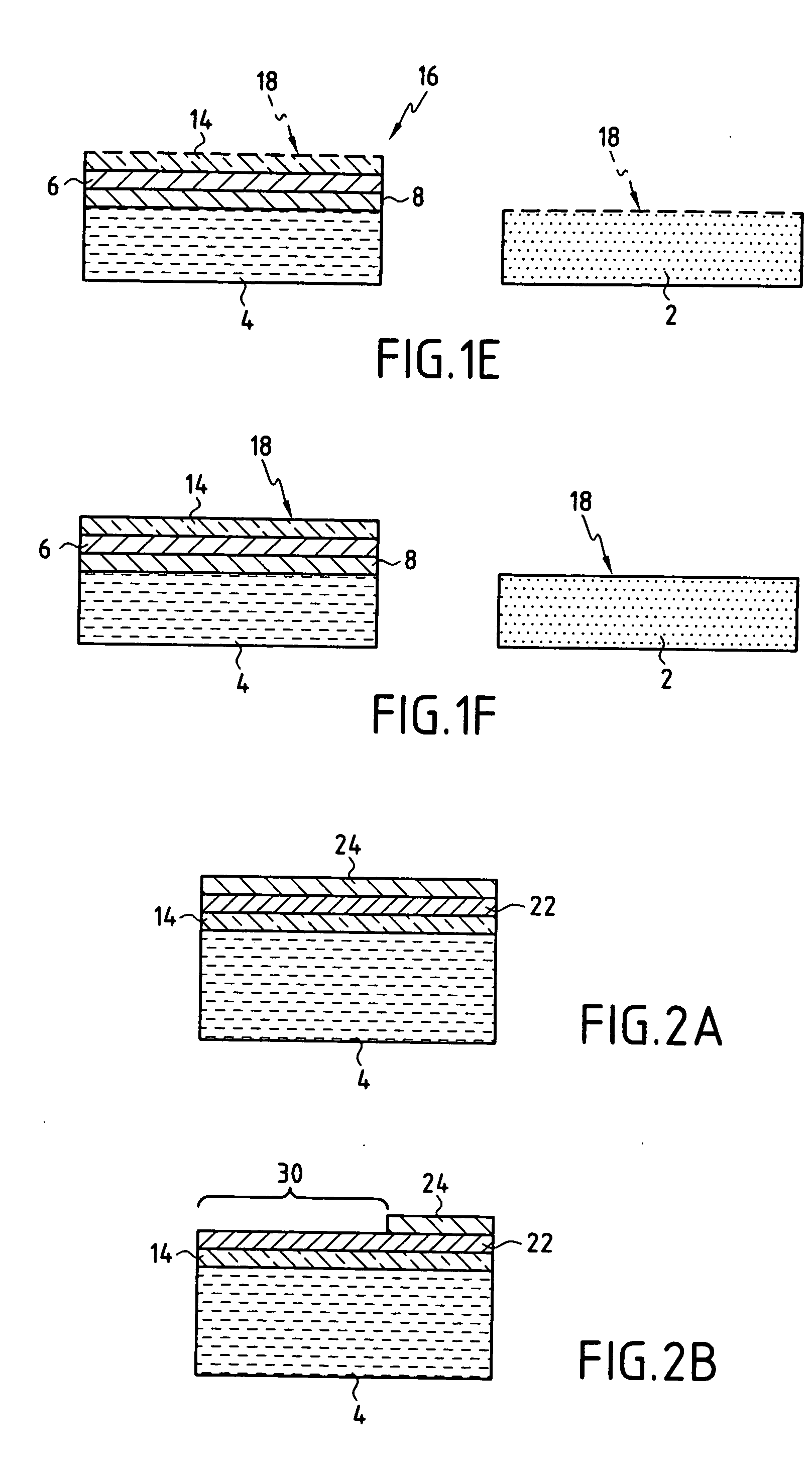
Figure 3
Abstract
Description
FIELD OF THE INVENTION AND BACKGROUND ART
[0001] The invention relates to the field of techniques for epitaxy, in particular for the production of layers of materials such as gallium nitride (GaN), aluminum nitride (AlN), indium nitride (InN), or their compounds.
[0002] It also relates to the field of radio frequency (RF) and microwave circuits based on materials such as GaN, AlN and their compounds.
[0003] As yet, there is still no method for pulling an ingot to produce monocrystalline substrates of GaN or other nitrides that is similar to the method of pulling silicon. Such materials are primarily obtained by forming a thin film by hetero-epitaxy on substrates that are essentially formed from sapphire (Al2O3), but are also in some cases formed from silicon carbide (SiC) or silicon (Si). Although nitrides are usually used in the form of a thin film, it is also possible to find monocrystalline GaN in the form of a bulk material. Such substrates are obtained by hetero-epitaxy of a th...
Examples
Embodiment Construction
[0034] In a particular implementation, the layer of monocrystalline SiC or GaN can preferably be produced by ion implantation of hydrogen or a rare gas such as helium or argon, or a hydrogen / rare gas combination (co-implantation) into the first conducting monocrystalline SiC or conducting monocrystalline GaN substrate. This implementation has the advantage that the initially conducting SiC or GaN becomes insulating or semi-insulating after implantation, regardless of the SiC polytype used initially for the first substrate. This property of high resistivity of the film after transfer by implantation followed by high temperature annealing persists even after annealing for several hours at 1300° C. This high resistivity of the transferred thin film will thus be conserved after epitaxy of a nitride (GaN, AlN, InN or compounds thereof).
[0035] The second substrate onto which the insulating monocrystalline SiC layer is transferred can be a polycrystalline SiC having electrical resistivity...