[0002]The present disclosure relates to the field of diagnostic testing systems for measuring the concentration of an analyte in a blood sample, including biosensors comprising gel formulations for filtering red cells, and thus reducing
hematocrit sensitivity. The present disclosure also relates to methods for measuring an analyte concentration using such biosensors.
[0004]The use of such electrochemical sensors to detect analytes in bodily fluids, such as blood or blood derived products,
tears,
urine, and
saliva, has become important, and in some cases, vital to maintain the health of certain individuals. In the health care field, people such as diabetics, for example, have a need to monitor a particular constituent within their bodily fluids. A number of systems are available that allow people to test a
body fluid, such as, blood,
urine, or
saliva, to conveniently monitor the level of a particular fluid constituent, such as, for example,
cholesterol, proteins, and glucose. Patients suffering from diabetes, a disorder of the
pancreas where insufficient
insulin production prevents the proper
digestion of
sugar, have a need to carefully monitor their blood glucose levels on a daily basis.
Routine testing and controlling blood glucose for people with diabetes can reduce their risk of serious damage to the eyes, nerves, and kidneys.
[0007]Variations in a volume of red blood cells within blood can cause variations in glucose readings measured with disposable electrochemical
test strips. Typically, a
negative bias (i.e., lower calculated analyte concentration) is observed at high hematocrits, while a
positive bias (i.e., higher calculated analyte concentration) is observed at low hematocrits. At high hematocrits, for example, the red blood cells may impede the reaction of enzymes and electrochemical mediators, reduce the rate of
chemistry dissolution since there less
plasma volume to solvate the chemical reactants, and slow
diffusion of the
mediator. These factors can result in a lower than expected glucose reading as less current is produced during the electrochemical process. Conversely, at low hematocrits, less red blood cells may affect the electrochemical reaction than expected, and a higher measured current can result. In addition, the blood sample resistance is also hematocrit dependent, which can affect
voltage and / or current measurements.
[0008]Several strategies have been used to reduce or avoid hematocrit based variations on blood glucose readings as described in U.S.
patent application Ser. No. 11 / 401,458, which is incorporated by reference herein in its entirety. For example,
test strips have been designed to incorporate meshes to remove red blood cells from the samples, or have included various compounds or formulations designed to increase the
viscosity of
red blood cell and attenuate the affect of low hematocrit on concentration determinations. Further, biosensors have been configured to measure hematocrit by measuring optical variations after irradiating the blood sample with light, or measuring hematocrit based on a function of
sample chamber fill time. These methods have the disadvantages of increasing the cost and complexity of
test strips and may undesirably increase the time required to determine an accurate
glucose measurement.
[0009]In addition,
alternating current (AC) impedance methods have also been developed to measure electrochemical signals at frequencies independent of a hematocrit effect. Such methods suffer from the increased cost and complexity of advanced meters required for
signal filtering and analysis.
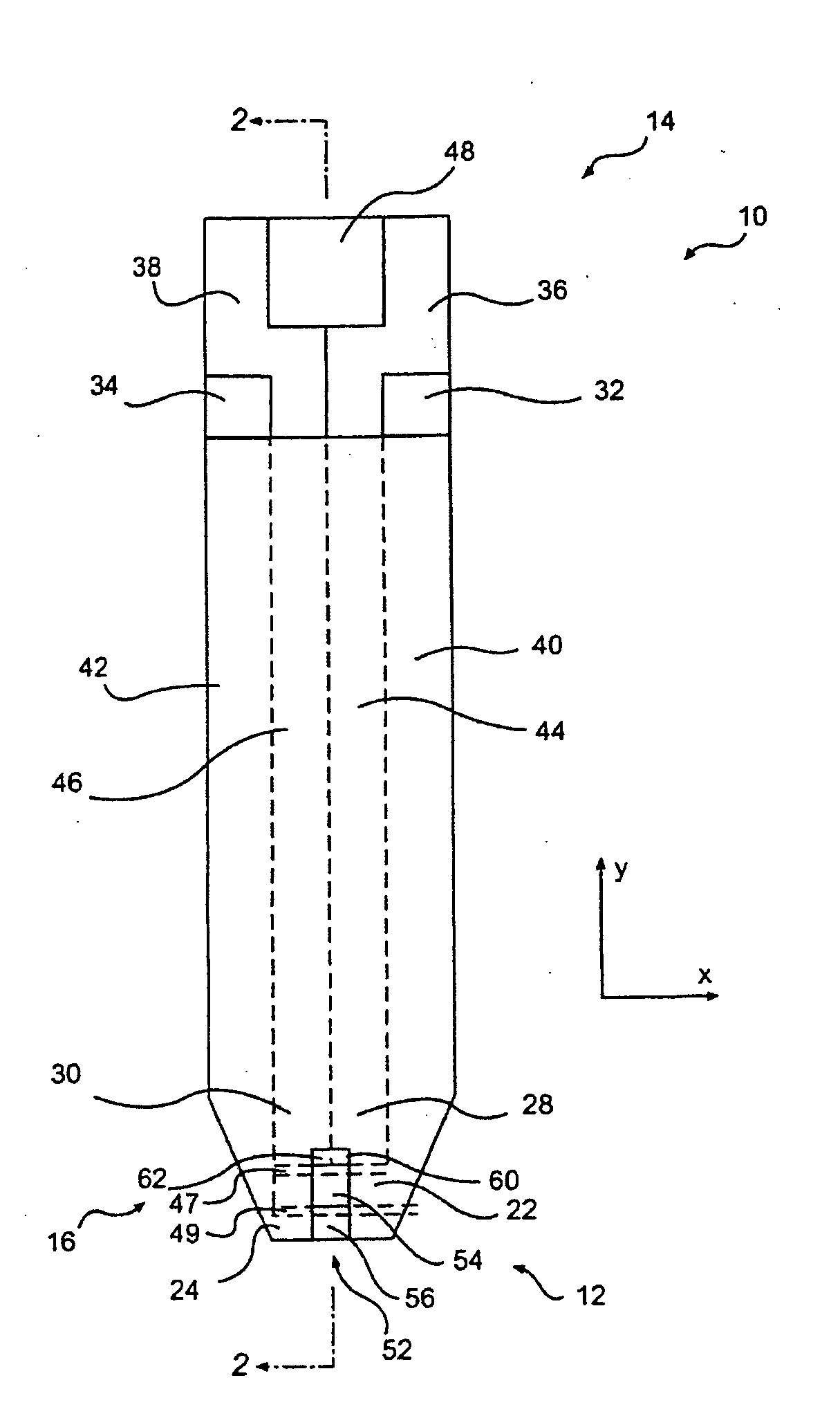
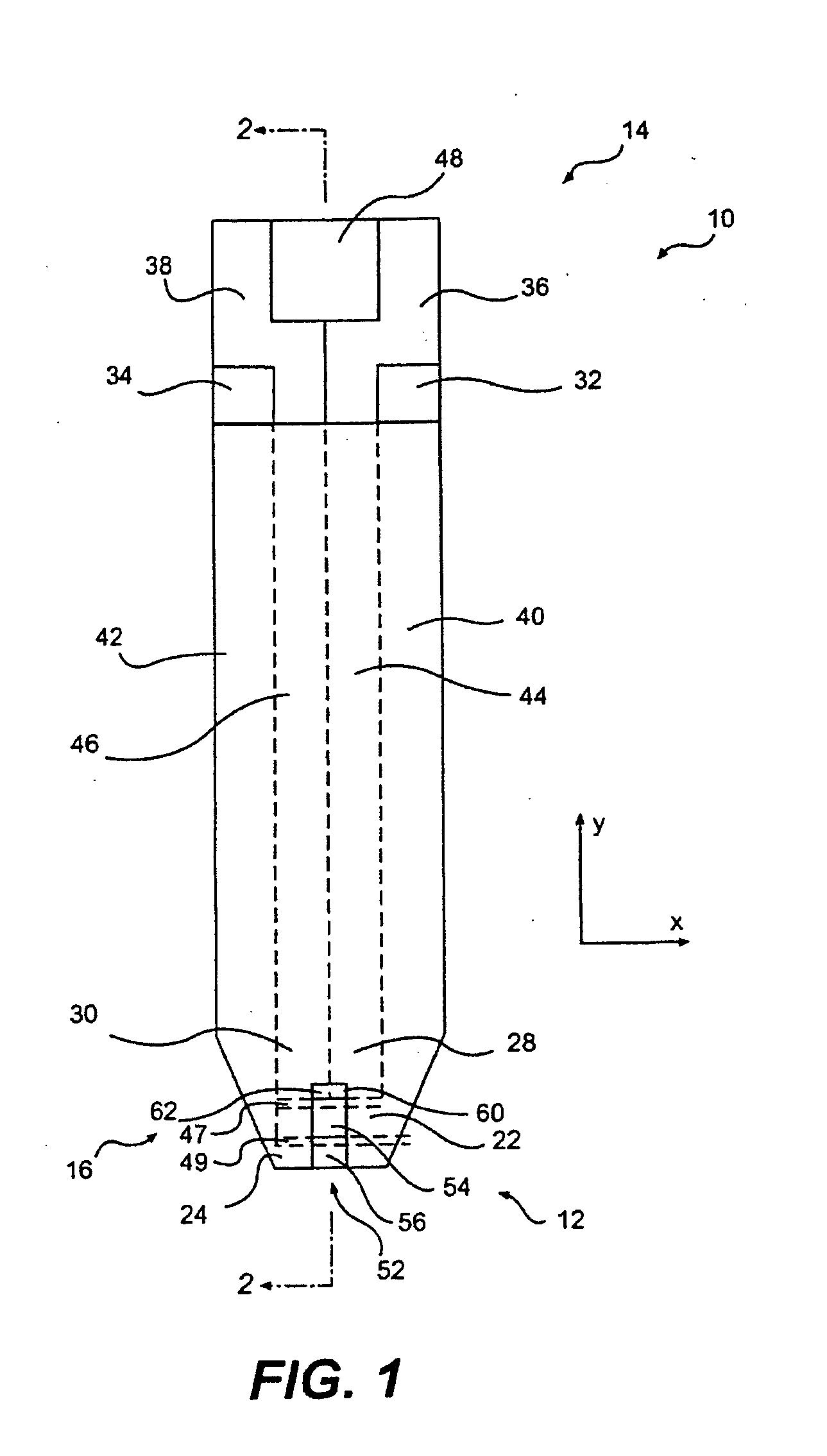
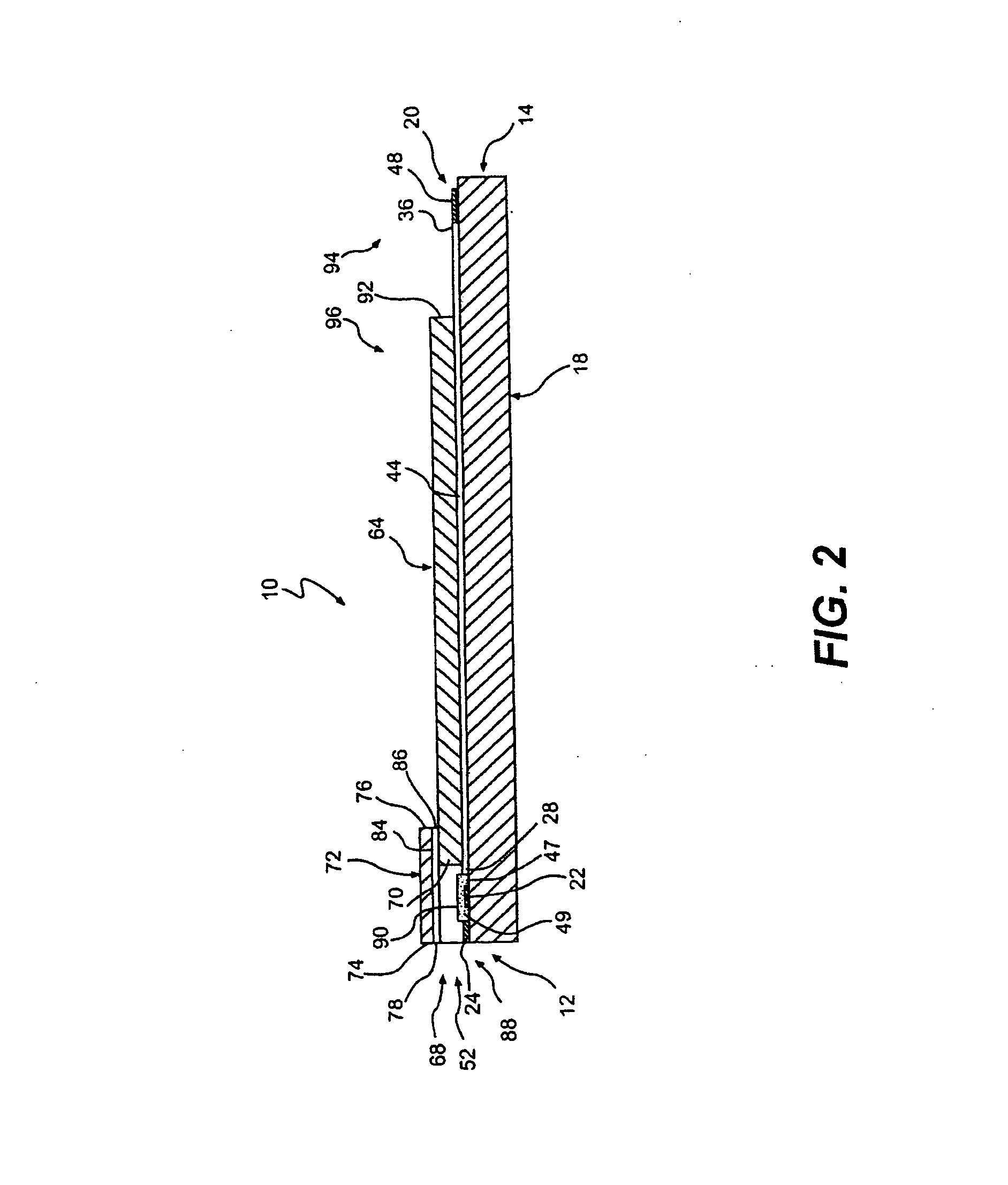
[0012]In view of the foregoing, there is disclosed biosensors for measuring a constituent concentration in blood, which comprises a unique gel matrix for filtering red blood cells. In addition to filtering red cells, the gel matrix prevents at least some of the red cells in the blood sample from contacting the electrode, and thus reduces inaccuracies in glucose readings associated with variations in
hematocrit levels. The biosensors disclosed herein typically comprise a sample reception region for receiving a blood sample, at least one electrode, and a reaction
reagent system.


 Login to View More