Non-Oxidized Desulfurization Process and Method of Using the Same
Inactive Publication Date: 2017-03-02
SPINTEK FILTRATION
View PDF2 Cites 16 Cited by
Summary
Abstract
Description
Claims
Application Information
AI Technical Summary
This helps you quickly interpret patents by identifying the three key elements:
Problems solved by technology
Method used
Benefits of technology
Benefits of technology
The present invention provides a method to efficiently reduce sulfur content in petroleum-based fuel feed stocks, producing diesel or other middle-distillate fuel that is substantially free of sulfur and impurities. This method does not require high temperatures or pressures and uses a reusable or regenerable adsorbent. The technical benefits of this invention are improved fuel quality, reduced emissions, and improved fuel efficiency.
Problems solved by technology
Sulfur-containing compounds are a component in petroleum-based fuels that can potentially form harmful compounds in the environment when the fuel is ignited or combusted.
The acids are then mixed with rain to form so-called “acid rain.” In addition, sulfur-containing compounds can also reduce the effectiveness of catalytic converters, leading to an increase in nitrous oxide (NOx) emissions.
While ruthenium is the most active catalyst, it is also expensive and relatively toxic, which has led to the extensive use of transitional metal catalyst binary metals on various catalyst supports.
However, the hydrodesulfurization process not only reduces the amount of sulfur and sulfur-containing compounds in the fuel, but also breaks apart olefins and reduces the amount of other heteroatom-containing compounds, including nitrogen-containing and oxygen-containing compounds in the fuel, and reduces the aromatic amount in the middle distillate.
Breaking middle distillate fuel into a lighter gas is not economical since the middle distillate is more valuable than that of the byproduct gases.
In addition, reducing aromatics in the middle distillate has adverse effects on the fuel quality, including reducing lubricity, increasing tear-wear in pistons, lowering the efficiency of the engine and increasing engine knocking.
The hydrodesulfurization process is also unable to achieve ultra-low sulfur levels in the fuel due to the low reactivity of refractory sulfur species under conventional conditions and also strong inhibition of the reaction by the reaction products H2S, NH3, nitrogen and aromatic species.
To achieve the required reductions in sulfur content in the fuel, the operating conditions of hydrogen desulfurization need to be more severe with respect to both temperature and pressure, which can also lead to an increased process cost.
Furthermore, while the concentration of thiophenes and, to a lesser extent, benzothiophenes can be reduced to the required levels by hydrodesulfurization, the reduction in concentration of other sulfur species, such as dialkyl dibenzothiophenes can be more problematic.
However, the catalysts used in this process typically comprise phosphate derivatives, tungstate derivatives, etc., which are generally non-regenerable.
Organic peroxide is one of the most commonly used oxidizing agents in the ODS process and the use and storage of organic peroxide can be hazardous, causing safety concerns.
In addition, the sulfoxide created by ODS cannot be treated by HDS.
Method used
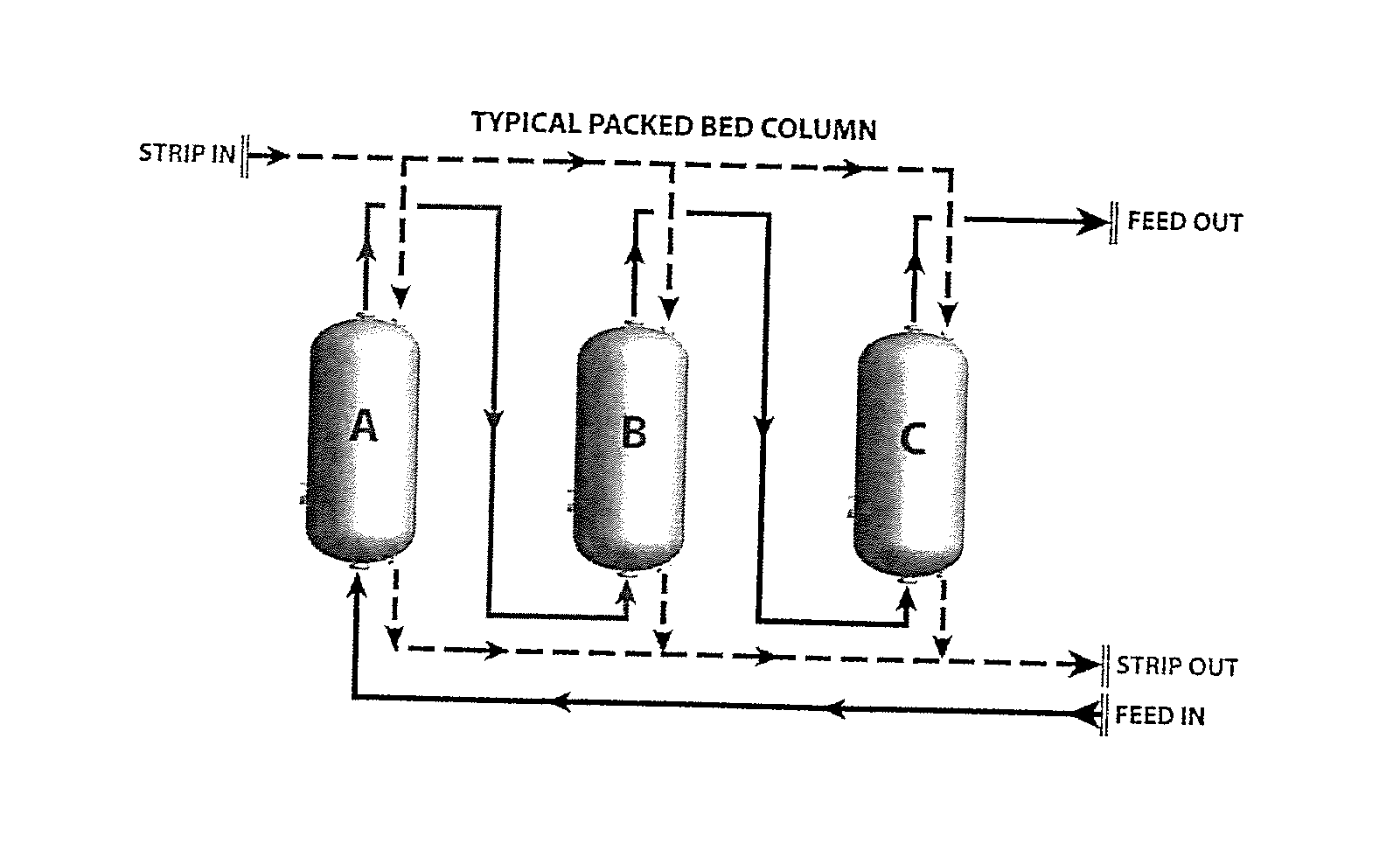
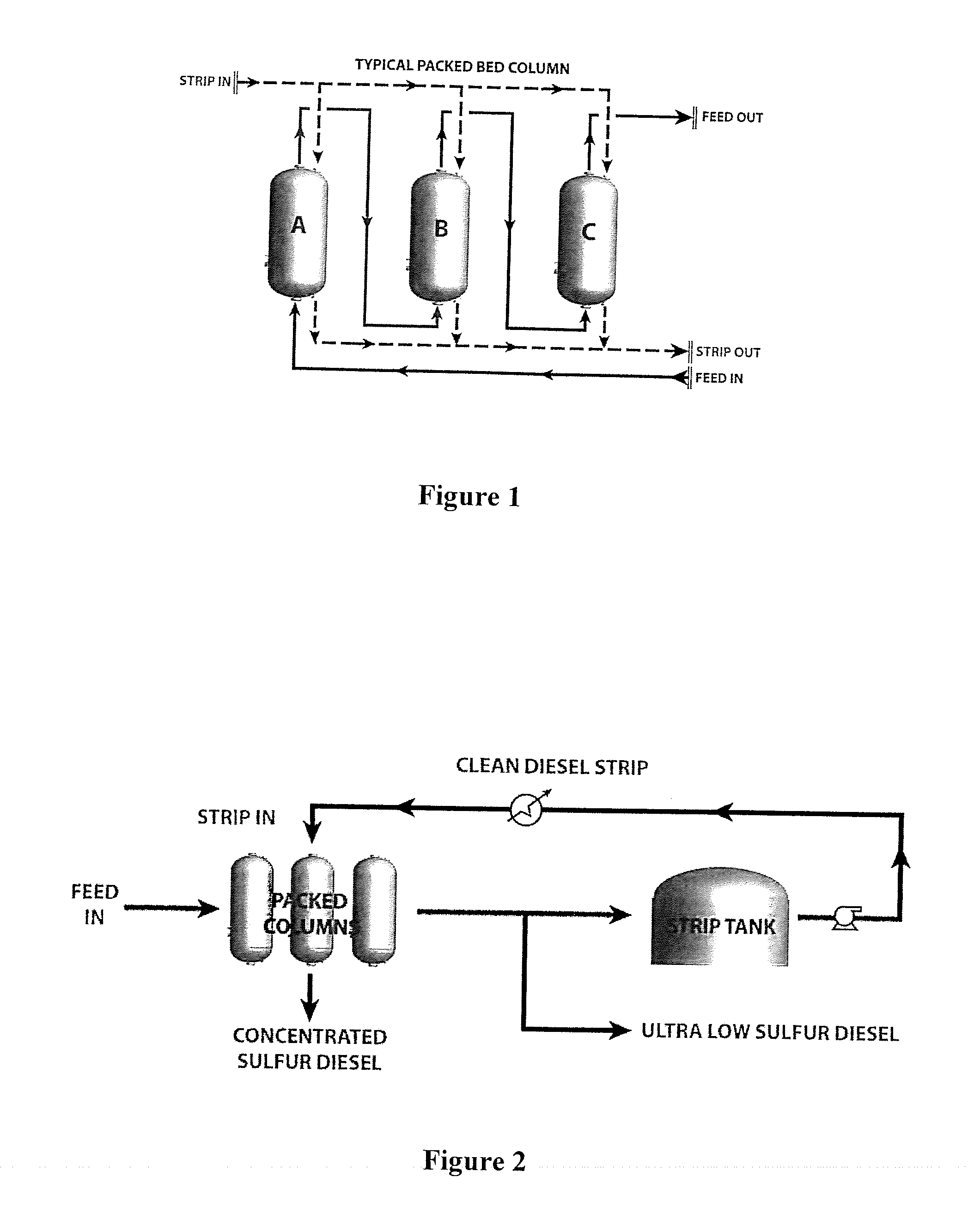
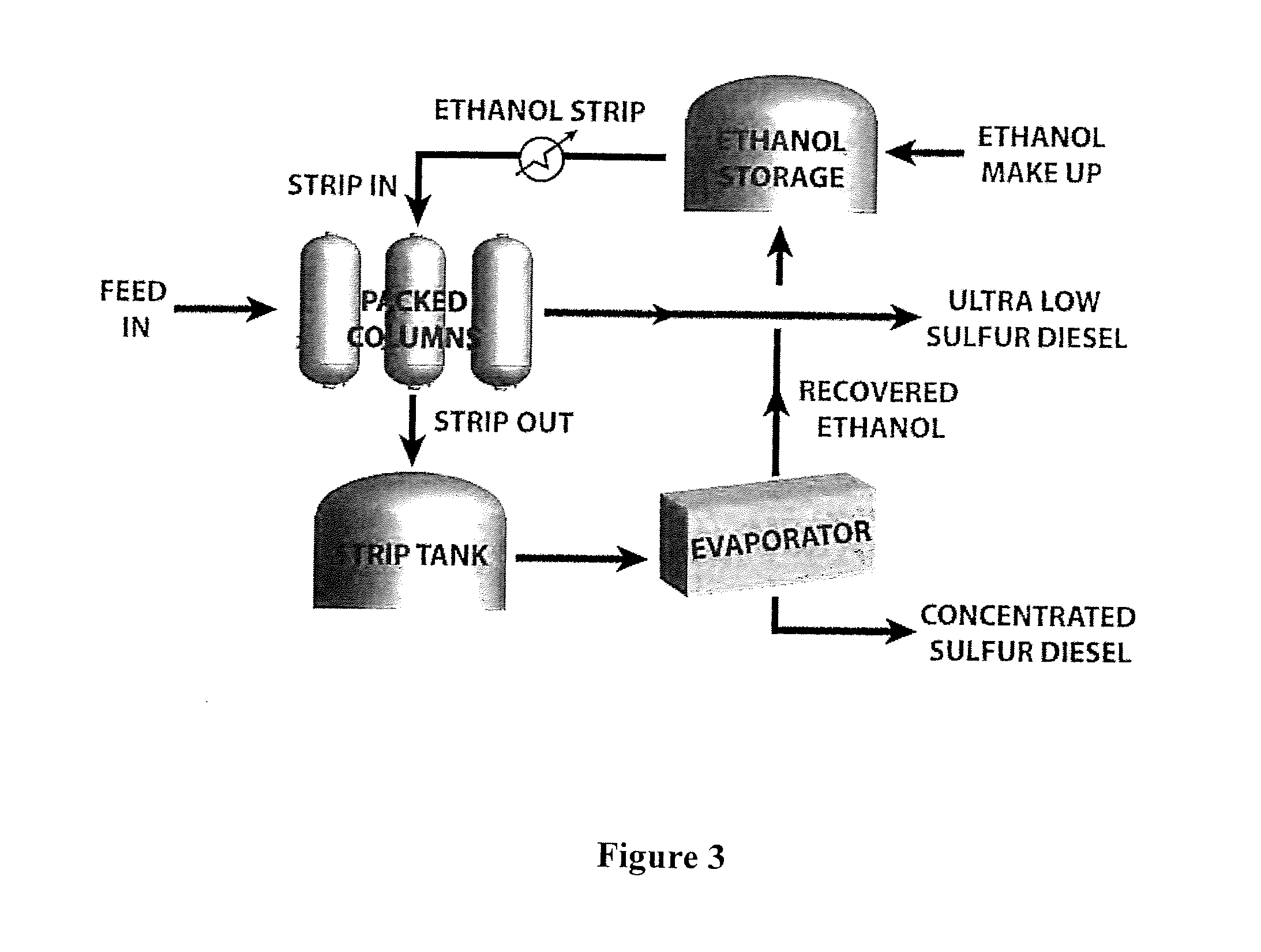
the structure of the environmentally friendly knitted fabric provided by the present invention; figure 2 Flow chart of the yarn wrapping machine for environmentally friendly knitted fabrics and storage devices; image 3 Is the parameter map of the yarn covering machine
View more
Image
Smart Image Click on the blue labels to locate them in the text.
Viewing Examples
Smart Image
Click on the blue label to locate the original text in one second.
Reading with bidirectional positioning of images and text.
Smart Image
Examples
Experimental program
Comparison scheme
Effect test
example 1
[0102]Ethanol was used in durability studies because it is harsher on the adsorbent described herein than ultra-low sulfur diesel. The adsorption capability of the adsorbent was measured to detect any adverse effects from repeated use and regeneration.
[0103]The test procedure in batch reactors was as follows:
[0104]1. Diesel and adsorbent in weight ratio of 5:1 were mixed at room temperature.
[0105]2. After reaching an equilibrium point, diesel was taken for analysis.
[0106]3. The adsorbent was washed with ethanol and dried.
[0107]4. The adsorbent was mixed again with new diesel at the same ratio as before.
[0108]5. Steps 1 through 4 were repeated 10 times.
[0109]Two sets of tests were run for two diesel compositions with different sulfur concentrations, 4900 ppm and at 300 ppm respectively. The diesels containing the recited sulfur concentrations were mixed with adsorbent at a constant weight ratio of 5:1 repeatedly. Test results demonstrated that repeating the regeneration process on th...
example 2
[0127]The following tables demonstrate a typical process calculations for sizing a temperature swing adsorption system in accordance with the present invention.
[0128]The first requirement is to input the amount of petroleum-based fuel, such as crude and / or diesel, to be processed and the level of sulfur contained therein. Thereafter, the diameter, column area, and working bed height of the packed bed columns can be calculated as shown in Tables 2 through 4.
TABLE 2Crude processing:Crude rate20,000BPDRatio of diesel to crude25%Diesel rate5,000BPD
TABLE 3Columns for diesel processing:Diesel rate5,000BPDLength of run24HoursDiesel / run5,000B / runDiesel / run794,850liters / runSulfur compounds300mg / lSulfur compounds238,455,000mg / runWorking bed loading2.5mg / gram adsorbentAdsorbent required95,382,000grams / runBulk density of adsorbent30,232grams / ft3Working bed volume3,155ft3
TABLE 4Column selection:Column diameter10.5ftColumn area86.59ft2Working bed height36.44ft
[0129]This example uses a configurati...
the structure of the environmentally friendly knitted fabric provided by the present invention; figure 2 Flow chart of the yarn wrapping machine for environmentally friendly knitted fabrics and storage devices; image 3 Is the parameter map of the yarn covering machine
Login to View More
PUM
Property
Measurement
Unit
Temperature
aaaaa
aaaaa
Temperature
aaaaa
aaaaa
Temperature
aaaaa
aaaaa
Login to View More
Abstract
A non-oxidized diesel desulfurization process that uses temperature swing adsorption along with an adsorbent to adsorb sulfur compounds and other impurities petroleum-based from fuel compositions, including light distillates, middle distillates, diesel, gasoline and transmix. The process uses temperature cycling of an adsorbent bed to adsorb and desorb organosulfur compounds and other impurities. Once the adsorbent reaches a selected concentration of sulfur compounds, the temperature of the adsorbent bed is raised to desorb sulfur compounds, using a regenerant.
Description
FIELD OF THE INVENTION[0001]The present invention relates generally to a desulfurization process for removing sulfur compounds and other impurities from petroleum-based fuel compositions.BACKGROUND OF THE INVENTION[0002]Sulfur-containing compounds are a component in petroleum-based fuels that can potentially form harmful compounds in the environment when the fuel is ignited or combusted. The sulfur-containing compounds can be converted into sulfur dioxide, which can then be converted into sulfur-based acids in the atmosphere. The acids are then mixed with rain to form so-called “acid rain.” In addition, sulfur-containing compounds can also reduce the effectiveness of catalytic converters, leading to an increase in nitrous oxide (NOx) emissions.[0003]In order to reduce air pollution and the negative environmental impact associated with petroleum-based fuels, various technologies have been developed to reduce sulfur and other harmful emissions while maintaining fuel efficiency. Fuel q...
Claims
the structure of the environmentally friendly knitted fabric provided by the present invention; figure 2 Flow chart of the yarn wrapping machine for environmentally friendly knitted fabrics and storage devices; image 3 Is the parameter map of the yarn covering machine
Login to View More
Application Information
Patent Timeline
Application Date:The date an application was filed.
Publication Date:The date a patent or application was officially published.
First Publication Date:The earliest publication date of a patent with the same application number.
Issue Date:Publication date of the patent grant document.
PCT Entry Date:The Entry date of PCT National Phase.
Estimated Expiry Date:The statutory expiry date of a patent right according to the Patent Law, and it is the longest term of protection that the patent right can achieve without the termination of the patent right due to other reasons(Term extension factor has been taken into account ).
Invalid Date:Actual expiry date is based on effective date or publication date of legal transaction data of invalid patent.



 Login to View More