
Bar-shaped perovskite deposited compound giant electrorheological fluid and preparation method thereof
A technology of giant electrorheological fluid and compound, which is applied in the directions of lubricating composition, petroleum industry, base material, etc., can solve the problems that electrorheological fluid is not widely used and the yield strength of electrorheological fluid is low, and achieves a short preparation period, Easy operation, high yield stress effect
Patent Information
- Authority / Receiving Office
- CN · China
- Patent Type
- Applications(China)
- Current Assignee / Owner
- Publication Date
- 2009-09-16
Smart Images
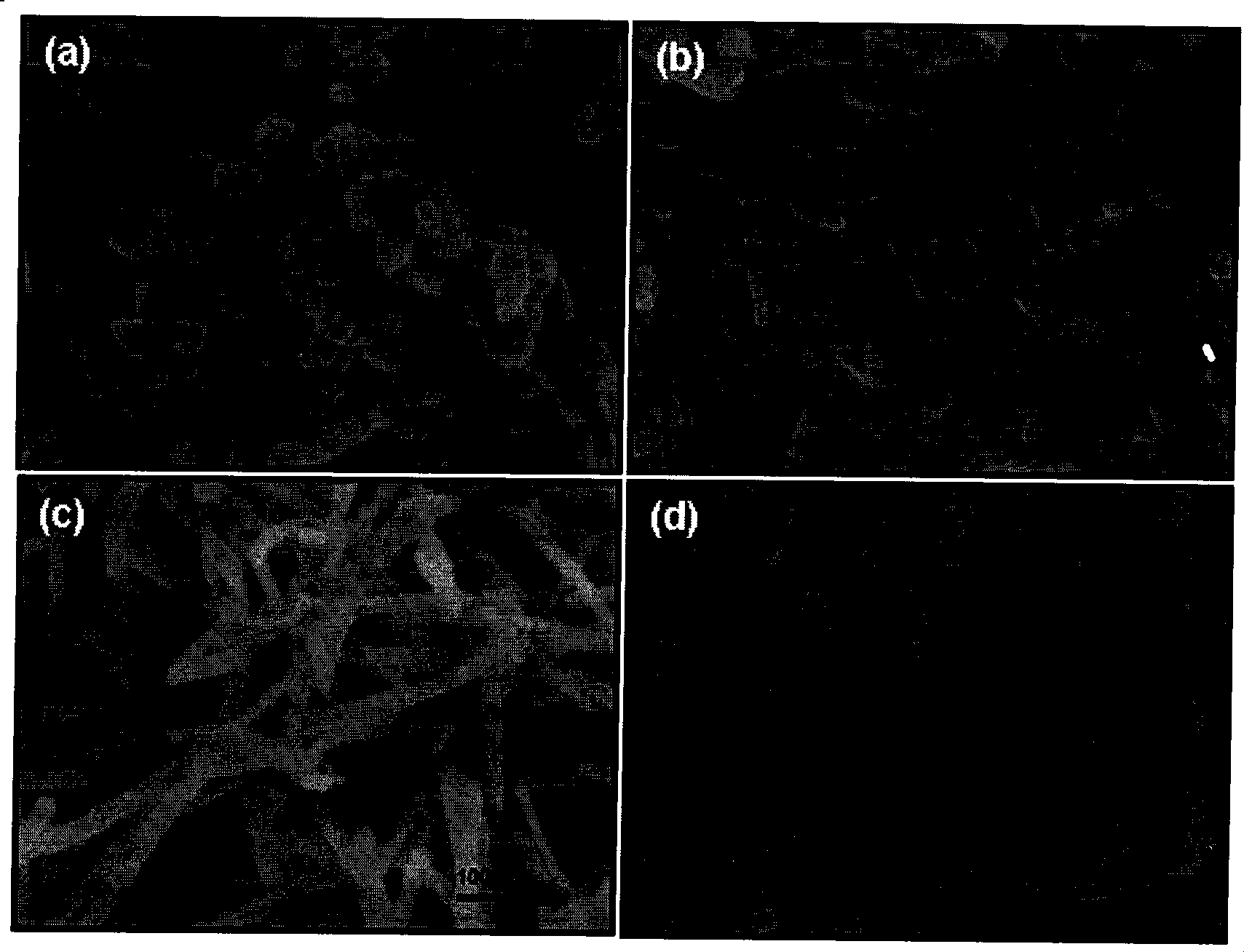
Figure 1 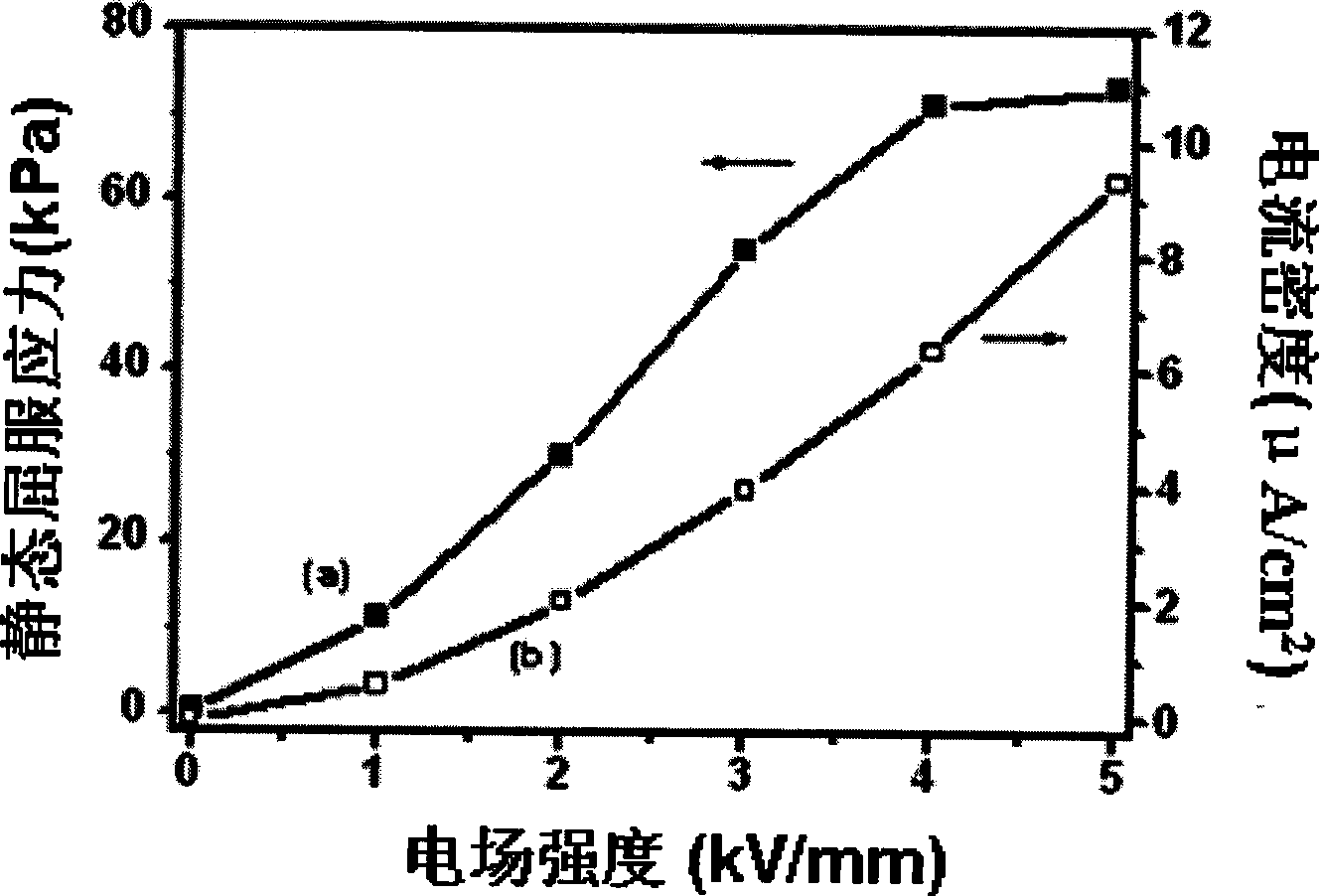
Figure 2 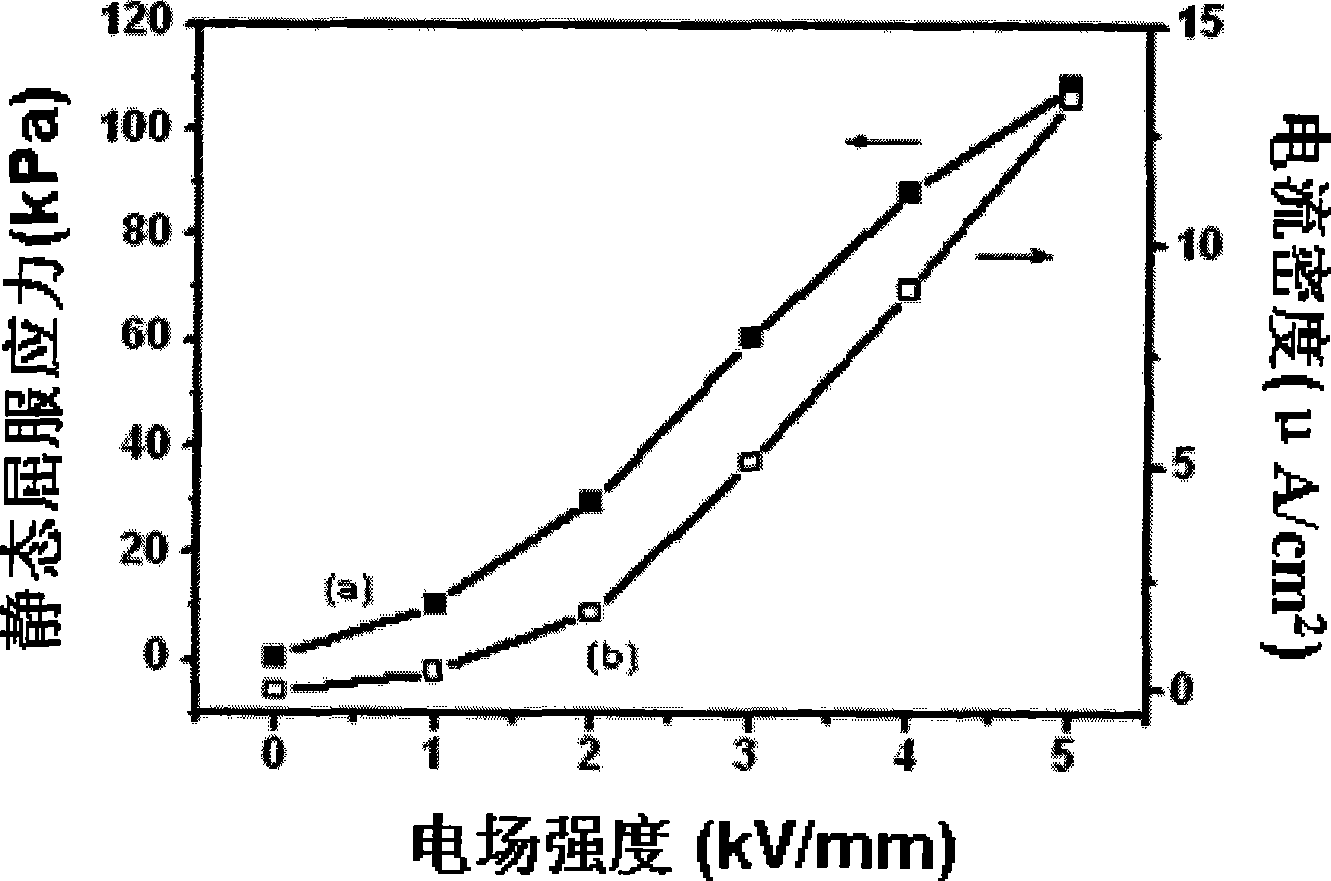
Figure 3
Abstract
Description
technical field
[0001] The invention relates to an electrorheological fluid and a preparation method thereof, in particular to a rod-shaped perovskite precipitation complex electrorheological fluid and a preparation method thereof. Background technique
[0002] Electrorheological fluid is a suspension system formed by dispersing polarizable solid particles in an insulating liquid. Under the action of an electric field, the electrorheological fluid has the characteristics of continuously adjustable shear strength (elastic modulus or rheological properties), fast response (ms level) and reversible transformation, which makes it the best fluid with adjustable hardness. Smart materials show greater advantages than existing technologies in terms of mechatronics and automatic control. Electrorheological fluids can be used to manufacture damping systems, shock and noise reduction systems, braking systems, displays, liquid valves, electromechanical coupling controls, robot parts an...
Examples
Embodiment 1
[0028] Dissolve 0.054mol oxalic acid in 100ml ethanol / water (1:1 volume ratio) mixed solvent, then add 0.021mol titanium tetrabromide dropwise, stir while adding dropwise until a transparent solution a is formed, adjust the solution with dilute ammonia water pH=3~4.
[0029] Dissolve 0.022mol of calcium chloride in a mixed solution of 100ml of ethanol / water (7:1 by volume) containing 0.033mol of citric acid, and then add 0.0005mol of PEG20000 to obtain solution b after dissolution.
[0030] At room temperature, add solution b dropwise to solution a while stirring, and gradually form a milky white precipitate. After the reaction is complete, age the formed precipitate at 50°C for 5 hours; wash and centrifuge the aged precipitate, and release the product Dry in a vacuum oven at 50-60°C for 24 hours, and then dry at 110°C under normal pressure for 6 hours to obtain rod-shaped calcium titanium precipitation composite nanoparticles. The scanning electron microscope photos are shown...
Embodiment 2
[0032] Dissolve 0.062mol oxalic acid in 200ml ethanol / water (volume ratio: 3:1) mixed solvent, then add dropwise 0.025mol tetrabutyl titanate, stir while adding dropwise until a transparent solution a is formed, adjust with dilute ammonia water Solution pH=3-4.
[0033] Dissolve 0.026mol calcium chloride hexahydrate in 50ml water to obtain solution b.
[0034] At 40°C, add solution b dropwise to solution a while stirring, and gradually form a milky white precipitate. After the reaction is complete, age the formed precipitate at 40°C for 12 hours; wash and centrifuge the aged precipitate to obtain the product Dry in a vacuum oven at 50-60°C for 24 hours, and then dry at 120°C under normal pressure for 4 hours to obtain rod-shaped calcium titanium precipitation composite nanoparticles. The scanning electron microscope photo is shown in figure 1 (c). Evenly mix the obtained nanoparticles with methyl silicone oil dried at 120°C for 2 hours, that is, the electrorheological fluid ...
Embodiment 3
[0036] Dissolve 0.054mol oxalic acid in 100ml ethanol / water (1:1 volume ratio) mixed solvent, then add 0.021mol tetrapropyl titanate dropwise, stir while adding dropwise until a transparent solution a is formed, adjust with dilute ammonia water Solution pH=3~4;
[0037] Dissolve 0.022mol of calcium nitrate tetrahydrate in a mixed solution of 100ml of ethanol / water (volume ratio 7:1) containing 0.033mol of citric acid, and then add 0.0006mol of PEG100000 to obtain solution b after dissolution.
[0038]At 60°C, add solution b dropwise to solution a while stirring, and gradually form a milky white precipitate. After the reaction is complete, age the formed precipitate at room temperature for 5 hours; wash and centrifuge the aged precipitate, and release the product Dry in a vacuum oven at 50-60°C for 24 hours, and then dry at 110°C under normal pressure for 6 hours to obtain rod-shaped calcium titanium precipitation composite nanoparticles. The scanning electron microscope photos...