Unlock instant, AI-driven research and patent intelligence for your innovation.
Method for producing hyaluronic acids with different molecular weights through pichia pastoris gene-regulation fermentation
What is Al technical title?
Al technical title is built by PatSnap Al team. It summarizes the technical point description of the patent document.
A technology of Pichia pastoris and gene regulation, applied in the field of genetic engineering and biological fermentation, to achieve the effect of solving the difficulty of molecular weight grading
Inactive Publication Date: 2013-02-06
INST OF BIOPHARM OF SHANDONG PROVINCE
View PDF2 Cites 3 Cited by
Summary
Abstract
Description
Claims
Application Information
AI Technical Summary
This helps you quickly interpret patents by identifying the three key elements:
Problems solved by technology
Method used
Benefits of technology
Problems solved by technology
The enzymatic degradation method has mild reaction conditions and fast degradation speed, which is more suitable for the preparation of HA with different molecular weights, but it needs to prepare the enzyme solution first, and then use the enzyme solution to degrade HA
Method used
the structure of the environmentally friendly knitted fabric provided by the present invention; figure 2 Flow chart of the yarn wrapping machine for environmentally friendly knitted fabrics and storage devices; image 3 Is the parameter map of the yarn covering machine
View more
Image
Smart Image Click on the blue labels to locate them in the text.
Viewing Examples
Smart Image
Click on the blue label to locate the original text in one second.
Reading with bidirectional positioning of images and text.
Smart Image
Examples
Experimental program
Comparison scheme
Effect test
Embodiment 1
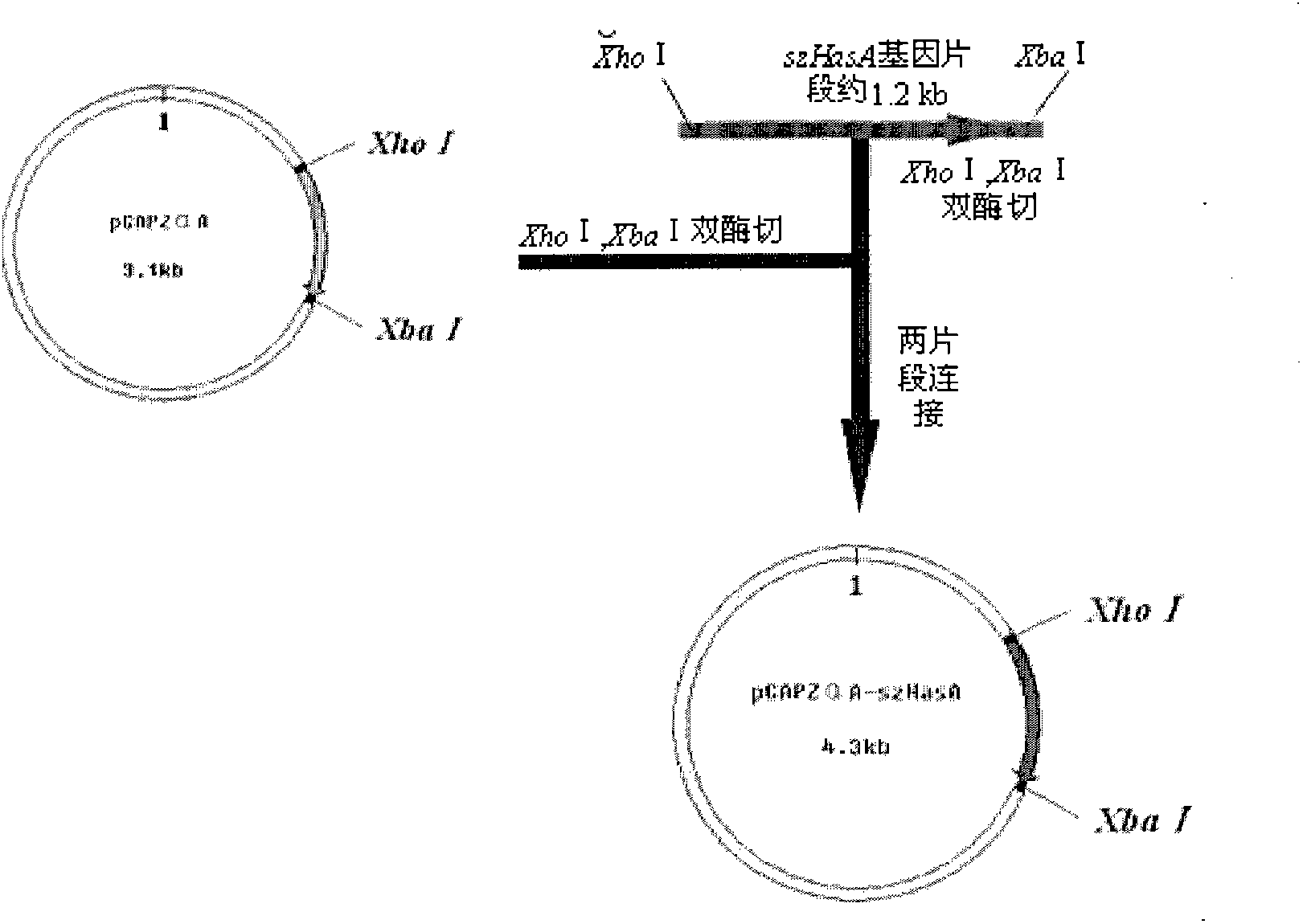
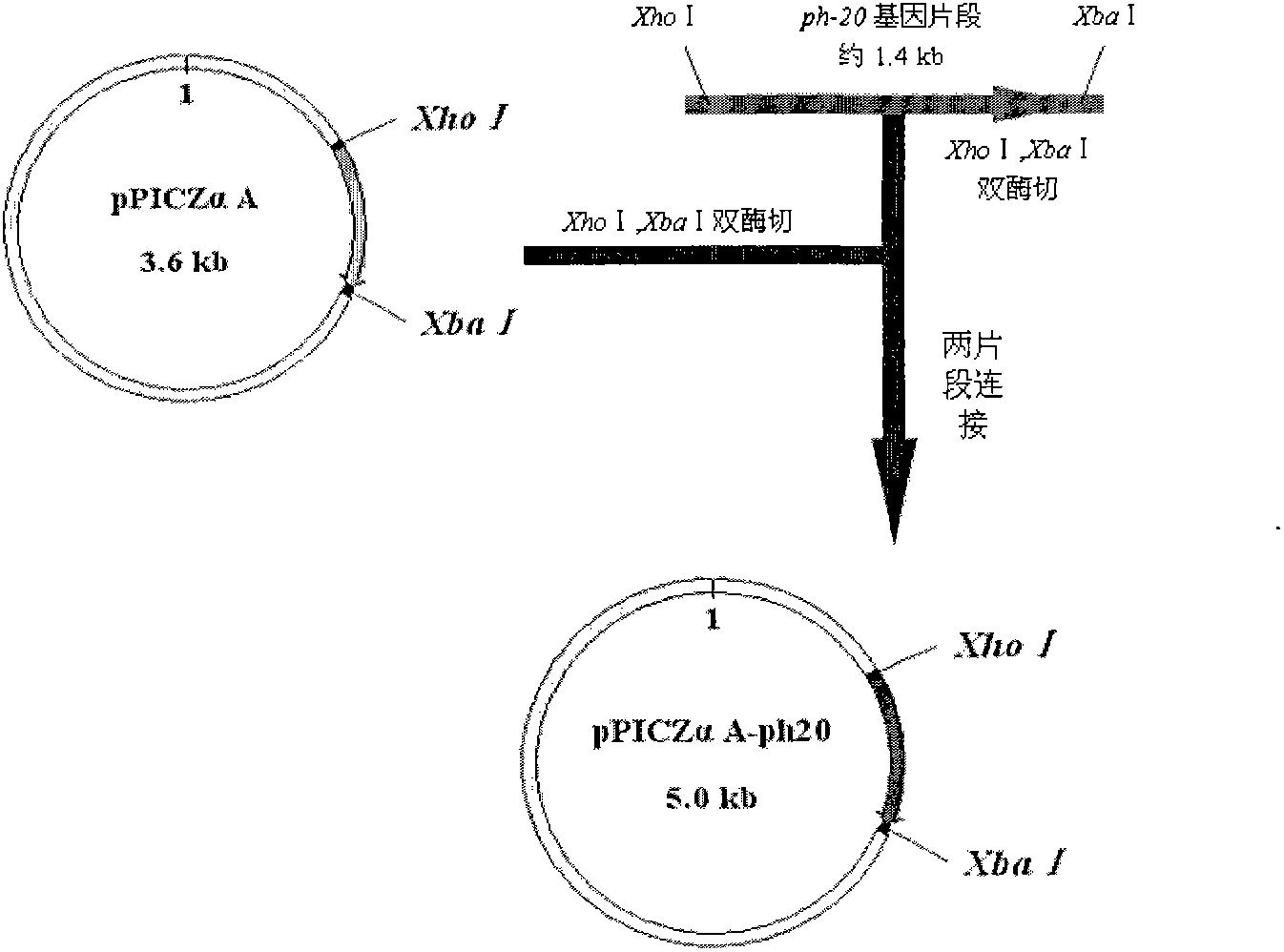
[0022] Example 1: Construction of recombinant plasmids pGAPZαA-szHasA and pPICZαA-ph20 and transformation of Pichia pastoris
[0023] 1 Construction of recombinant plasmid pGAPZαA-szHasA
[0024] 1 The whole gene synthesis sequence of the hyaluronic acid synthase gene szHasA of Streptococcus zooepidemicus in Table 1 was cloned and amplified by PCR. The PCR primer sequences are as follows:
[0035] Detected by 0.7% agaroseelectrophoresis, a PCR product with a size of about 1.2 kb was recovered for cloning and expression. The PCR recovered product and the pPICZαA vector were digested with restri...
Embodiment 2
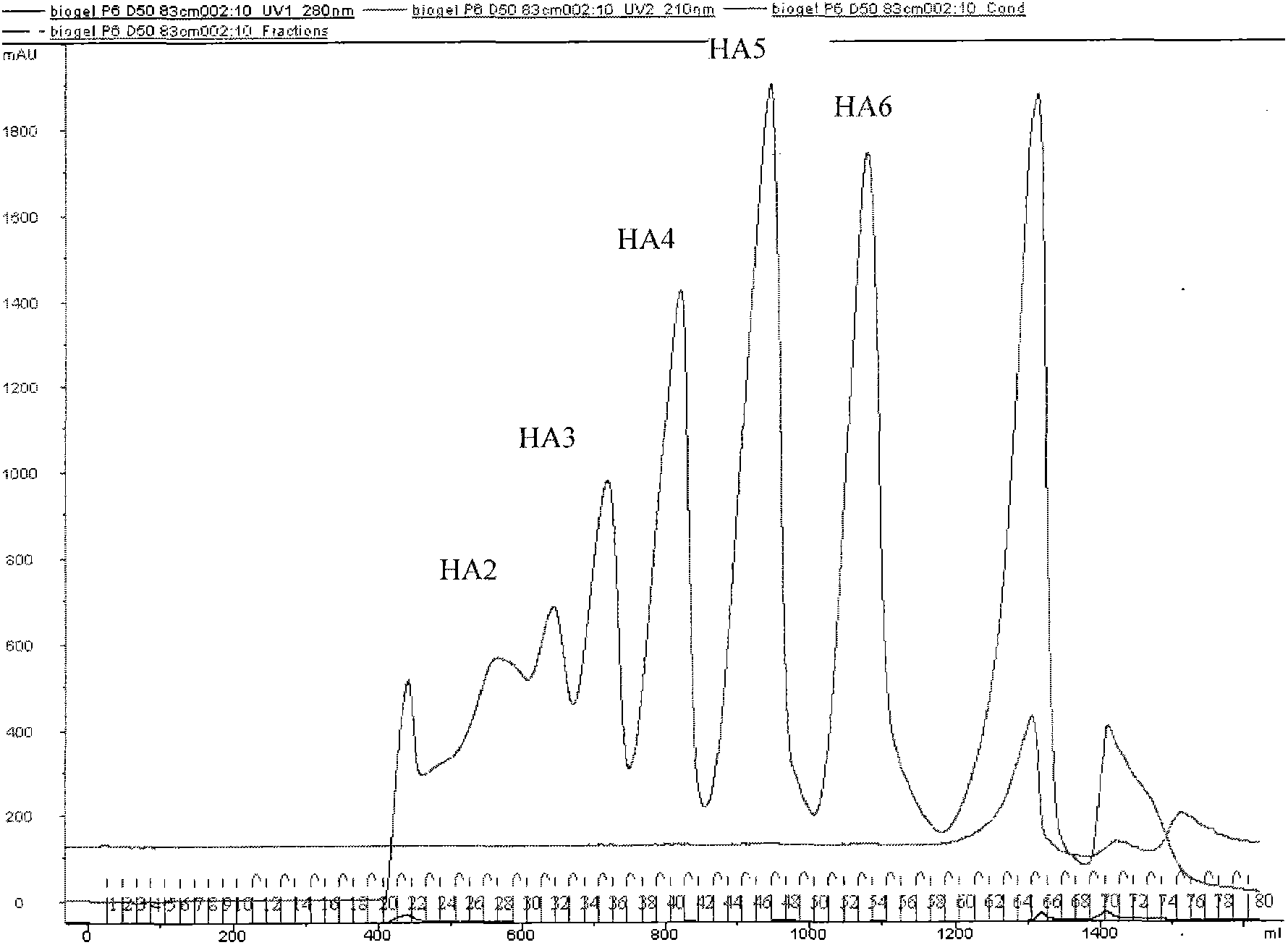
[0065] Embodiment 2: the method for producing multiple different molecular weight HA by fermentation of yeastengineeringbacteria HAS-PH20
[0066] In a 1-liter fermenter, the engineered yeast strain HAS-PH20 can directly produce HA with different molecular weights. First, under the condition of 30°C, activate and culture the recombinant yeast HAS-PH20 in YPD medium for 24 hours; inoculate the yeast cultivated overnight in the YPD seed medium at a ratio of 0.5% to 2%, and ferment in the tank as follows :
[0067] (1) Cell culture stage: the fermentation temperature is maintained at 28-30°C, the pH value of the fermentation medium is adjusted to 5.0-6.0 with 28% ammonia water, and then the seed medium is inoculated into the Add 4.37mL PTM1 salt solution to the Basal Salts upper tank medium at the same time, and aerate and stir for 18 to 24 hours;
[0068] (2) Glycerol feeding stage, that is, the stage of constitutively expressing the hyaluronic acid synthase of Streptococcus...
the structure of the environmentally friendly knitted fabric provided by the present invention; figure 2 Flow chart of the yarn wrapping machine for environmentally friendly knitted fabrics and storage devices; image 3 Is the parameter map of the yarn covering machine
Login to View More
PUM
Login to View More
Abstract
The invention relates to a novel method for producing hyaluronic acids (HA) with different molecular weights through pichia pastoris gene-regulation fermentation. The method comprises the steps that: recombinant plasmid pGAPZalphaA-szHasA constitutively expressing streptococcus zooepidemicus hyaluronic acid synthase and recombinant plasmid pPICZalphaA-ph20 inducibly expressing recombinant human hyaluronidase are used for converting yeast cells, such that a target strain HAS-PH20 is obtained. Through different gene regulation and induction methods, the yeastengineering strain HAS-PH20 directly produces various hyaluronic acids with different molecular weights through fermentation processes. With the method, the coupling of hyaluronic acid molecular weights and gene regulation methods is realized, and hyaluronic acids with specific molecular weights can be prepared according to requirements.
Description
technical field [0001] The invention relates to the fields of genetic engineering and biological fermentation, in particular to a method for producing hyaluronic acid with different molecular weights by using Pichia pastoris gene regulation and fermentation. Background technique [0002] Hyaluronic acid (HA) is a linear polysaccharide structure composed of repeating structures of N-hexanoylglucosamine and D-glucuronic acid. HA plays a significant role in lubricating joints, regulating the permeability of blood vessel walls, and promoting wound healing. More importantly, it has a special water-retaining effect and is one of the best moisturizing substances found in nature. [0003] However, due to the large molecular weight of HA, it will not be absorbed by the dermis when it is applied to the epidermis, so that its effect is greatly reduced. And low molecular weight HA oligosaccharides (1×10 5 ~4×10 5 ) can penetrate into the dermis, regulate skinmetabolism, promote blo...
Claims
the structure of the environmentally friendly knitted fabric provided by the present invention; figure 2 Flow chart of the yarn wrapping machine for environmentally friendly knitted fabrics and storage devices; image 3 Is the parameter map of the yarn covering machine
Login to View More
Application Information
Patent Timeline
Application Date:The date an application was filed.
Publication Date:The date a patent or application was officially published.
First Publication Date:The earliest publication date of a patent with the same application number.
Issue Date:Publication date of the patent grant document.
PCT Entry Date:The Entry date of PCT National Phase.
Estimated Expiry Date:The statutory expiry date of a patent right according to the Patent Law, and it is the longest term of protection that the patent right can achieve without the termination of the patent right due to other reasons(Term extension factor has been taken into account ).
Invalid Date:Actual expiry date is based on effective date or publication date of legal transaction data of invalid patent.



 Login to View More
  Login to View More