
Hydrothermal preparation method of nano lithium iron manganese phosphate anode material
A lithium iron manganese phosphate, cathode material technology, applied in nanotechnology, chemical instruments and methods, phosphorus compounds, etc., can solve the problems of easy decomposition of manganese element, low conductivity, etc., achieve good crystallinity, improve conductivity, and purity. high effect
- Summary
- Abstract
- Description
- Claims
- Application Information
AI Technical Summary
Problems solved by technology
Method used
Image

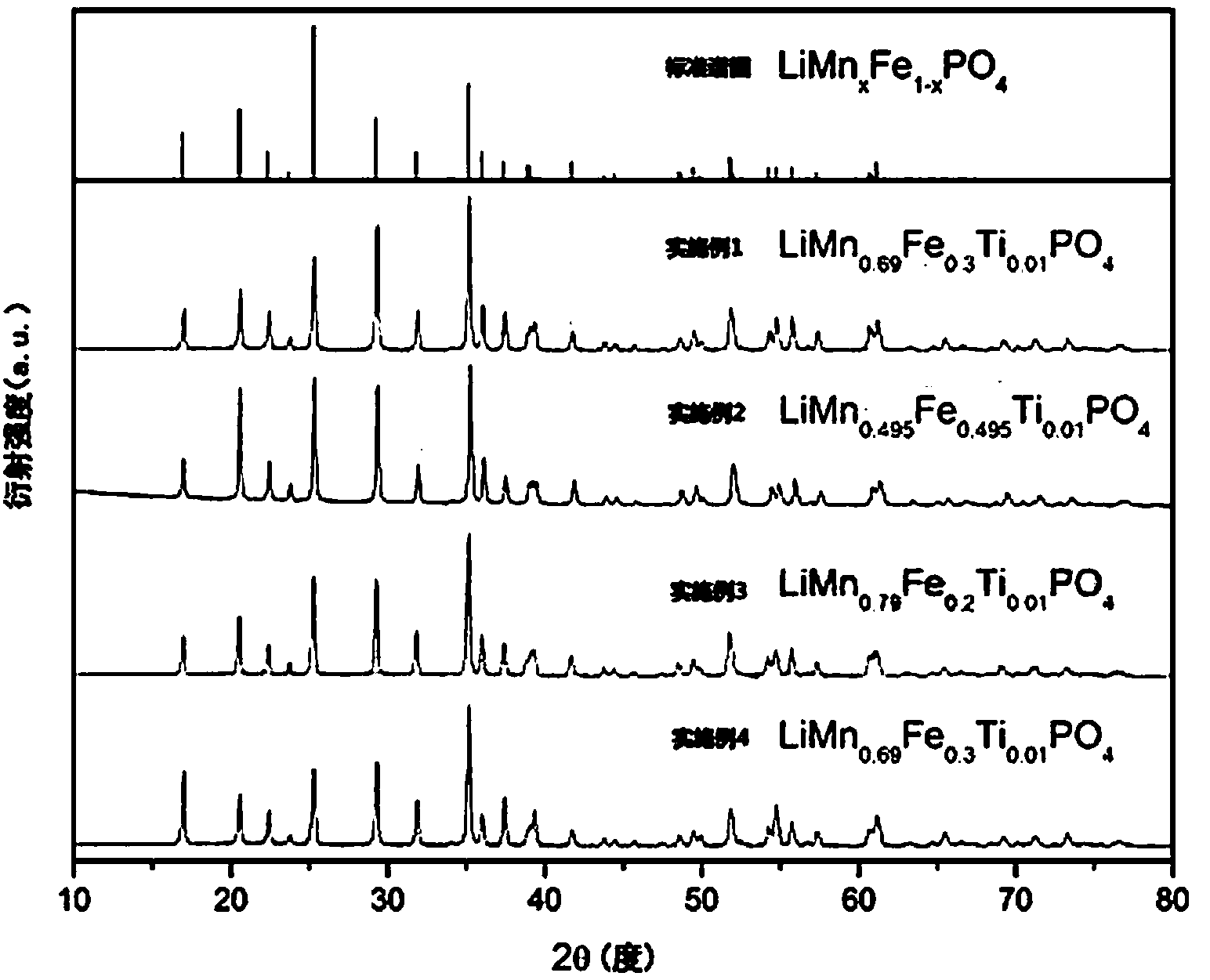
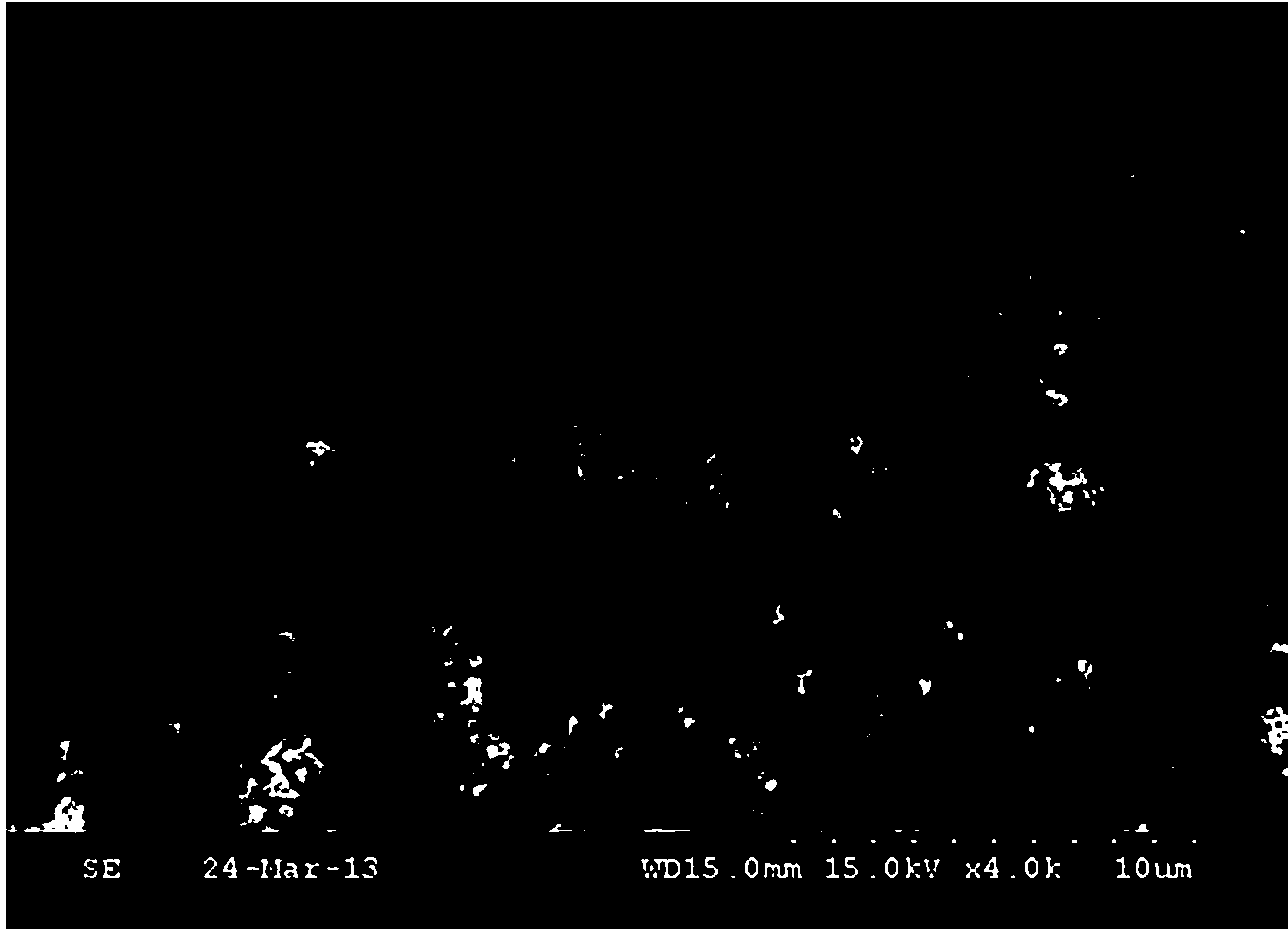
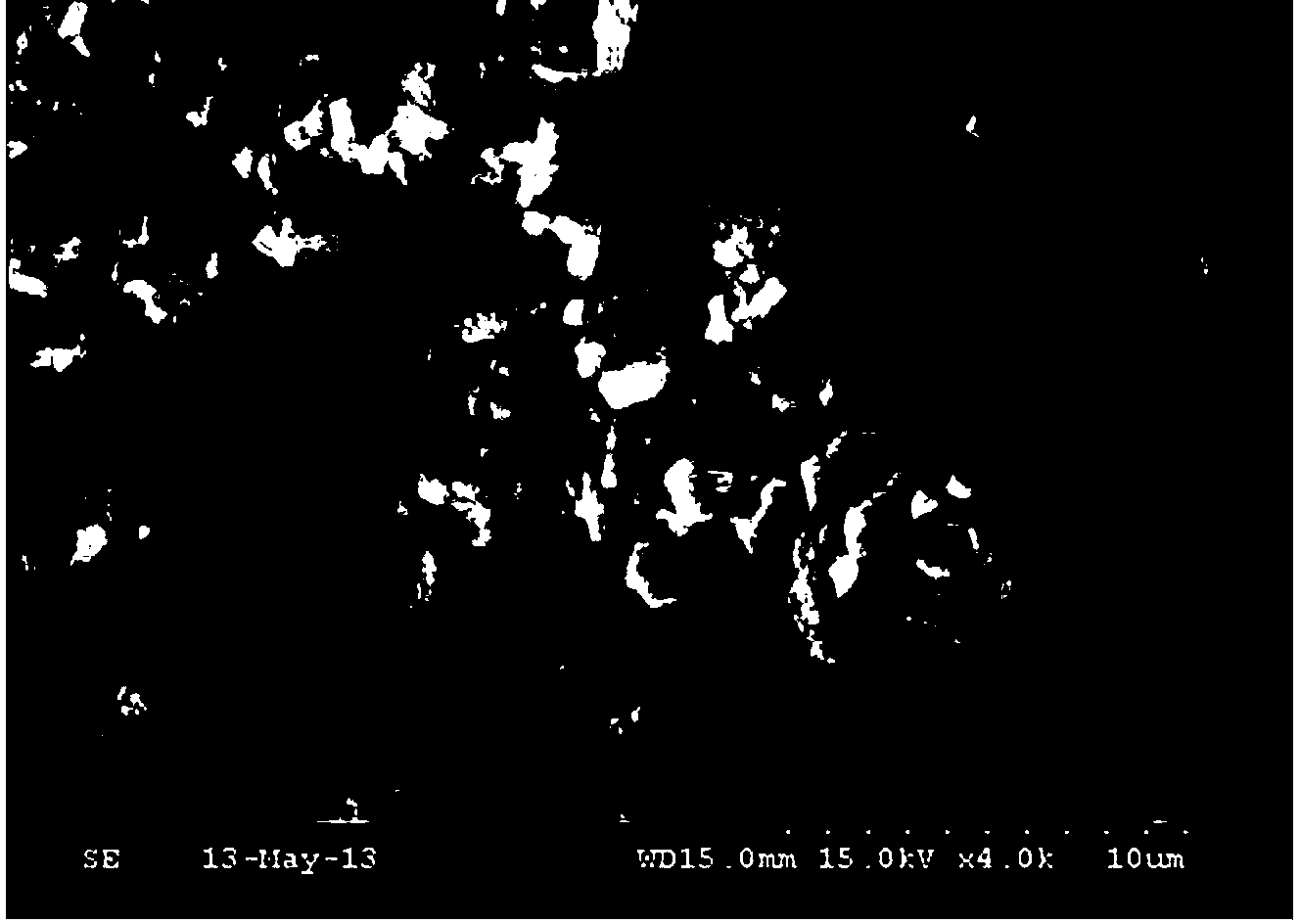
Examples
Embodiment 1
[0019] Add 2L of deionized water into the sealed reaction kettle, add 6.0mol LiOH·H 2 O and 2.0mol 85%H 3 PO 4 Add to the reaction kettle respectively, add while stirring, and then add concentrated ammonia water with a mass fraction of 25% into the reaction kettle to control the pH value in the reaction kettle within the range of 9 to 10, and seal the reaction kettle. At the same time, the temperature was raised to 180°C, and 0.6mol FeSO 4 ·7H 2 O, 1.38mol MnSO 4 ·H 2 O and 0.02mol Ti (SO 4 ) 2 Add it into 2L of deionized water, stir evenly, pump the solution into the reaction kettle with a high-pressure pump, and control the addition speed so that the temperature in the reaction kettle is within the range of 170-200°C during the addition process. The reaction kettle was heated, and the temperature in the reaction kettle was raised to 200° C. for 10 hours. After cooling, when the reaction kettle is cooled below 60°C, wash the material with deionized water until there i...
Embodiment 2
[0024] Add 2L of deionized water into the sealed reaction kettle, add 6.0mol LiOH·H 2 O and 2.0mol 85%H 3 PO 4 Add to the reaction kettle respectively, add while stirring, and then add concentrated ammonia water with a mass fraction of 25% into the reaction kettle to control the pH value in the reaction kettle within the range of 9 to 10, and seal the reaction kettle. The closed reaction kettle was heated to 180°C at the same time, and 0.99mol FeSO 4 ·7H 2 O, 0.99mol MnSO 4 ·H 2 O and 0.02mol Ti (SO 4 ) 2 Add it into 2L of deionized water, stir evenly, pump the solution into the reaction kettle with a high-pressure pump, and control the addition speed so that the temperature in the reaction kettle is within the range of 170-200°C during the addition process. The reaction kettle was heated, and the temperature in the reaction kettle was raised to 200° C. for 10 hours. After cooling, when the reaction kettle is cooled below 60°C, wash the material with deionized water un...
Embodiment 3
[0027] Add 2L of deionized water into the sealed reaction kettle, add 6.0mol LiOH·H 2 O and 2.0mol 85%H 3 PO 4 Add to the reaction kettle respectively, add while stirring, and then add concentrated ammonia water with a mass fraction of 25% into the reaction kettle to control the pH value in the reaction kettle within the range of 9 to 10, and seal the reaction kettle. The closed reaction kettle was heated to 180°C at the same time, and 0.4mol FeSO4 ·7H 2 O, 1.58mol MnSO 4 ·H 2 O and 0.02mol Ti (SO 4 ) 2 Add it into 2L of deionized water, stir evenly, pump the solution into the reaction kettle with a high-pressure pump, and control the addition speed so that the temperature in the reaction kettle is within the range of 170-200°C during the addition process. The reaction kettle was heated, and the temperature in the reaction kettle was raised to 200° C. for 10 hours. After cooling, when the reaction kettle is cooled below 60°C, wash the material with deionized water until...
PUM
 Login to View More
 Abstract
Description
Claims
Application Information
 Login to View More