Check patentability & draft patents in minutes with Patsnap Eureka AI!

A method for the preparation of monolayer g-c3n4 nanomaterials with single-atom thickness

A single-atom-thick, nano-material technology, applied in the direction of nanotechnology, nanotechnology, nanotechnology, etc. for materials and surface science, can solve unobtained problems, achieve cheap raw materials, simple preparation process, and improve photocatalytic efficiency Effect

Inactive Publication Date: 2016-01-20
NORTHWEST UNIV
View PDF2 Cites 0 Cited by
  • Summary
  • Abstract
  • Description
  • Claims
  • Application Information

AI Technical Summary

Problems solved by technology

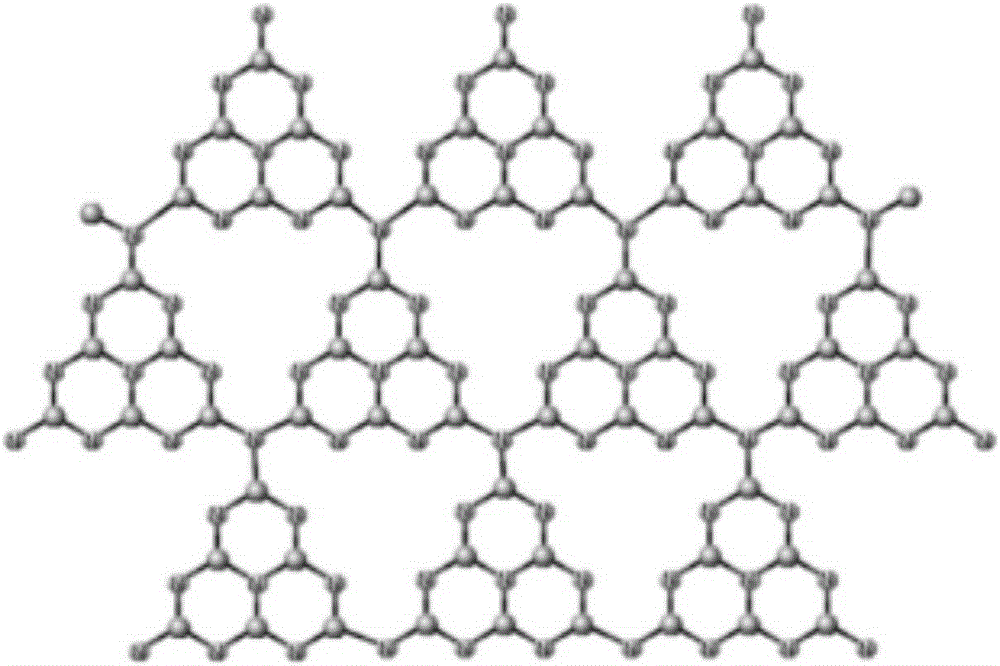
However, these methods have not obtained a true single-layer (thickness of about 0.35nm) atomically arranged carbon nitride, and they are all multi-layered or even multi-layered bulk g-C 3 N 4

Method used

the structure of the environmentally friendly knitted fabric provided by the present invention; figure 2 Flow chart of the yarn wrapping machine for environmentally friendly knitted fabrics and storage devices; image 3 Is the parameter map of the yarn covering machine
View more

Image

Smart Image Click on the blue labels to locate them in the text.
Viewing Examples
Smart Image
  • A method for the preparation of monolayer g-c3n4 nanomaterials with single-atom thickness
  • A method for the preparation of monolayer g-c3n4 nanomaterials with single-atom thickness
  • A method for the preparation of monolayer g-c3n4 nanomaterials with single-atom thickness

Examples

Experimental program
Comparison scheme
Effect test

Embodiment 11

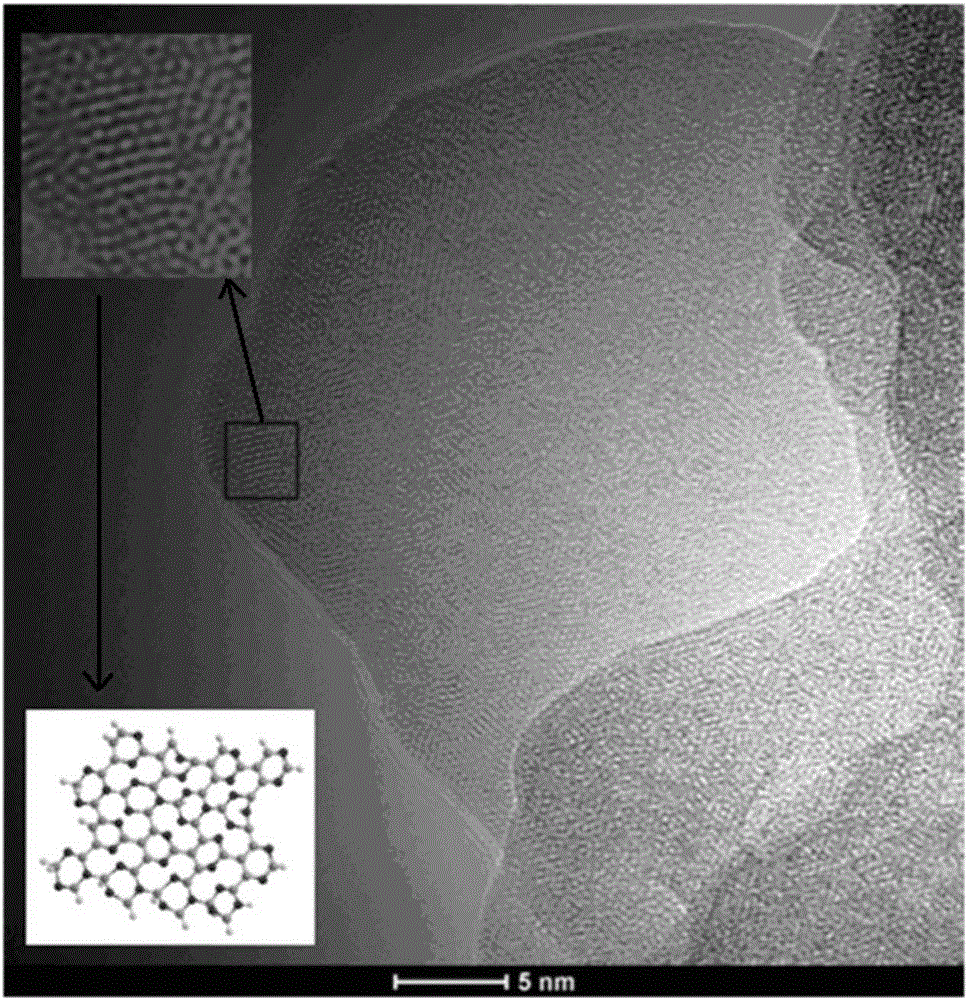
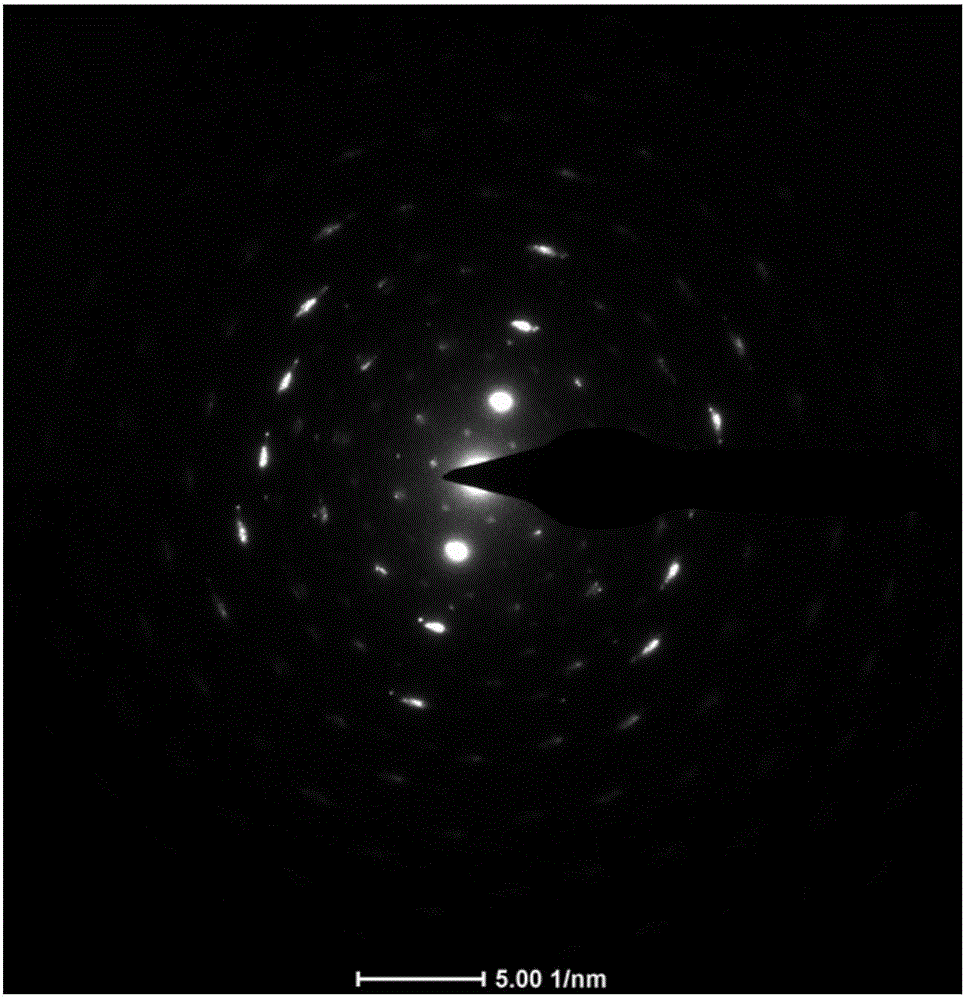
[0039] At room temperature, weigh 0.0526gg-C 3 N 4 , grind to powder in an agate mortar, sieve out the particles with a particle size greater than 0.106mm (use a 140 mesh sieve), and add 30ml of HNO with a mass concentration of 65% 3 After being stirred evenly, it was left to stand for 24 hours. After being stirred evenly again, it was sonicated for 3 hours at intervals on an ultrasonic instrument with a frequency of 40,000 Hz in a 65°C water bath using a centrifuge tube, and washed with water until the pH was 6. After drying and grinding into powder, add 50ml of absolute ethanol, stir evenly, and ultrasonicate for 3 hours at intervals. Centrifuge and wash with absolute ethanol, dry and grind at 80°C to obtain a single layer of g-C 3 N 4 . The monolayer g-C 3 N 4 The interatomic distance of the material is about 0.35nm, and the electron diffraction at any position will show a six-membered ring structure, and the thickness is about 0.334nm, and the size is about 500nm-1um...

Embodiment 12

[0041] At room temperature, weigh 0.0507gg-C 3 N 4 , grind to powder in an agate mortar, sieve out the particles with a particle size greater than 0.106mm (use a 140 mesh sieve), add 30ml of HNO with a mass concentration of 50% 3 After stirring evenly, let it stand for 24 hours. After stirring again, conduct ultrasonic treatment at intervals of 3 hours on an ultrasonic instrument with a frequency of 40,000 Hz in a 60°C water bath, wash with water until the pH is 6, dry and grind it into powder, and then add 50ml of absolute ethanol and stir. Uniform, interval sonication for 3h. Centrifuge and wash with absolute ethanol, dry and grind at 80°C to obtain a single layer of g-C 3 N 4 . This monolayer g-C 3 N 4 The distance between atoms is about 0.35nm, the thickness is 0.334nm, and the size is about 450nm-1um. The TEM image of the material is shown in Figure 5 shown.

Embodiment 13

[0043] At room temperature, weigh 0.0571gg-C 3 N 4 , grind to powder in an agate mortar, sieve out the particles with a particle size larger than 0.106mm (use a 140 mesh sieve), and add 30ml of HNO with a mass concentration of 32% 3 After being stirred evenly, it was left to stand for 24 hours. After being stirred evenly again, it was ultrasonically treated for 3 hours at intervals on an ultrasonic instrument with a frequency of 40,000 Hz in a 65°C water bath, and washed with water until the pH was 6. After drying and grinding into powder, add 50ml of absolute ethanol, stir evenly, and ultrasonicate for 3 hours at intervals. Centrifuge and wash with absolute ethanol, dry and grind at 60°C to obtain a single layer of g-C 3 N 4 . This monolayer g-C 3 N 4 The distance between atoms is about 0.35nm, and the electron diffraction at any position will show a six-membered ring structure with a thickness of about 0.334nm and a size between about 700nm and 5um. The TEM image of t...

the structure of the environmentally friendly knitted fabric provided by the present invention; figure 2 Flow chart of the yarn wrapping machine for environmentally friendly knitted fabrics and storage devices; image 3 Is the parameter map of the yarn covering machine
Login to View More

PUM

PropertyMeasurementUnit
thicknessaaaaaaaaaa
thicknessaaaaaaaaaa
sizeaaaaaaaaaa
Login to View More

Abstract

The invention discloses a method for preparing a single-layer g-C3N4 photocatalytic material with a single-atom thickness: Step 1: Grind the bulk g-C3N4 to powder at room temperature, add it to an acid solution or an alkali solution, and stir After uniformity, let it stand; Step 2: Stir the solution obtained in Step 1 evenly again and then perform ultrasonic treatment. After the precipitation is complete, remove the supernatant and rinse with deionized water to pH 6-8; dry and grind, and add to the organic solvent Perform ultrasonic treatment again, and remove the supernatant after the precipitation is complete; Step 3: Centrifuge and wash the g-C3N4 obtained in step 2 with absolute ethanol to obtain a single layer of g-C3N4. The preparation process of the invention is simple, the repeatability is good and the preparation speed is fast. Under xenon lamp irradiation, this photocatalytic material has high efficiency in decomposing water and producing hydrogen, and has obvious effect in degrading organic dyes. The invention provides new ideas for the preparation and application of g-C3N4 photocatalytic materials, and broadens the research scope of photocatalytic materials.

Description

technical field [0001] The invention belongs to the technical field of semiconductor nanomaterials and relates to a single-layer g-C 3 N 4 Preparation of two-dimensional photocatalytic nanolayered materials, especially a single-atom-thick monolayer g-C 3 N 4 Preparation method of photocatalyst. Background technique [0002] g-C 3 N 4 (Graphene Carbon Nitride, g-C 3 N 4 ) is a block-shaped g-C formed by stacking a single-layer sheet structure composed of carbon and nitrogen atoms. 3 N 4 Materials, due to their excellent electronic, mechanical and optical properties, have aroused a research boom at home and abroad. Especially in the field of photocatalysis, g-C 3 N 4 It has the same high specific surface area and extremely fast electron transport speed as graphene, which can improve the catalytic efficiency of photocatalytic materials. Since the monoatomic layer of g-C 3 N 4 It has a larger specific surface area than multilayer carbon nitride, better photocatalyt...

Claims

the structure of the environmentally friendly knitted fabric provided by the present invention; figure 2 Flow chart of the yarn wrapping machine for environmentally friendly knitted fabrics and storage devices; image 3 Is the parameter map of the yarn covering machine
Login to View More

Application Information

Patent Timeline
no application Login to View More
Patent Type & Authority Patents(China)
IPC IPC(8): C01B21/082B82Y30/00B01J27/24
Inventor 樊君马永宁刘恩周胡晓云李兴华代宏哲武慧童樊骁李银叶
Owner NORTHWEST UNIV
Features
  • R&D
  • Intellectual Property
  • Life Sciences
  • Materials
  • Tech Scout
Why Patsnap Eureka
  • Unparalleled Data Quality
  • Higher Quality Content
  • 60% Fewer Hallucinations
Social media
Patsnap Eureka Blog
Learn More