
Preparation method of magnetic microspheres-based levofloxacin surface imprinted material
A technology of levofloxacin and magnetic microspheres, applied in chemical instruments and methods, alkali metal oxides/hydroxides, other chemical processes, etc., can solve the problems of difficulty in meeting detection requirements, low specific selectivity, complicated and time-consuming operations, etc.
- Summary
- Abstract
- Description
- Claims
- Application Information
AI Technical Summary
Problems solved by technology
Method used
Image

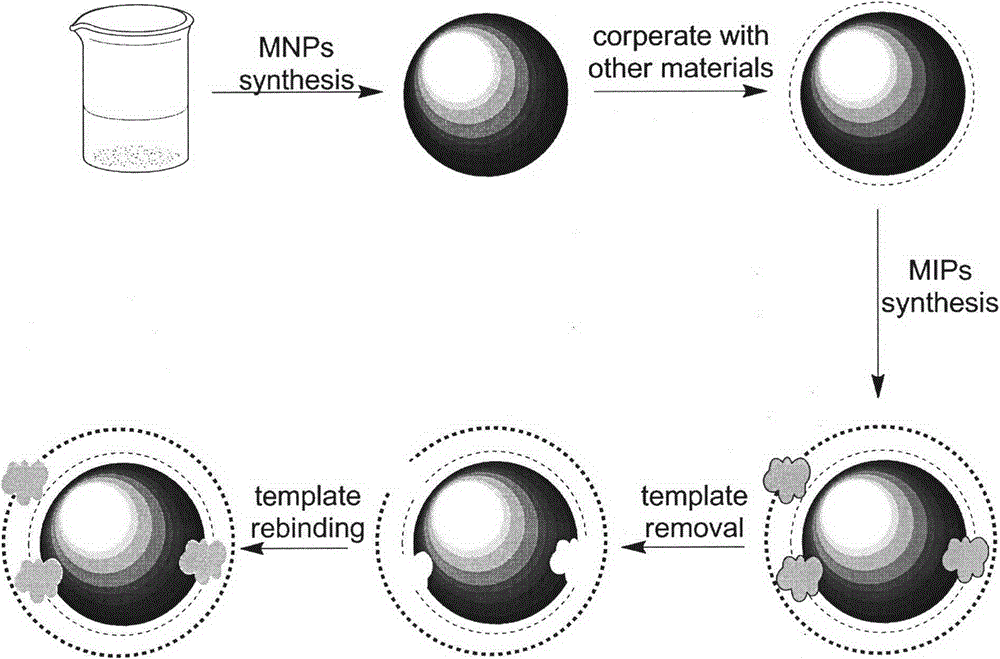
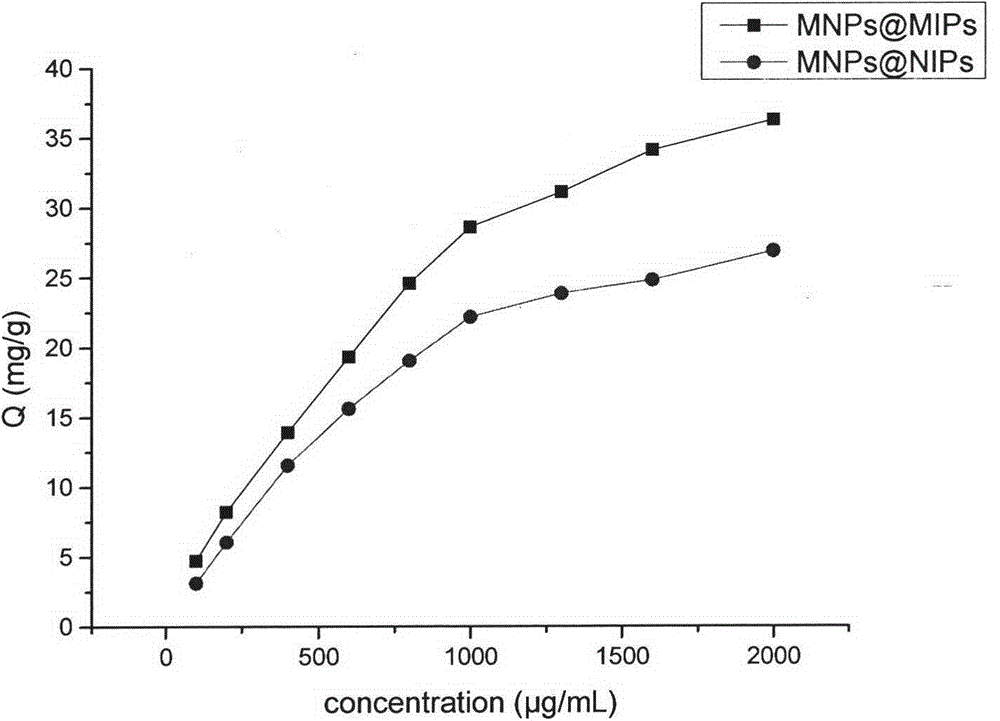
Examples
Embodiment 1
[0023] Add 2.4g of ferric chloride, 3.4g of sodium acetate and 3.4g of sodium acrylate into a mixed solvent consisting of 33.75mL of ethylene glycol and 11.25mL of diethylene glycol, and ultrasonically obtain a yellow mixed solution for 1h, which is then transferred to polytetrafluoroethylene Place in a reaction kettle made of ethylene, seal it, and place it in a muffle furnace to react for 10 hours. After the reaction, cool to room temperature, wash with methanol and water for several times, and vacuum-dry at 60°C to constant weight for later use;
[0024] Add 1mmol of levofloxacin and 4mmol of methacrylic acid into 10mL of dimethyl sulfoxide, mix, shake for 2 hours, and obtain a pre-assembly solution for later use;
[0025] Add 1.0 g of the above-prepared magnetic microspheres to 4 mL of dimethyl sulfoxide for ultrasonic dispersion, add the above-prepared pre-assembly solution, 20 mmol of ethylene glycol dimethacrylate and 50 mg of azobisisobutyronitrile, and ultrasonically d...
Embodiment 2
[0028] Add 2.4g of ferric chloride, 3.4g of sodium acetate and 3.4g of sodium acrylate into a mixed solvent consisting of 33.75mL of ethylene glycol and 11.25mL of diethylene glycol, and ultrasonically obtain a yellow mixed solution for 1h, which is then transferred to polytetrafluoroethylene Place in a reaction kettle made of ethylene, seal it, and place it in a muffle furnace to react for 10 hours. After the reaction, cool to room temperature, wash with methanol and water for several times, and vacuum-dry at 60°C to constant weight for later use;
[0029] Add 1mmol of levofloxacin and 4mmol of methacrylic acid into 10mL of dimethyl sulfoxide, mix, shake for 2 hours, and obtain a pre-assembly solution for later use;
[0030] Add 1.0 g of the above-prepared magnetic microspheres to 4 mL of dimethyl sulfoxide for ultrasonic dispersion, add the above-prepared pre-assembly solution, 20 mmol of ethylene glycol dimethacrylate and 50 mg of azobisisobutyronitrile, and ultrasonically d...
Embodiment 3
[0033] Add 2.4g of ferric chloride, 3.4g of sodium acetate and 3.4g of sodium acrylate into a mixed solvent consisting of 33.75mL of ethylene glycol and 11.25mL of diethylene glycol, and ultrasonically obtain a yellow mixed solution for 1h, which is then transferred to polytetrafluoroethylene Place in a reaction kettle made of ethylene, seal it, and place it in a muffle furnace to react for 10 hours. After the reaction, cool to room temperature, wash with methanol and water for several times, and vacuum-dry at 60°C to constant weight for later use;
[0034] Add 1mmol of levofloxacin and 4mmol of acrylic acid into 10mL of dimethyl sulfoxide, mix, shake for 2 hours, and obtain a pre-assembly solution for later use;
[0035] Add 1.0 g of the above-prepared magnetic microspheres into 4 mL of dimethyl sulfoxide for ultrasonic dispersion, add the above-prepared pre-assembly solution, 20 mmol of ethylene glycol dimethacrylate and 50 mg of azobisisobutyronitrile, and ultrasonically dis...
PUM
 Login to View More
 Abstract
Description
Claims
Application Information
 Login to View More