Anionic framework polymer for extracting muramidase, preparation method of anionic framework polymer

An anionic skeleton and polymer technology, applied in the field of polymer material preparation, can solve the problem of small pore size of ion exchange resin, and achieve the effect of large freeness, easy electrostatic attraction, and large pore size

CN105013453AActive Publication Date: 2015-11-04NINGBO UNIV
5 Cites 5 Cited by

Patent Information

Authority / Receiving Office
CN · China
Patent Type
Applications(China)
Current Assignee / Owner
Publication Date
2015-11-04

Smart Images

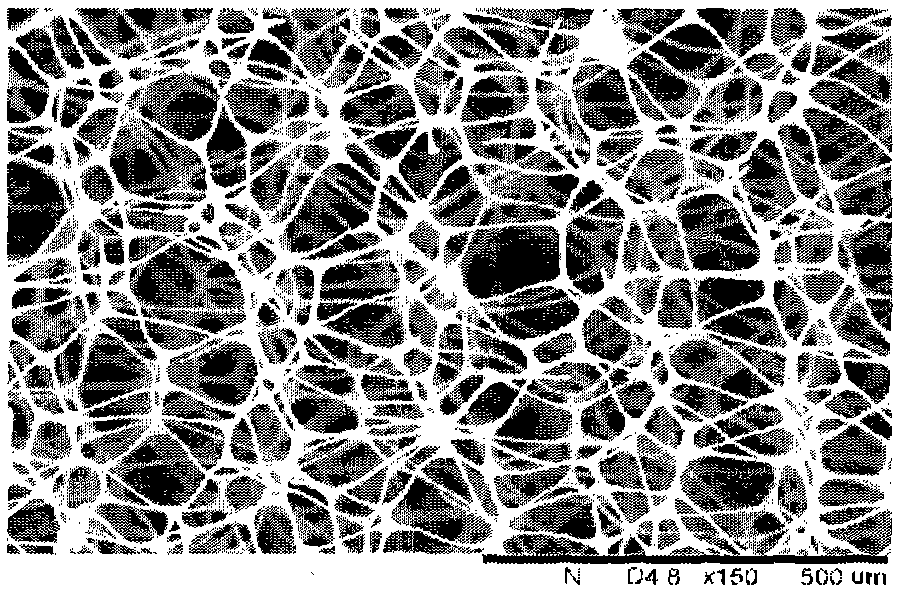
  • Figure 1
    Figure 1
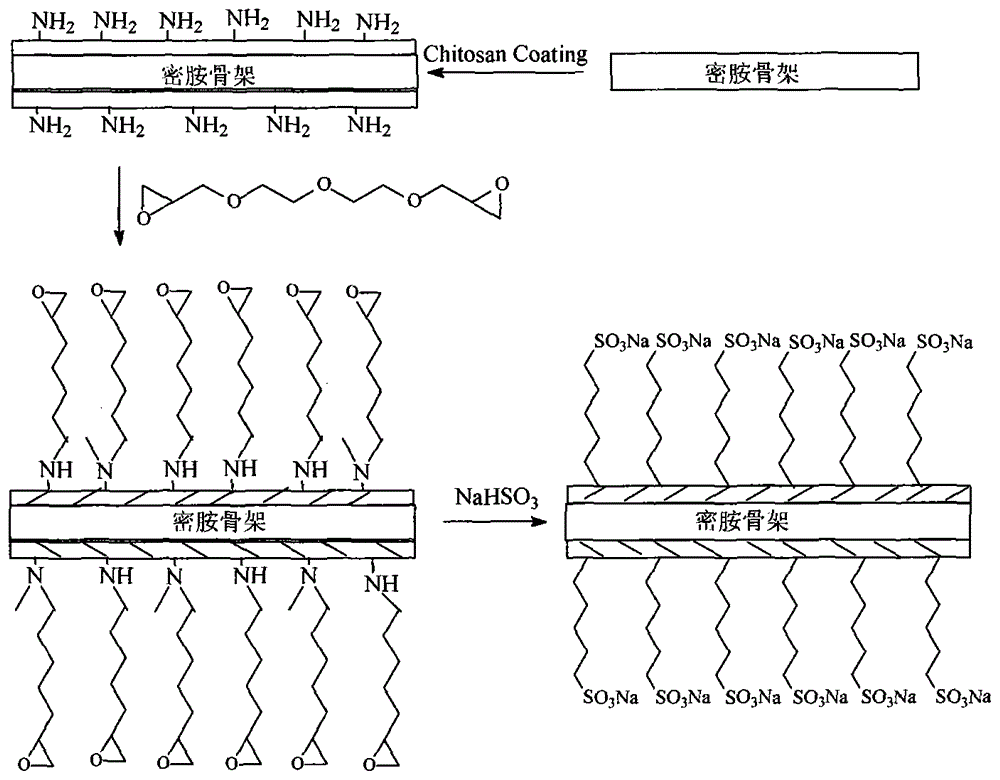
  • Figure 2
    Figure 2
Patent Text Reader

Abstract

The invention discloses an anionic framework polymer for extracting muramidase, a preparation method of the anionic framework polymer, and an application of the anionic framework polymer in the muramidase extraction. A special three-dimensional framework structure of existing melamine sponge is used; a framework is wrapped with a chitosan coating; diethylene glycol diglycidyl ether reacts with the chitosan coating, so that the chitosan coating is crosslinked, and the surface of the chitosan coating is provided with suspended epoxy groups; the epoxy groups react with sodium hydrogen sulfite to obtain sulfonate anions; in an ion exchange step in the muramidase extraction, the purification operation is carried out by taking the anionic framework polymer as an integral column, so that the surface of a material and muramidase are subjected to electrostatic interaction, the defect of poor diffusivity of muramidase macromolecules is overcome, the adsorption capacity of the material is improved, and the production efficiency of the muramidase is improved. A framework material has the advantages that the operation is easy and convenient, the repeated use is realized, the cost is low and the efficiency is high.
Need to check novelty before this filing date? Find Prior Art

Description

technical field

[0001] The invention relates to the technical field of bioactive substance extraction, in particular to a method for rapidly and efficiently extracting lysozyme by using an anionic skeleton polymer and a preparation method for the polymer material. Background technique

[0002] Lysozyme is a hydrolase that specifically acts on the cell wall of microorganisms. It can cut off the link between the β-1,4-glycosidic bonds between N-acetylglucosamine and N-acetylmuramic acid in peptidoglycan, destroying The peptidoglycan scaffold, which cracks the cell wall, causes bacterial lysis and is thus a very effective antimicrobial agent. Lysozyme can be used as a preservative and antistaling agent for cooked aquatic products and cooked meat products. Adding lysozyme to cakes, beverages and fruit juices with a pH of 6.0 to 7.5 can also prevent microbial reproduction. Lysozyme has the function of destroying the structure of the bacterial cell wall, and this enzyme is used t...

Examples

Embodiment Construction

[0018] Below in conjunction with embodiment the present invention is described in further detail.

[0019] Material preparation: Dissolve commercial chitosan in dilute acetic acid aqueous solution (the concentration of 1-2wt.% if the viscosity is greater than 400mPa; the concentration of 2-3wt.% if the viscosity is in the range of 200-400mPa), add a small amount of cations Surfactant (such as dodecyltrimethylammonium chloride, the content in the solution is 0.1 ~ 0.2wt. %), soak the cylindrical melamine sponge (diameter 10cm, thickness 20cm) in the solution, after taking it out Use a vacuum to suck off the excess solution to ensure that no solution flows out after standing still, then dry it in an oven at 60°C for 2 to 3 hours, and then soak it in a sodium carbonate solution with a pH of 9 to 10 for 20 to 30 minutes. After chitosan is deprotonated, an insoluble film is formed to cover the surface of the skeleton. The material is washed with clear water and then soaked in 10-12...