
Photodetector and preparation method based on graphene/boron-doped silicon quantum dots/silicon
A photodetector and quantum dot technology, applied in the field of photoelectric detection, can solve the problems of non-absorption and zero infrared light, and achieve high optical response, simple preparation process and fast response speed
- Summary
- Abstract
- Description
- Claims
- Application Information
AI Technical Summary
Problems solved by technology
Method used
Image

Examples
Embodiment Construction
[0029] The present invention will be further described below in conjunction with the accompanying drawings and embodiments.
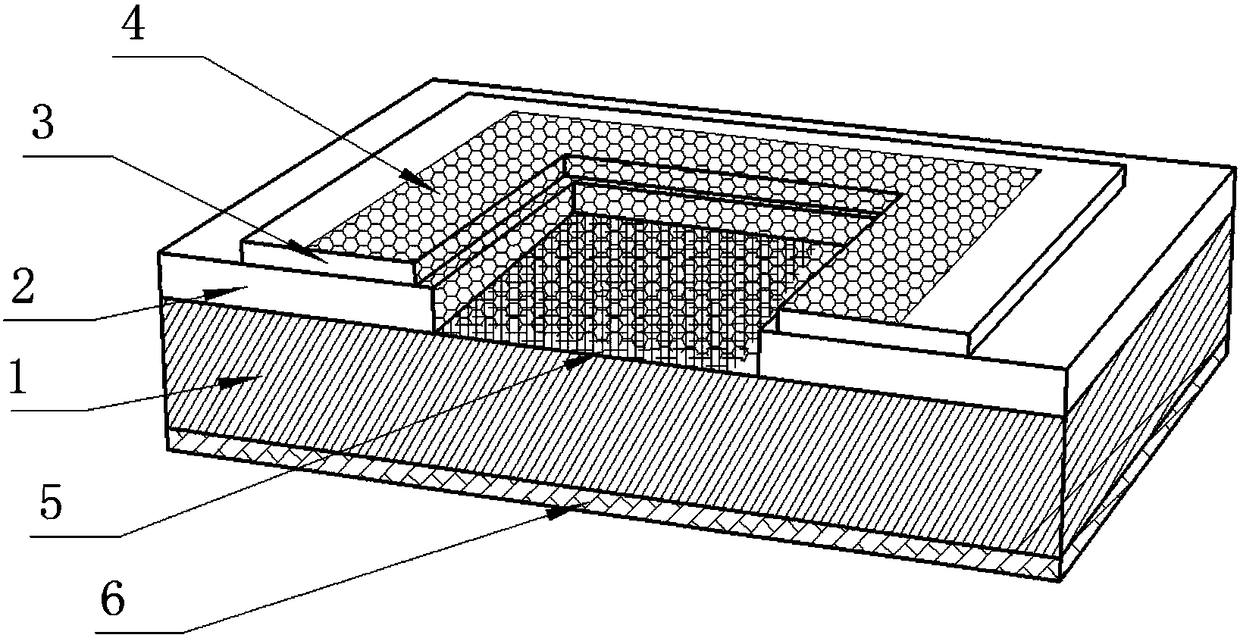
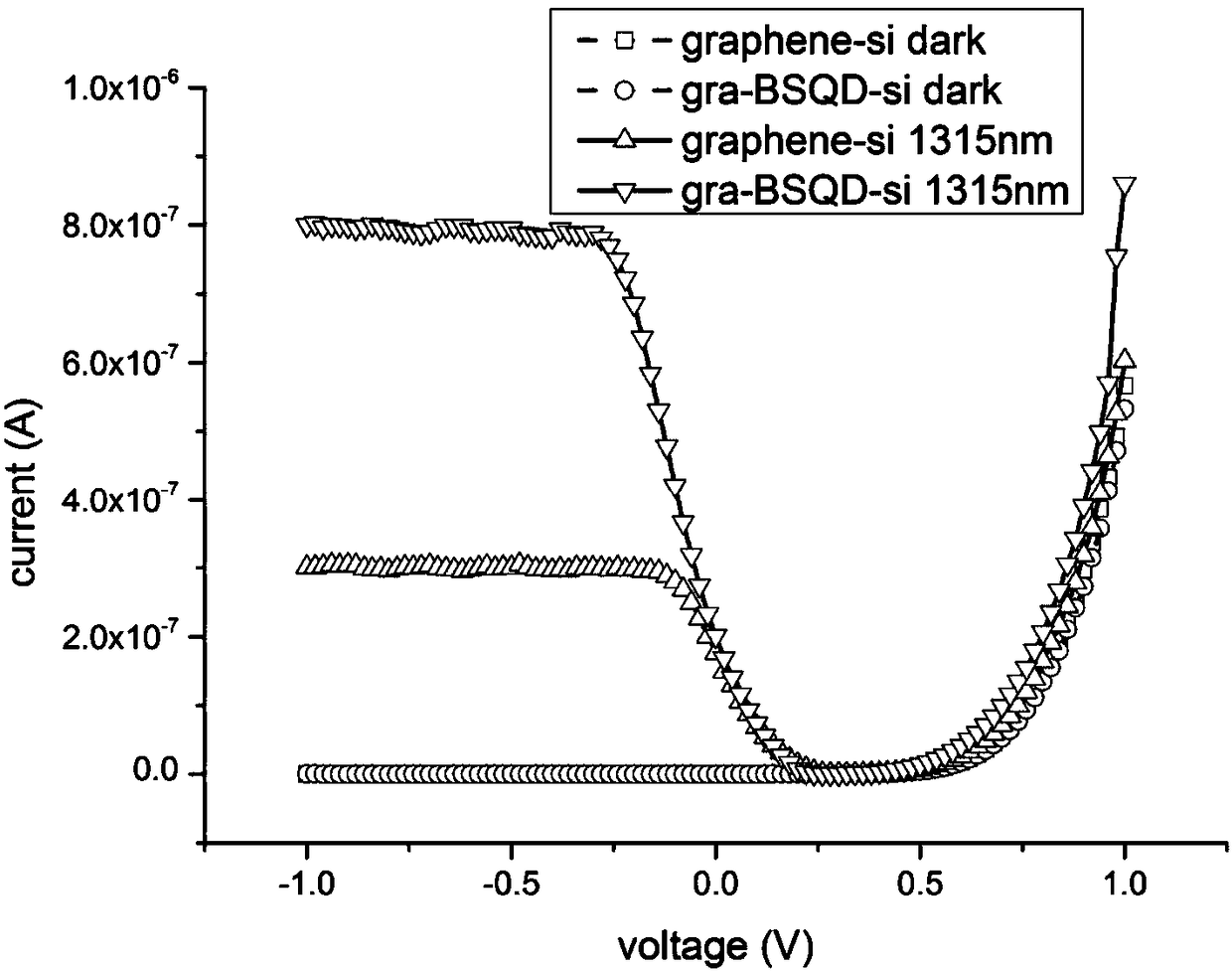
[0030] Graphene / silicon Schottky junction is a commonly used device structure and has been reported in many optoelectronic devices. Boron-doped silicon quantum dots have absorption in the visible near-infrared and even mid-infrared, especially the mid-infrared has a strong absorption peak, there is a local plasmon effect (LSPR), the preparation process is simple, and it is widely used in the field of photoelectric detection. Since the boron-doped silicon quantum dot film is in contact with graphene, it will transfer charges to graphene, and it is also an anti-reflection film to reduce surface recombination, which can solve the dead layer problem and improve infrared optical response. A thin layer of boron-doped silicon quantum dots is added to graphene and silicon. On the one hand, the strong absorption of boron-doped silicon quantum dots in the infrare...
PUM
 Login to View More
 Abstract
Description
Claims
Application Information
 Login to View More