Iridium complex, preparation method, application and organic electroluminescence device
A technology of iridium complexes and luminescence, which is applied in the direction of electric solid devices, electrical components, luminescent materials, etc., can solve the problems of efficiency reduction, efficiency roll-off, etc., and achieve the effects of excellent performance, excellent device performance, and high yield
- Summary
- Abstract
- Description
- Claims
- Application Information
AI Technical Summary
Problems solved by technology
Method used
Image

Examples
preparation example Construction
[0041] The invention also discloses a preparation method of the iridium complex. This preparation method can prepare the above-mentioned iridium complex. Specifically, the preparation method includes the following steps:
[0042] Step S10: adding the ligand and iridium acetylacetonate into glycerol, heating and reacting, and then cooling to obtain a first solution.
[0043] Wherein, the ligand is a boron-containing quinazoline derivative.
[0044] Wherein, the molar ratio of the ligand to iridium acetylacetonate is 4:1-7:1, the heating reaction temperature is 220-240° C., the heating reaction time is 24-72 hours, and cooling to room temperature is sufficient.
[0045] Step S20: removing the solvent of the first solution, and extracting to obtain an organic phase.
[0046] Solvent removal can be achieved by distillation under reduced pressure. Extraction can be performed with dichloromethane. The organic phase can be concentrated.
[0047] Step S30: Separating the organic...
Embodiment 1
[0062] The iridium complex in Example 1 is
[0063] The preparation process of the iridium complex of Example 1 is as follows: the quinazoline ligand and iridium acetylacetonate with a molar ratio of 5:1 are dissolved in glycerol solution, heated to 240 ° C, reacted for 36 hours and cooled to room temperature to obtain the first solution. The first solution was distilled under reduced pressure to remove glycerin, then water and methylene chloride were added to the residue, and the liquid was separated to obtain an organic phase, which was concentrated and purified by column chromatography to obtain an iridium complex (yield: 37.6%). The response looks like this:
[0064]
[0065] Gained iridium complex is analyzed as follows by proton nuclear magnetic resonance spectrum and high-resolution mass spectrometry: 1 H NMR (400MHz, CDCl 3 )δ9.24(s, 1H), 7.91(d, J=12.0Hz, 6H), 7.86(s, 2H), 7.77(s, 3H), 7.51(s, 5H), 2.47(s, 3H). HRMS (ESI-TOF) calcd for C 81 h 60 B 3 IrN 6...
Embodiment 2
[0067] An organic electroluminescent device was prepared by using the iridium complex of Example 1 as a luminescent material.
[0068] The classic structure of an organic electroluminescent device is: a substrate, an anode, a hole transport layer, an organic electroluminescent layer, an electron transport layer, and a cathode are stacked in sequence.
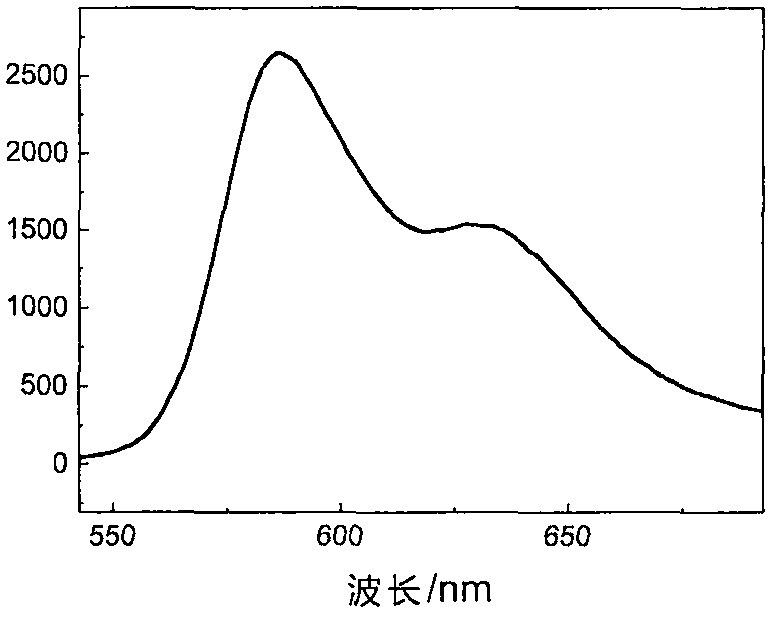
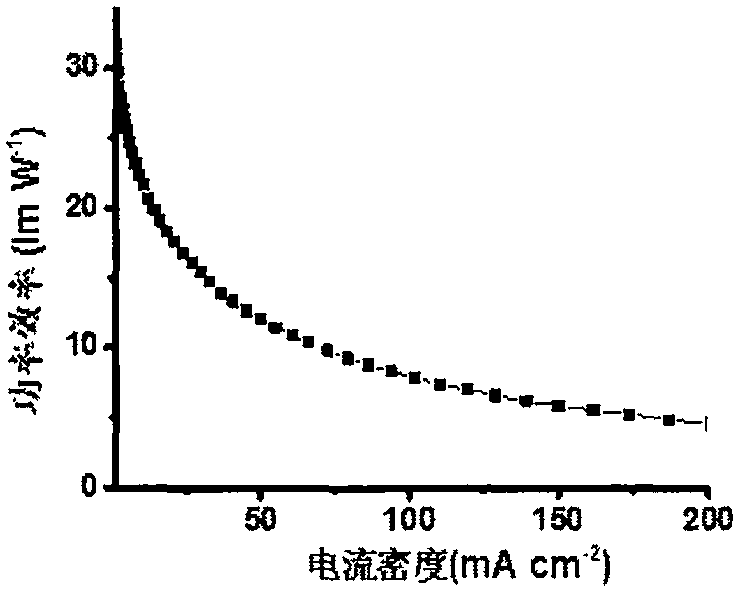
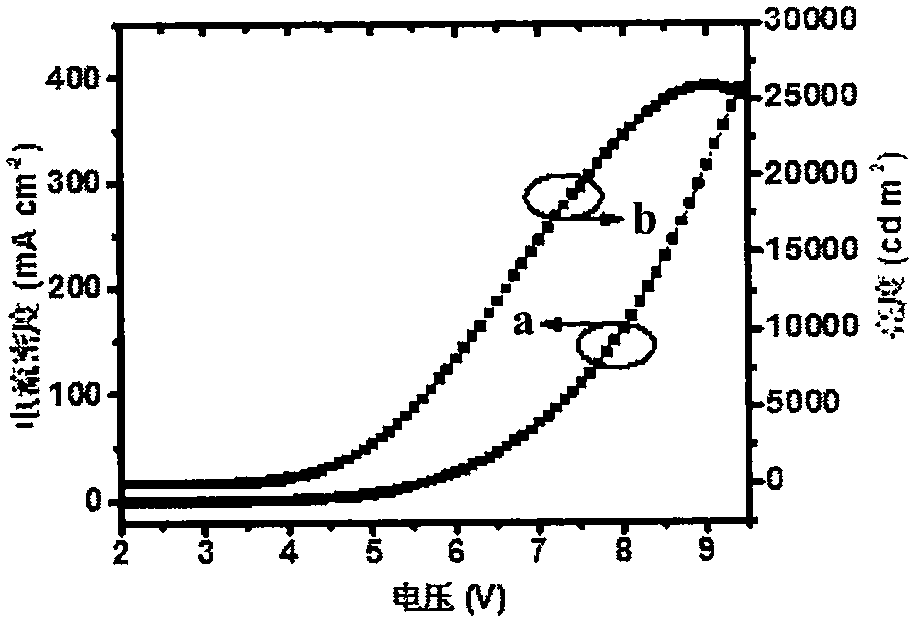
[0069] The substrate in Example 2 is glass, the anode material is indium tin oxide (ITO), and the hole transport layer uses 4,4'-cyclohexyl bis[N,N-bis(4-methylphenyl)aniline (TAPC ). The structural formula of the TAPC is: The electron transport layer material uses 3,3'-(5'-(3-(pyridin-3-yl)phenyl)-[1,1':3',1"-triphenyl]-3,3"- diyl) dipyridine (TmPyPB). The structural formula of TmPyPB is: The thickness is 60nm, and the evaporation rate is 0.05nm / s. The cathode is LiF / Al, the thickness of LiF is 1nm, the evaporation rate is 0.01nm / s, the thickness of Al is 100nm, and the evaporation rate is 0.2nm / s. The organic electrolu...
PUM
 Login to View More
 Abstract
Description
Claims
Application Information
 Login to View More
 - R&D
- Intellectual Property
- Life Sciences
- Materials
- Tech Scout
- Unparalleled Data Quality
- Higher Quality Content
- 60% Fewer Hallucinations
Browse by: Latest US Patents, China's latest patents, Technical Efficacy Thesaurus, Application Domain, Technology Topic, Popular Technical Reports.
© 2025 PatSnap. All rights reserved.Legal|Privacy policy|Modern Slavery Act Transparency Statement|Sitemap|About US| Contact US: help@patsnap.com