
Preparation method of a ph-temperature synergistically responsive drug-releasing bone cement
A synergistic response, bone cement technology, used in pharmaceutical formulations, drug delivery, pharmaceutical science and other directions, can solve problems such as uncontrollable drug release, and achieve the effect of improving volume shrinkage, improving biocompatibility, and large application value.
- Summary
- Abstract
- Description
- Claims
- Application Information
AI Technical Summary
Problems solved by technology
Method used
Image

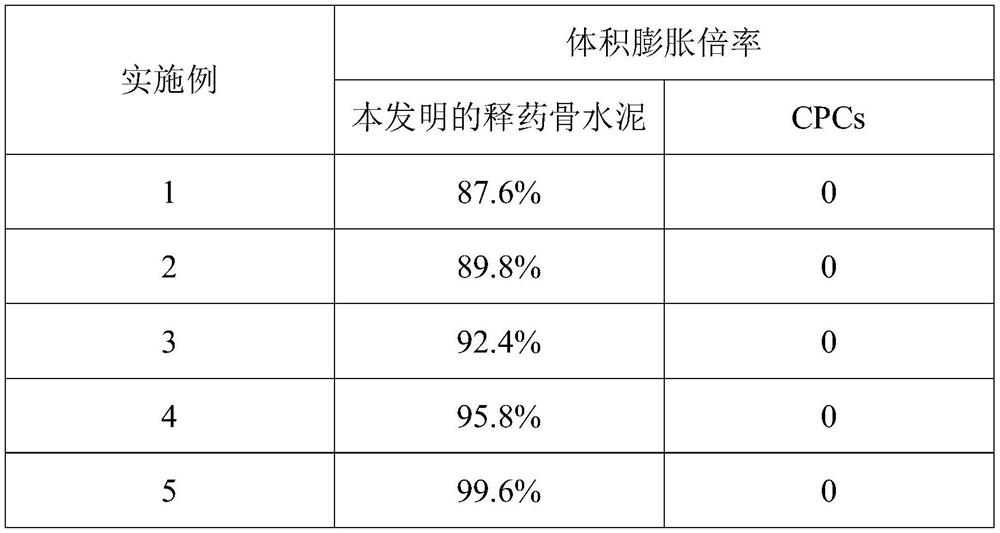
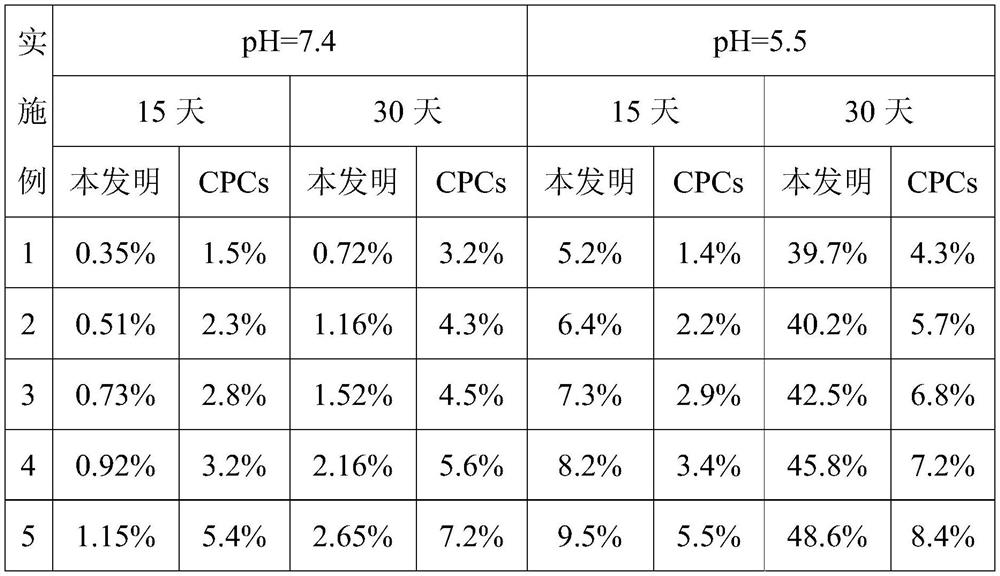
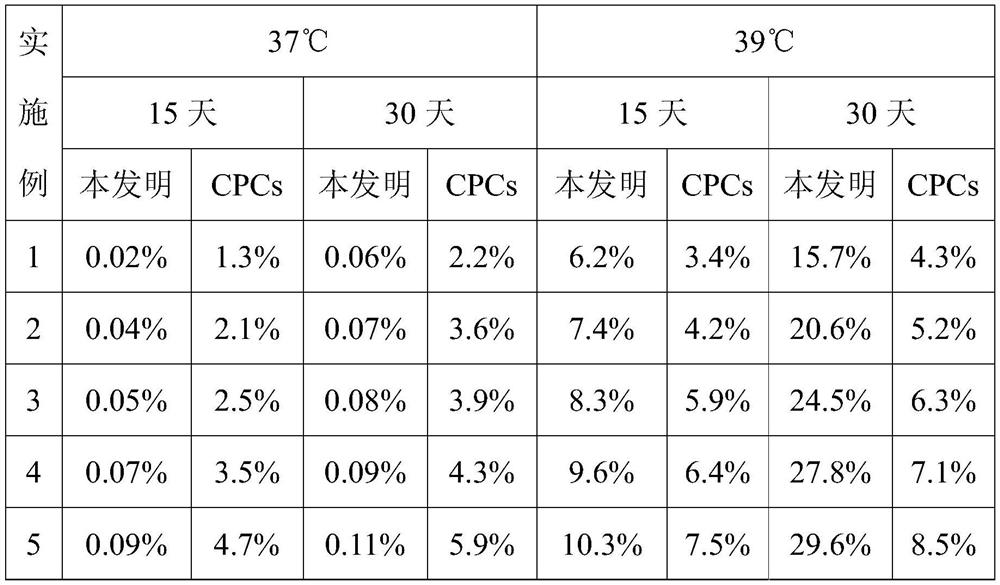
Examples
Embodiment 1
[0053] The preparation method of a pH-temperature synergistic response drug-releasing bone cement of the present invention is specifically implemented according to the following steps:
[0054] Step 1, preparing drug-loaded carbon nanotubes;
[0055] Step 1.1, weigh 0.5g single-walled carbon nanotubes and 10ml acid solution H 2 SO 4 / HNO 3 (Mixed acid of 98% concentrated sulfuric acid and 68% concentrated nitric acid, the volume ratio is 3:1) mixed to activate the carboxyl group, ultrasonicated at room temperature for 2 hours, diluted with deionized water, filtered with suction, washed with deionized water until neutral , dried under vacuum at room temperature for 16 hours to obtain carboxylated single-walled carbon nanotubes (SWCNT-COOH);
[0056] Step 1.2, weigh 0.5g of carboxylated single-walled carbon nanotubes (SWCNT-COOH) and 0.2g of vancomycin hydrochloride dissolved in 10ml of deionized water, mix the two, stir at room temperature for 2 hours, and vacuum dry for 16 ...
Embodiment 2
[0064] The preparation method of a pH-temperature synergistic response drug-releasing bone cement of the present invention is specifically implemented according to the following steps:
[0065] Step 1, preparing drug-loaded carbon nanotubes;
[0066] Step 1.1, weigh 1g of single-walled carbon nanotubes and 15ml of acid solution H 2 SO 4 / HNO 3 (The mixed acid of 98% concentrated sulfuric acid and 68% concentrated nitric acid has a volume ratio of 3:1) and mix them to activate the carboxyl groups. Ultrasound at room temperature for 3 hours, dilute with deionized water, filter with suction, wash with deionized water until neutral, Vacuum drying at room temperature for 18 hours to obtain carboxylated single-walled carbon nanotubes (SWCNT-COOH);
[0067] Step 1.2, weigh 1g of carboxylated single-walled carbon nanotubes (SWCNT-COOH) and 0.4g of vancomycin hydrochloride dissolved in 15ml of deionized water, mix the two at room temperature and stir for 4 hours, then vacuum dry for...
Embodiment 3
[0075] The preparation method of a pH-temperature synergistic response drug-releasing bone cement of the present invention is specifically implemented according to the following steps:
[0076] Step 1, preparing drug-loaded carbon nanotubes;
[0077] Step 1.1, weigh 1.5g single-walled carbon nanotubes and 20ml acid solution H 2 SO 4 / HNO 3 (The mixed acid of 98% concentrated sulfuric acid and 68% concentrated nitric acid has a volume ratio of 3:1) mixed to activate the carboxyl groups, ultrasonicated at room temperature for 4 hours, diluted with deionized water, filtered with suction, washed with deionized water until neutral, Vacuum drying at room temperature for 20 hours to obtain carboxylated single-walled carbon nanotubes (SWCNT-COOH);
[0078] Step 1.2, weigh 1.5g of carboxylated single-walled carbon nanotubes (SWCNT-COOH) and 0.6g of vancomycin hydrochloride dissolved in 20ml of deionized water, mix the two at room temperature and stir for 4 hours, then vacuum dry for...
PUM
 Login to View More
 Abstract
Description
Claims
Application Information
 Login to View More