Rapid detection capillary tube for visually detecting heavy metal mercury as well as preparation method and application of rapid detection capillary tube
A capillary and heavy metal technology, applied in the field of mercury ion detection, can solve expensive problems, achieve the effects of saving processing costs, simple operation, and high sensitivity
- Summary
- Abstract
- Description
- Claims
- Application Information
AI Technical Summary
Problems solved by technology
Method used
Image

Examples
Embodiment 1
[0029] Embodiment 1 preparation is used for detecting the fast detection capillary of mercury:
[0030] Clean the glass substrate with detergent to remove surface dirt. A NaOH solution with a mass fraction of 25% was prepared; a capillary with a specification of 100 mm, an inner diameter of 1.8 mm, and an outer diameter of 2.2 mm was soaked in the 25% NaOH solution for 30 minutes of soaking reaction.
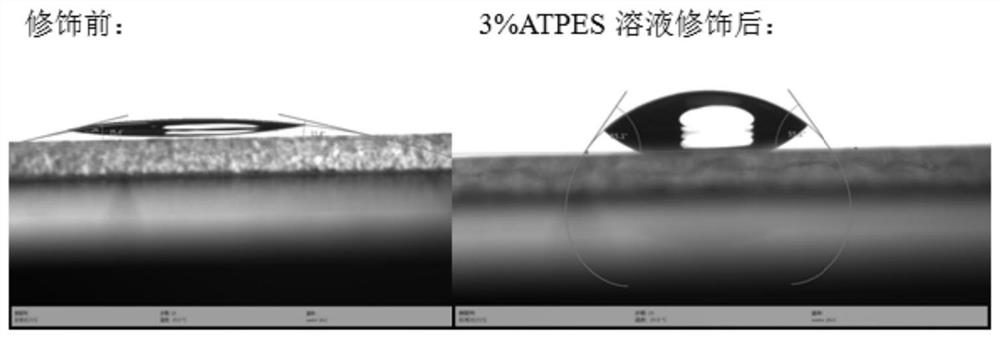
[0031] Put the pretreated capillary into 3% ATPES solution, soak for 30min, take it out, wash it thoroughly with absolute ethanol, and put it in a drying oven at 120°C for 1.5h. Such as figure 1 , it can be seen that the capillary contact angle changes significantly in the 3% ATPES solution.
[0032] The capillary was completely submerged in 25% glutaraldehyde (GA) aqueous solution overnight, and then fully washed with ultrapure water and fully dried with nitrogen. Prepare phycocyanin solution (2 mg / mL) according to the ratio of 1 mg phycocyanin to 500 μL deionized water, imm...
Embodiment 2
[0033] Embodiment 2 uses a mercury detection capillary to detect mercury ions:
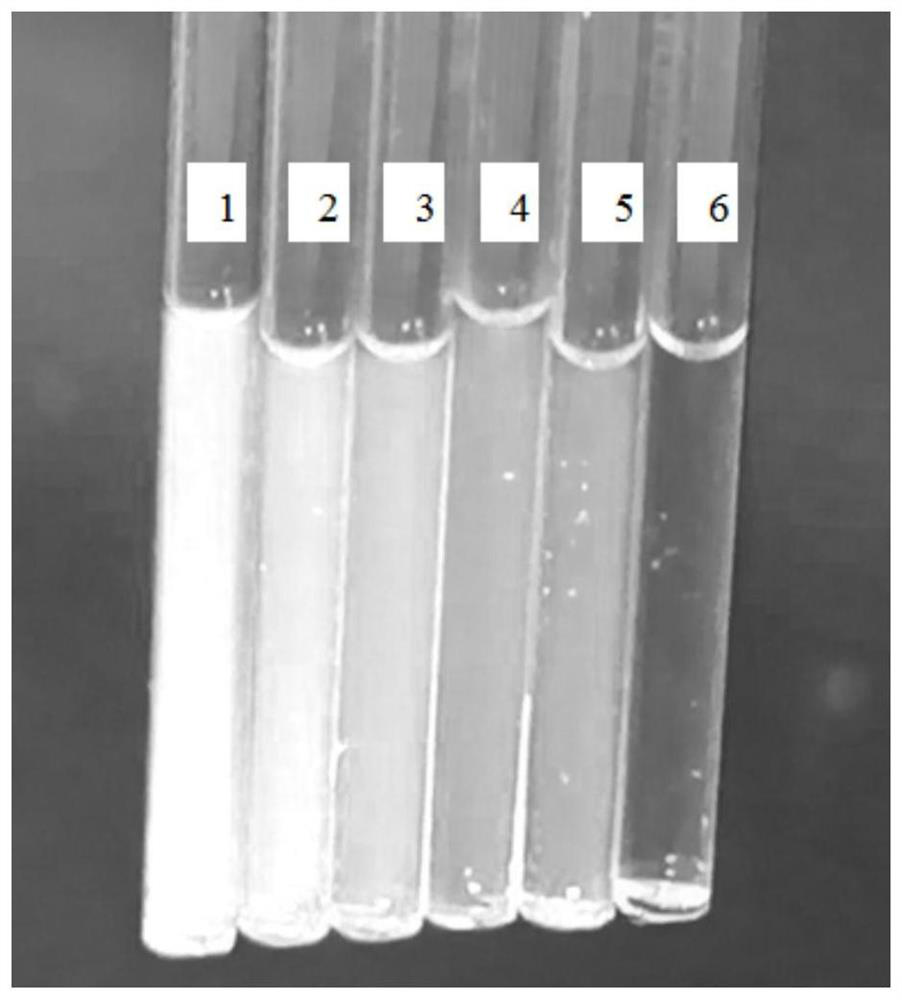
[0034] The detection capillary mouth obtained in Example 1 is contacted with the liquid sample to be tested, and the sample is sucked into the capillary to an adsorption height of 20 mm (the fixed protein content is 0.18-0.28 mg), and the absorbed sample is observed (No. 1 to No. 6 samples contain Hg 2+ Whether the capillary with the concentration of 0nM, 30nM, 40nM, 50nM, 60nM, 70nM) can show red fluorescence under a 365nm ultraviolet lamp. Such as figure 2 Medium No. 1 sample tube with high red fluorescence intensity does not contain Hg 2+ , The red fluorescence intensity of sample tubes 2 to 6 is low and the fluorescence intensity gradually decreases. The detection limit of the capillary is 25-30nM, and the detection process only takes a few minutes.
Embodiment 3
[0035] Example 3 Effects of Different Concentrations of Pretreatment Solutions and Different Concentrations of Silane Coupling Agents on Capillary Surface Contact Angle
[0036] Referring to Example 1, only the mass fraction of NaOH in the pretreatment solution NaOH solution was changed, and the others remained unchanged. The specific detection performance results are shown in Table 1 below. It can be seen that the capillary contact angle is the smallest in 25% NaOH solution. Therefore, this condition was taken as the optimal pretreatment condition.
[0037] Table 1 The contact angle test results after treatment with different concentrations of NaOH solution
[0038]
[0039] Note: The smaller the contact angle, the greater the wettability of the liquid on the capillary glass surface, and the easier the phycocyanin is adsorbed.
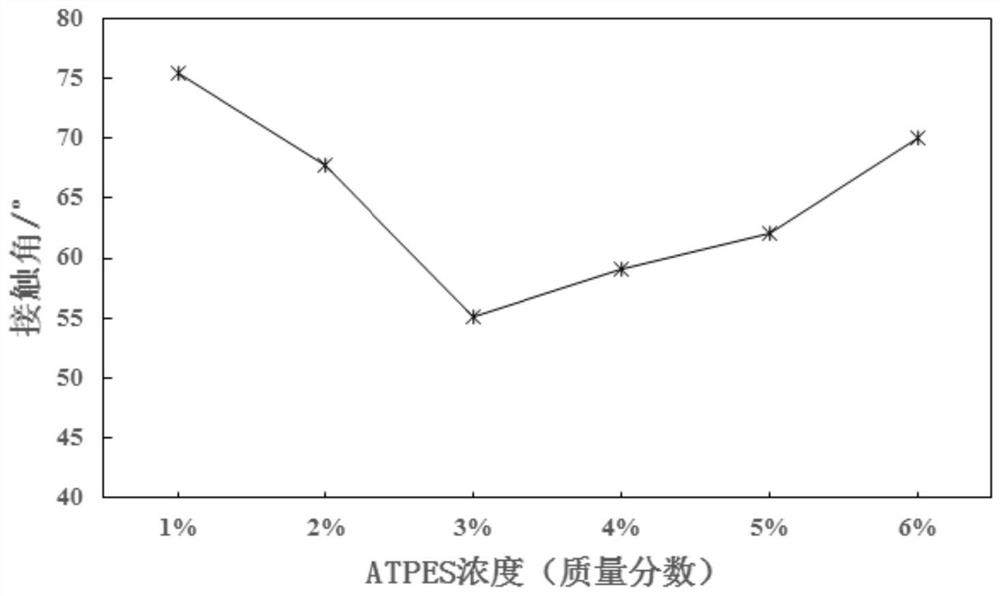
[0040] With reference to Example 1, only the concentration of the silane coupling agent is changed, and the others remain unchanged. The specifi...
PUM
| Property | Measurement | Unit |
|---|---|---|
| Concentration | aaaaa | aaaaa |
Abstract
Description
Claims
Application Information
 Login to View More
 - R&D
- Intellectual Property
- Life Sciences
- Materials
- Tech Scout
- Unparalleled Data Quality
- Higher Quality Content
- 60% Fewer Hallucinations
Browse by: Latest US Patents, China's latest patents, Technical Efficacy Thesaurus, Application Domain, Technology Topic, Popular Technical Reports.
© 2025 PatSnap. All rights reserved.Legal|Privacy policy|Modern Slavery Act Transparency Statement|Sitemap|About US| Contact US: help@patsnap.com