
Preparation method of AuCu-FeMoS electrocatalyst for nitrogen reduction
An aucu-femos and electrocatalyst technology, applied in the direction of electrodes, electrolysis processes, electrolysis components, etc., to reduce energy consumption and environmental pollution, improve nitrogen reduction yield and product selectivity, and broad application prospects
Patent Information
- Authority / Receiving Office
- CN · China
- Current Assignee / Owner
- Publication Date
- 2021-09-21
Smart Images
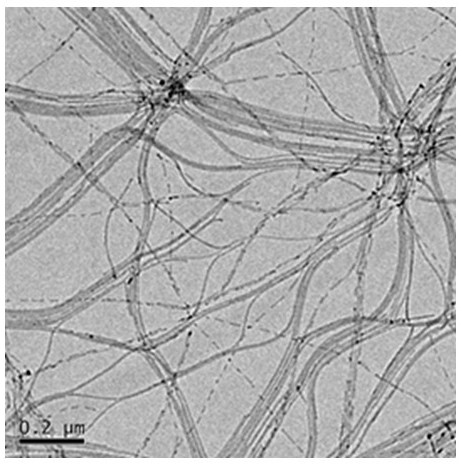
Figure 1 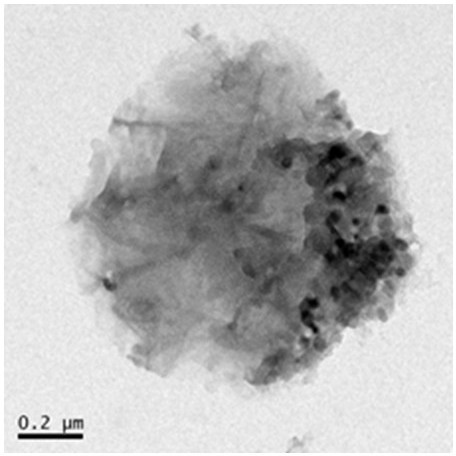
Figure 2 
Figure 3
Abstract
Description
technical field
[0001] The invention belongs to the technical field of nitrogen reduction catalysts, and in particular relates to a method for preparing an AuCu-FeMoS electrocatalyst for nitrogen reduction. Background technique
[0002] The annual consumption of chemical fertilizers in the world reaches as much as 200 million tons, among which ammonia is an important raw material for synthetic fertilizers. The Haberbosch scheme is the most important way for the ammonia industry in the 20th century, but it requires high temperature and high pressure conditions, resulting in huge energy consumption and environmental pollution. Electrocatalytic nitrogen reduction is a simple and energy-saving new solution, so it is of great significance to synthesize a catalyst that can efficiently and selectively catalyze nitrogen reduction.
[0003] The alloy catalyst has an efficient and stable composition structure. The theoretical calculation and experimental results show that the AuCu al...
Examples
Embodiment
[0019] Prepare 2 mL of a mixed solution of hexane and oleylamine at a volume ratio of 1:1, take 9.88 mg of tetrachloroauric acid hydrate and 1.33 mg of cuprous chloride in the mixed solution, stir rapidly to form a homogeneous solution, and dissolve the mixture in advance at room temperature. The prepared 1.4 mL volume ratio of 2:5 triisopropylsilane and hexane mixed solution was added to the above homogeneous solution, and it was left to stand at 60 °C until the color of the solution turned black and red to obtain the AuCu alloy nanowire catalyst. Depend on figure 1 It can be seen that the AuCu alloy nanowire catalyst prepared in this example has good flexibility, the diameter is as thin as 1.2 nm, and the length is several microns.
[0020] Dissolve 0.125 g of sodium molybdate hydrate and 0.21 g of ferric nitrate hydrate in 20 mL of water, and keep the pH value of the solution at 6.5, then add 0.5 g of L-cysteine and 50 mL of water and stir for 30 minutes to form a uniform...