However, even if any method of the above processes is employed to treat the
polyolefin material, we cannot obtain the material which absorbs water as much as several times of the original weight of the material.
However, when only the
ozone treatment is employed to improve the property of the material, very severe
reaction conditions are necessary and they cause the decrease in the
mechanical strength, which makes that the treatment is non-practical.
Furthermore, it is impossible to give a large water absorption property to the material only by the
ozone treatment.
In order to modify the materials by the other treatments mentioned above, the following problems are caused; the lowering in
mechanical strength of the material and the high cost for facilities and a
waste disposal system.
However, a
grafting of sufficient amount which gives a high hydrophilic property to polyolefins is not easily attained by the vinyl
monomer grafting according to the proposed method.
Moreover, the method requires the
hydrolysis treatment after the grafting, which causes a problem of taking time and effort.
Although this method gave practically a hydrophilic property to the nonwoven fabrics, the modified hydrophilic property does not give a durability in use.
For instance, the hydrophilic property obtained by this method is lost considerably by washing with a hot detergent solution.
In addition, when the materials such as films and casts other than a
nonwoven fabric were processed, sufficient hydrophilic property could not be given, or the
adhesive property by adhesives could not be improved.
Although the hydrophilic property of the obtained material is high, it has the problem that the durability of a hydrophilic property is not enough because the process is mere covering.
Although the polymeric materials which gave the hydrophilic property on the basis of this method can be manufactured by this method, the kind of polymeric materials which can be applied by the method is limited.
However, when the moldings of the polymeric materials containing additives such as a stabilizer and an
antioxidant are processed to obtain a high durable hydrophilic property, these additives may reduce the effect of the activation process.
However, the PC bracket gives a low durability in the
adhesive property to teeth and is easily polluted when it is used by fitting to teeth.
In addition, it was reported that the PC bracket produces
bisphenol A which is considered to give an environmental
pollution.
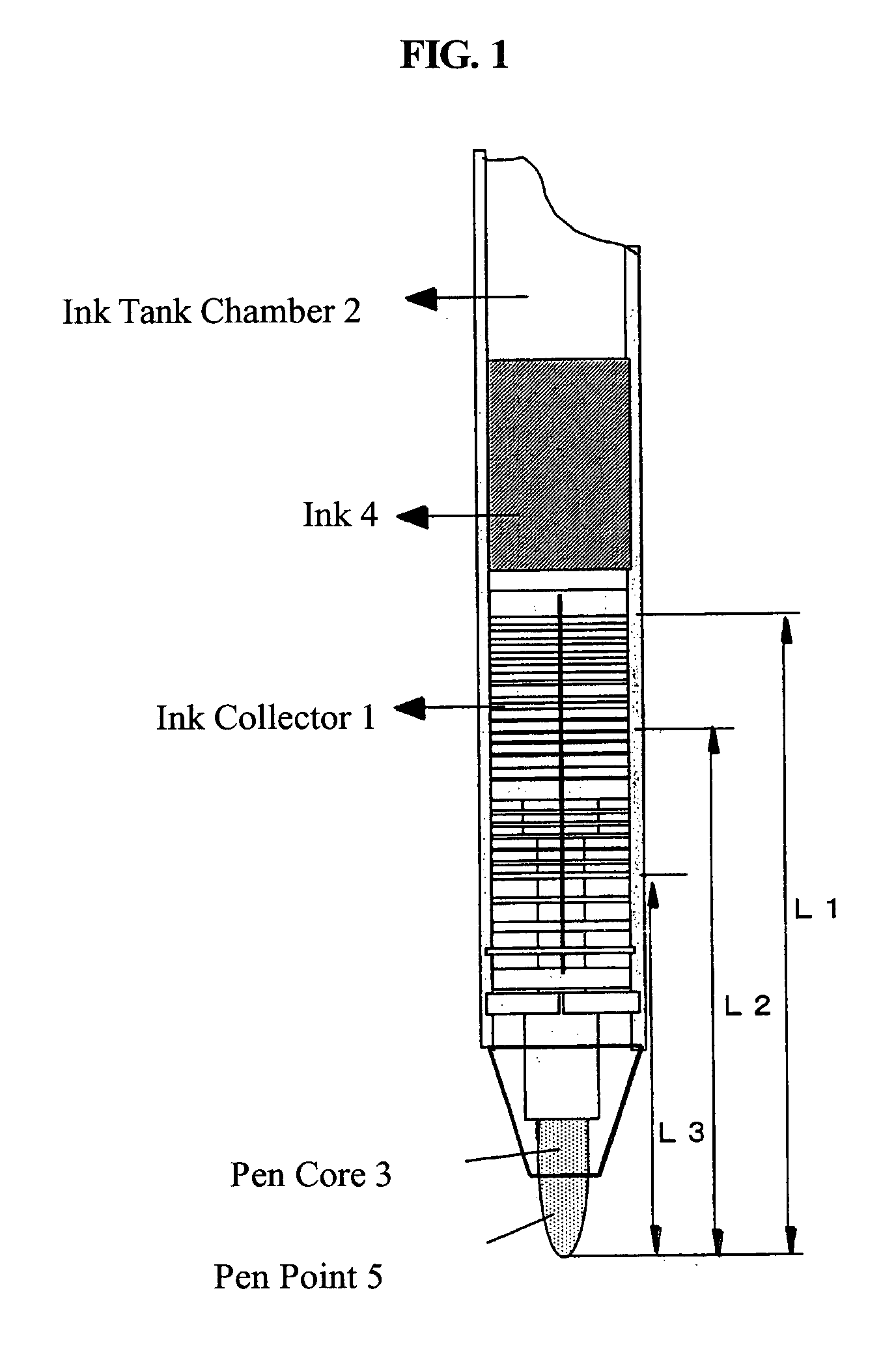
When a writing implement is used for a long time, a decrease in air pressure in the ink tank is caused by a decrease in the amount of ink.
As a result, when the decrease in air pressure is caused to excess, the amount of ink suitable for a good writing cannot be drawn from the nib of pens.
However, when an ink collector surface has an insufficient wettability to ink, the ink pressured in the ink tank cannot run smoothly into the ink-retaining channels of the collector and the retention power of the collector to the ink is too weak to keep the ink in the collector, without a capillary attraction.
As a result, the ink contained in the collector goes out of the ink-retaining channels easily and the ink outflows from the
air voids.
However, the treatment has the following problems; a dangerous working and the difficulty in the treatment of waste liquid.
In addition, when the washing of the collector after the treatment is not carried out completely, the following problems are considered to be caused; the waste liquid of the chemicals in the writing implement changes the quality of ink and causes a definite default in the writing implement.
Although the danger in the job is high, the wettability of the ink collector to ink decreases with the elapse of time and therefore, the treatment is not satisfied well.
The
plasma treatment is suitable for the surface treatment of materials with
smooth surface, but it causes a defect in the treatment of correctors having concavo-convex surface because it cannot give a good result to treat the concave part of correctors.
This problem is similarly seen in the treatment of pen cores made by
fiber bundles and porous materials with an ink absorptivity.
Namely, it is very difficult to treat the inner part of
fiber bundles and porous materials by a
plasma treatment.
However, as each of these methods has laborious processes and gives some problems in grafting such as a surface irregularity and a difficulty to obtain a controlled amount of graft polymers, it's application is not suitable for the treatment of materials such as correctors which need a precise structure.
However, it is very difficult to improve polyolefin resins by the well-known technique for hydrophilic improvement so far.
Especially, as cast products of polyolefin resins should contain many kinds of additives such as stabilizers for
polymer resins, chemical destaticizers, and so forth, their treatment to improve the hydrophilic property is impossible as far as the products are used as they are.
Therefore, there is not an excellent method to give the improvement expected in the hydrophilic property of collectors and the other members in writing implements as described above.
A battery separator made of
polyamide non-woven fabrics used from the past has a fault that it elutes
nitrogen oxides from the fiber and contracting the life of a
cell by repeat use.
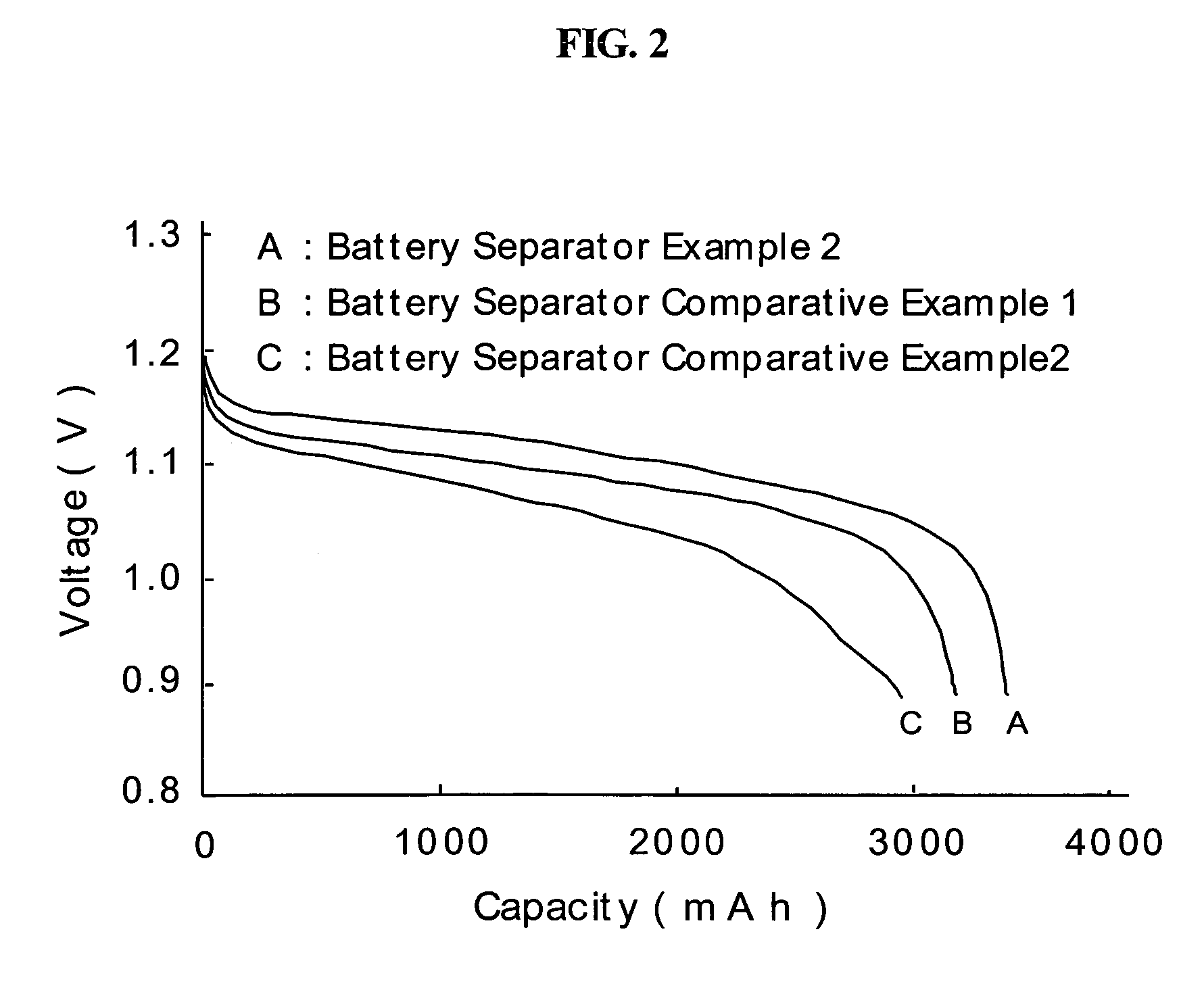
However, battery separators made of polyolefin materials with an excellent durable water absorption property are not seen at present.
Although various techniques mentioned in the above "(1) Prior Art for Modification of Surface Property of Polymeric Materials" have been applied for the modification of materials for battery separators and some methods have been proposed, the materials satisfying the requirements for battery separators are not obtained.


 Login to View More