

Silicone hydrogel lens with a grafted hydrophilic coating
a technology of hydrophilic coating and silicone hydrogel, which is applied in the direction of instruments, bandages, transportation and packaging, etc., can solve the problems of insufficient cost-efficiency, inadequate time-efficiency, and insufficient use of grafting methods in commercial products
- Summary
- Abstract
- Description
- Claims
- Application Information
AI Technical Summary
Benefits of technology
Problems solved by technology
Method used
Image

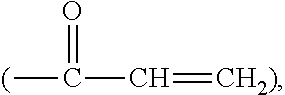
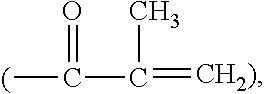
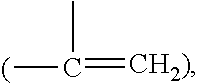
Examples
example 1
[0063]Oxygen Permeability Measurements. The oxygen permeability of a lens and oxygen transmissibility of a lens material is determined according to a technique similar to the one described in U.S. Pat. No. 5,760,100 and in an article by Winterton et al., (The Cornea: Transactions of the World Congress on the Cornea 111, H. D. Cavanagh Ed., Raven Press: New York 1988, pp 273-280), both of which are herein incorporated by reference in their entireties. Oxygen fluxes (J) are measured at 34° C. in a wet cell (i.e., gas streams are maintained at about 100% relative humidity) using a Dk1000 instrument (available from Applied Design and Development Co., Norcross, Ga.), or similar analytical instrument. An air stream, having a known percentage of oxygen (e.g., 21%), is passed across one side of the lens at a rate of about 10 to 20 cm3 / min., while a nitrogen stream is passed on the opposite side of the lens at a rate of about 10 to 20 cm3 / min. A sample is equilibrated in a test media (i.e....
example 2
[0074]Preparation of Chain-Extended Polydimethylsiloxane Vinylic Macromer with Terminal Methacrylate Groups (CE-PDMS Macromer)
[0075]In the first step, α,ω-bis(2-hydroxyethoxypropyl)-polydimethylsiloxane (Mn=2000, Shin-Etsu, KF-6001a) is capped with isophorone diisocyanate by reacting 49.85 g of α,ω-bis(2-hydroxyethoxypropyl)-polydimethylsiloxane with 11.1 g isophorone diisocyanate (IPDI) in 150 g of dry methyl ethyl ketone (MEK) in the presence of 0.063 g of dibutyltindilaurate (DBTDL). The reaction is kept for 4.5 h at 40° C., forming IPDI-PDMS-IPDI. In the second step, a mixture of 164.8 g of α,ω-bis(2-hydroxyethoxypropyl)-polydimethylsiloxane (Mn=3000, Shin-Etsu, KF-6002) and 50 g of dry MEK are added dropwise to the IPDI-PDMS-IPDI solution to which has been added an additional 0.063 g of DBTDL. The reactor is held for 4.5 h at 40° C., forming HO-PDMS-IPDI-PDMS-IPDI-PDMS-OH. MEK is then removed under reduced pressure. In the third step, the terminal hydroxyl-groups are capped wit...
example 3
[0077]Preparation of Contact Lenses with Monomeric Formulation
[0078]Into a brown bottle 15.75 g CE-PDMS, 10.25 g N-[tris(trimethylsiloxy)-silylpropyl]acrylamide (Tris-Am), 11.5 g N,N-dimethylacrylamide (DMA), 12 g 1-propanol (1-PrOH) and 0.5 g Darocur 1173 are subsequently weighted and added. The mixture is stirred for 15 minutes at ambient temperature with a magnetic stirrer. After 0.25 g LPEG 2000 (N-(carbonyl-methoxypolyethylene glycol-2000)-1,2-disteaoyl-sn-glycero-3-phosphoethanolamin, sodium salt) is added to the formulation, it is stirred for 15 min at 40° C. with a magnetic stirrer. Then the formulation is filtered with a 5 μm filter. Then 0.05 g Visitint-dispersion (5% Cu phthalcyanine dispersion in TRIS) is added and stirred at 40° C. for 15 min. Formulation is cooled dawn to room temperature for contact lens cast.
[0079]Lens is cast in spherical LS-3 Glass / Quartz molds using power of −3.00 D, and a mask diameter 14.29 mm. Cure lenses utilizing the Hamamatsu lamp with an in...
PUM
| Property | Measurement | Unit |
|---|---|---|
| temperature | aaaaa | aaaaa |
| lonoflux Diffusion Coefficient | aaaaa | aaaaa |
| elastic modulus | aaaaa | aaaaa |
Abstract
Description
Claims
Application Information
 Login to View More