This process has the
advantage that it is based on a simple technology for bio-degrading of material, which was hitherto distributed usually untreated on the areas under cultivation. Thus, according to the said invention, a degradation of waste and process water and by-products from the production of sugar and ethanol and biogenic material with all-season operation of the biogas reactor is possible, with which periodically accruing waste and process water is treated in large quantities of over 10,000 m3 per day and in the remaining periods by using
fresh water and recycling of substrate water in combination with renewable raw materials or organic material, it is possible to
exploit biogas and to use it for energy production throughout the year. Cleaned waste water is made available just like the accruing
sludge for fertilization and
irrigation. By use of
fresh water and recycling of substrate water for compensating the delivery fluctuations and for leveling the biogas operation, a recycling of substrate water as well as re-circulating
sludge in / or between the preliminary tank and the biogas reactors may be foreseen. The water accruing here can likewise be used for
irrigation purpose. Thus, a demand based
irrigation lasting all throughout the year as well as a continuous control of biogas accrual is made possible and the biogas requirement, for example, for the generation of
electricity or heat, continuously and / or in peak and / or
low load periods, is regulated accordingly. While in case of known facilities, control of
biogas production does not take place or only in closer periods for adjustment according to consumption, a leveling of the biogas exploitation and production of
electricity and heat can take place with the help of a
decomposition process according to the invention. As biogenic material are considered substances
stemming from organisms like plants, animals, single-
cell organisms, viruses etc., in particular, distiller's waste and process water and further natural by-products of the production of renewable raw materials, like, for example: washing water, fusel oil and filter cakes or sugarcane from ethanol and sugar extraction, bio-waste,
green waste,
industrial waste,
food waste,
agricultural waste, renewable raw materials, alkaline fermenter fluid, waste water from
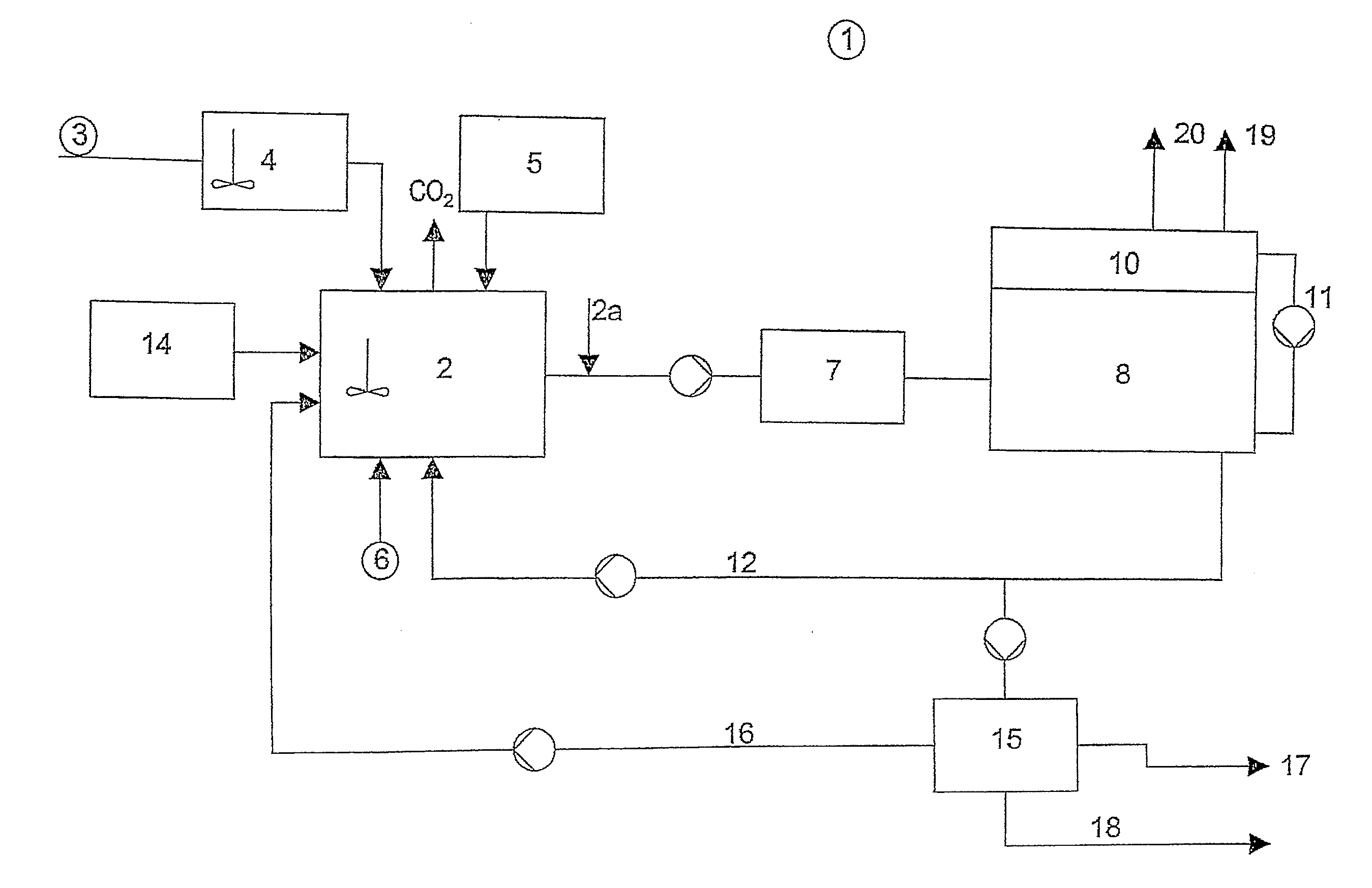
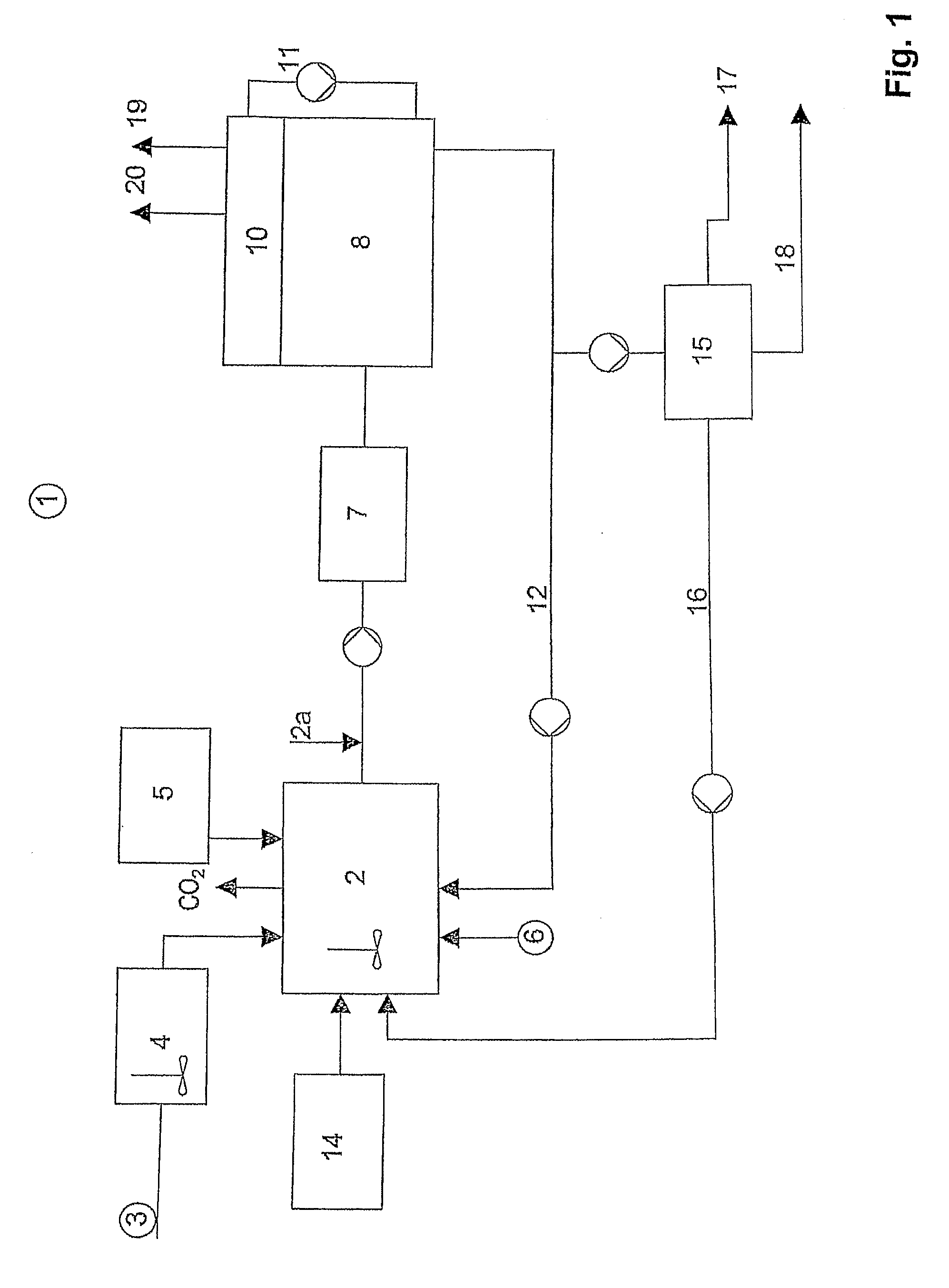
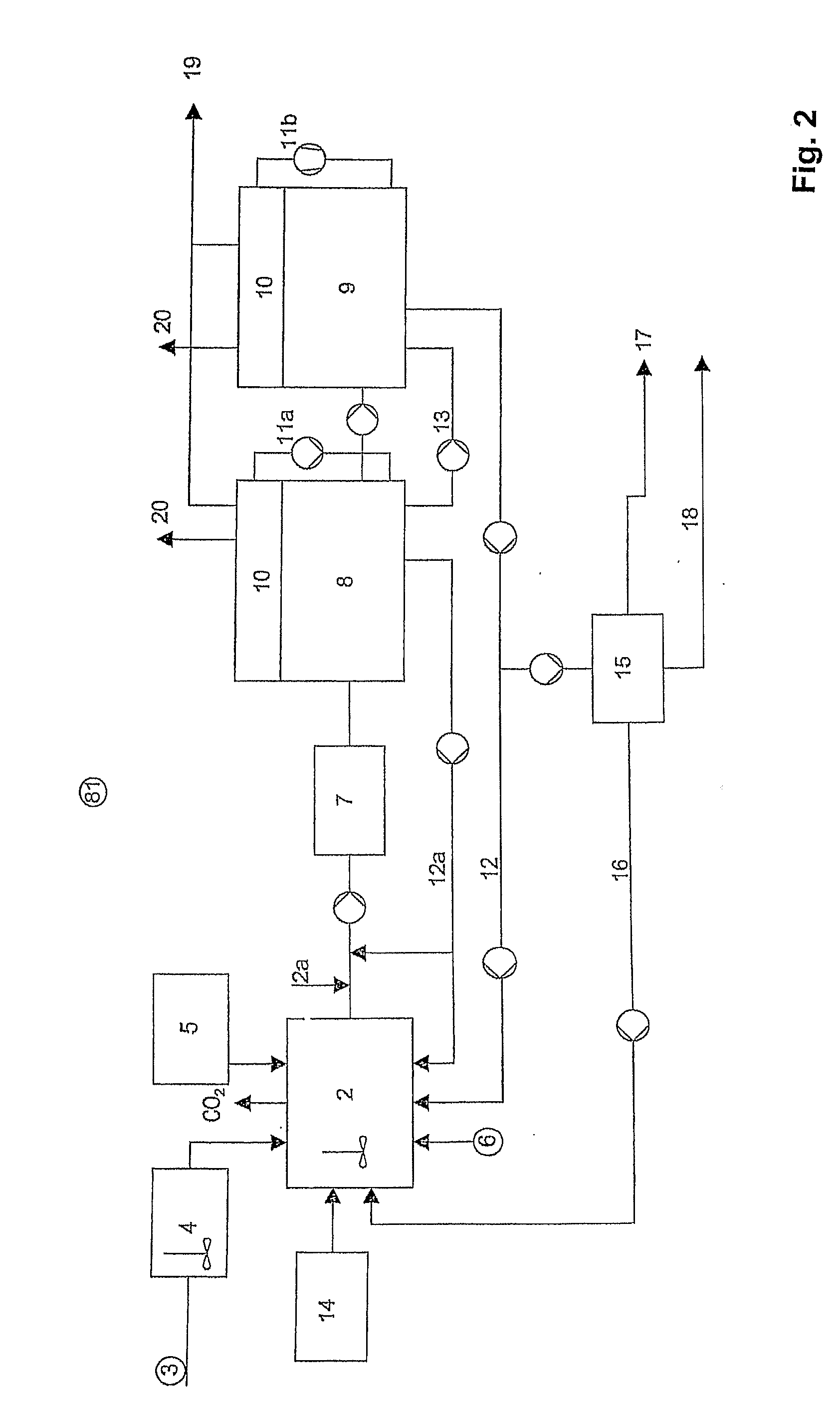
starch production from potatoes, peas and beans etc. and other similar materials. Preferably, waste / process water as well as biogenic material and the above mentioned byproducts are stored in a suitably sized buffer reactor and / or preliminary tanks (e.g., 24 h buffer) for liquids in a predetermined proportion to one another, since the methane reactions subsequently accomplished by
bacteria in an anaerobic biogas reactor for
biogas production are in the hourly range. As
methane bacteria are thermally sensitive, the maximum temperatures possible for the respective bacteria strains should not be exceeded, for example approx. 55° C., better even approx. 37° C. in the
methane gas reactors.
The generation of gas takes place via anaerobic fermentation of organic materials. For increasing the biogas yield, co-fermented material is frequently used (for example, renewable raw materials or waste from the foodstuffs industry). The fermented organic material can be agriculturally used afterwards as high-quality
fertilizer. In a preferred embodiment of the invention, the storage buffer and / or mixing / premixing tank may be aerated. By mixing with air, biogas can easily lead to explosive mixtures; therefore the production and storage are subject to special safety regulations. Preferably, the
mixing tank has a volume of approx. 50 to 100% of the daily accruing waste / process water or fresh water. It serves for mixing the supplied material flows as mentioned above (liquids with
biomass and by-products from the sugarcane
processing) and is provided with a
heat exchanger system. Further, ventilation is provided for expelling
carbon dioxide. The
biomass is finely
cut by a
chaff cutter and supplied through a conveying
system to the
mixing tank. The danger of explosion can be precluded according to the invention, since biogas production takes place exclusively in the lagoon facility, which is provided with an air roof, that simultaneously serves as gas storage space and further, the operation takes place under anaerobic conditions. Moreover, storage of biogas is not necessary, since the entire biogas is transferred directly to the combined heat and power
plant downstream. As a safety system, an emergency flair is installed, which comes into operation in case of failure of the CHP.


 Login to View More
  Login to View More