
Multicellular system and method for multiparametric analysis
a multi-parametric analysis and multi-electrode technology, applied in the field of multi-electrode spheroid assembly, can solve the problems of time- and depth-resolved continuous mapping of oxygen inside tumor tissue models, and the failure of therapy
- Summary
- Abstract
- Description
- Claims
- Application Information
AI Technical Summary
Benefits of technology
Problems solved by technology
Method used
Image

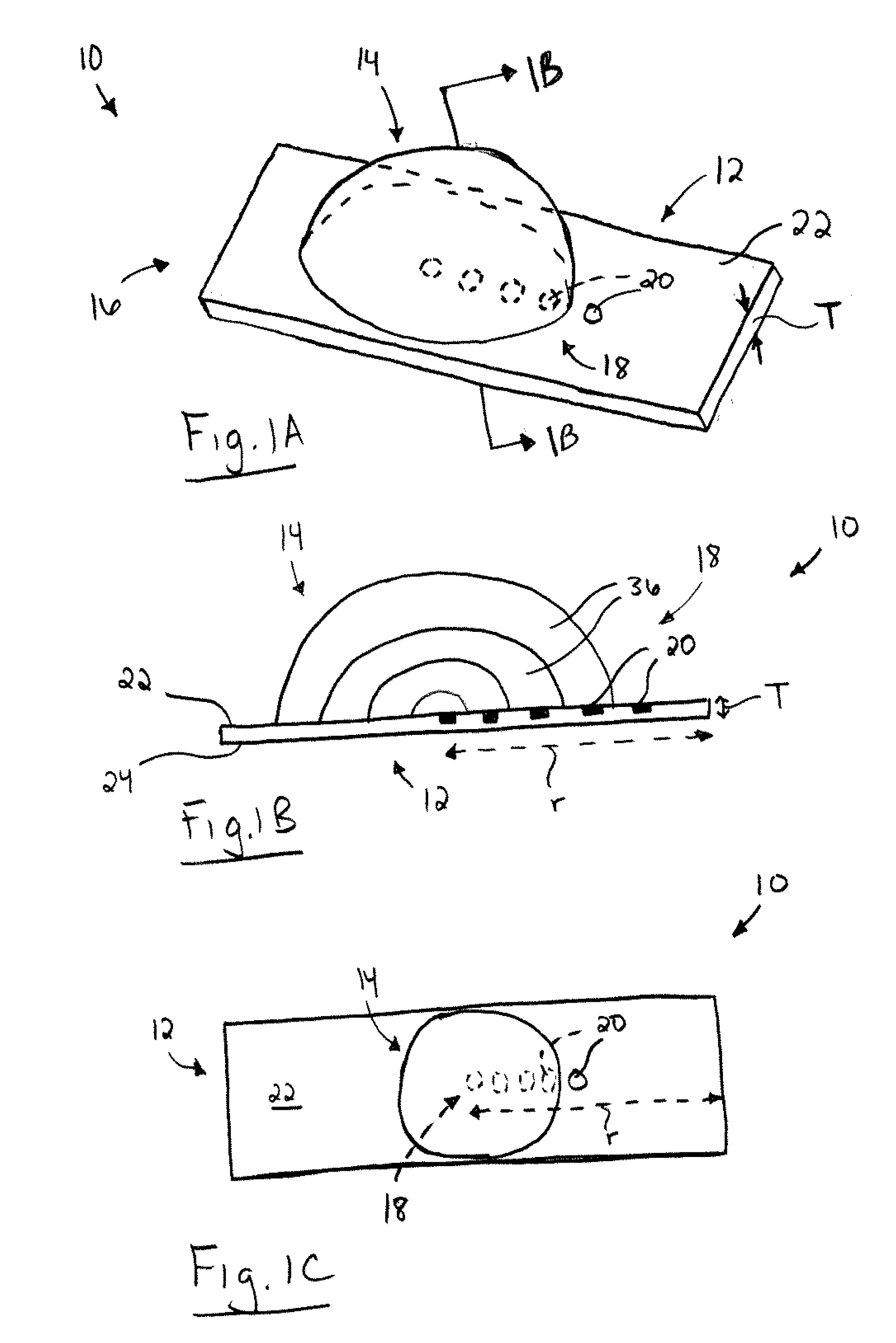
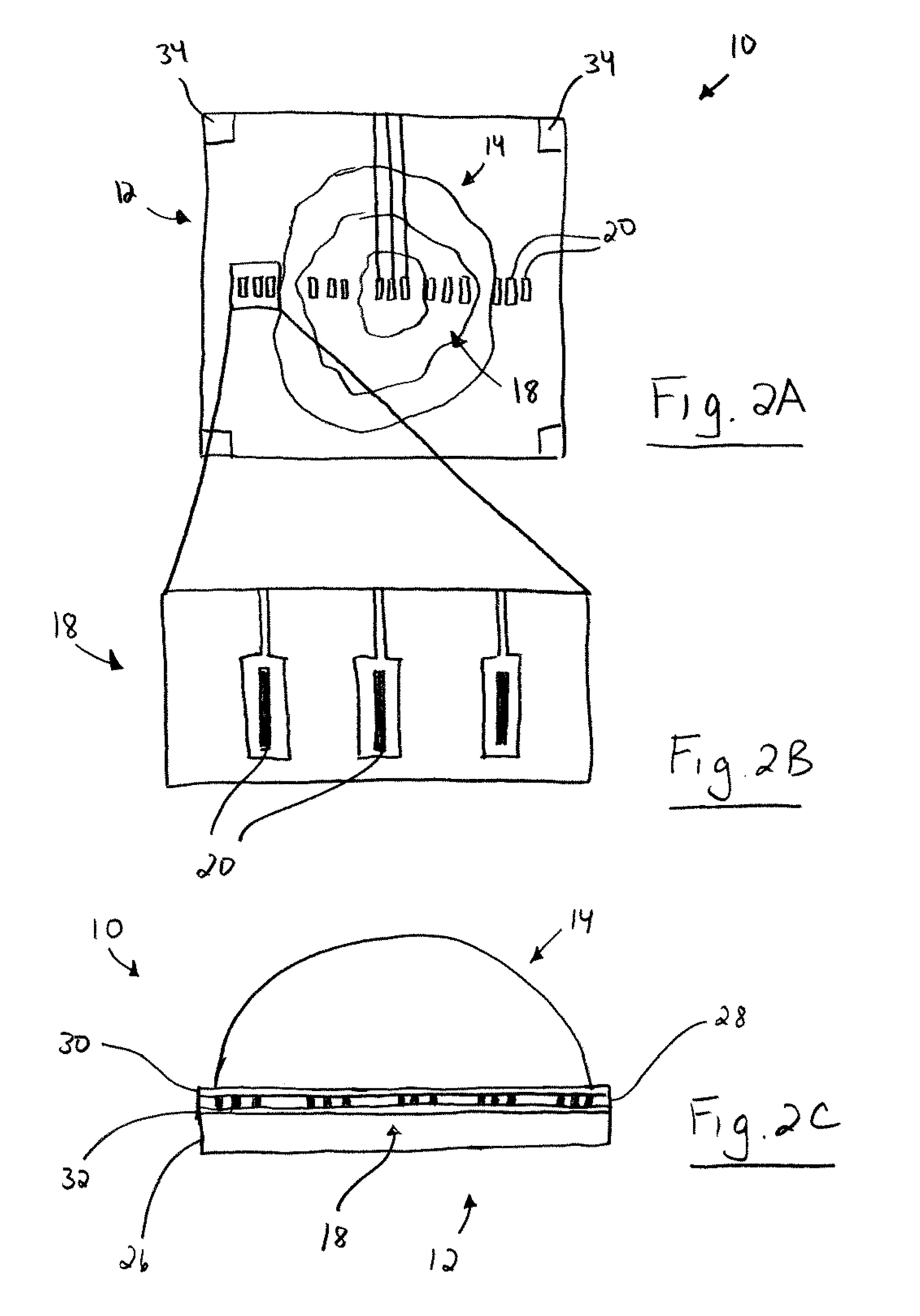
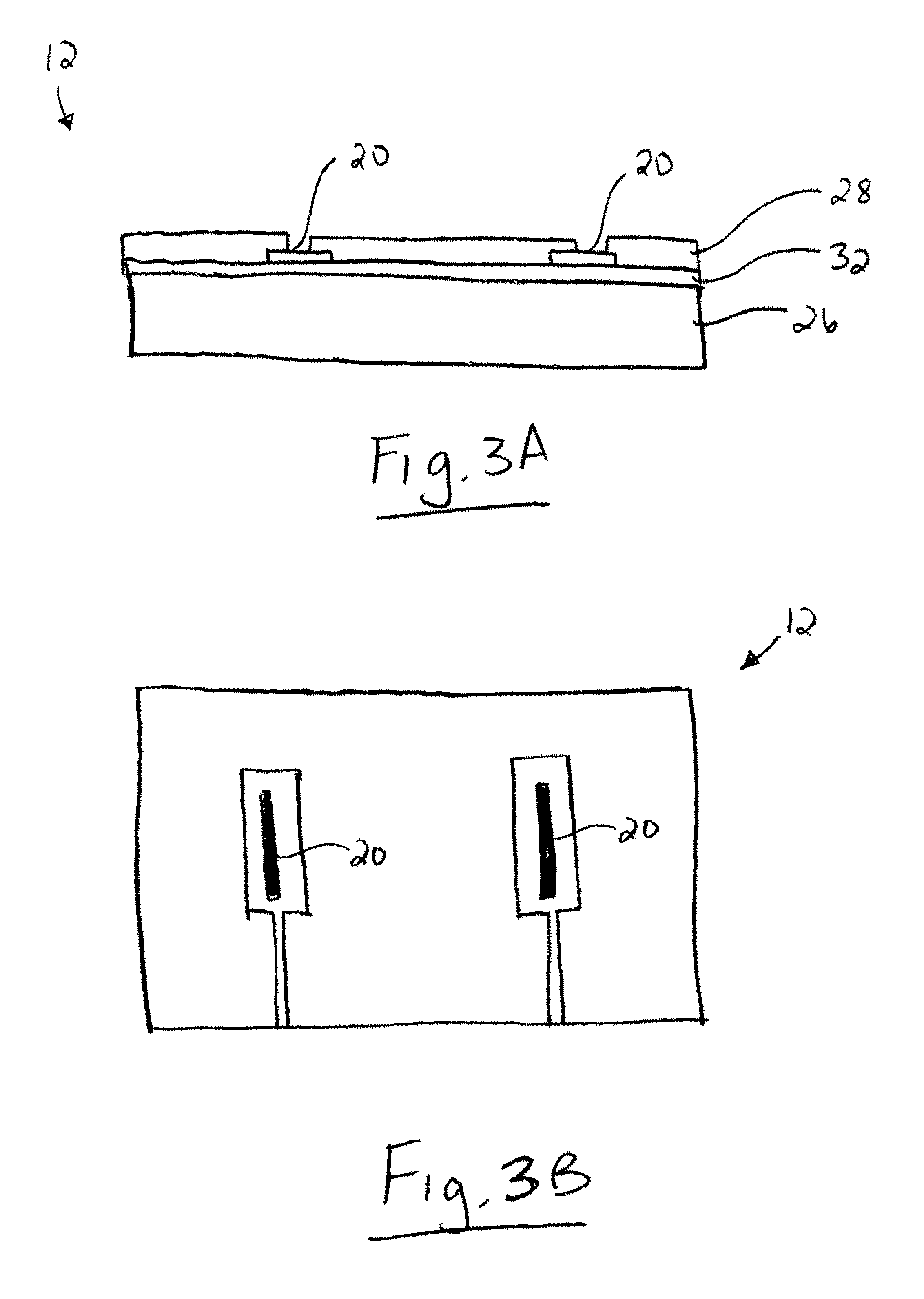
Examples
example 1
Measuring Oxygenation Status in Multicellular Tumor Spheroid Models with a Microelectrode Array
Experimental
Cell Culture
[0101]MCF7 doxorubicin resistant (MCF7-R) cell line was acquired from The University of Texas, M. D. Anderson Cancer Center, Texas, USA. MCF7 cells were maintained and propagated in DMEM containing 10% FBS and penicillin-streptomycin in tissue culture dishes (Fisher Scientific). Cells were incubated at 37° C. in 5% CO2 environment.
3D Multicellular Model Agar Half Spheroids
[0102]Confluent plates of MCF7-R cells ere trypsinized and collected in a sterile 1 mL vial. The cell density and the total number of cells in the vial were estimated by cell counting using a hematocytometer. The cells were spun down in a centrifuge and the supernant medium removed. A known volume of 1% agarose type VII-A (low gelling temperature) was added to the cells and mixed well to attain the desired cell density, 0.3 million cells / μL in this case, for model agar spheroid. The vial with the c...
example 2
Modeling of Oxygen Concentration as a Function of the Rate of Consumption Inside Multicellular Tumor Spheroid
Experimental
Cell Line, Instrument and Half Spheroid Oxygen Concentration Experiment
[0158]MCF7 doxorubicin resistant (MCF7-R) cells line were maintained and propagated in DMEM containing 10% FBS and penicillin-streptomycin in tissue culture dishes (Fisher Scientific). Cells were incubated at 37° C. in 5% CO2. Model agar half spheroids were made by mixing MCF7-R cells in 1% agar at 37° C. and casting 1 mm hemispheres on Teflon® sheet (as described in Example 1).
[0159]Gold multielectrode array platform with 5 microdisc electrodes was used to measure oxygen concentration under the half spheroids. Ag / AgCl reference, stainless steel counter and pH 7.4 PBS electrolyte were used. A CHI 1030 8-channel potentiostat (CH Instruments Inc., Austin, Tex.) placed inside a Faraday cage was used for oxygen measurements. Absolute oxygen flux moving across the spheroid shells and variable rate o...
example 3
Differential Pulse Voltammetry Vs. Continuous Scanning
Experimental
Apparatus
[0180]A CHI 1030 8-channel potentiostat (CH Instruments Inc., Austin, TZ) was used to perform all electrochemical experiments. The experimental setup was placed inside a custom built Faraday cage for electromagnetic isolation. Au microdisc electrode fabricated by insulating a 50 μm Au wire with Parylene and then fixing it in non-conducting epoxy (Example 1) was used for oxygen reduction analysis on gold. A 10 μm layer of cellulose acetate was deposited on the Au electrode which was hydrated for at least an hour in PBS prior to calibration experiments. A carbon fiber electrode was used as the working electrode. An Ag / AgCl with 4M KCl filling solution (BAS Inc., West Lafayette, Ind.) and a stainless steel wire were used as reference and counter electrodes, respectively, to complete the electrochemical cell.
Measurement Parameters
[0181]Potential was scanned from 0.2 V to −1.1 V for Au microdisc electrode. Pulse a...
PUM
| Property | Measurement | Unit |
|---|---|---|
| diameter | aaaaa | aaaaa |
| diameter | aaaaa | aaaaa |
| radius | aaaaa | aaaaa |
Abstract
Description
Claims
Application Information
 Login to View More