
Electrically conductive thin films
a technology of electrically conductive films and thin films, applied in the direction of oxide conductors, non-metal conductors, titanium suboxides, etc., can solve the problems of poor flexibility, cost increase, poor flexibility, etc., and achieve excellent flexibility and enhanced light transmittance
- Summary
- Abstract
- Description
- Claims
- Application Information
AI Technical Summary
Benefits of technology
Problems solved by technology
Method used
Image

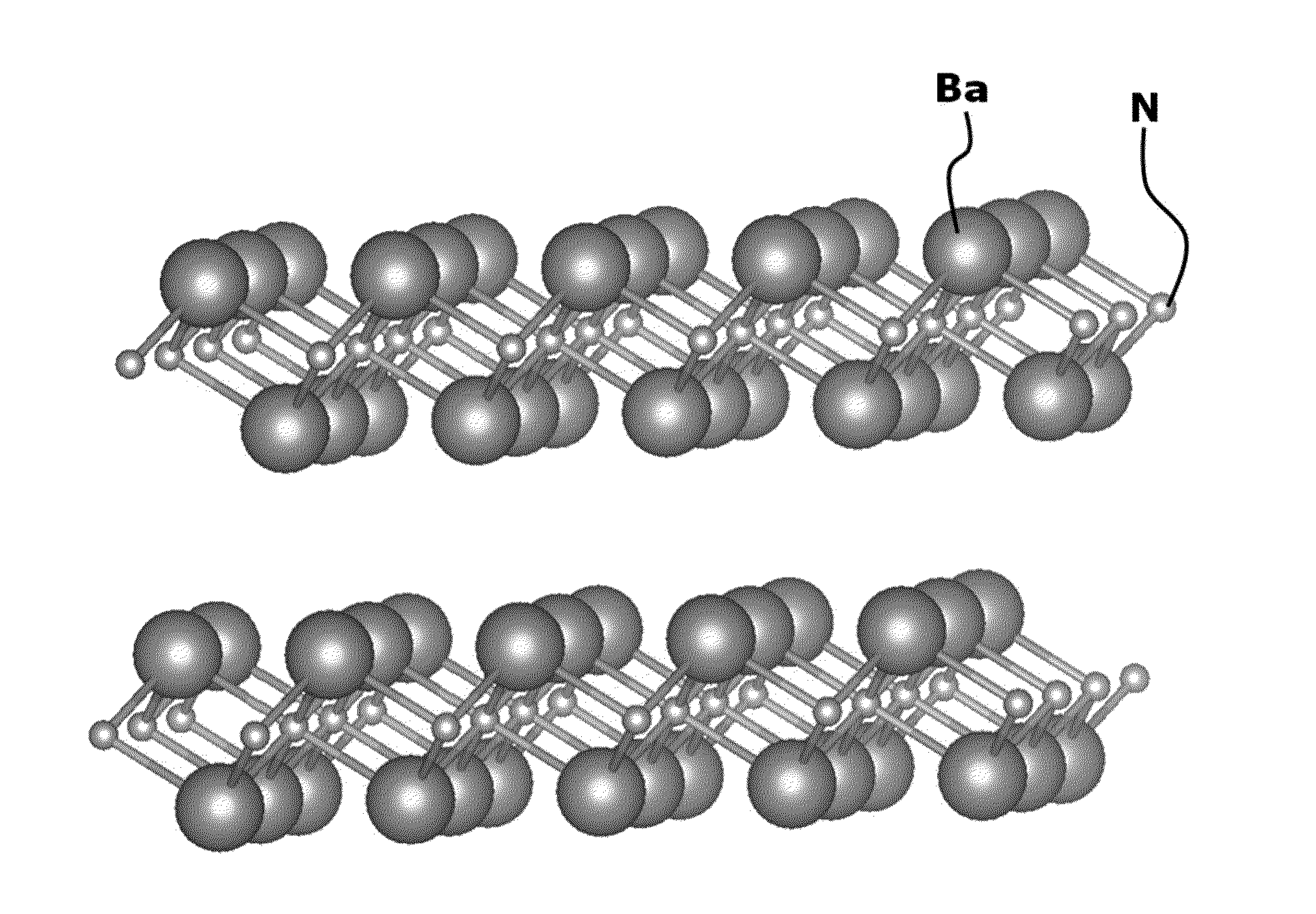
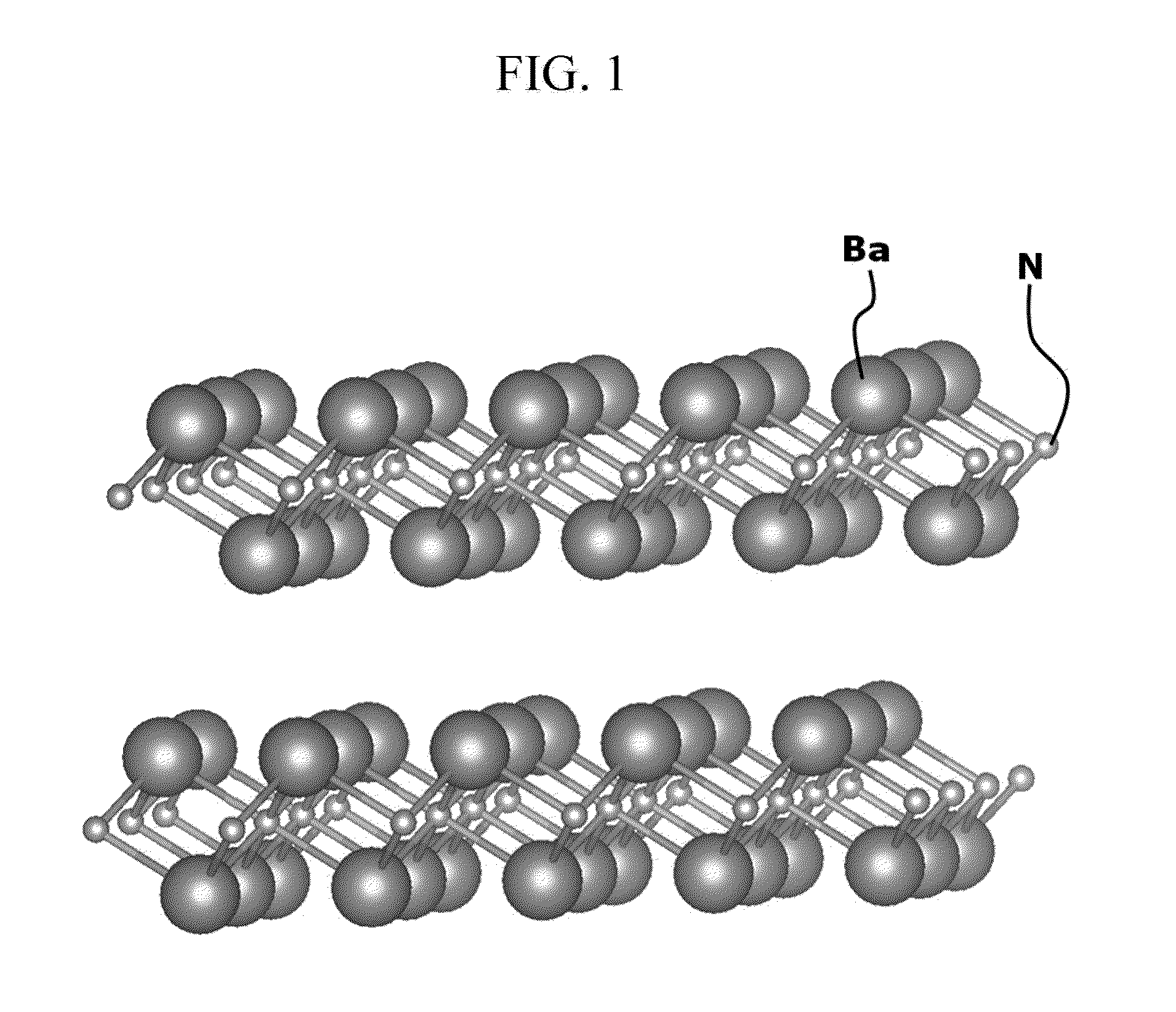
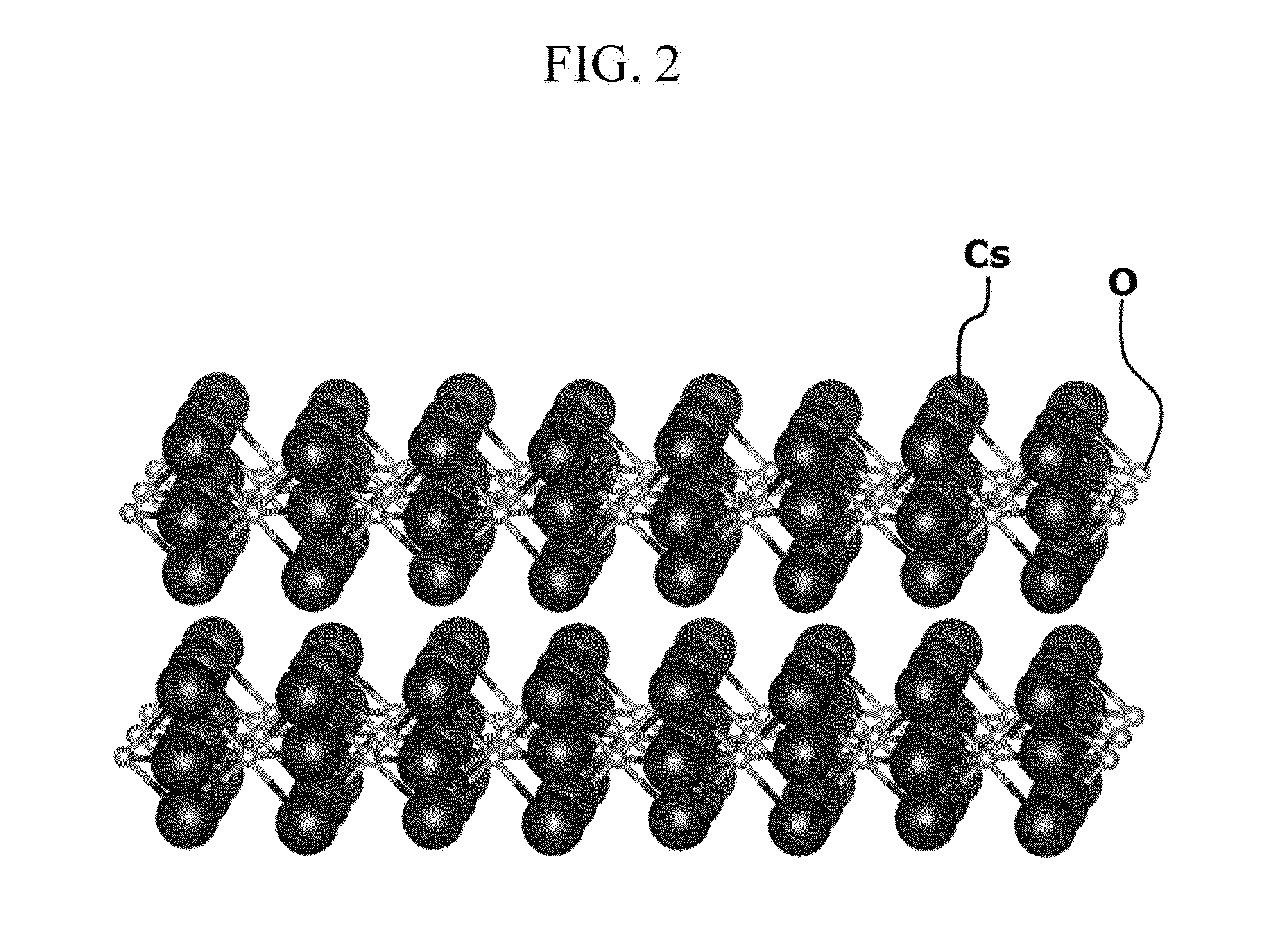
Examples
example 1
Preparation of a Hf3Te2 Thin Film
[0152]A Hf powder and a HfTe2 powder are mixed at a molar ratio of 2:1. The resulting mixture is sintered under a pressure of 900 kgf / cm2 at a temperature of 1000° C. for about one hour to provide a sintered body having a density of 95% of its ideal density.
[0153]Pulsed laser deposition (PLD) is conducted on an Al2O3 substrate under the following conditions using the sintered body prepared above as a target and using a Nd / YAG laser.
[0154]PLD device: PLD 5000 Deposition Systems, PVD Products
[0155]Output: 60 mJ / cm2
[0156]Time: 20 min
[0157]Substrate temperature: 600° C.
[0158]Vacuum degree: 2*10−6 Pa
[0159]The Hf3Te2 vapor deposited film thus prepared has a thickness of about 20 nm. The TEM image of the vapor deposited film thus prepared is shown in FIG. 11, which confirms that the Hf3Te2 film thus formed has a layered crystal structure.
example 2
Preparation of Thin Film Including Hf3Te2 Nanosheets
[0160]The Hf3Te2 sintered body prepared from Example 1 is pulverized and the obtained powder is dispersed in 1.6 M of butyllithium solution in hexane including butyllithium dissolved therein, and the resulting dispersion is agitated for 72 hours. Then, the powder is taken out from the dispersion and washed with hexane and dried under an argon atmosphere to obtain lithium intercalated powder of Hf3Te2. 15-20 g of lithium intercalated powder of Hf3Te2 is placed in a vial in a glove box, and then 5-10 ml of water is added thereto and the resulting mixture is subjected to ultrasonication for one hour. With the generation of hydrogen gas, interlayer separation occurs to provide Hf3Te2 nanosheets.
[0161]The nanosheets thus obtained are centrifuged and the precipitate is washed with water until it shows a pH of about 7 and centrifuged again.
[0162]The obtained nanosheet precipitate is placed in a vial and added with 3 ml of deionized water ...
example 3
Preparation of the Sintered Body of Titanium Suboxide (Ti2O) and a Thin Film Formation Thereof
[0163]A Ti powder (>99%, Aldrich) and a TiO2 powder (99.9%, Aldrich) are weighed in an amount such that the mole ratio of titanium to oxygen is 2:1 (Ti:O) and are mixed well using a mortar. In order to facilitate the deposition, the mixed powder is placed in a metal mold and pelletized in a shape of a coin. The pellet thus obtained is placed in a glass tube, which is then vacuum-sealed. The vacuum sealed tube is put into an electric furnace and heat-treated at 700° C. for 24 hours. The heat treated pellet is pulverized using a mortar and the pulverized product is sintered using spark plasma sintering (SPS) equipment under the conditions of 850° C. / 80 MPa for 5 minutes. The synthesized polycrystalline bulk material has a density of 80% based on its ideal density and its conductivity is measured to be 5600 S / cm, which may further increase when the material is prepared as a monocrystalline bul...
PUM
| Property | Measurement | Unit |
|---|---|---|
| Temperature | aaaaa | aaaaa |
| Thickness | aaaaa | aaaaa |
| Thickness | aaaaa | aaaaa |
Abstract
Description
Claims
Application Information
 Login to View More