Method for preparing hierarchical pore molecular sieve materials

A molecular sieve, multi-level pore technology, applied in the direction of crystalline aluminosilicate zeolite, can solve the problems of unfavorable free diffusion of macromolecules, complicated process, weak interaction between cationic surfactant and molecular sieve precursor, etc. and purification, good hydrothermal stability and good catalytic activity

A molecular sieve, multi-level pore technology, applied in the direction of crystalline aluminosilicate zeolite, can solve the problems of unfavorable free diffusion of macromolecules, complicated process, weak interaction between cationic surfactant and molecular sieve precursor, etc. and purification, good hydrothermal stability and good catalytic activity

CN103130239AInactive Publication Date: 2013-06-05SHANGHAI INST OF CERAMIC CHEM & TECH CHINESE ACAD OF SCI

Image

Smart Image Click on the blue labels to locate them in the text.
Viewing Examples
Smart Image
  • Method for preparing hierarchical pore molecular sieve materials
  • Method for preparing hierarchical pore molecular sieve materials
  • Method for preparing hierarchical pore molecular sieve materials

Examples

Experimental program
Comparison scheme
Effect test

Embodiment 1

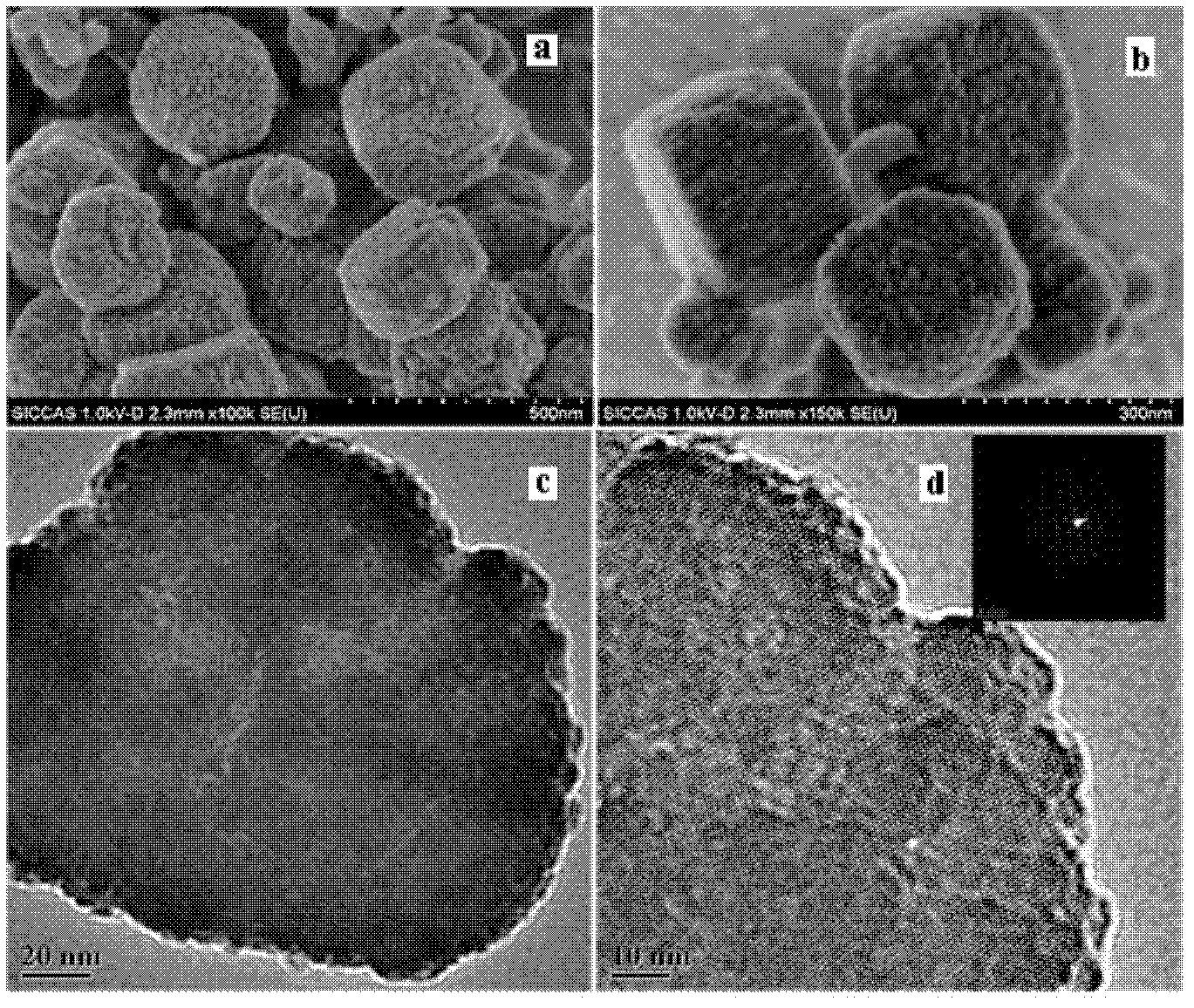
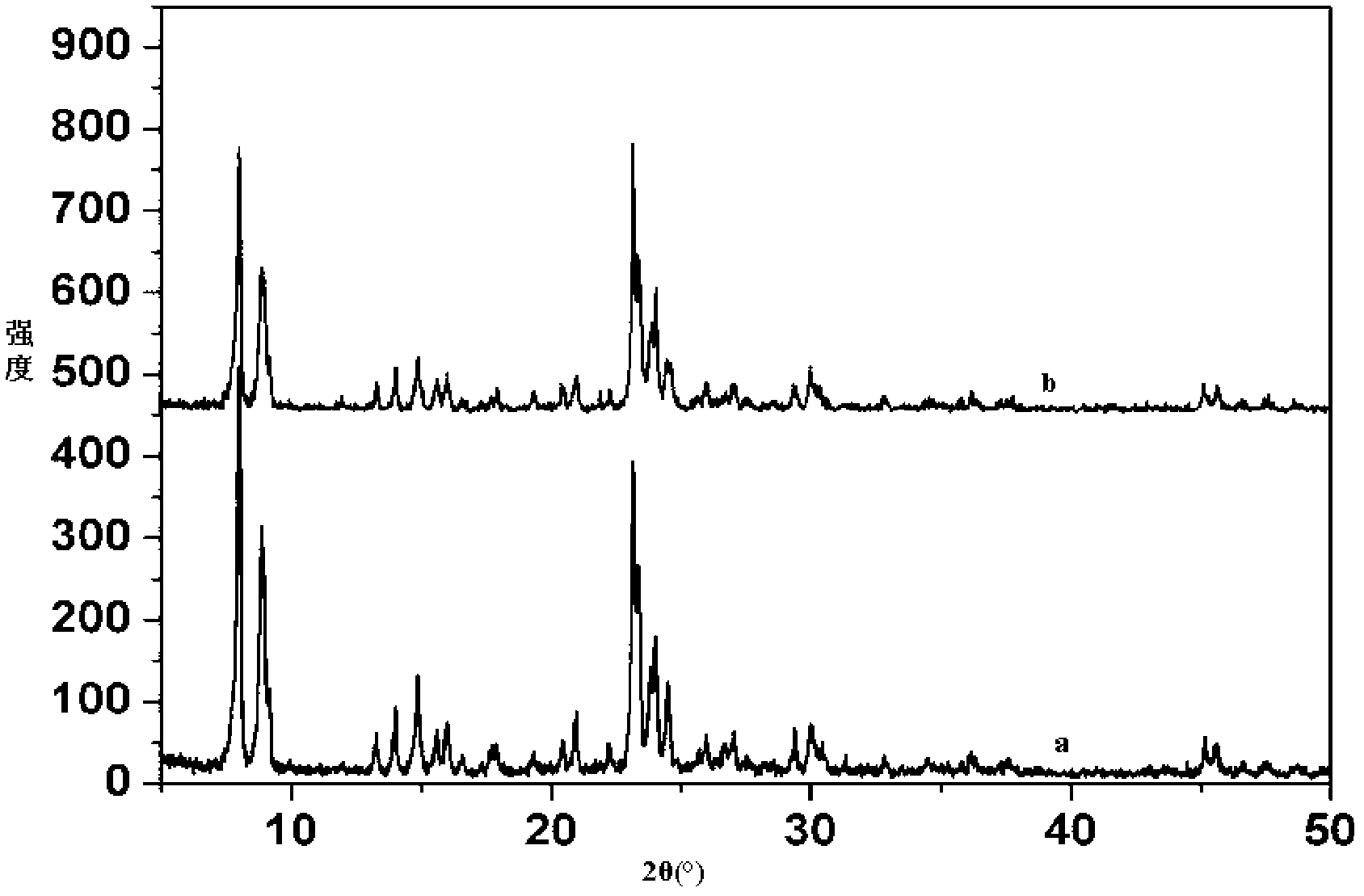
[0031] a) Preparation of reaction precursor solution: add 0.31g of aluminum isopropoxide and 15.62g of ethyl silicate to 26g of water, stir at room temperature for 2h, then dropwise add 21.96g of 25wt% tetrapropylammonium hydroxide, and stir at 40°C to clarification;

[0032] b) Aging to prepare high polymer sub-grains: continue stirring the solution obtained in step a) in an oil bath at 100°C for 2 days;

[0033] c) Preparation of hierarchically porous molecular sieve material: After the high poly subgrain solution obtained in step b) is cooled to room temperature, it is slowly added dropwise to an aqueous solution of cationic surfactant CTAB (0.765g CTAB is dissolved in 90ml of water), at 80°C Stir for 2 hours, then add 12g of ethanol, continue to stir for 2 hours to make the mixture uniform, and then carry out hydrothermal crystallization in a 150°C hydrothermal kettle for 24 hours;

[0034] d) Suction filtration, washing, drying in an oven at 100°C under normal pressure f...

Embodiment 2

[0038] The difference between this example and Example 1 is that the aqueous solution of the cationic surfactant CTAB used is prepared by dissolving 0.3825g CTAB in 90ml water.

[0039] All the other contents are the same as those described in Example 1.

[0040] The structural parameter data of the prepared hierarchical porous molecular sieve material are shown in Table 1.

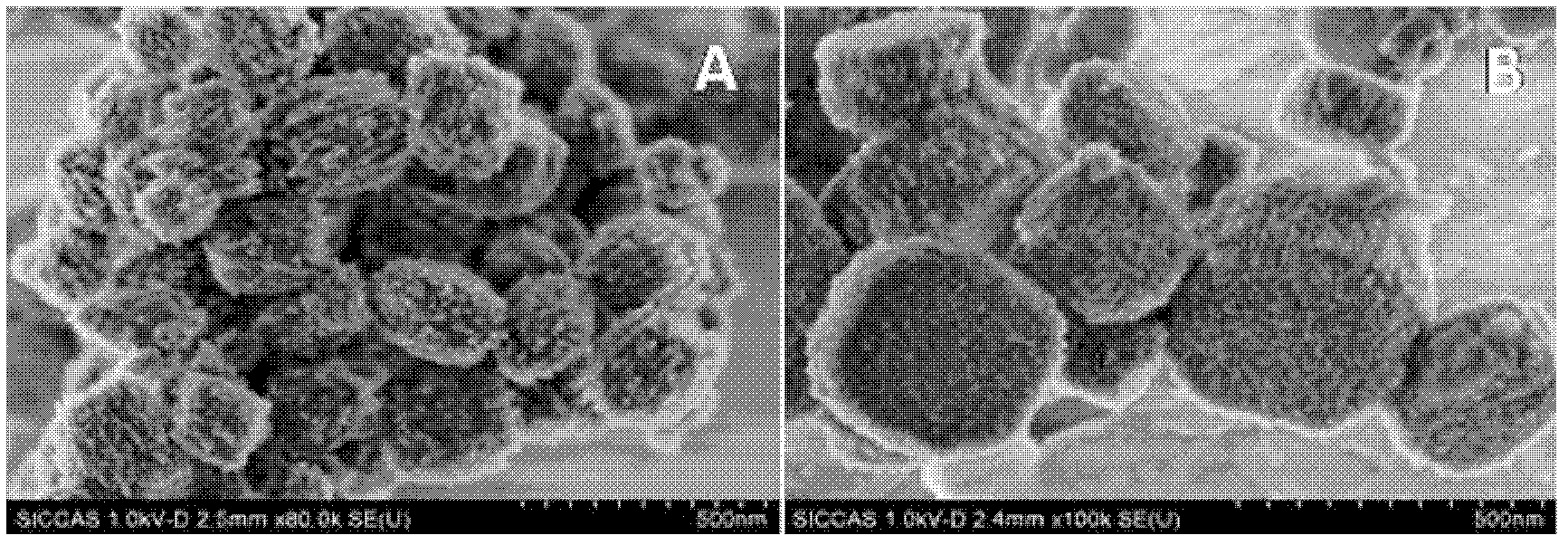
[0041] The SEM photo of the prepared hierarchical porous molecular sieve material is shown in image 3 Shown in Figure A.

Embodiment 3

[0043] The difference between this example and Example 1 is that the aqueous solution of the cationic surfactant CTAB used is prepared by dissolving 0.576g of CTAB in 90ml of water.

[0044] All the other contents are the same as those described in Example 1.

[0045] The structural parameter data of the prepared hierarchical porous molecular sieve material are shown in Table 1.

[0046] The SEM photo of the prepared hierarchical porous molecular sieve material is shown in image 3 Shown in Figure B.

the structure of the environmentally friendly knitted fabric provided by the present invention; figure 2 Flow chart of the yarn wrapping machine for environmentally friendly knitted fabrics and storage devices; image 3 Is the parameter map of the yarn covering machine
Login to View More

PUM

PropertyMeasurementUnit
particle diameteraaaaaaaaaa
specific surface areaaaaaaaaaaa
pore sizeaaaaaaaaaa
Login to View More

Abstract

The invention discloses a method for preparing hierarchical pore molecular sieve materials. The method comprises the following steps: reaction premedicant liquid is prepared; high polymer subgrain is prepared in an aging mode; the hierarchical pore molecular sieve materials are prepared; and separation, washing, drying and calcination are conducted. A cationic surface active agent serves as a template agent, and the hierarchical pore molecular sieve materials with good performance are prepared through a single-step hydrothermal method. The problem in the prior art that split-phase exists when the cationic surface active agent serves as the template agent is solved effectively, and meanwhile the prepared materials have good catalytic activity in a macromolecule aldol reaction, hydrothermal stability is good, high catalytic activity is displayed when flavanone and chalcone drug intermediate are prepared, and the heterogeneous catalyst is beneficial for isolation and purification of products, and therefore the method for preparing the hierarchical pore molecular sieve materials has an industrial application value.

Description

technical field [0001] The invention relates to a method for preparing a hierarchical porous molecular sieve material, in particular to a method for directly preparing a hierarchical porous molecular sieve material with excellent performance by using a cationic surfactant as a template agent in one-step hydrothermal method. Background technique [0002] Molecular sieve is a crystalline aluminosilicate compound, also known as zeolite, named for its ability to sieve molecules due to its special pore structure. At the same time, the crystallized skeleton shows the properties of solid acid or base after being replaced by heteroatoms. Therefore, such materials are widely used as catalysts in the fields of petrochemical, fine chemical synthesis, adsorption and separation, etc. However, the pore size of traditional molecular sieves is less than 1.5nm. Such a small pore size limits the reaction of macromolecules and makes the reaction controlled by diffusion. On the one hand, the r...

Claims

the structure of the environmentally friendly knitted fabric provided by the present invention; figure 2 Flow chart of the yarn wrapping machine for environmentally friendly knitted fabrics and storage devices; image 3 Is the parameter map of the yarn covering machine
Login to View More

Application Information

Patent Timeline
05 Jun 2013
Publication
CN103130239A
IPC
C01B39/04
Inventors
朱颜; 施剑林