
Polymicrobial Formulations For Enhancing Plant Productivity
a technology of polymicrobial formulations and plant productivity, applied in the field of environmental protection compositions, can solve the problems of plant growth or productivity increases expected by plant growers, and achieve the effects of enhancing plant productivity, enhancing plant growth, and enhancing plant growth
- Summary
- Abstract
- Description
- Claims
- Application Information
AI Technical Summary
Benefits of technology
Problems solved by technology
Method used
Image

Examples
example i
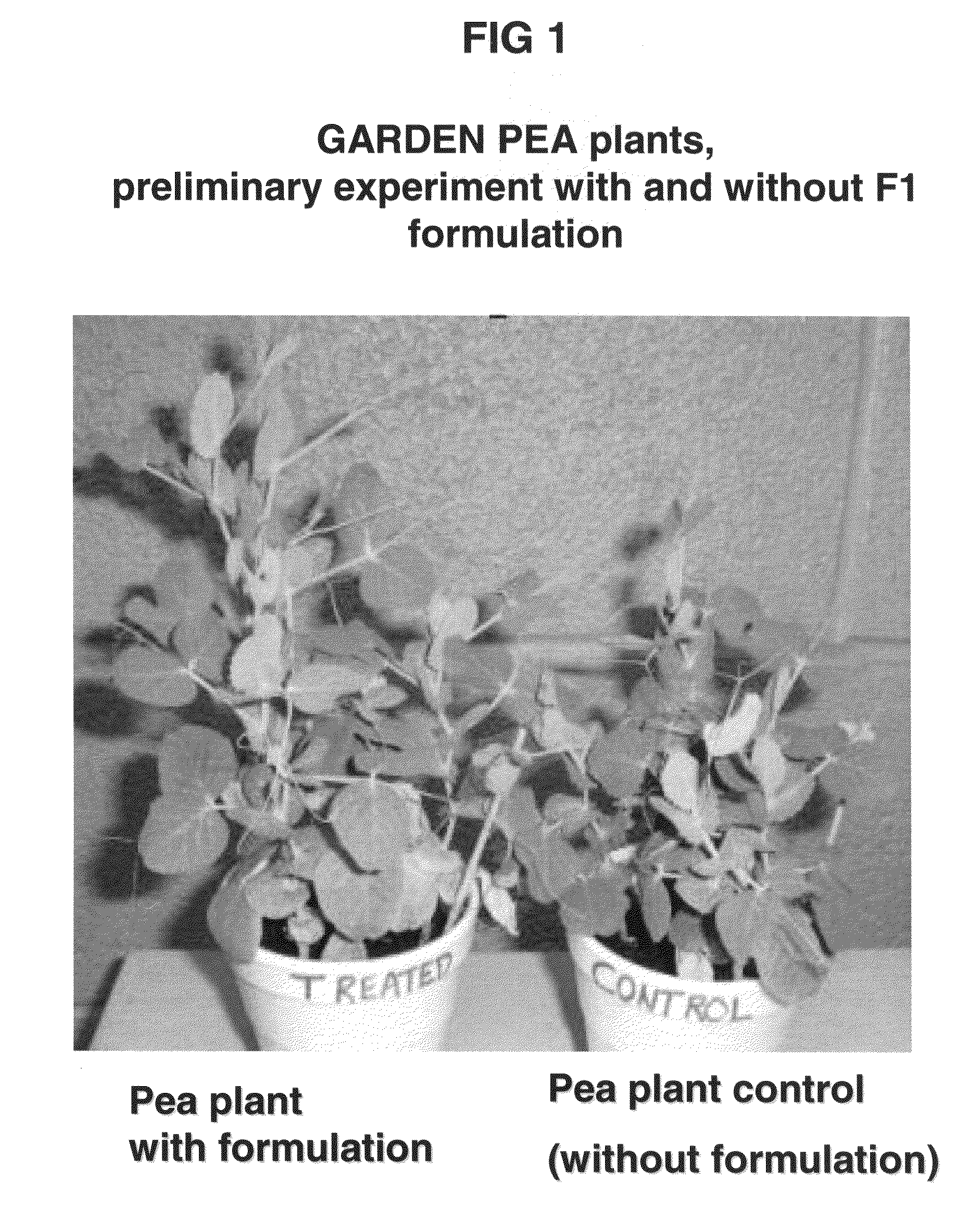
[0212]The inventors' objective was to develop an efficacious, eco-friendly, and cost-effective formulation suitable for enhancing the productivity of a broad spectrum of crops such as cereals, pulses, vegetable, horticultural and floricultural corps. To this end, the inventors were able to isolate multifunctional microbes, useful for constructing a suitable microbial inoculant formulation(s), form root nodules of various legume, rhizosphere soils and soils collected from temperate, tropical and sub-tropical regions. The results indicate a wide range of phenotypic diversity of the isolates. The inventors then constructed at least two microbial inoculant formulation designated F1 and F2, (see Examples below) each with a distinct set of microbes and tested their efficacy on various crops under greenhouse condition and field conditions. Both conditions confirmed enhanced growth and yield of a broad spectrum of legumes, cereals, and vegetable crops as described in the Examples.
Materials ...
example ii
Greenhouse Experiments Using Sumagro 1 and 2
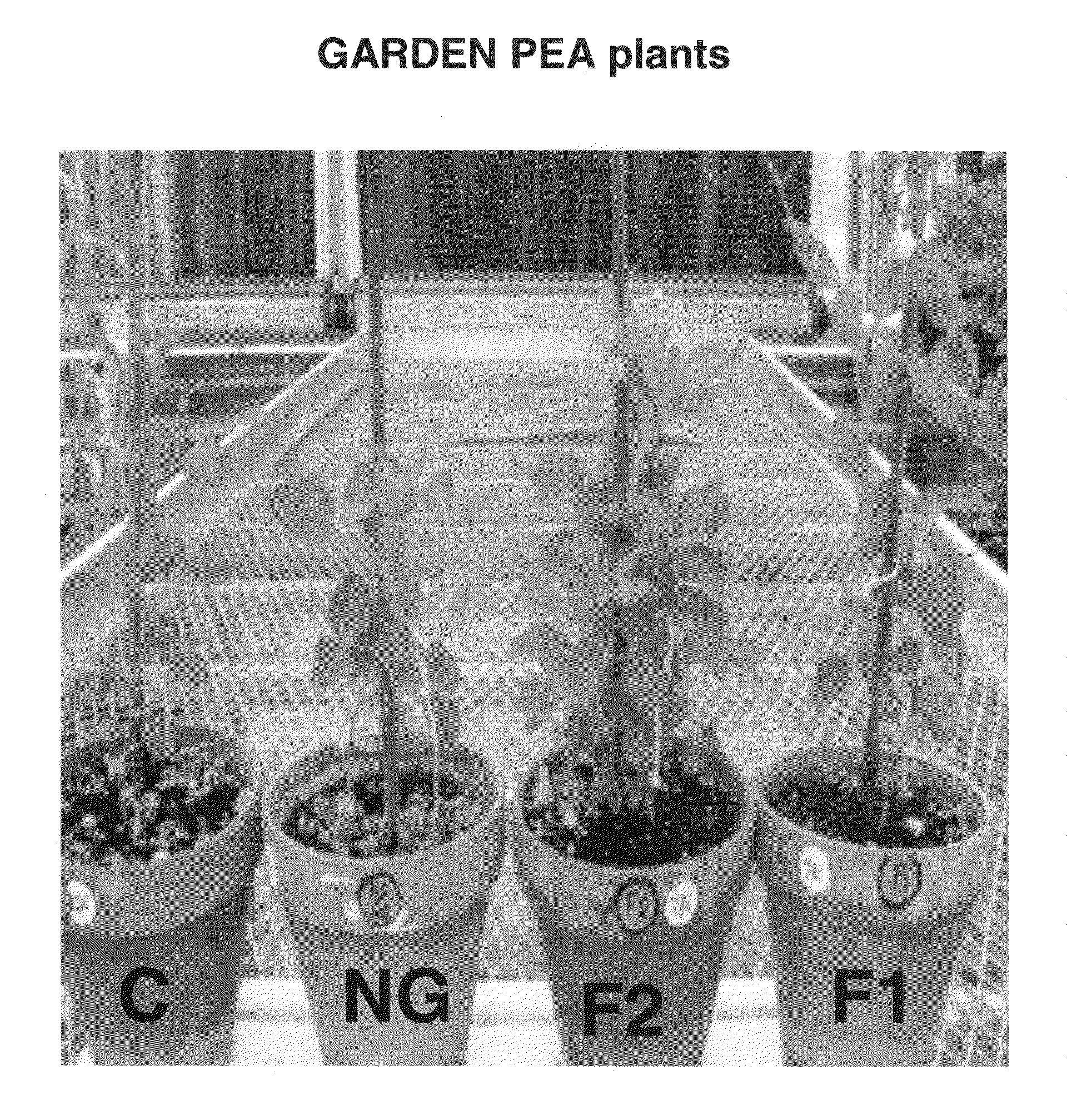
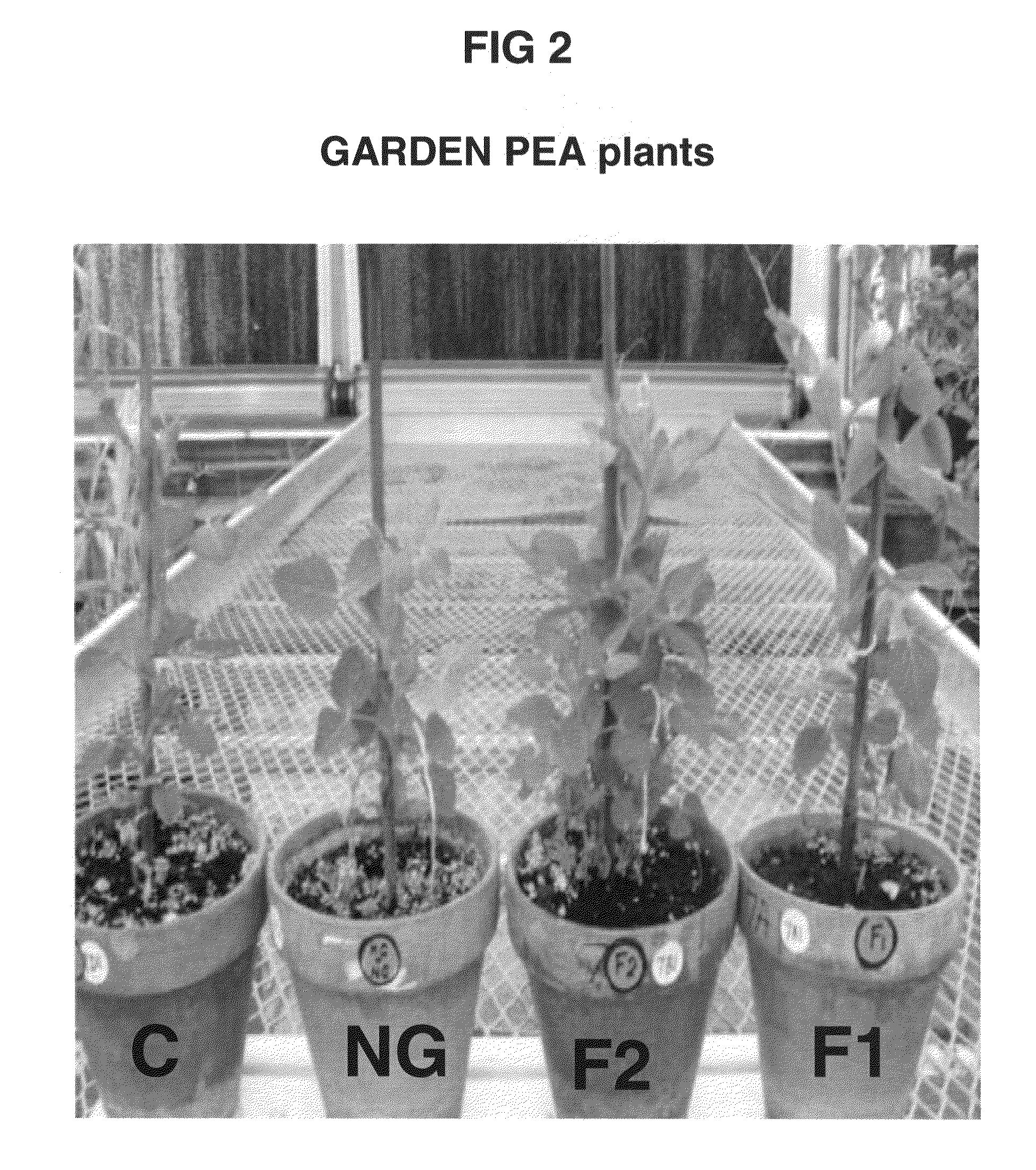
[0256]The relative efficacy of Sumagro 1 and Sumagro 2 were tested in lab scale experiments done in a greenhouse with standard controlled temperature and humidity. NutraGro, a commercially available microbial product with claimed plant growth enhancing properties was used in parallel on duplicate pots of plants for comparison. No exogenous nitrogen fertilizer or pesticides were added in these experiments.
[0257]Procedures: Sumagro 1 (F1) and Sumagro 2 (F2) described in the preceding sections were used. F1 and F2 contained 1014 microbes per ml. For Sumagro 1, one part of F1 was added to 4 parts of Humate carrier (12% humic acid in water as mentioned above). For Sumagro 2, one part of F1 was added to 4 parts of Humate carrier (12% humic acid in water as mentioned above). Pots (size 4″×5″ and 500 g soil volume) were used for the initial Greenhouse experiments. If the experiment is continued beyond two months, then the plants were transferred t...
example iii
Field Trials Demonstrating Plant Growth Enhancement of Sumagro 1 and Sumagro 2
[0270]The primary objective was to compare the efficacy of the microbial growth enhancement formulations of the present inventions with one of the microbial products, claimed to be a plant growth enhancer, such as a product claimed to be a plant growth enhancer that is already in commercial use. The commercial product selected for comparison was Nutragro, see above.
Field Trial Applications (Procedure):
[0271]Step 1. Concentrated Sumagro 1 (F1) and Sumagro 2 (F2) as described in the preceding sections were prepared and used for these trials, such that F1 and F2, respectively, contained 1017 and 1015 microbes per ml.
[0272]Step 2. One liter of concentrated F1 or F2 was added to 4 liters of Humagro (a commercial humic acid carrier) and this 5 liter F1 Mix or F2 Mix was further mixed with irrigation water and applied to one acre of land.
[0273]At least 2 applications were applied by irrigation water for one crop ...
PUM
 Login to View More
 Abstract
Description
Claims
Application Information
 Login to View More