Cellulose derivative fine particle, dispersion liquid thereof, dispersion body thereof and diagnostic reagent
a technology of cellulose derivatives and fine particles, which is applied in the direction of instruments, cellulosic plastic layered products, natural mineral layered products, etc., can solve the problems of limited fine particles, inability to make use of hydrophilicity of cellulose derivative fine particles, and strict application limitations. , to achieve the effect of high hydrophilicity, excellent features and high storage stability
- Summary
- Abstract
- Description
- Claims
- Application Information
AI Technical Summary
Benefits of technology
Problems solved by technology
Method used
Image

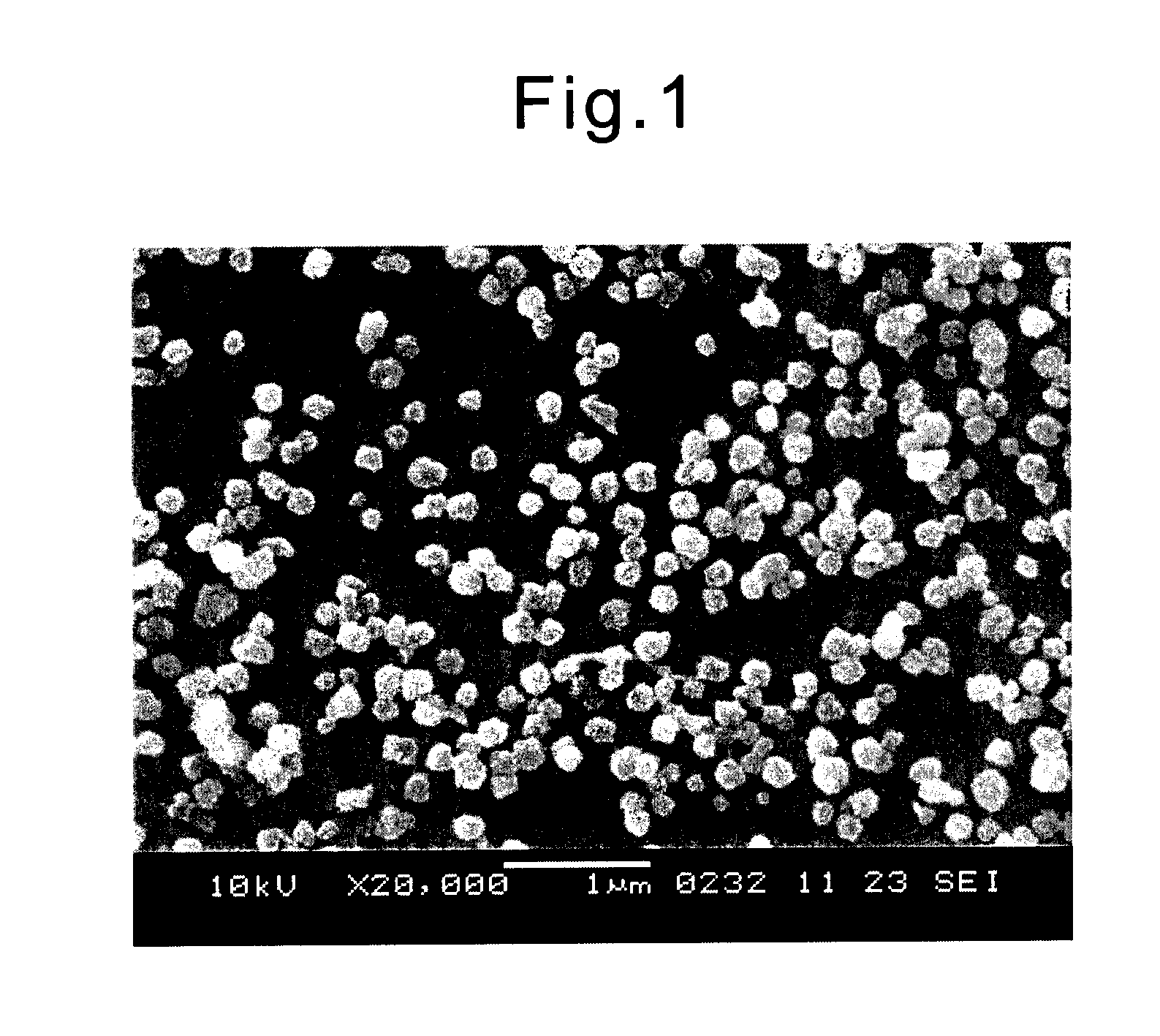
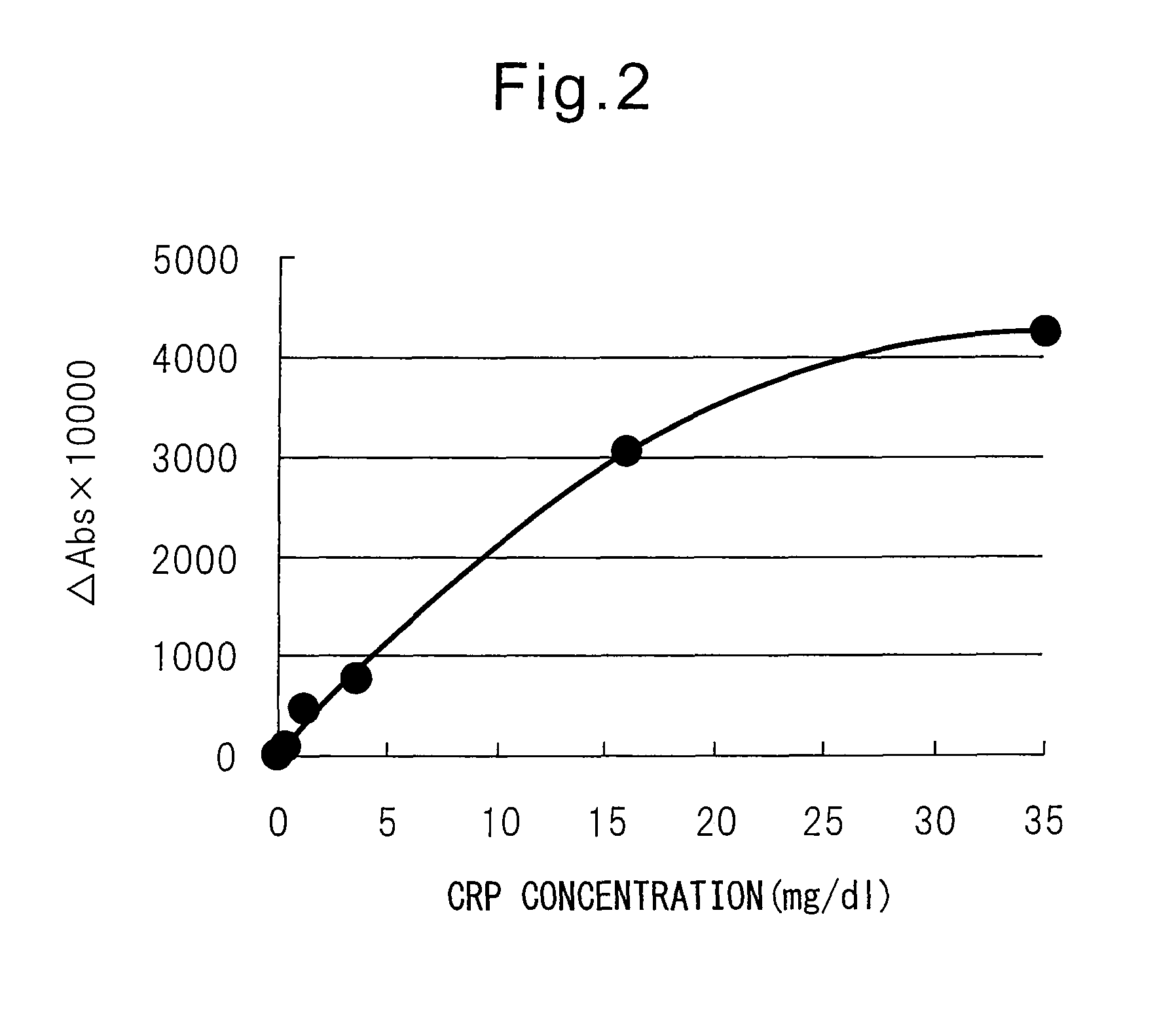
Examples
example 1
[0106]A copper ammonia cellulose solution having a cellulose concentration of 0.37 wt %, a copper concentration of 0.13 wt % and an ammonia concentration of 1.00 wt % was prepared by a conventionally known method. Furthermore, a coagulating solution having a tetrahydrofuran concentration of 89.0 wt % and a water concentration of 11.0 wt % was prepared.
[0107]While slowly stirring 5,000 g of the coagulating solution with a magnetic stirrer, 500 g of the copper ammonia cellulose solution prepared above was added. After continuing stirring for about 5 seconds, 1,000 g of 10 wt % sulfuric acid was added to effect neutralization and regeneration, whereby 6,500 g of a slurry containing cellulose fine particles was obtained.
[0108]The obtained slurry was centrifuged at a speed of 10,000 rpm for 10 minutes. The precipitate was taken out by decantation, deionized water was poured and after stirring, the mixture was again centrifuged. This operation was repeated several times until the pH becam...
example 2
[0111]Using the cellulose fine particle dispersion liquid having an average particle diameter of 261 nm prepared in Example 1, carboxylation of cellulose was effected in the same manner as in Example 1 except that the amount of sodium chloroacetate added was 140 mg (molar ratio of cellulose:sodium chloroacetate=1.0:1.0). The average particle diameter of the carboxylated cellulose fine particles obtained was measured and found to be 263 nm. The CV value thereof was 21%. The substitution degree was 0.157.
example 3
[0112]Using the cellulose fine particle dispersion liquid having an average particle diameter of 261 nm prepared in Example 1, carboxylation of cellulose was effected in the same manner as in Example 1 except that the amount of sodium chloroacetate added was 280 mg (molar ratio of cellulose:sodium chloroacetate=1.0:2.0). The average particle diameter of the carboxylated cellulose fine particles obtained was measured and found to be 266 nm. The CV value thereof was 22%. The substitution degree was 0.312.
PUM
| Property | Measurement | Unit |
|---|---|---|
| particle diameter | aaaaa | aaaaa |
| average particle diameter | aaaaa | aaaaa |
| particle diameter | aaaaa | aaaaa |
Abstract
Description
Claims
Application Information
 Login to View More
 - R&D
- Intellectual Property
- Life Sciences
- Materials
- Tech Scout
- Unparalleled Data Quality
- Higher Quality Content
- 60% Fewer Hallucinations
Browse by: Latest US Patents, China's latest patents, Technical Efficacy Thesaurus, Application Domain, Technology Topic, Popular Technical Reports.
© 2025 PatSnap. All rights reserved.Legal|Privacy policy|Modern Slavery Act Transparency Statement|Sitemap|About US| Contact US: help@patsnap.com