
Decellularization cornea preparation method
A technique of decellularization and decornea, which is applied in the field of preparation of decellularized cornea, can solve the problems of tissue destruction, host rejection, poor tissue fusion effect, etc., and achieve less damage to the corneal stroma, good biocompatibility, and easy elution Effect
- Summary
- Abstract
- Description
- Claims
- Application Information
AI Technical Summary
Problems solved by technology
Method used
Image

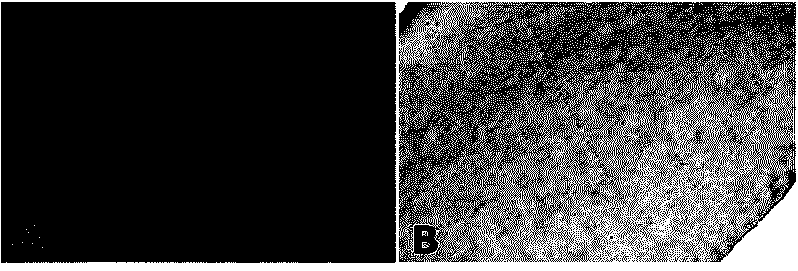
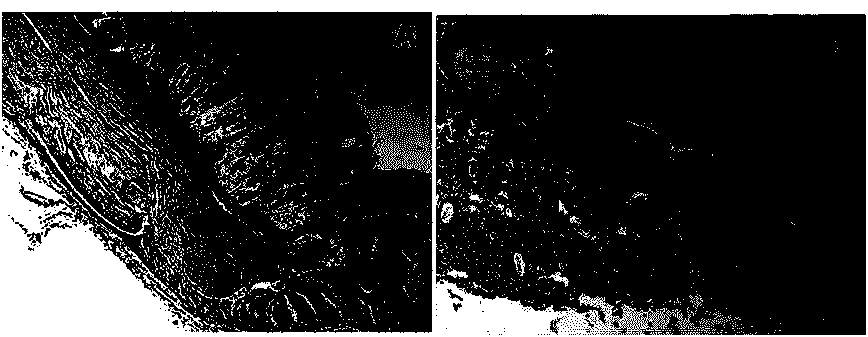
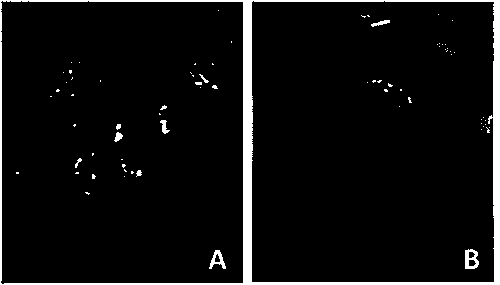
Examples
Embodiment 1
[0041] Example 1. Preparation of decellularized (pig) cornea
[0042] Step 1. Corneal epithelium removal: Put the porcine cornea with complete structure, no damage, and 0.3 cm wide sclera into 0.2M EDTA solution, soak for 12 hours, and then use deionized water to swell the cornea by shaking method, so that the cornea reaches 1cm thick, then rub off the corneal epithelial cell layer, exposing the corneal descemet;
[0043] Step 2. Ultraviolet crosslinking: place the cornea obtained in step 1 with the elastic layer facing upwards, and irradiate it with ultraviolet light with a wavelength of 370 nm for 1 hour at room temperature to complete the crosslinking treatment;
[0044] Step 3. Virus inactivation: use a knife to draw 10 scratches on the surface of the Descemet's membrane of the cornea, and the depth of the scratches is less than 1mm; soak the cornea in 50mg / ml trehalose solution for 3 hours, and transfer to Soak in a mixed solution of 5mg / ml and ethanol concentration of 7...
Embodiment 2
[0049] Example 2. Preparation of decellularized (rabbit) cornea
[0050] Step 1. Corneal epithelium removal: Put the rabbit cornea with complete structure, no damage, and 1 mm wide sclera in 0.1M EDTA solution, soak for 12 hours; then use deionized water to swell the cornea by shaking method to make the cornea Reach 0.5cm thick, then rub off the corneal epithelial cell layer, exposing the corneal descemet;
[0051] Step 2. Ultraviolet cross-linking: place the cornea obtained in step 1 with the anterior elastic layer facing up, and irradiate it with ultraviolet light with a wavelength of 370 nm for 20 minutes at room temperature to complete the cross-linking treatment;
[0052] Step 3. Virus inactivation: use a knife to draw 4 scratches on the surface of the Descemet membrane of the cornea, the depth of the scratches is <1mm; soak the cornea in a trehalose solution with a concentration of 20mg / ml for 0.5h; Soak in a mixed solution with a sugar concentration of 5mg / ml and an et...
PUM
| Property | Measurement | Unit |
|---|---|---|
| Thickness | aaaaa | aaaaa |
Abstract
Description
Claims
Application Information
 Login to View More