
Method for synthesizing copper indium diselenide quantum dot
A synthesis method and technology of quantum dots, applied in chemical instruments and methods, nanotechnology for materials and surface science, nanotechnology, etc., can solve problems such as being unsuitable for industrial production, unfavorable for industrial production, harsh reaction conditions, etc. The effect of stable structure, short process cycle and low cost
- Summary
- Abstract
- Description
- Claims
- Application Information
AI Technical Summary
Problems solved by technology
Method used
Image

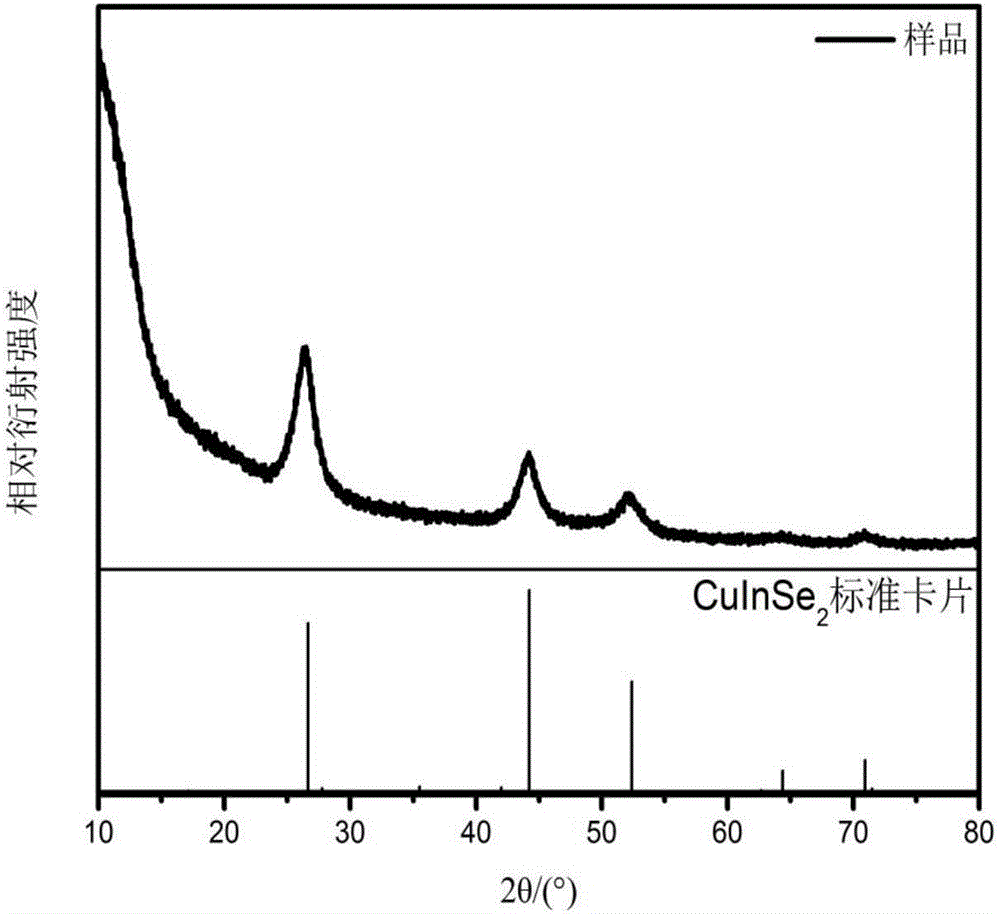
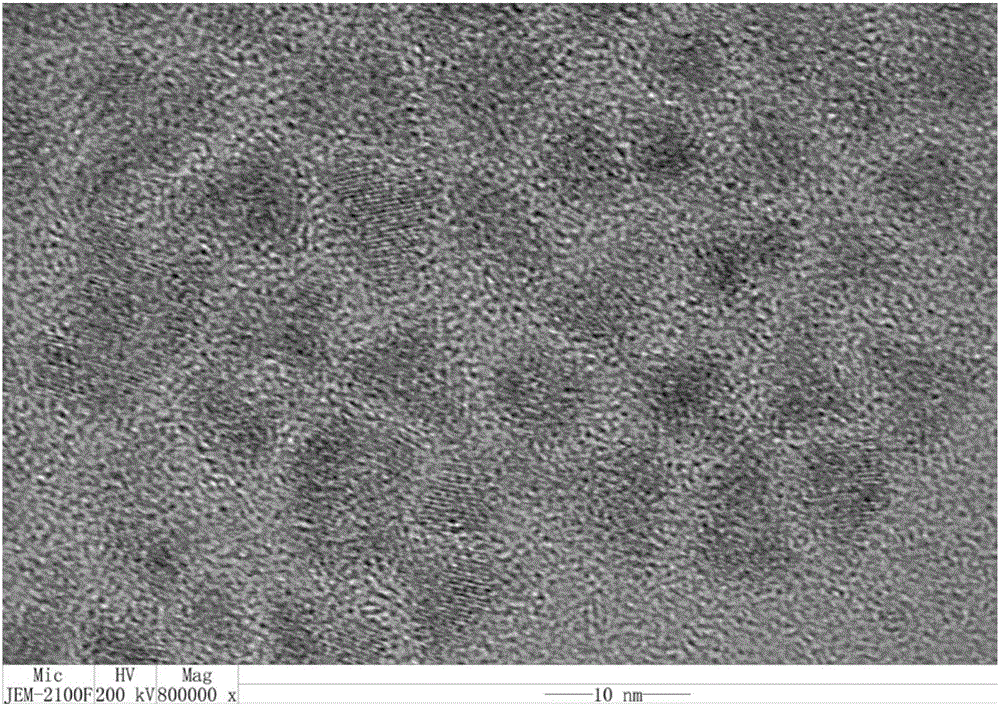
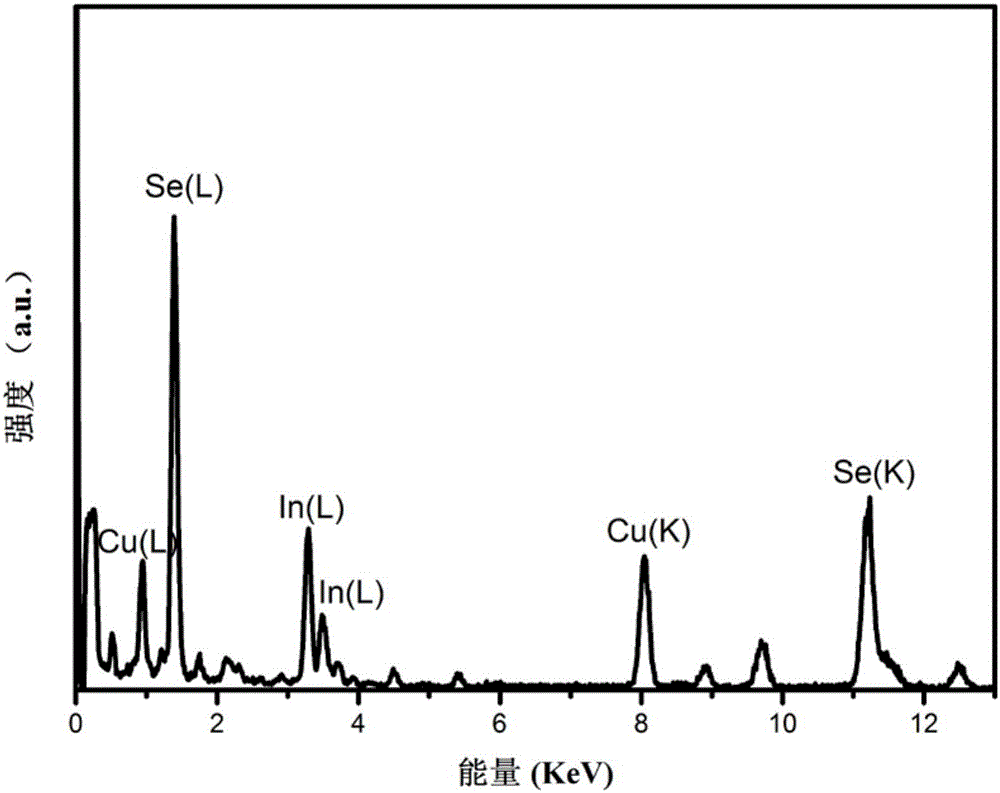
Examples
Embodiment 1
[0046] Weigh 0.1111mg (1.0mmol) of selenium dioxide and put it into a round bottom flask, add 3ml of oleylamine to it, put it in a constant temperature oil bath at 100°C for 6 minutes, and after cooling to room temperature, add 19.0mg (0.1mmol) of cuprous iodide to it , 58.4mg (0.2mmol) of indium acetate, the reaction vessel was placed in a 210°C constant temperature oil bath for 20 minutes, and then cooled to room temperature; the solution after the reaction was centrifuged, and the supernatant was discarded and washed with n-hexane. Centrifuge, discard the precipitate again, add ethanol to the supernatant to wash and centrifuge, repeat the washing and centrifugation several times until the supernatant after centrifugation is colorless and transparent, and take the final precipitate as the final product.
[0047] Product composition, structure and morphology characterization:
[0048] The final product is dissolved in dichloromethane, and after the dichloromethane volatilizes...
Embodiment 2
[0063] Weigh 0.1111mg (1.0mmol) of selenium dioxide and put it into a round bottom flask, add 3ml of oleylamine to it, put it in a constant temperature oil bath at 100°C for 6 minutes, and after cooling to room temperature, add 26.2mg (0.1mmol) of copper acetylacetonate, 82.4mg (0.2mmol) of indium acetylacetonate, the reaction vessel was placed in a 210°C constant temperature oil bath for 20 minutes, and then cooled to room temperature; the solution after the reaction was centrifuged, and the supernatant was discarded and washed with n-hexane. Centrifuge, discard the precipitate again, add ethanol to the supernatant to wash and centrifuge, repeat the washing and centrifugation several times until the supernatant after centrifugation is colorless and transparent, and take the final precipitate as the final product.
[0064] Product composition, structure and morphology characterization:
[0065] The final product is dissolved in dichloromethane, and after the dichloromethane vo...
Embodiment 3
[0073] Weigh 0.1111mg (1.0mmol) of selenium dioxide and put it into a round bottom flask, add 3ml of oleylamine to it, put it in a constant temperature oil bath at 100°C for 6 minutes, and after cooling to room temperature, add 19.0mg (0.1mmol) of cuprous iodide to it , 82.4mg (0.2mmol) indium acetylacetonate, put the reaction vessel in a constant temperature oil bath at 210°C for 20 minutes, then cool to room temperature; centrifuge the reacted solution, discard the precipitate and wash the supernatant with n-hexane And centrifugal separation, after discarding the precipitate again, add ethanol to the supernatant to wash and centrifuge, repeat the washing and centrifugation several times until the supernatant after centrifugation is colorless and transparent, take the final precipitate as the final product obtained .
[0074] The final product is dissolved in dichloromethane, and after the dichloromethane volatilizes, the product is subjected to XRD measurement, and the X-ray...
PUM
| Property | Measurement | Unit |
|---|---|---|
| size | aaaaa | aaaaa |
| size | aaaaa | aaaaa |
Abstract
Description
Claims
Application Information
 Login to View More