

Nanoparticulate system, process for the preparation of the same, use of the same, photoprotective composition, process for the preparation of the same, method of prevention of diseases of the skin
a nanoparticulate and nanotechnology technology, applied in the field of nanoparticulate systems, can solve the problems of promoting the formation of free radicals, causing skin cancer, and damage to the peripheral vascular system
- Summary
- Abstract
- Description
- Claims
- Application Information
AI Technical Summary
Benefits of technology
Problems solved by technology
Method used
Image

Examples
example 1
1.1. Photoprotective Composition for the Body (SPF 30)
[0066]
ComponentsSPE 30PHASE AAcrylates / C10-30 alkyl acrylate crosspolymer0.05Triglycerides of caprylic / capric Acid2.0Dimethicone2.0Isostearyl alcohol (and) butylene glycol cocoate (and)4.5ethylcelluloseCeteareth-201.0PEG-30 Polyhydroxystearate4.0PHASE BWater20.0PHASE CDicaprylyl carbonate4.0Avobenzone3.0Octocrylene7.0Tinosorb ® S3.0Eusolex ® 63002.0PHASE DCyclopentasiloxane2.0Farnesol (and) linalool0.5Tocopheryl acetate0.5PHASE EWater33.0Nanocapsules5.0Xanthan gum0.2EDTA disodium0.1Imidazolidinyl urea0.5Titanium dioxide1.0Tinosorb ® M2.5
1.2. Photoprotective Composition for the Body (SPF 45)
[0067]
ComponentsSPF 45PHASE AAcrylates / C10-30 alkyl acrylate crosspolymer0.05Triglycerides of caprylic / capric acid2.0Dimethicone7.0Isostearyl alcohol (and) butylene glycol cocoate (and)4.5ethylcelluloseCeteareth-201.5PEG-30 Polyhydroxystearate5.0PHASE BWater20.0PHASE CDicaprylyl carbonate3.0Avobenzone3.0Octocrylene7.0Tinosorb ® S5.0Eusolex 6000...
example 2
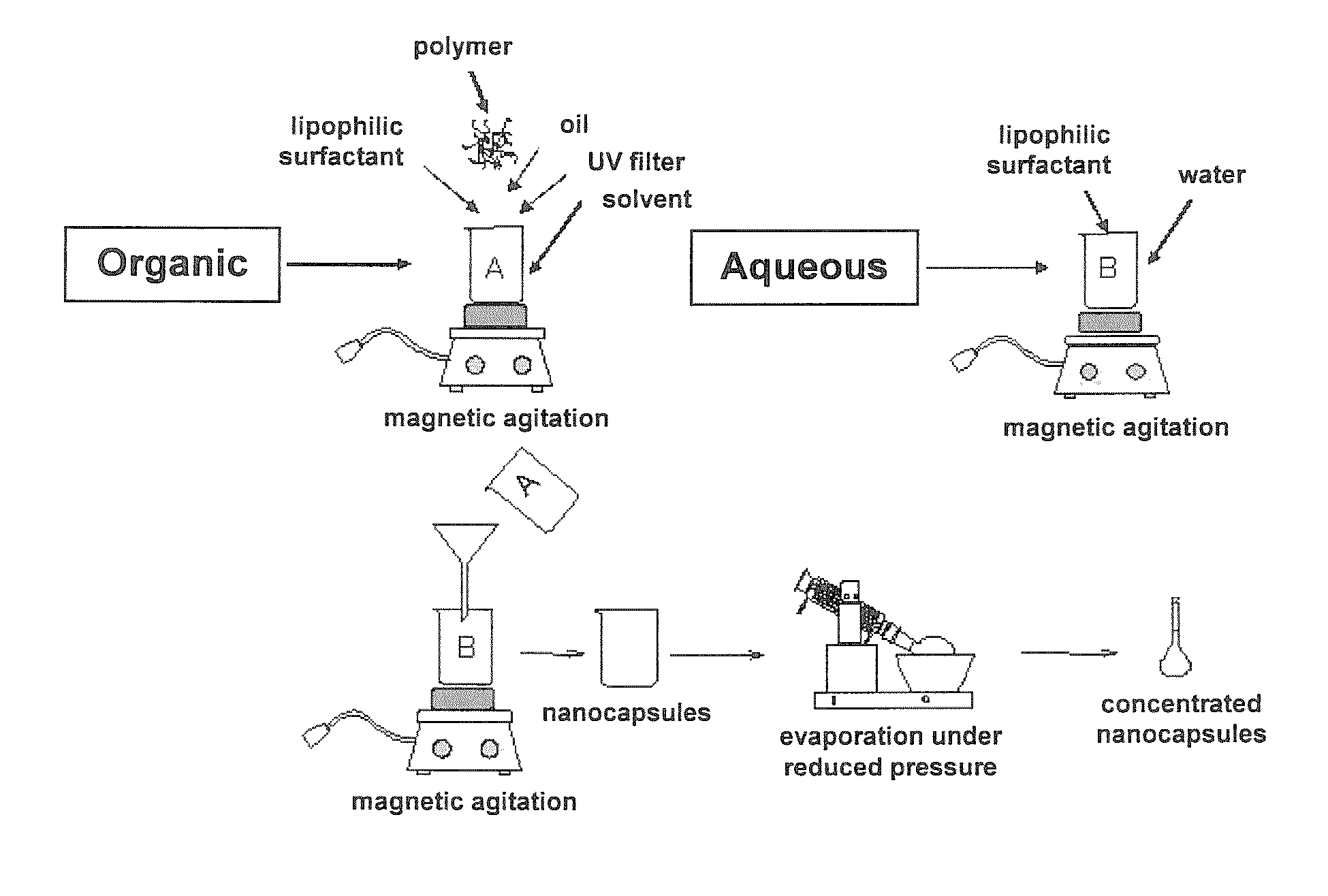
[0068]The particular composition of the invention as defined in Examples 1.1 and 1.2 were prepared as follows
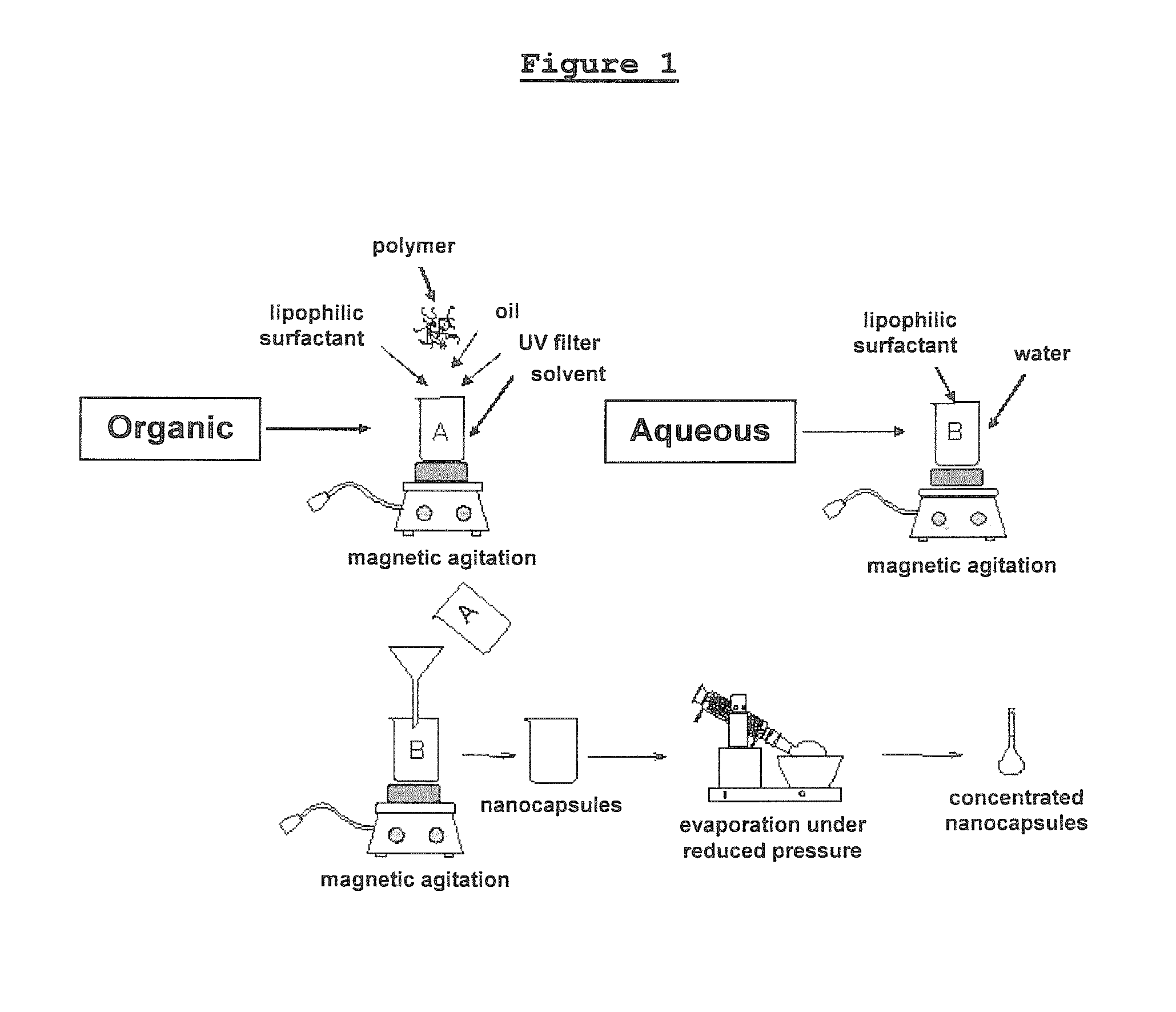
[0069]2.1. Preparation of the Nanocapsules:
[0070]The nanocapsules comprising octocrylene, avobenzone and buriti oil in the nucleus (denominated Nanophoton®) were prepared by interfacial polymer deposition.
[0071]The aqueous phase was prepared by dissolving 0.076 g polysorbate 80 (P80) in 53 mL of distilled water.
[0072]The organic phase was prepared by adding 0.076 g sorbitan monostearate, 0.100 g poly(ε-caprolactone), 0.125 g octocrylene, 0.025 g avobenzone and 0.125 g buriti oil, in 27 mL of acetone.
[0073]After dissolution of the components, the organic phase was added to the aqueous phase. The mixture was kept under agitation until complete homogenization and, afterwards, evaporated the acetone and water phase, concentrating the suspension to a final volume of 10 mL, adjusted in a volumetric flask.
[0074]A scheme for the preparation of the nanocapsules is shown in FIG. 1.
[007...
example 3
Photostability Studies of the Photoprotective Compositions
[0092]3.1. Photostability Studies:
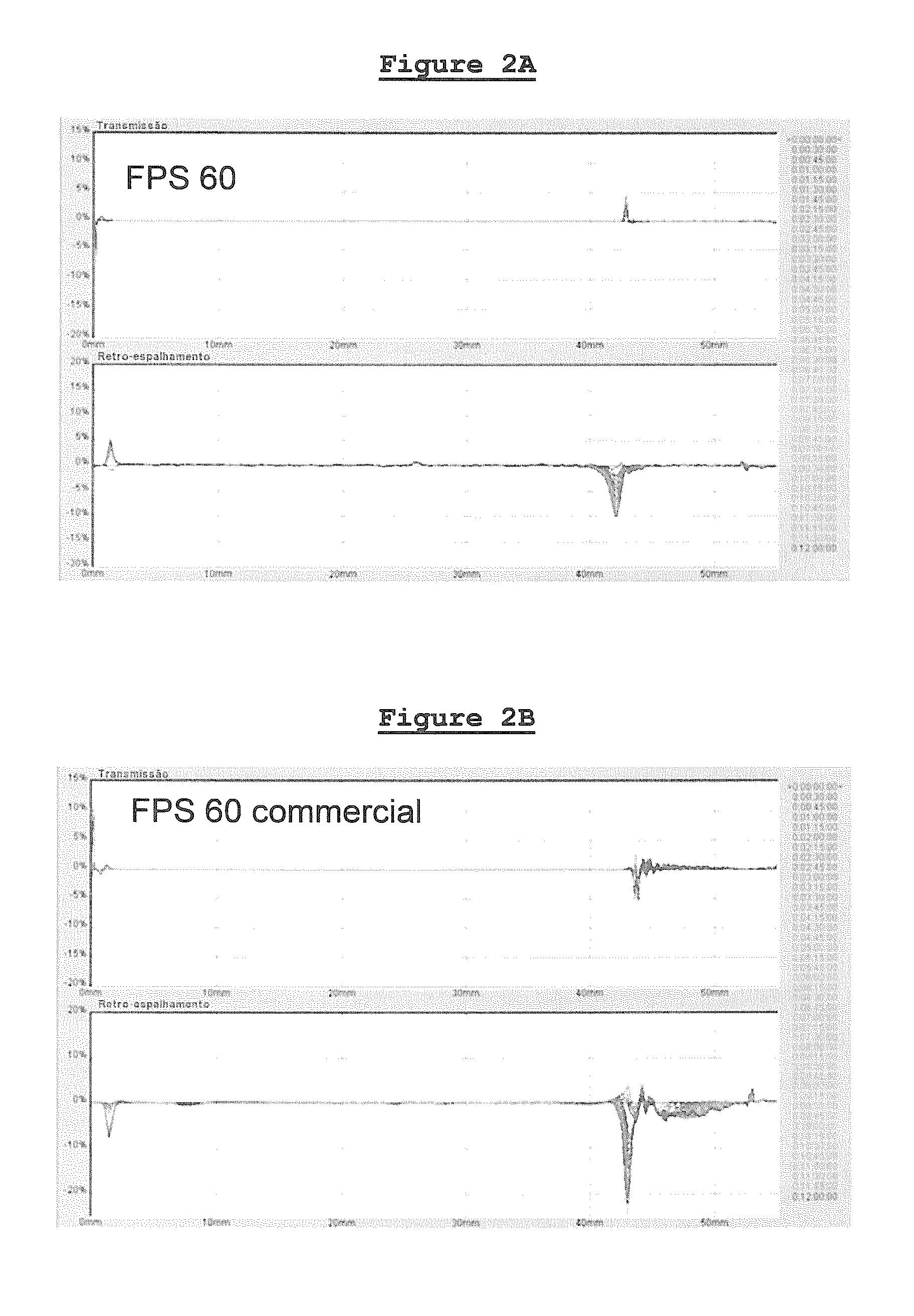
[0093]For the photostability studies, a volume of approximately 20 μL of semi-solid base was placed in quartz cuvettes, 10 mm, type 101-S (Suprazil). With the aid of a blade, a drop of semi-solid base was spread out so that it was sufficiently transparent (a few micrometers), permitting measurements of transmission and absorption. After 30 minutes, a reading was realized for the transmission and absorption in the UV (290 to 400 nm) at the initial time (t=0), using the spectrophotometer Varian Cary 50 UV-vis. After the initial reading, the cuvettes were irradiated with UVA radiation (300 to 400 nm, 90 Watts) and, at predetermined periods (2 in 2 hours), readings were realized for the transmission and absorption from 290 to 400 nm (FIGS. 2A and 2B). The absorption spectra of the times of irradiation were treated and the integral of the area of the absorption curve was calculated using the progr...
PUM
| Property | Measurement | Unit |
|---|---|---|
| Fraction | aaaaa | aaaaa |
| Fraction | aaaaa | aaaaa |
| Fraction | aaaaa | aaaaa |
Abstract
Description
Claims
Application Information
 Login to View More