

Active matrix substrate, microfluidic device including active matrix substrate, and method of manufacturing active matrix substrate and microfluidic device
- Summary
- Abstract
- Description
- Claims
- Application Information
AI Technical Summary
Benefits of technology
Problems solved by technology
Method used
Image

Examples
embodiment 1
[0034]The present embodiment will describe, as an example of a microfluidic device in accordance with the present invention, an active matrix electrowetting-on-dielectric (AM-EWOD) device that uses thin film transistors (TFTs) to actuate a droplet (electrowetting-on-dielectric) in an active matrix array.
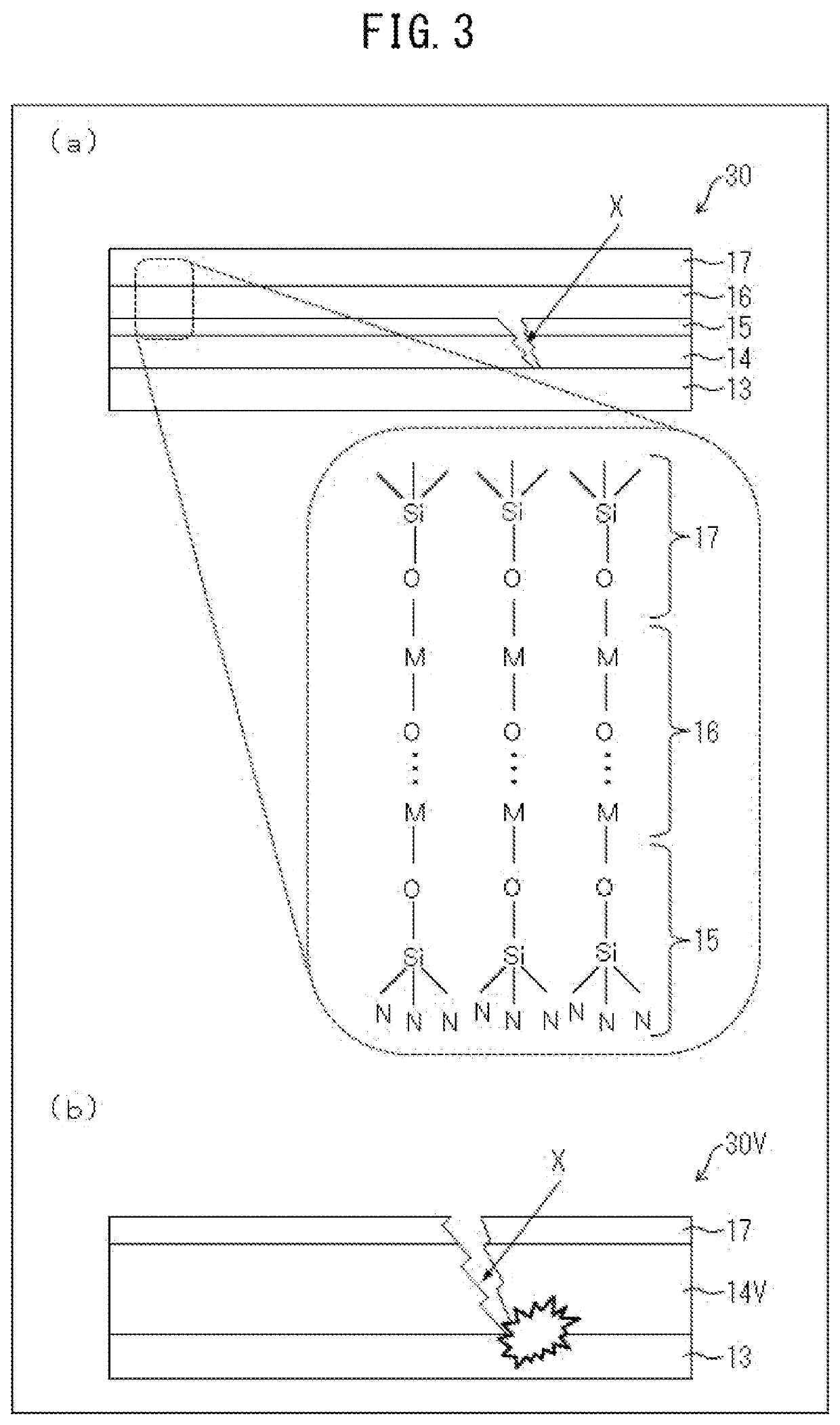
[0035]A description is now given of an embodiment of the present invention with reference to FIGS. 1 to 5.
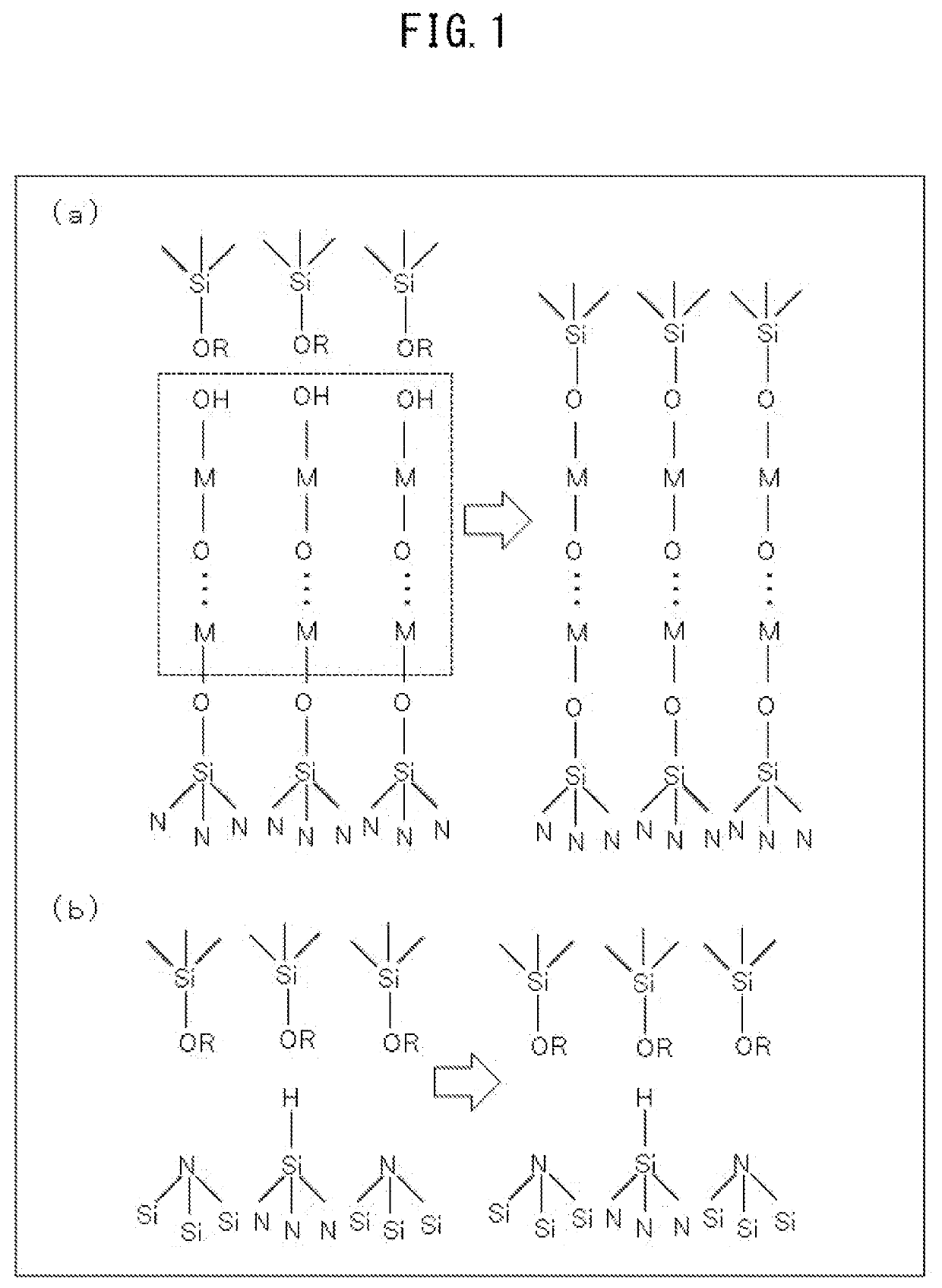
[0036]Portion (a) of FIG. 1 is a schematic illustration of bonding of an oxidized silicon nitride film surface, a metal-oxide film, and a water-repelling layer surface. Portion (b) of FIG. 1 is a schematic illustration of the condition of a silicon nitride film surface and a water-repelling layer surface in a conventional active matrix substrate.
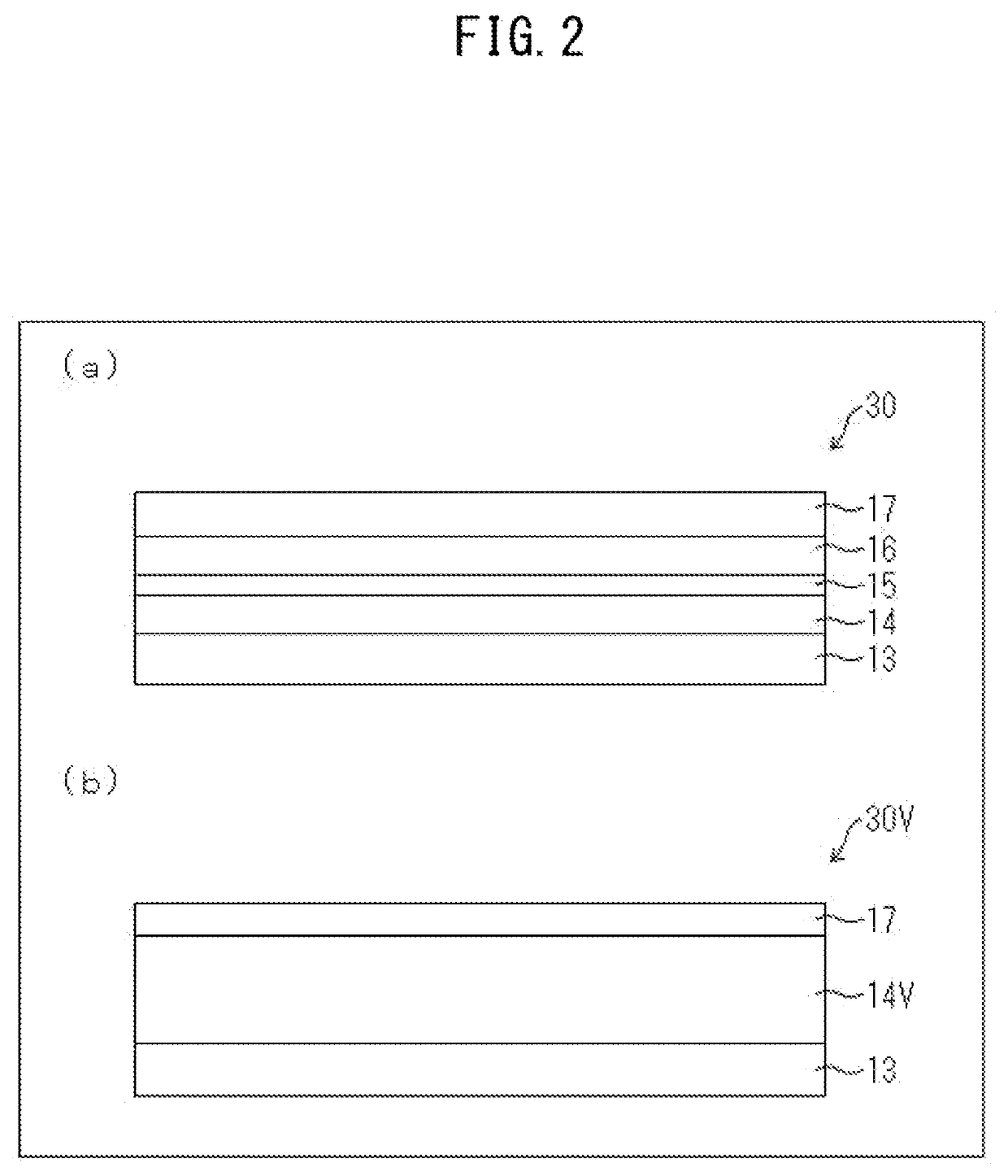
[0037]Portion (a) of FIG. 2 is a schematic cross-sectional view of an active matrix substrate accordance with Embodiment 1 of the present invention. Portion (b) of FIG. 2 is a schematic cross-sectional view of a conventional active matrix...
embodiment 2
[0079]A description is now given of another embodiment of the present invention with reference to FIGS. 6 and 7.
[0080]FIG. 6 is an illustration of a method of manufacturing an active matrix substrate in accordance with the present embodiment. FIG. 7 is an illustration of a method of manufacturing an opposite substrate in accordance with the present embodiment.
[0081]First, as shown in (a) of FIG. 6, a butler layer 101 is formed on a glass substrate (first substrate) 100. The buffer layer 101 may be, for example, a film of SiNx, Si)2, or SiNO with a thickness of approximately 100 to 300 nm. The buffer layer may have either a monolayer structure or a multilayer structure including a stack of two or more films and may also be omitted altogether in some devices. There is formed a semiconductor layer 102 on the buffer layer 101. The semiconductor layer 102 is a Si film with a thickness of approximately 20 to 100 nm and may be photo / dry-etched for patterning after being formed and crystall...
embodiment 3
[0101]A description is now given of another embodiment of the present invention.
[0102]The present embodiment differs from Embodiment 2 in that in the former, the metal-oxide film in the dielectric layer is formed by sputtering. The following describe another embodiment of present invention,
[0103]Similarly to the previous embodiment, a dielectric layer 111 is obtained by forming a silicon nitride (SiNx) film by plasma CVD, oxidizing the surface of the film to form a surface layer region having a high oxygen concentration, and forming a metal-oxide film on the surface layer region by DC sputtering. More specifically, a metal-oxide film is formed with a thickness of approximately 30 to 100 nm by using a sintered metal oxide as a target material, introducing argon and gaseous oxygen into a film-forming chamber, and heating the substrate to a temperature of 200° C. The metal-oxide film is formed at a rate of 10 nm / scan. A particularly preferred metal-oxide material is hafnium oxide (HFO2...
PUM
 Login to View More
 Abstract
Description
Claims
Application Information
 Login to View More