
Process for producing basic lead carbonate
a lead carbonate and lead carbonate technology, applied in the direction of dissolving, chemical/physical/physicochemical stationary reactors, tin compounds, etc., can solve the problems of significant environmental pollution, resource waste, economic losses, etc., and achieve the effect of saving resources, optimizing processes, and improving processing and utilization
- Summary
- Abstract
- Description
- Claims
- Application Information
AI Technical Summary
Benefits of technology
Problems solved by technology
Method used
Image

Examples
example 2
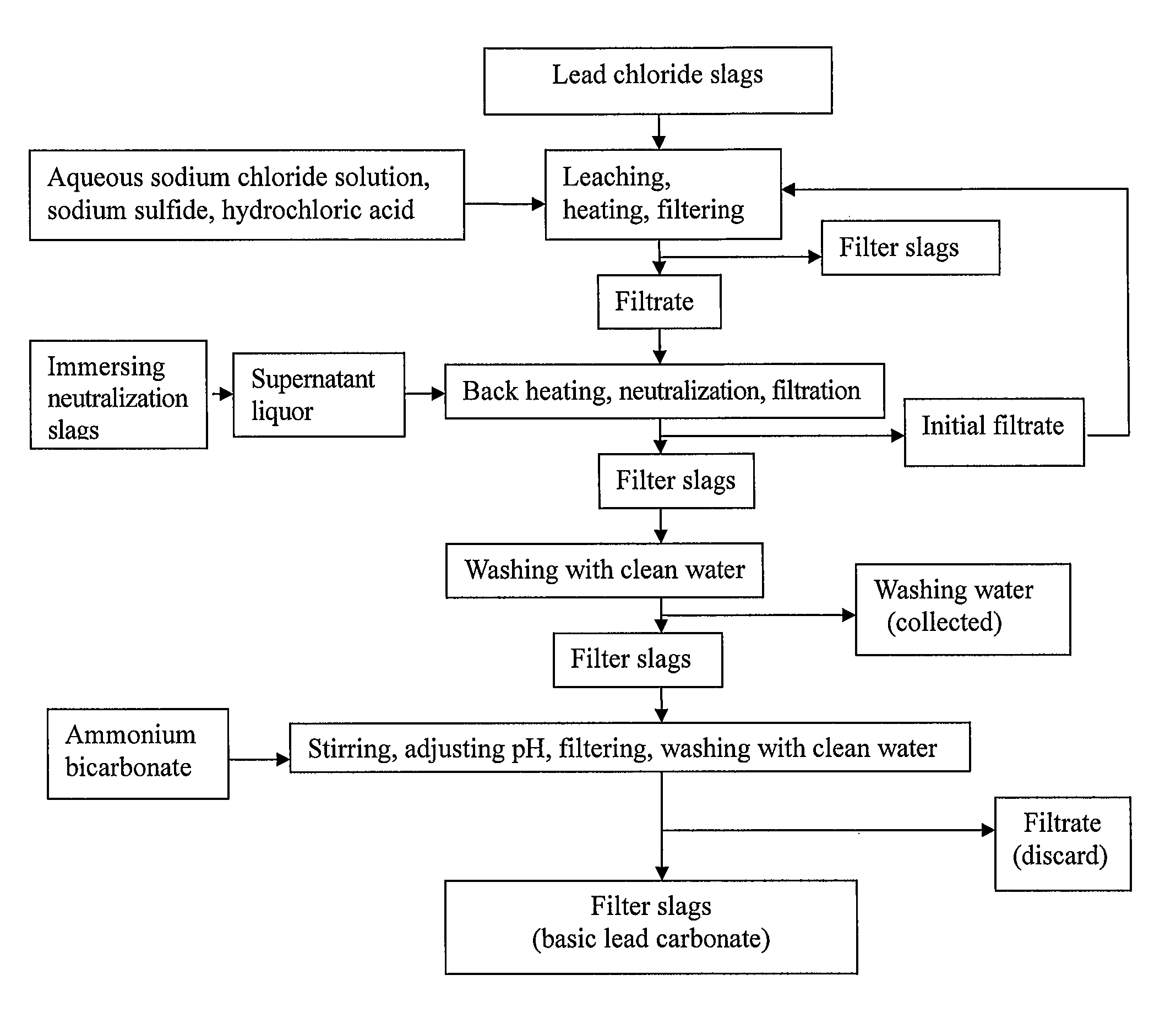
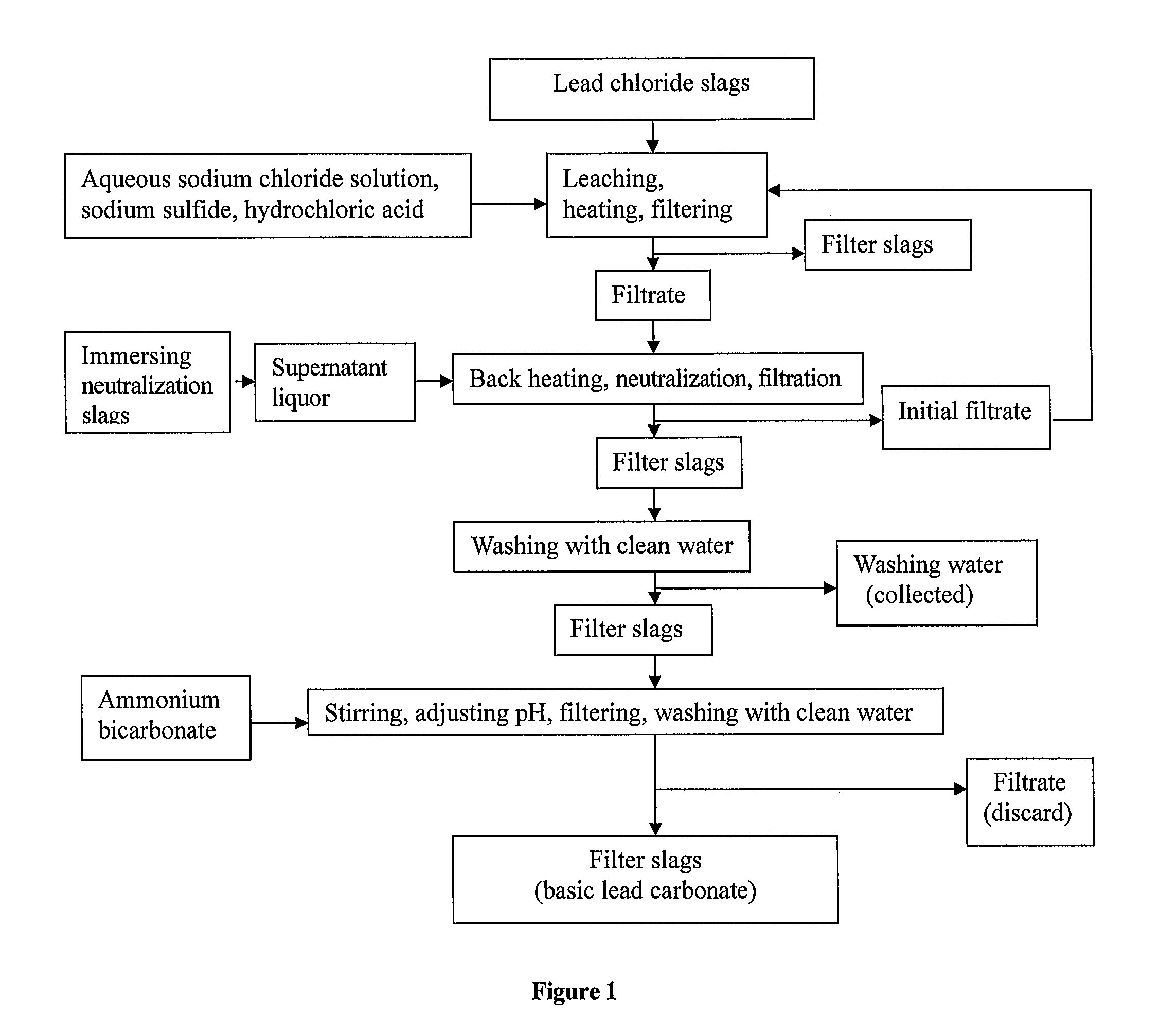
[0034]As shown in FIG. 1, a flow diagram is illustrated, wherein the “redundant slags” in fire refining of bismuth, i.e., lead chloride slags (PbCl2) and neutralization slags (NaOH) are used as raw materials to produce basic lead carbonate with low impurity content. The main steps of the process include:
(1) Immersing Neutralization Slags to Obtain Sodium Hydroxide Solution:
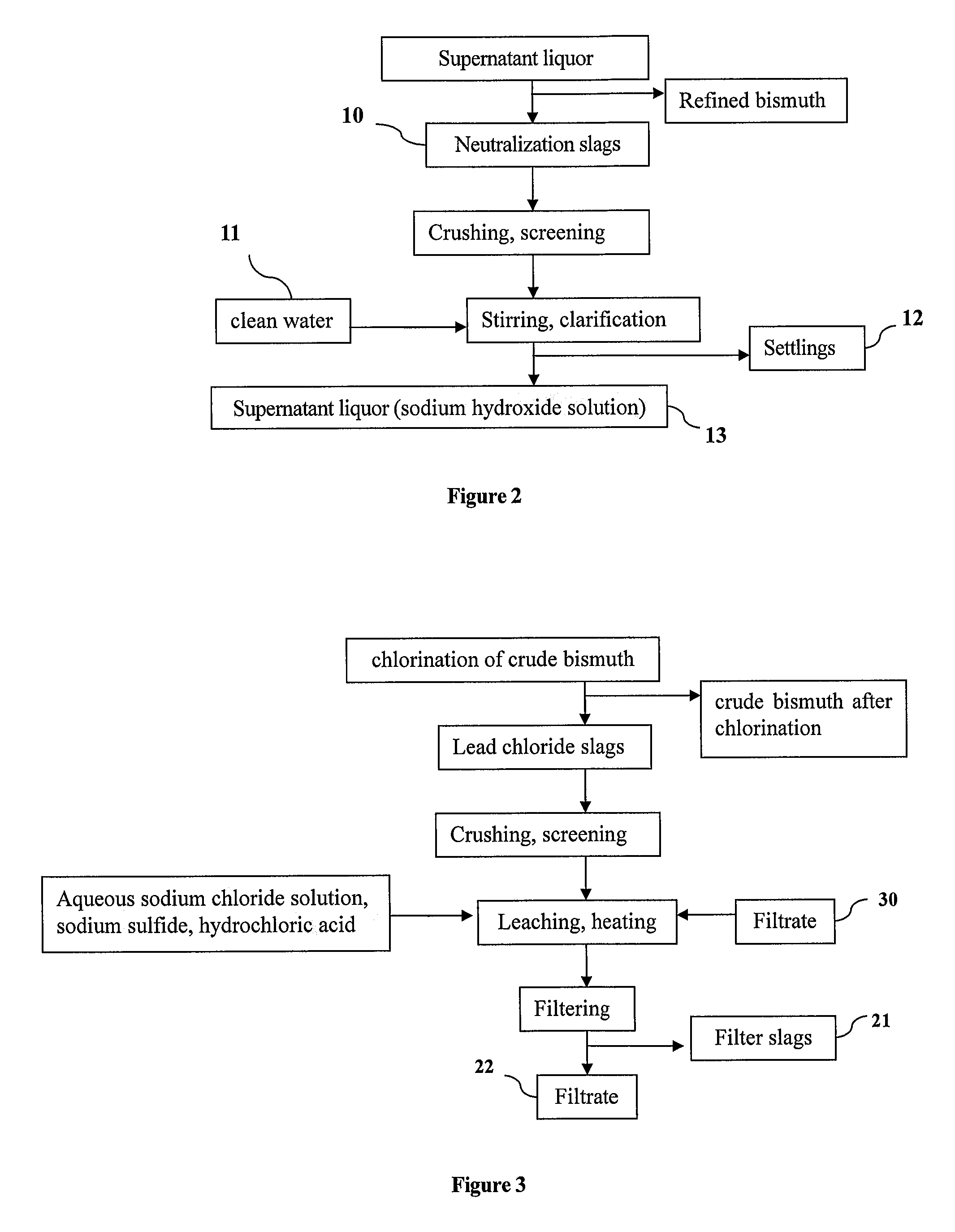
[0035]As shown in FIG. 2, neutralization slags 10 are crushed, then added into an immersing pool containing clean water 11 with stirrer in operation, immersed for 1.5 h and clarified. The supernatant liquor (sodium hydroxide solution) 13 is stored for use. The settlings 12 are dried and then returned directly to refining pot for smelting.
(2) Leaching Lead Chloride Slags and Filtering:
[0036]As shown in FIG. 3, the filtrate 30 and lead chloride slags which are crushed to about 200 meshes are fed into a reaction tank. The concentration of sodium chloride in the solution contained in the reaction tank is adjusted to 3...
PUM
| Property | Measurement | Unit |
|---|---|---|
| mass fraction | aaaaa | aaaaa |
| temperature | aaaaa | aaaaa |
| pH | aaaaa | aaaaa |
Abstract
Description
Claims
Application Information
 Login to View More