
Medical fertilizer with function of preventing and treating root-knot nematode and preparation method as well as application thereof
A root-knot nematode and functional technology, which is applied in the field of medicinal fertilizers with the function of preventing and controlling root-knot nematodes and its preparation, can solve the problems of affecting the growth and development of crops, destroying plant root systems, and economic losses, and achieves the prevention and control of crop root-knot nematode diseases, Effect of promoting crop growth and reducing phytotoxicity
- Summary
- Abstract
- Description
- Claims
- Application Information
AI Technical Summary
Problems solved by technology
Method used
Image

Examples
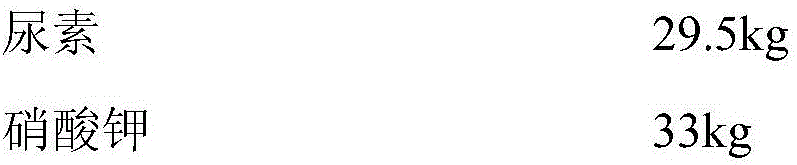
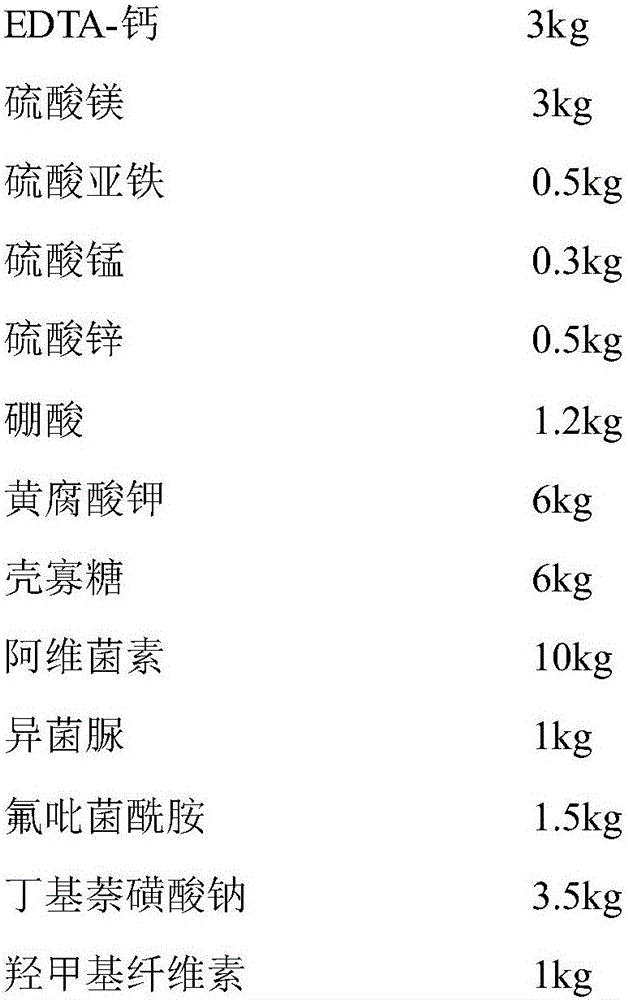
Embodiment 1
[0036]
[0037]
[0038] The preparation method is as follows:
[0039] (1) Accurately weigh the above raw materials for later use;
[0040] (2) Grinding urea and potassium nitrate to 60 mesh and mixing uniformly to obtain component A;
[0041] (3) Grinding EDTA-calcium, magnesium sulfate, ferrous sulfate, manganese sulfate, zinc sulfate 0.5kg, and boric acid to 60 meshes and mixing evenly to obtain component B;
[0042] (4) Potassium fulvic acid and chitosan oligosaccharides were pulverized to 60 mesh and mixed uniformly to obtain component C;
[0043] (5) After mixing Abamectin, Iprodione, Fluopyram, Sodium Butylnaphthalene Sulfonate, and Hydroxymethylcellulose, ultrafinely pulverize it to 3000 mesh to obtain Component D;
[0044] (6) Mix components B, C and D evenly to obtain component E;
[0045] (7) Mix components E and A evenly and then directly fill or granulate and then fill to obtain the finished product.
Embodiment 2
[0047]
[0048]
[0049] The preparation method is as follows:
[0050] (1) Accurately weigh the above raw materials for later use;
[0051] (2) Grinding urea and potassium sulfate to 40 mesh and mixing uniformly to obtain component A;
[0052] (3) Grinding calcium ammonium nitrate, magnesium sulfate, ferrous sulfate, manganese sulfate, zinc sulfate 0.5kg, and boric acid to 80 meshes and mixing uniformly to obtain component B;
[0053](4) Grinding sodium humate and chitosan oligosaccharide to 40 meshes and mixing uniformly to obtain component C;
[0054] (5) After mixing abamectin, iprodione, fluopyram, sodium butylnaphthalenesulfonate, and hydroxymethylcellulose, ultrafinely pulverize it to 2500 mesh to obtain component D;
[0055] (6) Mix components B, C and D evenly to obtain component E;
[0056] (7) Mix components E and A evenly and then directly fill or granulate and then fill to obtain the finished product.
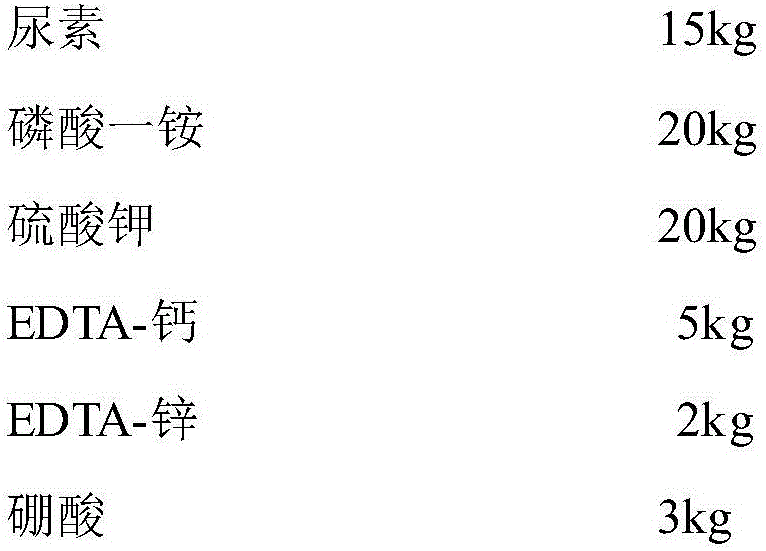
Embodiment 3
[0058]
[0059] The preparation method is as follows:
[0060] (1) Accurately weigh the above raw materials for later use;
[0061] (2) Grinding urea and potassium sulfate to 80 mesh and mixing uniformly to obtain component A;
[0062] (3) Grinding calcium ammonium nitrate, magnesium sulfate, ferrous sulfate, manganese sulfate, zinc sulfate 0.5kg, and boric acid to 40 meshes and mixing uniformly to obtain component B;
[0063] (4) Potassium fulvic acid and chitosan oligosaccharide were pulverized to 80 meshes and mixed uniformly to obtain component C;
[0064] (5) After mixing abamectin, iprodione, fluopyram, sodium butylnaphthalenesulfonate, and hydroxymethylcellulose, ultrafinely pulverize it to 3500 mesh to obtain component D;
[0065] (6) Mix components B, C and D evenly to obtain component E;
[0066] (7) Mix components E and A evenly and then directly fill or granulate and then fill to obtain the finished product.
PUM
 Login to View More
 Abstract
Description
Claims
Application Information
 Login to View More