
Bismuth-containing biphase mixed conductor oxygen permeation membrane material with carbon dioxide resistance and high stability and preparation method thereof
A high-stability, mixed-conductor technology, used in chemical instruments and methods, separation methods, semi-permeable membrane separation, etc., can solve problems such as poor stability, and achieve the effect of dense surface, excellent mechanical properties, and good oxygen permeability.
Patent Information
- Authority / Receiving Office
- CN · China
- Current Assignee / Owner
- Publication Date
- 2021-11-05
Smart Images
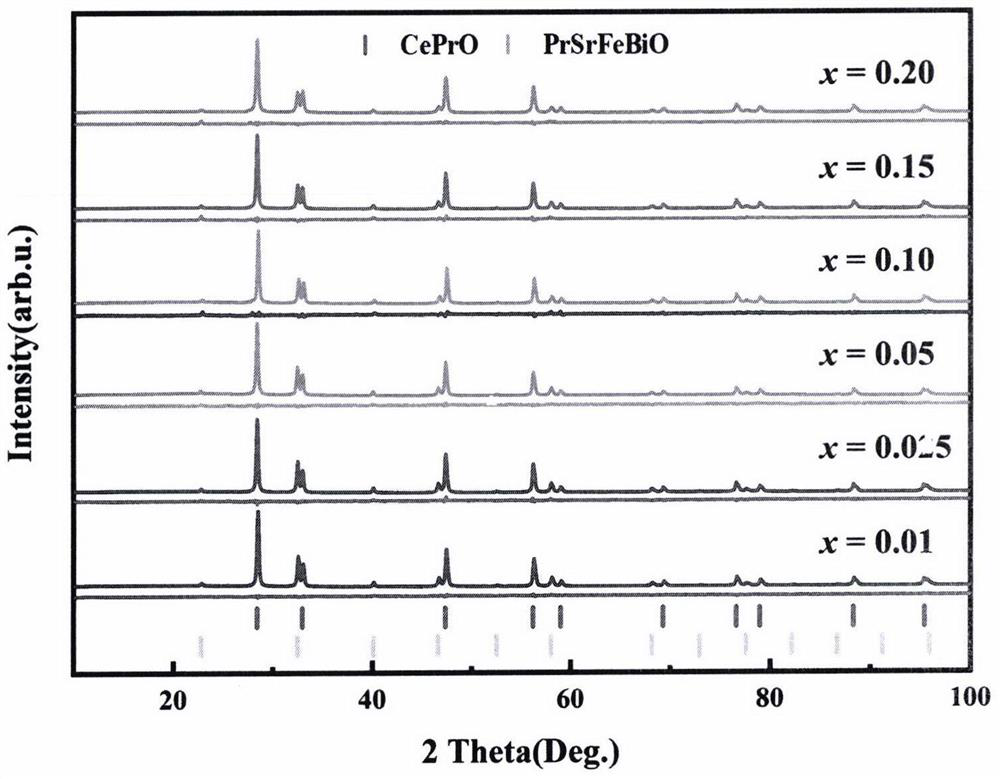
Figure 1 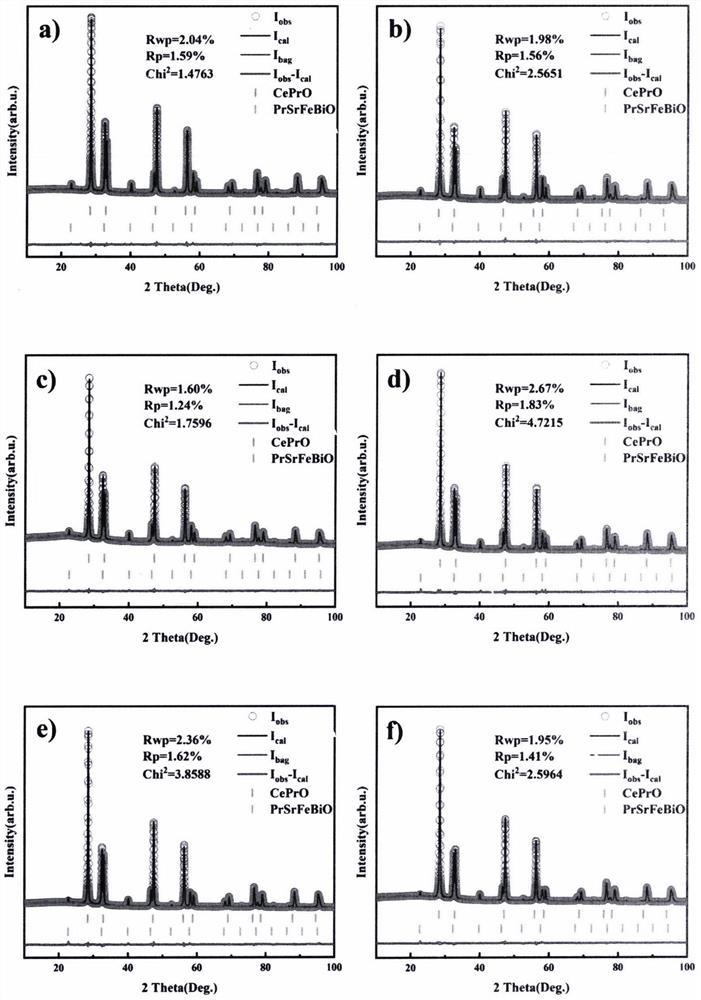
Figure 2 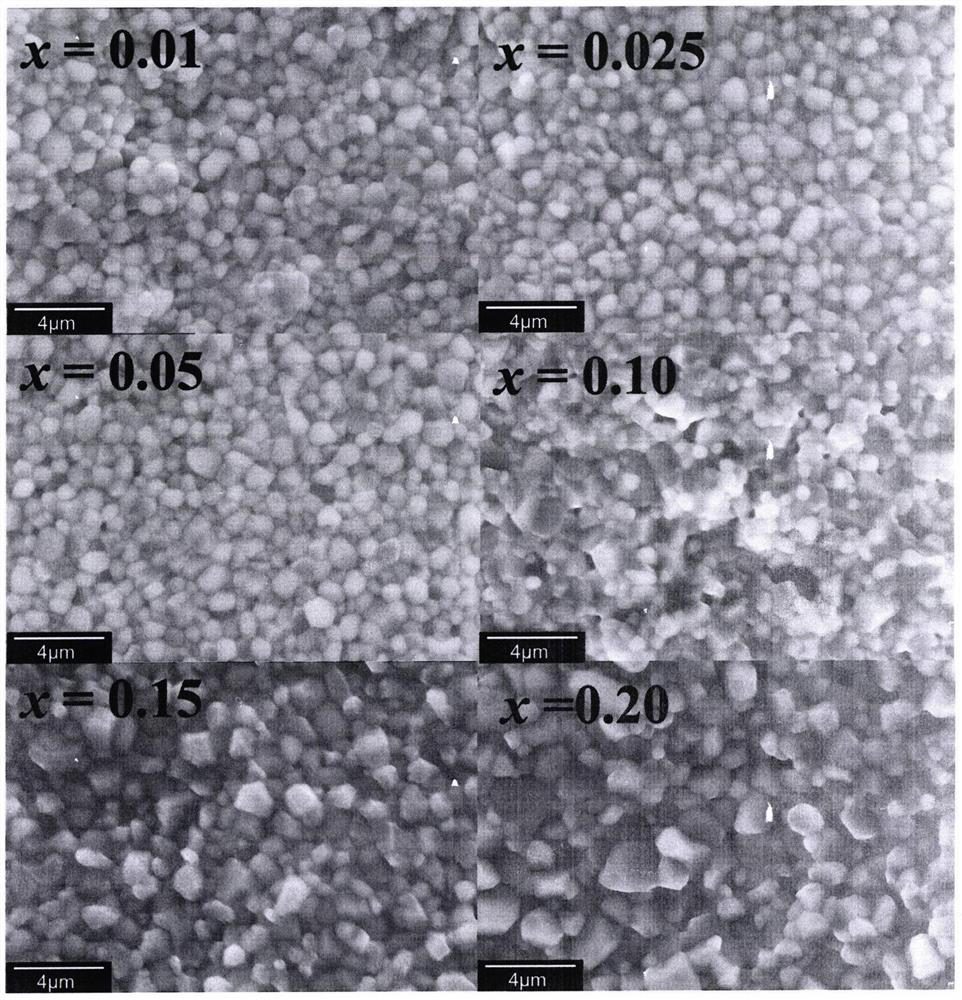
Figure 3
Abstract
Description
technical field
[0001] The invention belongs to the technical field of functional ceramics manufacturing, in particular to a chemical composition Ce 0.9 PR 0.1 o 2-δ -Pr 0.6 Sr 0 4 Fe 1-x Bi x o 3-δ Two-phase mixed conductor oxygen-permeable membrane material and its preparation method. Background technique
[0002] Mixed conductor oxygen permeable membranes (OTMs) are environmentally friendly and efficient air separation membranes, which can effectively separate oxygen and capture carbon dioxide, and possess certain catalytic activity. As a kind of dense ceramic film, take perovskite film as an example, it has both oxygen ion and electronic conductivity under medium and high temperature conditions, so it can permeate oxygen with high selectivity under the action of oxygen concentration gradient, thus continuous, Low-cost production of high-purity oxygen. Mixed conductor oxygen-permeable membranes have great potential in the coupling of oxygen-rich combustion, parti...
Examples
Embodiment 1
[0032] Accurately weigh 4.1057g Ce(NO 3 ) 3 ·6H 2 O, 1.8656g Pr(NO 3 ) 3 ·6H 2 O, 2.1336g Fe(NO 3 ) 3 9H 2 O. 0.4538g Sr(NO 3 ) 2 , 0.0261g Bi(NO 3 ) 3 ·5H 2 O, 8.7669g citric acid monohydrate, stir the solution until it becomes clear and transparent, place the beaker on a magnetic stirrer, continue heating and evaporating until it turns into a gel, and then put the gel in an oven at 140 ° C for 24 hours to obtain The dry gel is fluffy, and after being fully ground, it is put into a crucible and kept at 600°C for 8 hours for calcination to remove organic matter. The calcined powder is fully ground and placed in a crucible, and calcined at 950°C for 10 hours to obtain Ce 0.9 PR 0.1 o 2-δ -Pr 0.6 Sr 0.4 Fe 0.99 Bi 0.01 o 3-δ The powder is pressed at 10MPa to obtain a cake-shaped sheet, and the sheet is slowly heated up at 1400°C for 5 hours and sintered to obtain a dense dual-phase ceramic oxygen-permeable membrane material, and sanded to obtain a high-stabil...
Embodiment 2
[0034] Accurately weigh 4.1057g Ce(NO 3 ) 3 ·6H 2 O, 1.8514g Pr(NO 3 ) 3 ·6H 2 O, 2.0800g Fe(NO 3 ) 3 9H 2 O, 0.4492g Sr(NO 3 ) 2 , 0.0647g Bi(NO 3 ) 3 ·5H 2 O, 8.7669g citric acid monohydrate, stir the solution until it becomes clear and transparent, place the beaker on a magnetic stirrer, continue heating and evaporating until it turns into a gel, and then put the gel in an oven at 140 ° C for 24 hours to obtain The dry gel is fluffy, and after being fully ground, it is put into a crucible and kept at 600°C for 8 hours for calcination to remove organic matter. The calcined powder is fully ground and placed in a crucible, and calcined at 950°C for 10 hours to obtain Ce 0.9 PR 0.1 o 2-δ -Pr 0.6 Sr 0.4 Fe 0.975 Bi 0.025 o 3-δ The powder is pressed at 10MPa to obtain a cake-shaped sheet, and the sheet is slowly heated up at 1400°C for 5 hours and sintered to obtain a dense dual-phase ceramic oxygen-permeable membrane material, and sanded to obtain a high-stab...
Embodiment 3
[0036] Accurately weigh 4.1057g Ce(NO 3 ) 3 ·6H 2 O, 1.8283g Pr(NO 3 ) 3 ·6H 2 O, 1.9932g Fe(NO 3 ) 3 9H 2 O, 0.4418g Sr(NO3 ) 2 , 0.1272g Bi(NO 3 ) 3 ·5H 2 O, 8.7669g citric acid monohydrate, stir the solution until it becomes clear and transparent, place the beaker on a magnetic stirrer, continue heating and evaporating until it turns into a gel, and then put the gel in an oven at 140°C for 24 hours to obtain The dry gel is fluffy, and after being fully ground, it is put into a crucible and kept at 600°C for 8 hours for calcination to remove organic matter. The calcined powder is fully ground and placed in a crucible, and calcined at 950°C for 10 hours to obtain Ce 0.9 PR 0.1 o 2-δ -Pr 0.6 Sr 0.4 Fe 0.95 Bi 0.05 o 3-δ The powder is pressed at 10MPa to obtain a cake-shaped sheet, and the sheet is slowly heated at 1400°C for 5 hours to sinter to obtain a dense dual-phase ceramic oxygen-permeable membrane material, and sanded to obtain a high-stability bismut...