
Green synthesis method of 2, 5-dimethoxybenzaldehyde
A technology of dimethoxybenzaldehyde and dimethoxybenzene is applied in chemical instruments and methods, condensation preparation of carbonyl compounds, organic compounds/hydrides/coordination complex catalysts, etc. Friendly, high operating process requirements and other issues, to achieve the effect of simple synthesis and low price
Patent Information
- Authority / Receiving Office
- CN · China
- Patent Type
- Applications(China)
- Current Assignee / Owner
- Publication Date
- 2021-11-30
Smart Images
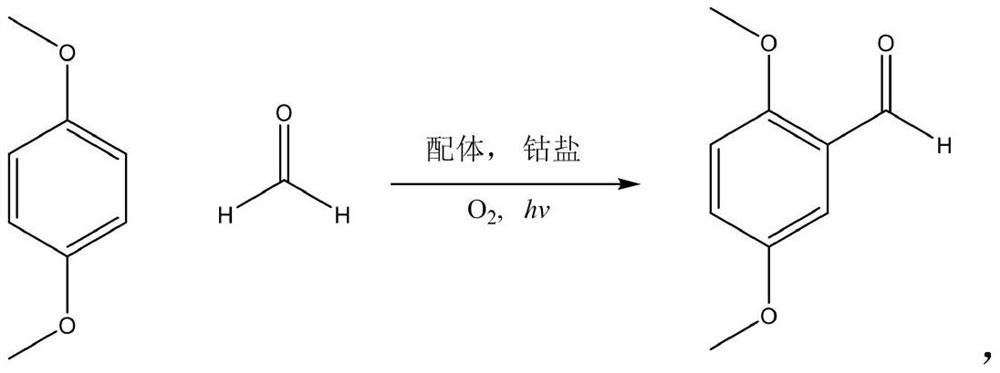
Figure 1 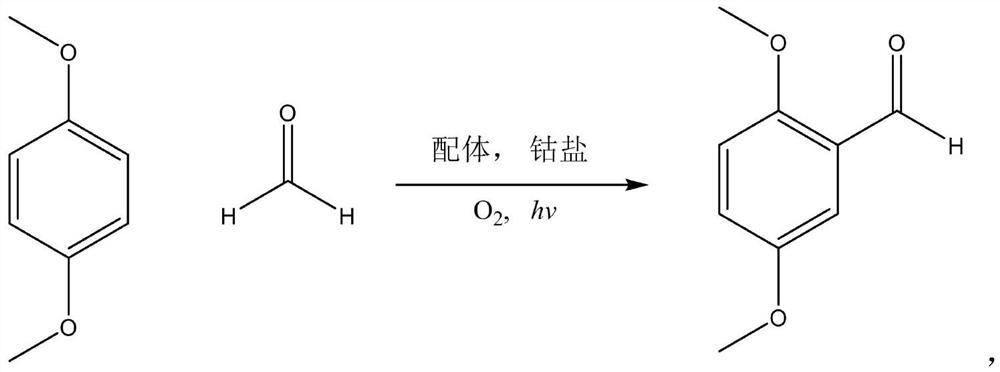
Figure 2 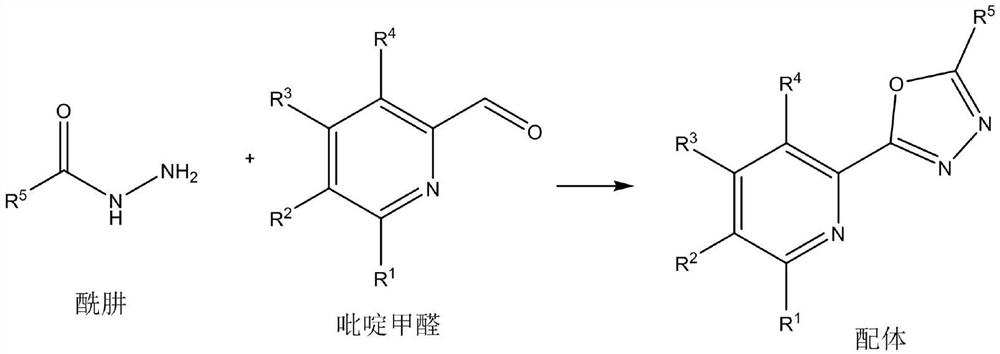
Figure 3
Abstract
Description
technical field
[0001] The invention belongs to the technical fields of organic chemistry and drug synthesis, and in particular relates to a green synthesis method of 2,5-dimethoxybenzaldehyde. Background technique
[0002] Parkinson's disease (Parkinson's disease, PD) is a common neurodegenerative disease, the main clinical symptoms are muscle tremors, stiffness, movement difficulties, body posture and motor balance disorders. Further development will also appear recognition, perception, memory impairment and obvious dementia. The main pathological feature of PD is the degeneration of dopaminergic neurons in the substantia nigra compacta, and the content of dopaminergic neurotransmitters in the striatum is significantly reduced. The cause of dopaminergic neuron degeneration is unknown so far. Genetics, infection, abnormal immune function, aging, and neurotoxins in vivo and in vitro all play a role in the pathogenesis of PD. Oxidative stress and mitochondrial dysfunction pl...
Examples
preparation example Construction
[0018] General step one (preparation of ligand):
[0019]
[0020] Add hydrazide (10mmol), pyridine formaldehyde (10mmol) and solvent methanol (20mL) into the reaction flask, add elemental iodine (0.5mmol) under stirring, and reflux reaction in the presence of air for 8 hours. After the reaction, add water and ethyl acetate The ester was extracted three times. The water layer was removed, and the organic layer was dried over anhydrous sodium sulfate, filtered, concentrated, and recrystallized with 20 mL of ethanol to obtain the ligand.
Embodiment 1
[0021] Embodiment 1 (preparation of ligand L1)
[0022]
[0023] The hydrazide is selected from acetylhydrazide, the pyridine formaldehyde is selected from pyridine-2-carbaldehyde, and the ligand L1 is prepared according to the method of general step 1. 1 H NMR: δ8.59(d, J=7.5Hz, 1H), 8.01(d, J=7.5Hz, 1H), 7.85(dd, J=7.5, 7.5Hz, 1H), 7.42(dd, J=7.5 ,7.5Hz,1H), 2.63(s,3H). 13 C NMR: δ164.7, 164.5, 157.4, 149.2, 137.2, 124.2, 123.6, 20.5.
Embodiment 2
[0024] Embodiment 2 (preparation of ligand L2)
[0025]
[0026] The hydrazide is selected from benzohydrazide, the pyridine formaldehyde is selected from 4-methoxypyridine-2-carbaldehyde, and the ligand L2 is prepared according to the method of general step 1. 1 H NMR: δ8.61(d, J=7.5Hz, 1H), 7.98(m, 2H), 7.73(d, J=7.5Hz, 1H), 7.62(m, 3H), 7.43(s, 1H), 3.81 (s,3H). 13 C NMR: δ164.8, 164.4, 159.4, 158.3, 150.2, 133.7, 129.3, 129.1, 128.7, 127.7, 127.5, 107.9, 105.4, 55.8.