
Salts of benzimidazole compound and use thereof
a technology of benzimidazole and salt, which is applied in the field of salts of benzimidazole compounds, can solve the problems of difficult to provide optically active lansoprazole with high purity, poor stability of pyridylmethylsulfinyl-1h-benzimidazole compounds, and practically fails to disclose the production of salts, etc., to achieve excellent anti-ulcer action of salts, low toxicity of salts, and high purity
- Summary
- Abstract
- Description
- Claims
- Application Information
AI Technical Summary
Benefits of technology
Problems solved by technology
Method used
Image

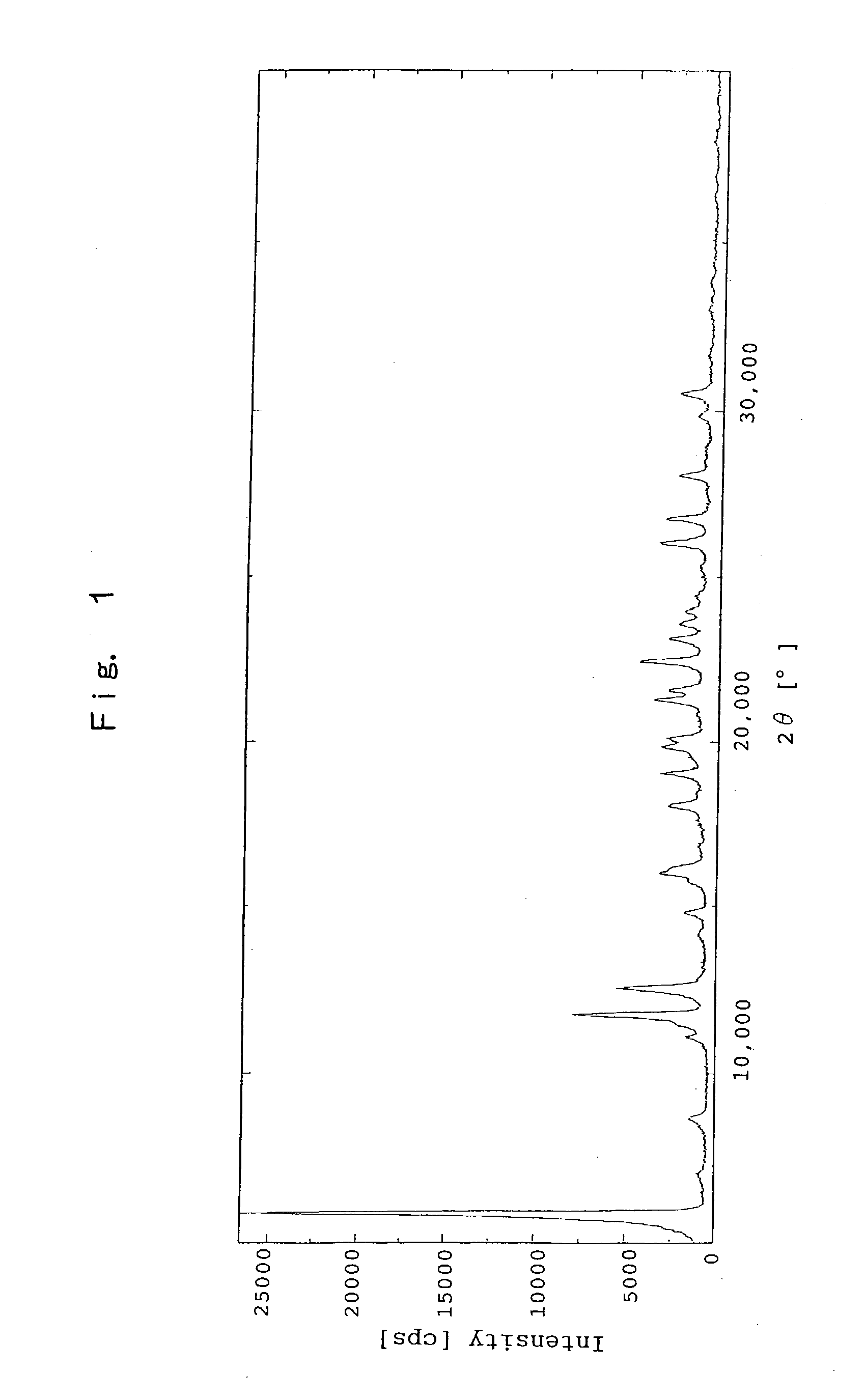
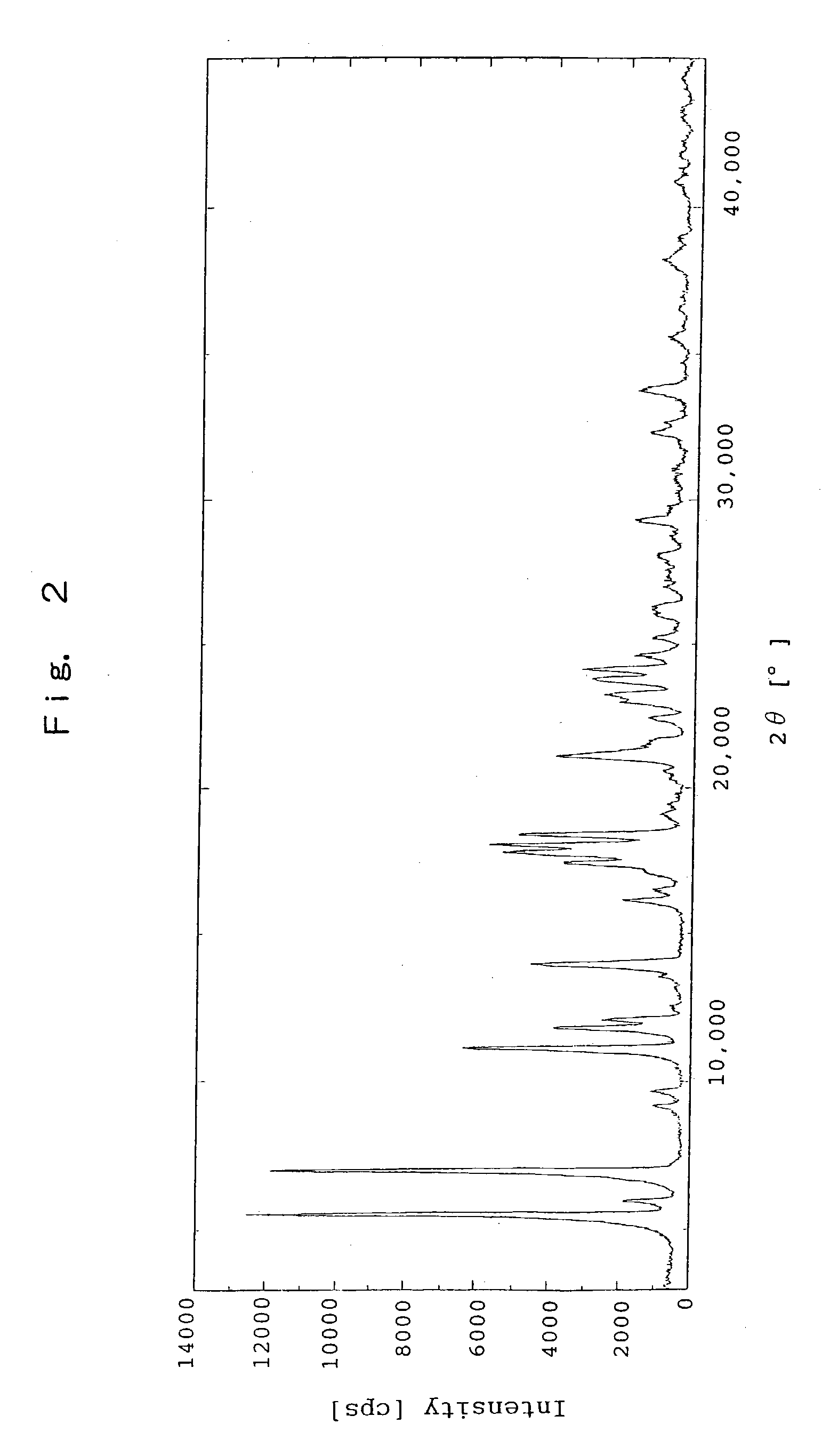
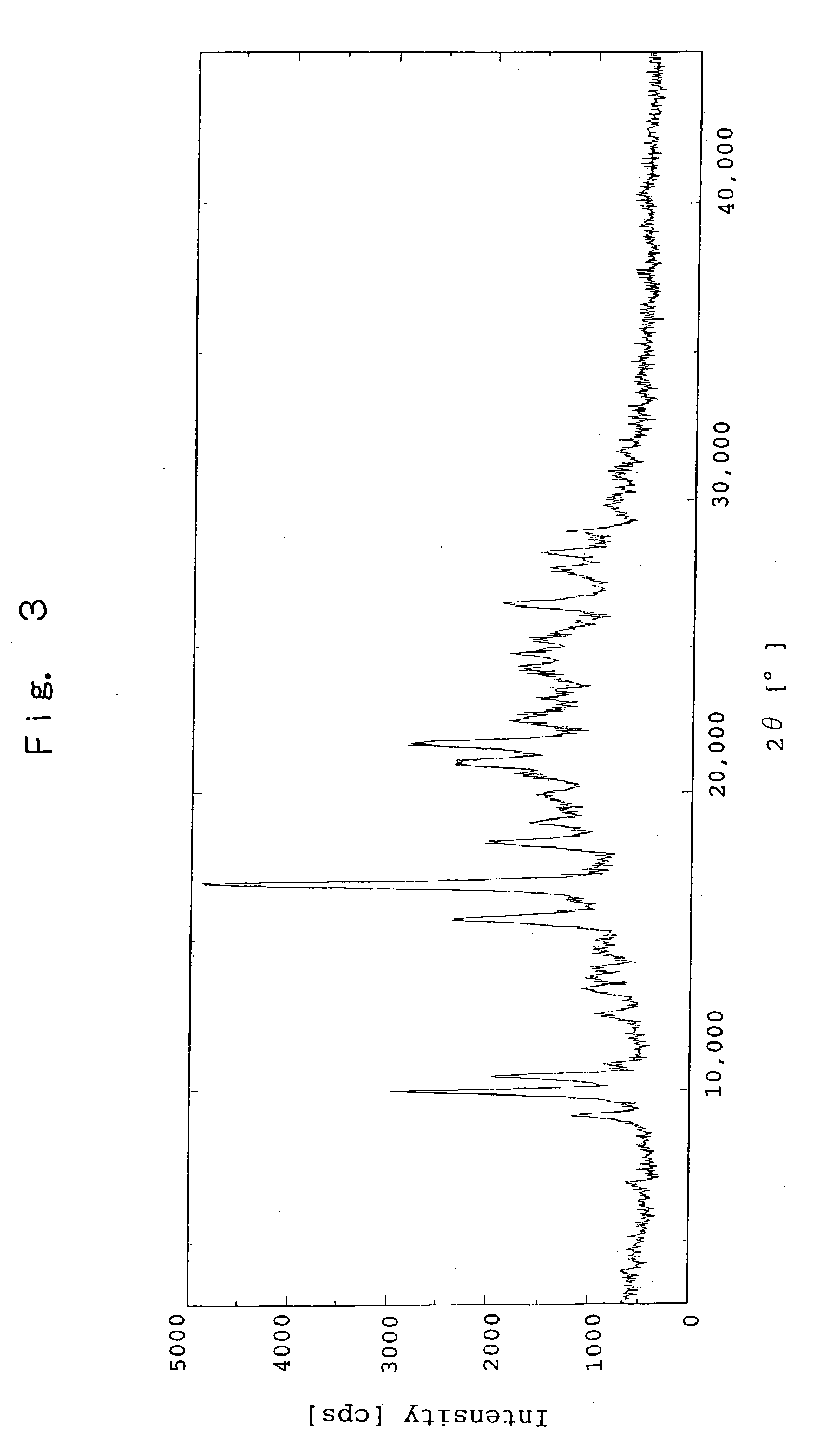
Examples
reference example 1
[0123] (R)-2-[[[3-methyl-4-(2,2,2-trifluoroethoxy)-2-pyridyl]methyl]sulfin-yl]benzimidazole
[0124] In a stream of nitrogen, 2-[[[3-methyl-4-(2,2,2-trifluoroethoxy)-2--pyridyl]methyl]thio]benzimidazole (4.5 kg, 12.7 mol, water content of 1.89 g), toluene (22 L), water (25 g, 1.39 mol, total water content of 1.49 mol) and (+)-diethyl tartrate (0.958 L, 5.60 mol) were mixed. In a stream of nitrogen, to the mixture was added titanium(IV) isopropoxide (0.747 L, 2.53 mol) at 50 to 60.degree. C., and stirred for 30 minutes at the same temperature. In a stream of nitrogen, to the resulting mixture liquid was added diisopropylethylamine (0.733 L, 4.44 mol) at a room temperature, further added cumenehydroperoxide (6.88 L, content of 82%, 37.5 mol) at -5 to 5.degree. C., and stirred at -5 to 5.degree. C. for 1.5 hours to obtain a liquid reaction mixture. In a stream of nitrogen, to the reaction liquid was added 30% sodium thiosulfate aqueous solution (17 L) to decompose residual cumenehydropero...
example 1
[0125] The Crystal of Sodium Salt of (R)-2-[[[3-methyl-4-(2,2,2-trifluoroe-thoxy)-2-pyridinyl]methyl]sulfinyl]-1H-benzimidazole
[0126] To ethanol solution (50 mL) of (R)-2-[[[3-methyl-4-(2,2,2-trifluoro-ethoxy)-2-pyridinyl]methyl]sulfinyl]-1H-benzimidazole (5.00 g) was added 1N sodium hydroxide aqueous solution (13.5 mL) under cooling with an ice. After filtration, the filtrate was concentrated under a reduced pressure. The residue was dissolved by adding ethanol (50 mL), and the resultant solution was concentrated under a reduced pressure. The residue was repeatedly dissolved by adding ethanol (50 mL) and the resultant solution was concentrated under a reduced pressure. To the resulting foamy material was added diethyl ether (50 mL), and then the resultant mixture was subjected to an ultrasonic treatment, and was heated with refluxing for 30 minutes. After cooling the mixture to a room temperature, the precipitated solid was filtrated off and the resultant solid was washed with diet...
example 2
[0133] The Crystal Solvated With Isopropyl Alcohol of Sodium Salt of (R)-2-[[[3-methyl-4-(2,2,2-trifluoroethoxy)-2-pyridyl]methyl]sulfinyl]ben-zimidazole
[0134] To (R)-2-[[[3-methyl-4-(2,2,2-trifluoroethoxy)-2-pyridyl]methyl]sul-finyl]benzimidazole (150.0 g, 0.41 mol) was added methanol (225 mL) to dissolve, and 20% sodium hydroxide aqueous solution (81 g, 0.41 mol) was added thereto. The mixture was concentrated under a reduced pressure. To the residue was added isopropyl alcohol (1,500 mL) to dissolve, and the resultant mixture was stirred at a room temperature for about 24 hours. The precipitated crystal was separated and washed with isopropyl alcohol (300 mL). After drying at 40.degree. C. under a reduced pressure, the title crystal (142.0 g) was obtained. The data of X-ray powder diffraction is shown in Table 2, and the chart of X-ray powder diffraction is shown in FIG. 2.
[0135] Elemental Analysis
[0136] Calculated (as C.sub.16H.sub.13N.sub.3O.sub.2SF.sub.3Na.C.sub.3H.su-b.8O.1.5...
PUM
| Property | Measurement | Unit |
|---|---|---|
| optical purity | aaaaa | aaaaa |
| optical purity | aaaaa | aaaaa |
| optical purity | aaaaa | aaaaa |
Abstract
Description
Claims
Application Information
 Login to View More