[0062]A 1998 study by I. J. Russell (Am. J. Med. Sci., 315(6): 377-384) noted that the term
allodynia is properly associated with fibromyalgia because people with fibromyalgia experience pain from pressure stimuli that are not normally painful. Thus, Russell determined that the nociceptive neurotransmitters of animal studies are relevant to the human model of chronic, widespread pain that is common with fibromyalgia. The association between pain and fibromyalgia and the
efficacy for treatment of fibromyalgia as evidenced by
effective treatment of
chronic pain is further supported in the literature. A 2005 study by Bomholt et al. (Brain Res., 1044(2): 216-226) illustrated that
chronic pain conditions, such as fibromyalgia, are associated with profound hypothalamo-pituitary-adrenal (HPA) axis dysfunction which can exacerbate symptoms of chronic pain. Another 2005 study by Pedersen et al. (Psychopharmacology (Berl), 182(4): 551-561) determined that anti-
nociception is selectively enhanced by parallel inhibition of multiple subtypes of monoamine transporters in rat models of persistent and
neuropathic pain. A 2002 study by Gracety et al. (
Arthritis &
Rheumatism, 46(5): 1333-1343) used
functional magnetic resonance imaging (fMRI) to provide evidence that fibromyalgia is characterized by cortical and subcortical augmentation of pain
processing in the
human brain. A 1988 study by Bennett, G. J. and Xie, Y. K. (Pain, 33(1): 87-107) indicated that a
rat model of
peripheral mononeuropathy produced through chronic constrictive injury (CCI) was an effective model of
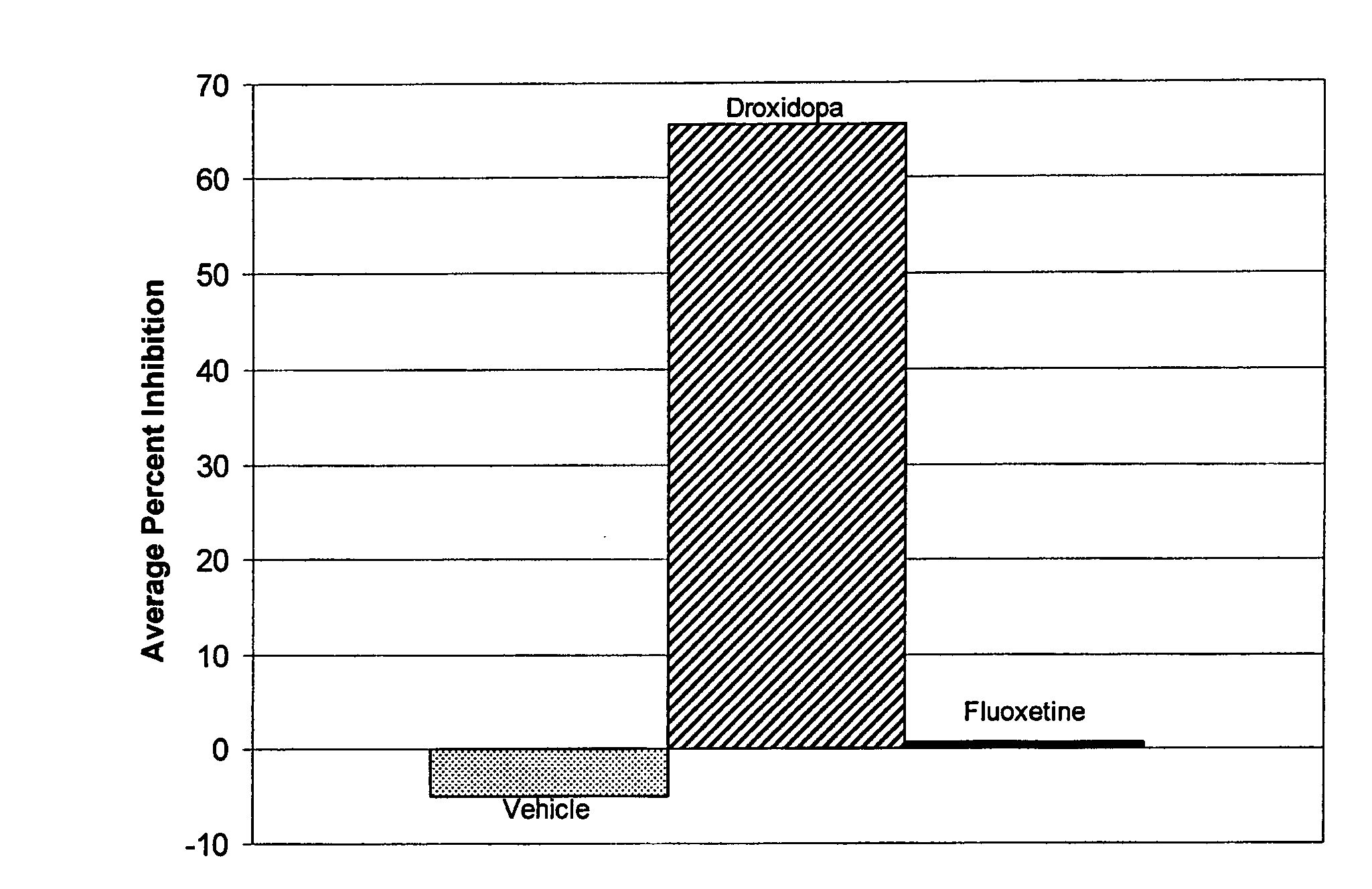
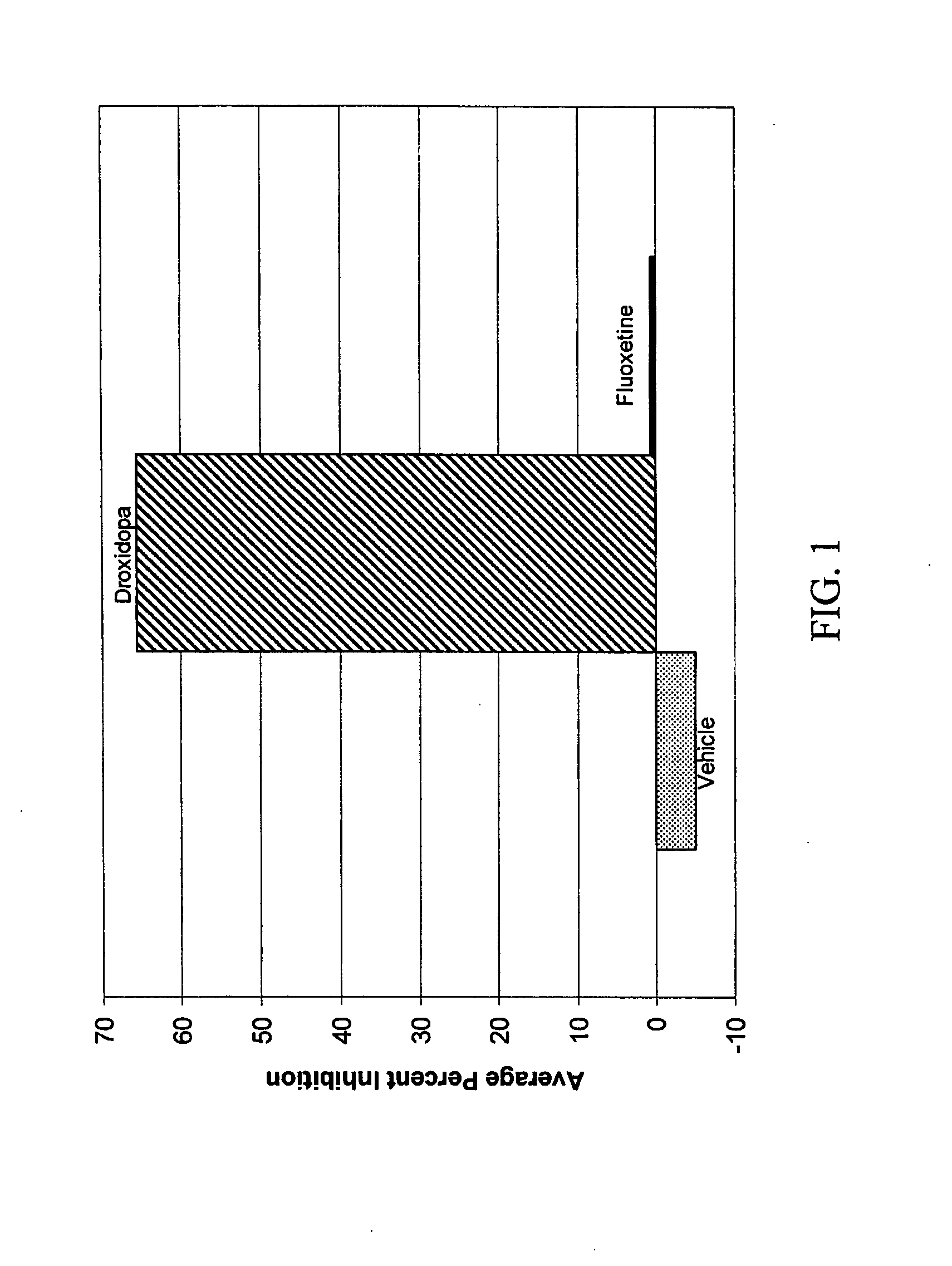
pain sensation disorders like those experienced by humans. Example 1 below uses such a model to illustrate the effectiveness of the invention for treating fibromyalgia through reduction of chronic pain.
[0063]The invention is thus particularly characterized by the ability to treat fibromyalgia through reducing or eliminating pain associated with the fibromyalgia. Such pain can be chronic pain,
allodynia, or
hyperalgesia, all of which are commonly associated with fibromyalgia and are recognized as clear indicators that a patient is suffering from fibromyalgia. In specific embodiments, the methods of the present invention are useful for reducing pain by at least about 30%. Such reduction in pain can be determined by objective testing, such as measuring a patient's response
palpation of known pain sites. Likewise,
pain reduction can be evaluated as a subjective report from the patient describing the patient's overall
pain level in light of the treatment. Preferably, the methods of the invention are useful for reducing pain by at least about 40%, at least about 50%, at least about 60%, at least about 70%, at least about 80%, or at least about 90%. In specific embodiments, pain can be completely eliminated by treatment according to the invention.
[0064]In other specific embodiments, the methods of the invention are particularly useful for reducing or eliminating depression associated with fibromyalgia. It is readily recognized that depression and fibromyalgia often coincide. The chronic pain of fibromyalgia, as well as the dearth of effective treatments, can often lead to depression. There may also be a common underlying cause, however, in the link between
neurotransmitter levels and depression and fibromyalgia. Thus, it has been found according to the present invention that treatment of fibromyalgia can be evidenced by the effective reduction or
elimination of the depressive state often associated with fibromyalgia. A reduction in depression can be indicated as a self-reported improvement by the patient. Further, reduced depression (and thus
effective treatment of fibromyalgia) can also be indicated by
objective evaluation of a previously depressed subject and noting certain indicators of reduced depression, such as increased activity, increased interest in various stimuli, and the like.
[0065]The methods of treatment provided by the present invention comprise administering, to a subject suffering from fibromyalgia, droxidopa or droxidopa in combination with one or more further active agents, as described herein. In certain embodiments, the one or more further active agents provide a conserving effect on the droxidopa. In further embodiments, the one or more further active agents provide a complimentary effect to the action of the droxidopa, preferably treating or reducing one or more of the symptoms associated with fibromyalgia, such as pain, depression, fatigue, hypotension, or sleep disturbance.
[0066]In particular embodiments, droxidopa is combined with one or more DDC inhibitors. Such a combination is particularly beneficial for focusing the effect of the droxidopa in increasing norepinephrine levels. Many DDC inhibitors, such as
benserazide and
carbidopa, do not enter the
central nervous system. Rather, they remain within the periphery where they prevent
decarboxylation of compounds (such as
levodopa or droxidopa) into the active metabolites (such as norepinephrine). Thus, when a non-CNS DDC inhibitor is administered in combination with droxidopa, the DDC inhibitor prevents
decarboxylation of the droxidopa in the periphery and therefore allows more droxidopa to enter the CNS intact. Once within the CNS (and thus segregated from the DDC inhibitor), the droxidopa can be converted to norepinephrine. Accordingly, the combination of a DDC inhibitor with droxidopa can increase the effective ability of the droxidopa to provide norepinephrine within the CNS and thereby reduce the
dose of droxidopa necessary to be effective in treating fibromyalgia.
[0067]As previously noted,
catechol-O-
methyltransferase is directly involved in the
metabolism of catecholamines, including
dopamine,
epinephrine, norepinephrine, and droxidopa. Accordingly, by providing droxidopa in combination with a
COMT inhibitor, the ability of the droxidopa to affect fibromyalgia is conserved. Specifically, by inhibiting the action of COMT, the COMT inhibiting compound slows or delays the
metabolism of droxidopa (as well as norepinephrine itself). This influences the overall
plasma concentration of the droxidopa by increasing both the
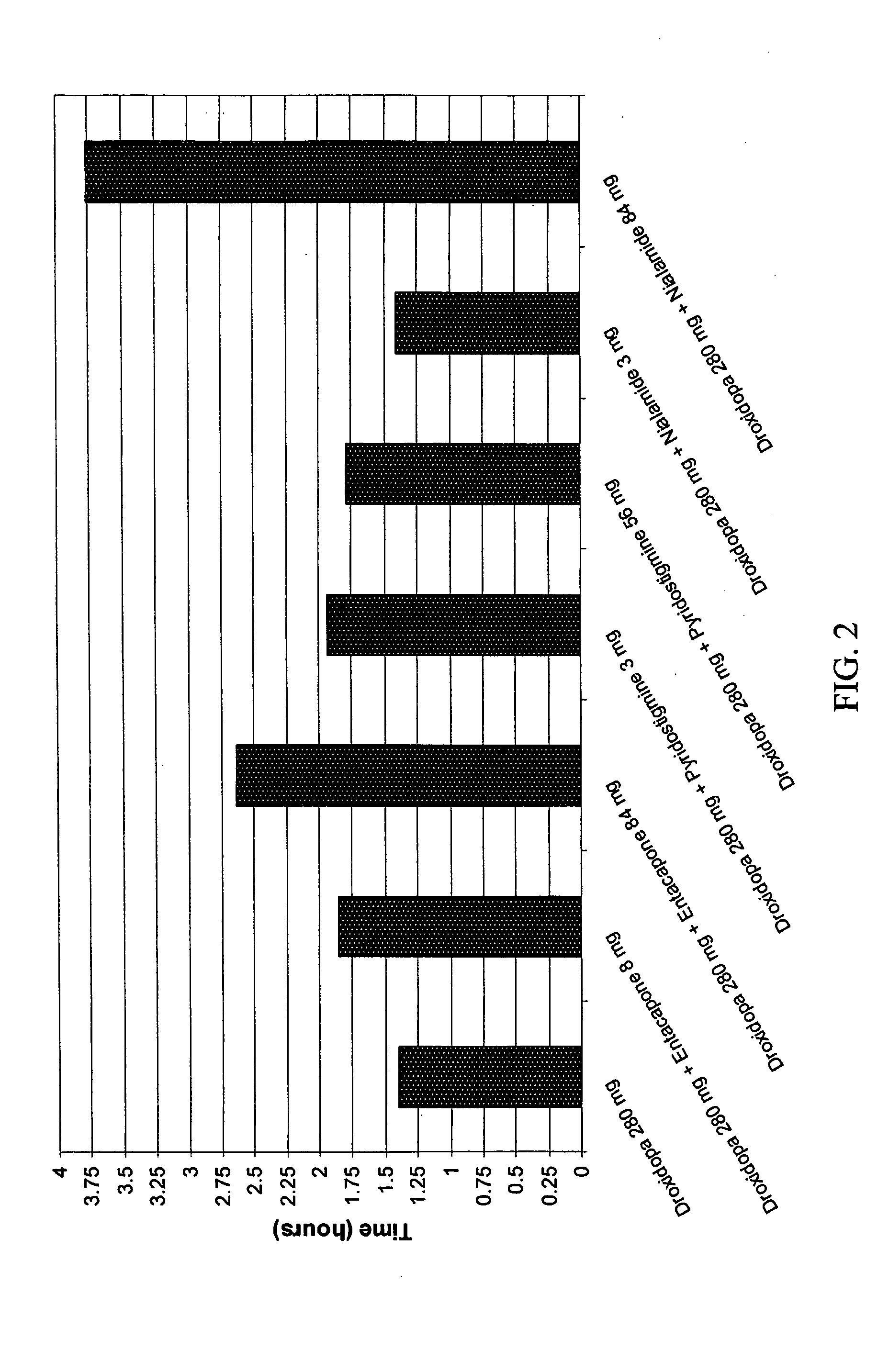
peak plasma concentration (Cmax) and the half-life of the administered droxidopa. This is particularly beneficial in that it allows for reduced dosages of droxidopa without limiting
effective treatment of fibromyalgia. Further, the combination of the
COMT inhibitor with droxidopa may be effective for increasing the duration of the droxidopa activity (i.e., increasing the duration of norepinephrine activity), which may allow for a reduction in
dosing frequency of the droxidopa.


 Login to View More