Significantly, the risk of GI side-effects has limited aspirin use to patient groups with a
high probability of a thrombotic event: in a random
population the risk of serious GI injury is higher than the risk of aspirin-preventable death.
As of yet, there are no reliable
dose-related data for the prophylactic use of aspirin in
cancer, however, it seems likely to be higher than the optimal
dose required for its established role in the prevention of heart
attack and so there is likely to be an
increased risk of greater GI
toxicity.
Although the absolute risks are low (1-2%), its widespread and rapidly growing consumption causes aspirin-induced gastrointestinal
toxicity to be a
public health concern (Morgan, 2003; Laheij 2001; Newton et al., 2004).
It is lipid soluble at low pH values and it is able to disrupt the hydrophobic layer covering the
epithelium allowing access by luminal contents, causing
irritation, eventually leading to ulceration.
Drug-induced GI
toxicity is very complex and the subject of frequently conflicting findings but this particular study indicates that
chemical toxicity is significant.
The problem of GI toxicity has been the focus of pharmaceutical attention for many years, but endoscopic studies demonstrate that conventional solutions such as enteric coatings or buffering are at best inadequate (Kelly et al, 1996, Walker et al., 2007).
Another problem with aspirin from a clinical point of view is that it is unstable towards
moisture and can't therefore be formulated in solutions.
On the other hand, the hypothesized theory of obviation of aspirin toxicity has never been tested because there has never been a suitable aspirin
ester prodrug candidate.
This is because aspirin ester prodrugs are very difficult to design.
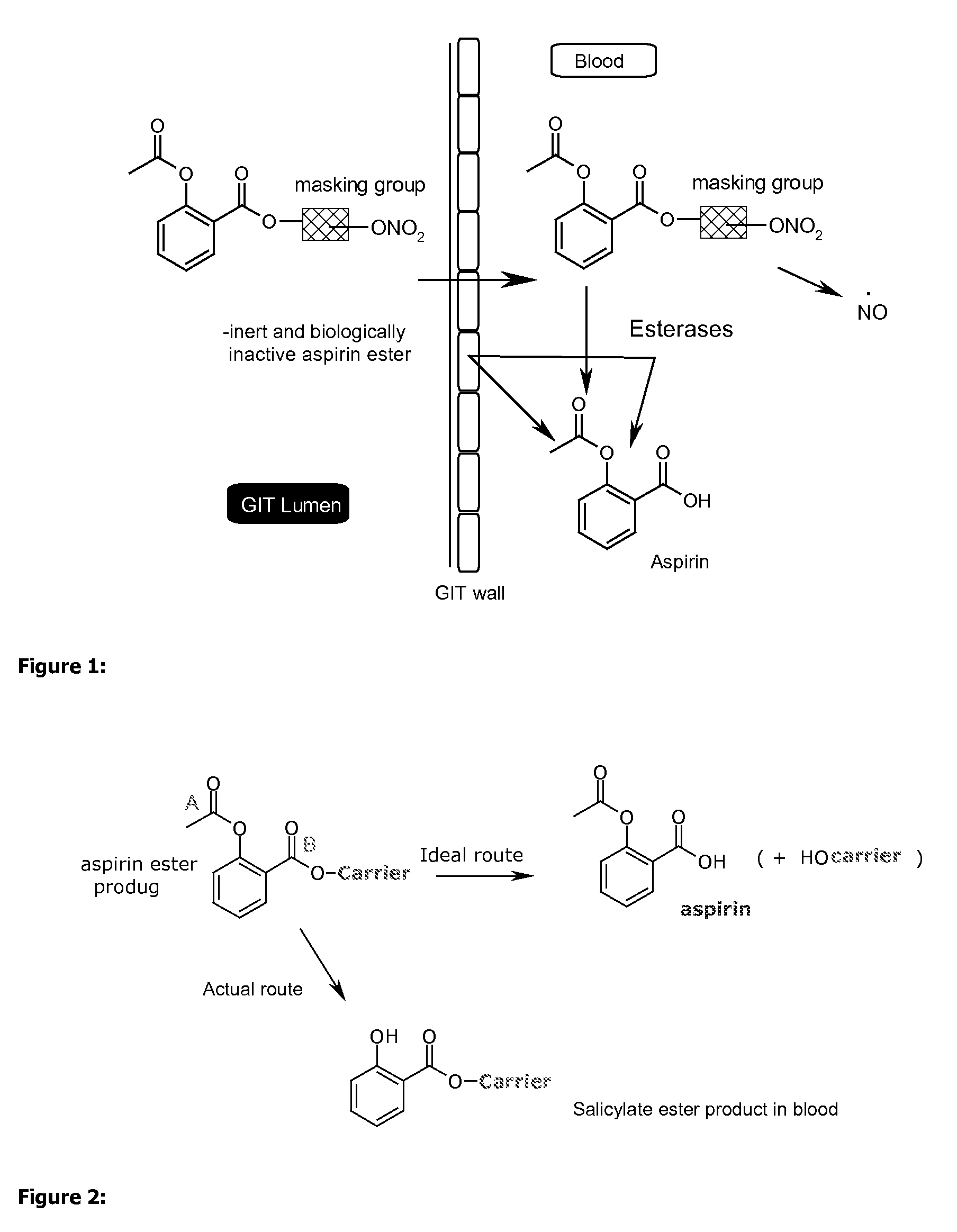
This biochemical pathway cannot produce aspirin.
The design challenge is that esterifying aspirin causes the wrong ester group to undergo
hydrolysis in the presence of
human plasma.
This turns out to be a highly demanding requirement to which their response was only partly adequate.
The problem with this approach is that aspirin is already quite unstable towards
hydrolysis by water and other nucleophiles at its acetyl group.
Aspirin esters deliberately intended to undergo cleavage by
chemical stimuli such as water therefore have the obvious flaw that they are likely to encounter such stimuli during storage and are therefore susceptible to degradation on the shelf.
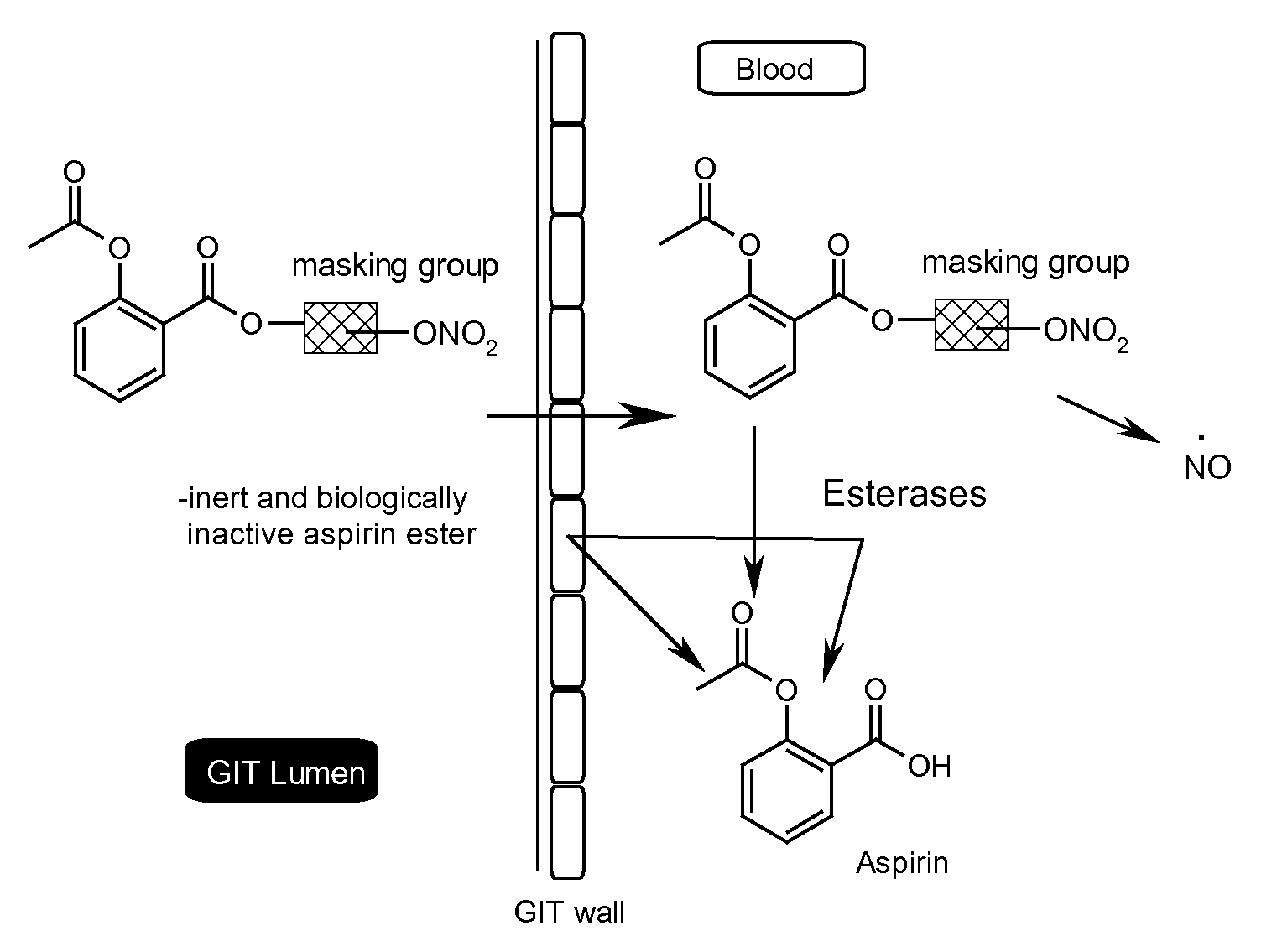
However, as an NO·-aspirin
prodrug, NCX-4016 appears to have a significant design flaw.
This is a significant deficiency because
platelet COX-inhibition needs to be quite complete to prevent
human platelet aggregation.
The results have been disappointing.
However, it was not expected that ISMNA could act as a viable aspirin
prodrug because no other aspirin ester had been shown to act as an aspirin prodrug, apart from the glycolamides, and these were very deliberately designed to be complementary to
plasma BuChE.
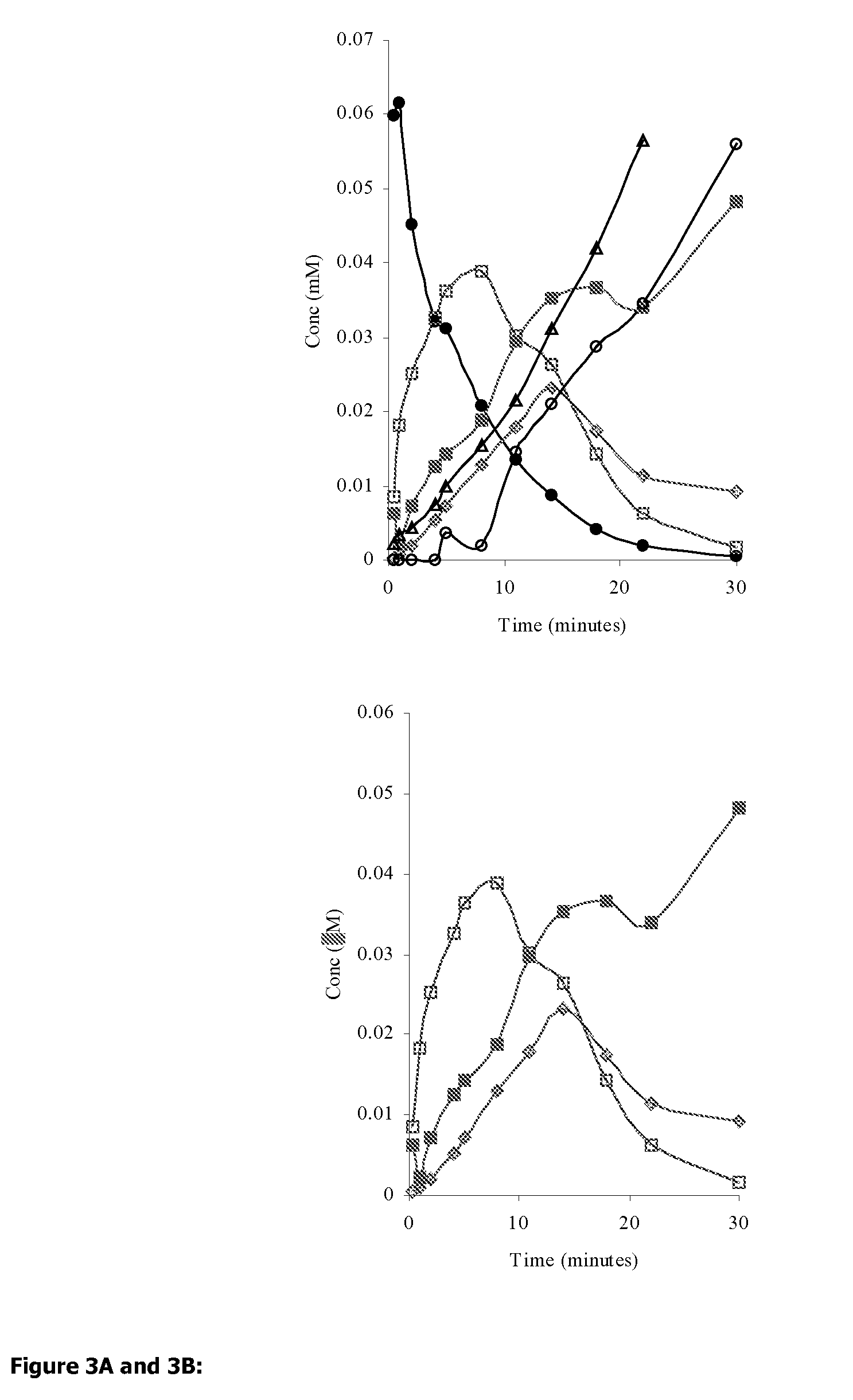
Later it emerged that ISMNA is not hydrolysed productively in
human plasma either.
Moreover, the person skilled in the art would not have expected
Isosorbide-di-aspirinate (ISDA) to function as a viable aspirin prodrug and would have had no chemical or biochemical reason to believe that
hydrolysis would lead to anything other than acetyl group cleavage and so ultimately
salicylic acid.


 Login to View More