
Non-steroidal antiandrogens and selective androgen receptor modulators with a pyridyl moiety
a technology of selective androgen receptor and pyridyl moiety, which is applied in the direction of peptide/protein ingredients, metabolism disorders, extracellular fluid disorders, etc., can solve the problems that steroidal antiandrogens are believed to have more frequently undesirable agonistic characteristics, and achieve good systemic bioavailability
- Summary
- Abstract
- Description
- Claims
- Application Information
AI Technical Summary
Benefits of technology
Problems solved by technology
Method used
Image

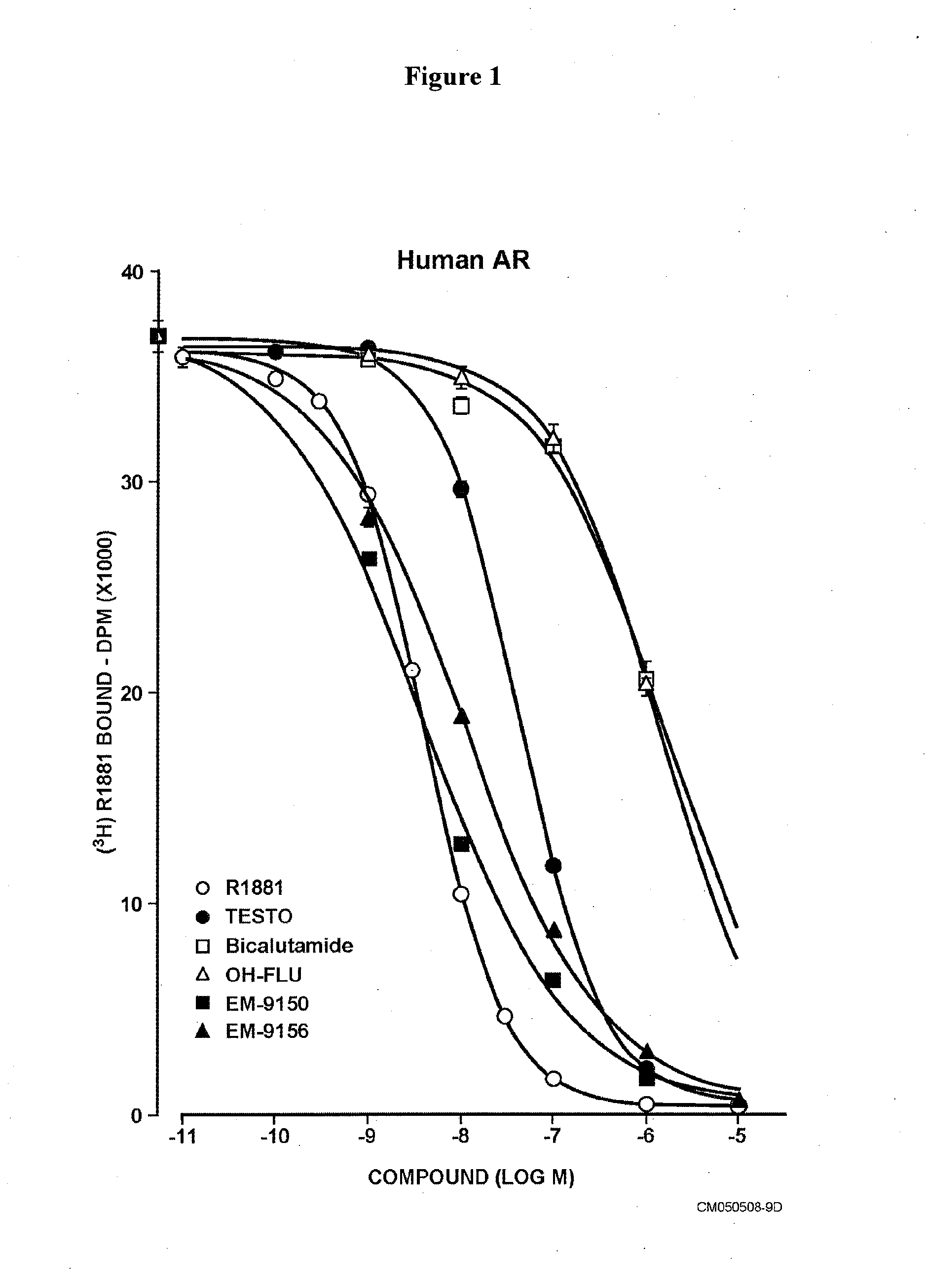
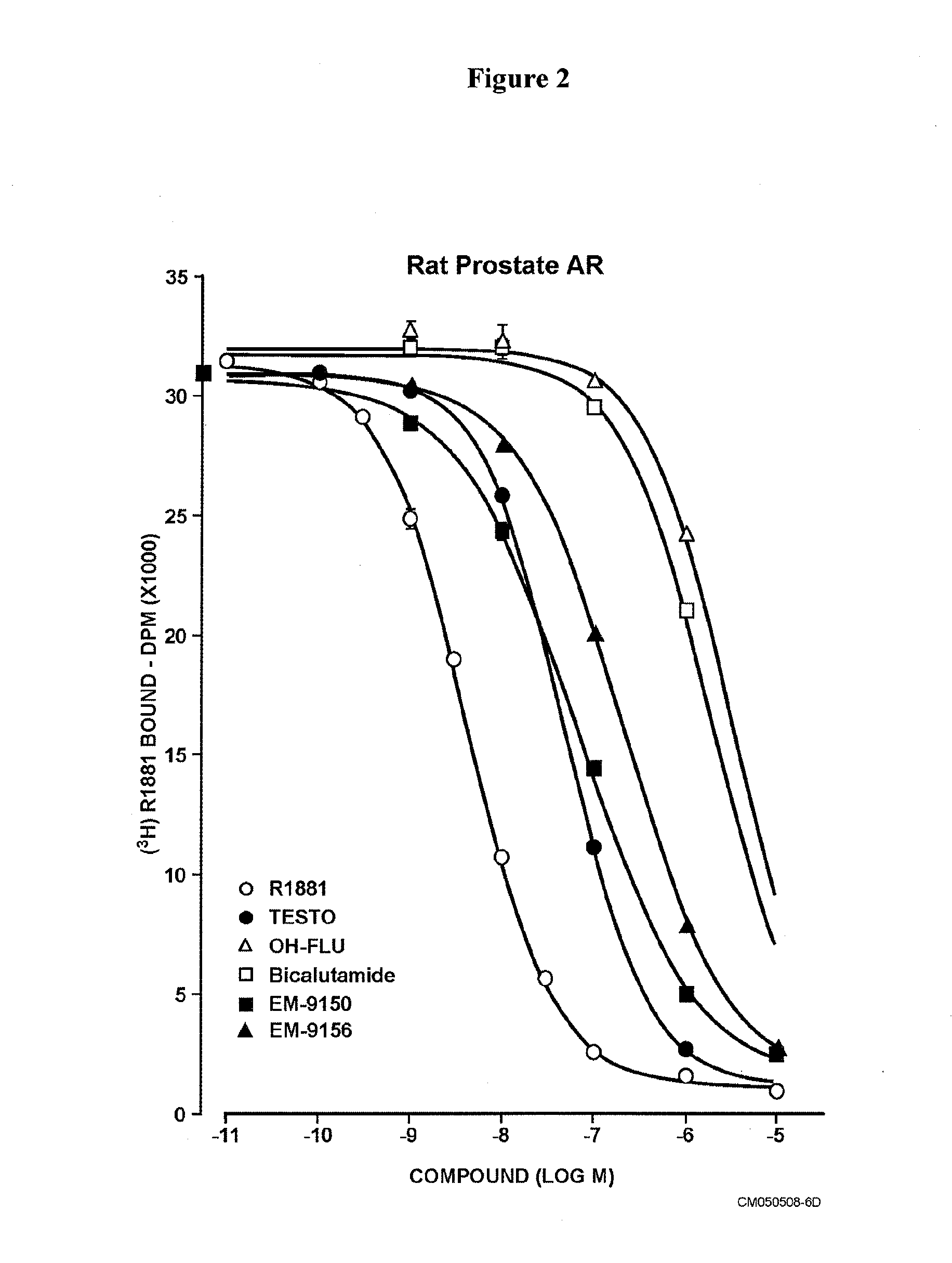
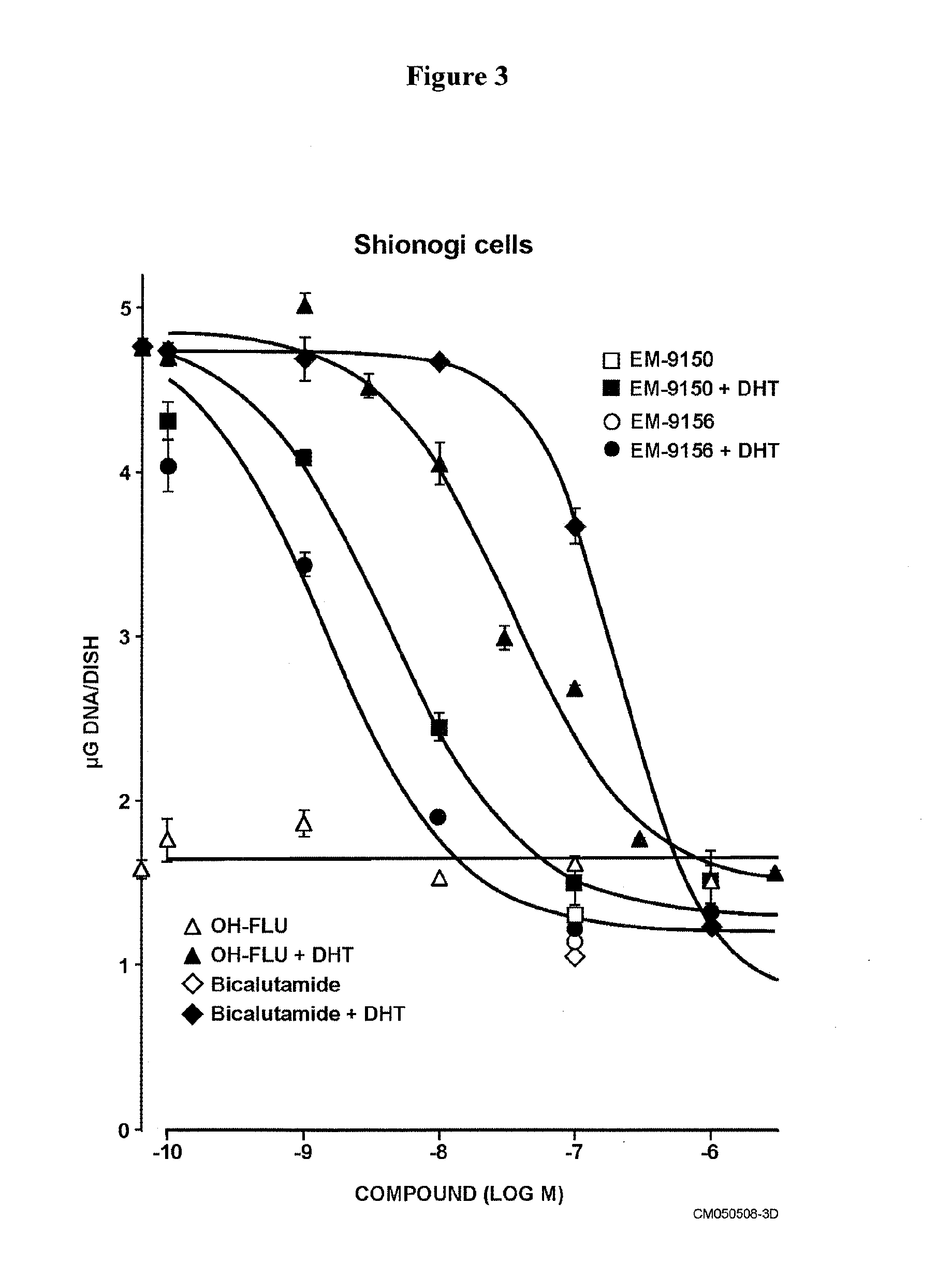
Examples
experiment 1
Animals
[0147]Intact 6 week-old male rats (Crl:CD(SD)) weighing 150-205 g were obtained from Charles-River Canada Inc. (St-Constant, Quebec, Canada) and housed up to 3 per cage in plastic bins in a temperature (19° C. to 25° C.)- and light (12 h light / day)-controlled environment. They were acclimatized to laboratory conditions for 2 weeks prior to the pharmacokinetic (PK) study. The rats were fed rodent chow (PMI Nutrition International Certified Rodent Chow No. 5CR4 (14% protein)) and tap water ad libitum. Animals were weighing 165-200 g at the time of dosing.
Dosing and Blood Collection
[0148]EM-9150 was administered orally by gavage (in the afternoon) at a dose of 20 mg / kg (5 ml / kg) to 9 intact male rats. EM-9150 was administered as a suspension in 0.4% aqueous methylcellulose (MeC). Blood samples (˜0.4 mL / timepoint / rat) were collected by jugular venipuncture at 0.5, 1, 2, 3.5, 7 and 24 h post-dosing from 3 animals / timepoint. Blood samples were put into tubes containing EDTA(K3) as ...
experiment 2
Animals
[0150]Castrated male Sprague-Dawley rats (Crl:CD(SD)Br) weighing 275-375 g were used for pharmacokinetic studies. Animals were fasted (access to water only) from around 16 h00 the afternoon prior to the dosing day.
Dosing and Blood Collection
[0151]EM-9150 was administered orally by gavage (in the morning) at a dose of 0.5 mg / animal (1.0 ml / animal; 3 animals / compound). EM-9150 was dissolved in dimethylsulfoxide (DMSO, 10% final concentration) and administered as a solution / suspension in 0.9% NaCl-1% gelatin). Blood samples (˜0.5 mL / timepoint) were collected by jugular venipuncture on animals under isoflurane anesthesia at 1, 2, 3, 4, 7 and 24 h post-dosing. Blood samples were put into tubes containing EDTA(K3) as anticoagulant and centrifuged at 4° C. for 10 min at 1700-2400 g. The resulting plasma was frozen on dry ice and kept at −80° C. pending analysis. After the blood collection 7 h post-dosing, the ventral prostate and the bulbocavernosus muscles were collected from one r...
example 1
Synthesis of EM-9150 and Derivatives
[0173]
Preparation of Compound 2
[0174]A solution of sodium cyanide (30.7 g, 0.62 mol) and ammonium chloride (39.5 g, 0.74 mol) in 28% aqueous ammonium hydroxide solution (240 mL, 1.7 mol) was stirred with a mechanical stirrer, cooled to 0° C., slowly treated with acetone (1) (36.8 mL, 0.50 mol) and stirred overnight after removing the ice-water bath. The reaction mixture was extracted with dichloromethane (3×300 mL). The combined organic layer was dried over sodium sulfate, filtered and evaporated in vacuo to give compound 2 as clear liquid (40 g, 95%). 1H NMR (400 MHz, CDCl3) δ: 1.48 (s, 6H, 2 Me), 1.64 (bs, 2H, NH2).
Preparation of Compound 4
[0175]A mixture of 4-bromopyridine hydrochloride (52.8 g, 0.27 mol) and 3-chloro-4-methoxyphenylboronic acid (3) (60.8 g, 0.33 mol) in toluene-ethanol-water (2:2:1, 675 mL) was flushed with argon for 15 min, slowly treated with sodium carbonate (115 g, 1.08 mol), flushed with argon for an additional 10 min per...
PUM
| Property | Measurement | Unit |
|---|---|---|
| Composition | aaaaa | aaaaa |
| Structure | aaaaa | aaaaa |
| Pharmaceutically acceptable | aaaaa | aaaaa |
Abstract
Description
Claims
Application Information
 Login to View More