[0003] The above-mentioned already very complex conventional process is added with the function of
denitrification and phosphorus removal, so the overall process becomes extremely complicated, the process is longer, and there are more structures to be treated
For large-scale sewage treatment, it is acceptable; for small-scale, it is neither economical nor reasonable to copy the above-mentioned practices. Therefore, it is necessary to find a new process for
nitrogen and phosphorus removal by activated sludge method suitable for small-scale sewage treatment.
[0004] For small-scale sewage treatment, the invention patent "Double-sided Diversion Biological
Sewage Treatment Technology and
Sewage Treatment Equipment" (application number ZL98121863.6, hereinafter referred to as prior art 1), the equipment consists of
buffer tank,
aeration tank,
Settling tank and other components, the equipment is a deep cone-shaped bucket, the
width ratio is insufficient, limited by the structural shape and the slope of the cone bottom, not only cannot be enlarged to the commonly used small scale of 100-10,000 tons per day, but also can only remove organic
pollution The operating principle of this equipment determines that it cannot remove nitrogen (
total nitrogen) and cannot remove phosphorus. The nitrogen and phosphorus indicators of the
effluent water quality do not meet the current national
discharge standards in my country, so it is not a process for nitrogen and phosphorus removal of sewage.
[0005] Invention patent "Double-sided diversion hydraulic circulation clarification sewage treatment method" (application number ZL200610124503.5, hereinafter referred to as prior art 2), this method has many structures and equipment, and the process is long, the sewage needs two-stage lifting, and the sludge There are many pumps, the sludge needs to be pumped from the
pool, the
energy consumption of the
system is high, and the sludge
discharge effect is poor; the
water level of the water inlet adjustment
pool should usually be located at a lower place under the ground, and the
water level difference between the adjustment
pool and the double-sided diversion pool is actually large , so the joint construction of the two pools is relatively unreasonable in
engineering; the double-sided diversion pool used in prior art 2 is the technology and equipment of prior art 1 (see the penultimate 4th line on page 1 of the main text of prior art 2); Subsequently, prior art 2 applied for the improvement of its own double-sided diversion pool and was approved for an invention patent "Forced
Backflow Double-sided Diversion
Sewage Treatment
Pool" (application number ZL200610125119.7, hereinafter referred to as prior art 3), The
treatment effect is still unsatisfactory. The
effluent of the sewage treatment pool is not clear and transparent. After the pool is improved, a filter layer is installed at the end for further
filtration. However, the filter layer will be blocked soon during operation, and there is no backwash of the filter layer. In
actual use, the blockage cannot be cleared and it is difficult to operate normally; in addition to the above, the sewage treatment method and the subsequent improved pool type all lack the sand setting process, which easily leads to the deposition of sand particles in the sewage
system and brings equipment wear and
siltation and other adverse effects; the sewage treatment method also lacks the function of biological phosphorus removal, and completely relies on the diatomite treatment agent to absorb and remove phosphorus, so the dosage is large; the
ultraviolet sterilizer is also difficult to build together with the conical hydraulic circulation
clarifier; Yes, this method uses a conventional sludge thickening tank and a conventional plate-and-frame
filter press, and the
moisture content of the sludge after
dehydration does not meet the new national sludge
moisture content disposal standards
Therefore, the above-mentioned various defects lead to the actual
treatment effect,
system engineering investment, and operation cost of the method and its main sewage treatment tank, which are difficult to meet the actual needs of denitrification and phosphorus removal of small-scale sewage at this stage and in the future.
[0006] Invention
patent application "An integrated device, system and process for sewage biochemical treatment" (publication number CN102923908A, publication date 2013.2.13), can basically meet the needs of small-scale sewage denitrification and phosphorus removal of 1500 tons / day and below, but the It is difficult to continue to scale up the device and method to 1,600-10,000 tons / day, and the effect of nitrogen and phosphorus removal needs to be further improved
The main reason is that after the device continues to be enlarged, the oblique guide partition will be further extended obliquely upwards, resulting in the sludge farther away lacking horizontal power and difficult to reach the vicinity of the vertical air lift return component, resulting in insufficient sludge return. Problems such as sludge deactivation and floating, anaerobic gas production or death and
corrosion brought about in time will seriously affect the
water quality of the
effluent; at the same time, due to the small size of the device, all one side of the vertical air lift return component is an aerated biochemical zone. There is no pre-anoxic denitrification zone that can use the
carbon source of the sewage itself, and it can only rely on the anoxic denitrification inside the granular sludge and the anoxic denitrification that lacks carbon sources on the other side of the vertical air lift reflux module, so denitrification There is still room for further improvement of the nitrogen effect; in addition, the chemical
flocculation reaction below the
sedimentation component is not sufficient and uneven, resulting in a large amount of
chemical agent, and the water distribution effect of the lower layer becomes worse after the scale is enlarged, so the phosphorus removal effect and other residual
pollutant removal effects are still weak. There is room for further improvement
In addition, there is no
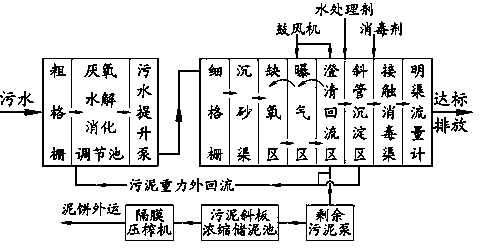
agitator in the anaerobic adjustment tank in this method, and the sand particles are easily deposited in the tank, and the return sludge is also easy to settle down, making it difficult to achieve the desired effect of homogeneous water quality and mud-water mixing; Pools, disinfection facilities, and water outlet open channel metering tanks are all built independently. There are four process structures from water inlet to water outlet, which occupy a relatively large area and relatively high investment; this method also lacks sludge as an important component of sewage treatment.


 Login to View More