
Method for rapidly constructing reverse genetic strain of duck hepatitis A virus type 3
A technology of duck hepatitis A virus and reverse genetics, which is applied in the field of rapid construction of type 3 duck hepatitis A virus reverse genetic strains, can solve the problems of low efficiency of enzyme digestion and ligation, heterogeneity of transcripts, and inability to store stably, and achieve genetic stability Good performance, simple operation, and accelerated development
Patent Information
- Authority / Receiving Office
- CN · China
- Patent Type
- Applications(China)
- Current Assignee / Owner
- Publication Date
- 2019-10-01
Smart Images
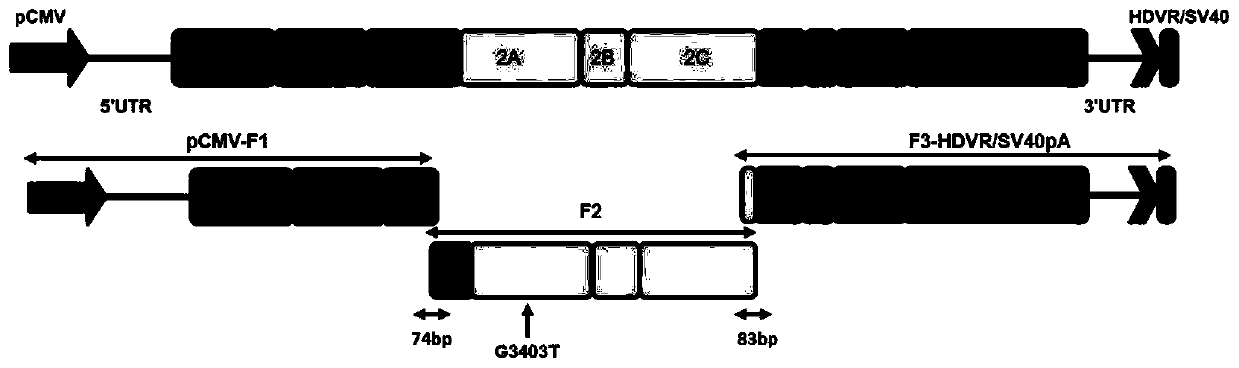
Figure 1 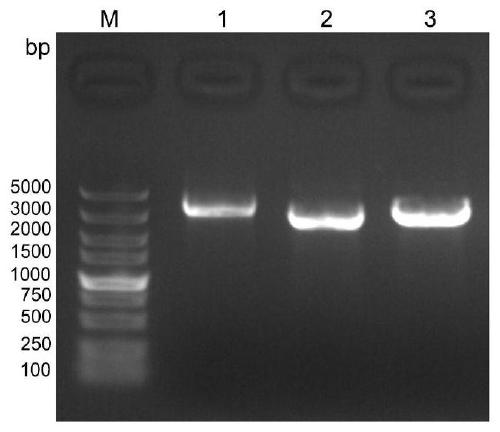
Figure 2 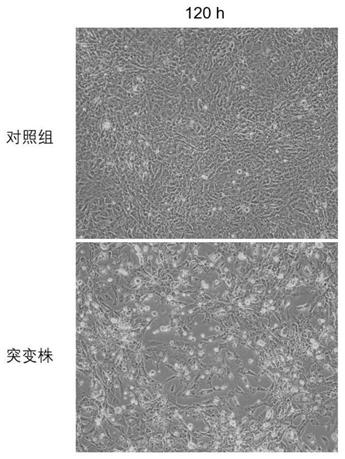
Figure 3
Abstract
Description
technical field
[0001] The invention belongs to the technical field of molecular biology of veterinary viruses, in particular to a method for rapidly constructing a reverse genetic strain of type 3 duck hepatitis A virus. Background technique
[0002] Duck viral hepatitis (DVH) is an acute, highly contagious disease caused by ducklings infected by duck hepatitis virus (DHV). At present, the disease exists in major duck raising areas in the world, and has the characteristics of intermittent outbreaks and endemicity. It is one of the main diseases that endanger the duck industry. The disease mainly affects ducklings less than four weeks old, and has the characteristics of acute onset, rapid spread, short course of disease and high mortality; the main clinical manifestations are convulsions before the duckling dies, and the head is tilted back to the back, showing "opistonus" , The pathological changes were mainly enlarged and inflamed liver and a large number of hemorrhagic s...
Examples
Embodiment 13
[0033] Example 13 Construction of the "Infectious Subgenome Replicon" of Duck Hepatitis A Virus Type 13 and Virus Rescue
[0034] 1.1. Design and synthesis of primers
[0035] According to the whole genome sequence of duck hepatitis A virus type 3 in GenBank, 6 pairs of primers were designed to amplify the virus genome sequence, pCMV and SV40pA sequences. The specific sequence information is shown in Table 1. The primers were synthesized by Shanghai Sangon Bioengineering Co., Ltd.
[0036] Table 1 The sequence of the primers needed to construct the "infectious subgenome replicon" of type 3 duck hepatitis A virus reverse genetic strain
[0037]
[0038] 1.2. Viral RNA extraction
[0039] According to the instruction manual of the TaKaRa MiniBEST Universal RNA Extraction kit, the whole genome RNA of the virus was extracted from the allantoic fluid of duck embryos, and after the nucleic acid concentration and purity were determined using a nucleic acid protein detector (BioRa...
Embodiment 2
[0045] Identification and characteristics of embodiment 2 reverse genetic strain virus
[0046] 2.1. Passage of reverse genetic strain virus
[0047] In order to observe whether the rescued virus can be propagated and passaged in duck embryos, the first-generation rescued virus was diluted 1:100 with sterilized saline, and five 9-day-old duck embryos were inoculated. The results showed that the death time of duck embryos was concentrated between 48 hours and 120 hours after inoculation, and the embryo body had obvious lesions. The allantoic fluid of dead duck embryos was collected and passed on for 5 consecutive times. All duck embryos had obvious lesions, similar to the parental virus.
[0048] 2.2. Identification of genetic markers in reverse genetic strain viruses
[0049] In order to exclude the possibility that the reverse genetic strain virus may come from the parental virus or wild strain contamination during transfection or subculture, during the construction of the r...
Embodiment 3
[0058]Example 3 Application of Type 3 Duck Hepatitis A Virus "Infectious Subgenome Replicon" Method to Rescue ISA-A117C Mutant Strain Virus
[0059] 3.1. Design and synthesis of primers
[0060] According to the whole genome sequence of type 3 duck hepatitis A virus in GenBank, 7 pairs of primers were designed to amplify the whole genome sequence of the virus, pCMV and SV40pA sequences. The specific sequence information is shown in Table 2. The primers were synthesized by Shanghai Sangong Bioengineering Co., Ltd.
[0061] Table 2 The sequence of the primers needed to construct the type 3 duck hepatitis A virus mutant strain ISA-A117C "infectious subgenomic replicon"
[0062]
[0063]
[0064] 3.2. Virus extraction
[0065] According to the instruction manual of the TaKaRa MiniBEST Universal RNA Extraction kit, the viral genome RNA of the type 3 duck hepatitis A virus isolate was extracted from the duck embryo allantoic fluid, and its nucleic acid was determined using a ...