
Transcription factor ODORANT1 for restraining wheat seed storage protein synthesis and application of transcription factor ODORANT1
A technique for transcription factors and storage proteins, which is applied in the field of transcription factors that inhibit the content of wheat grain storage proteins, and can solve the problem of no transcription factors being found
Patent Information
- Authority / Receiving Office
- CN · China
- Patent Type
- Applications(China)
- Current Assignee / Owner
- Publication Date
- 2020-02-07
Smart Images
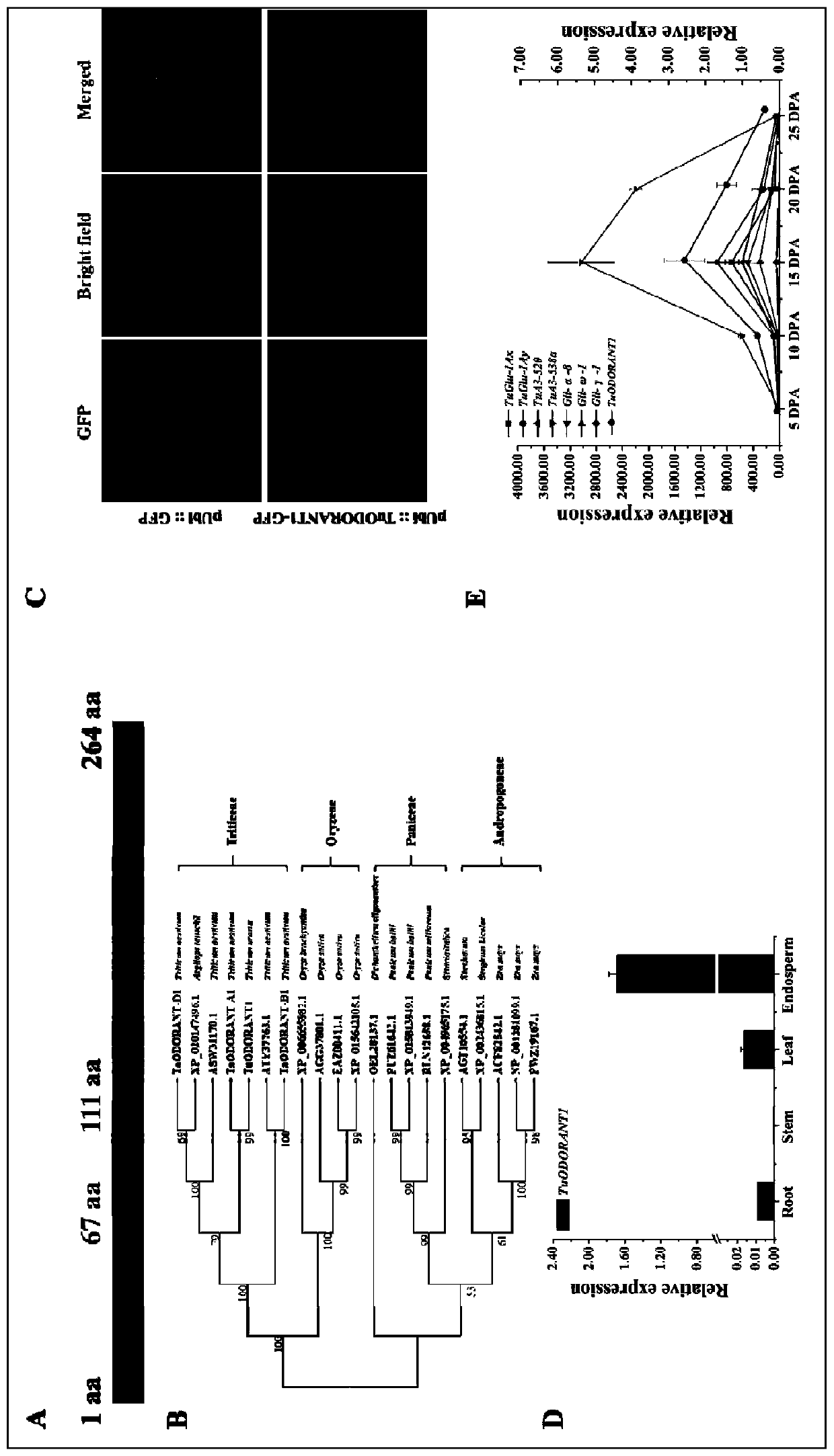
Figure 1 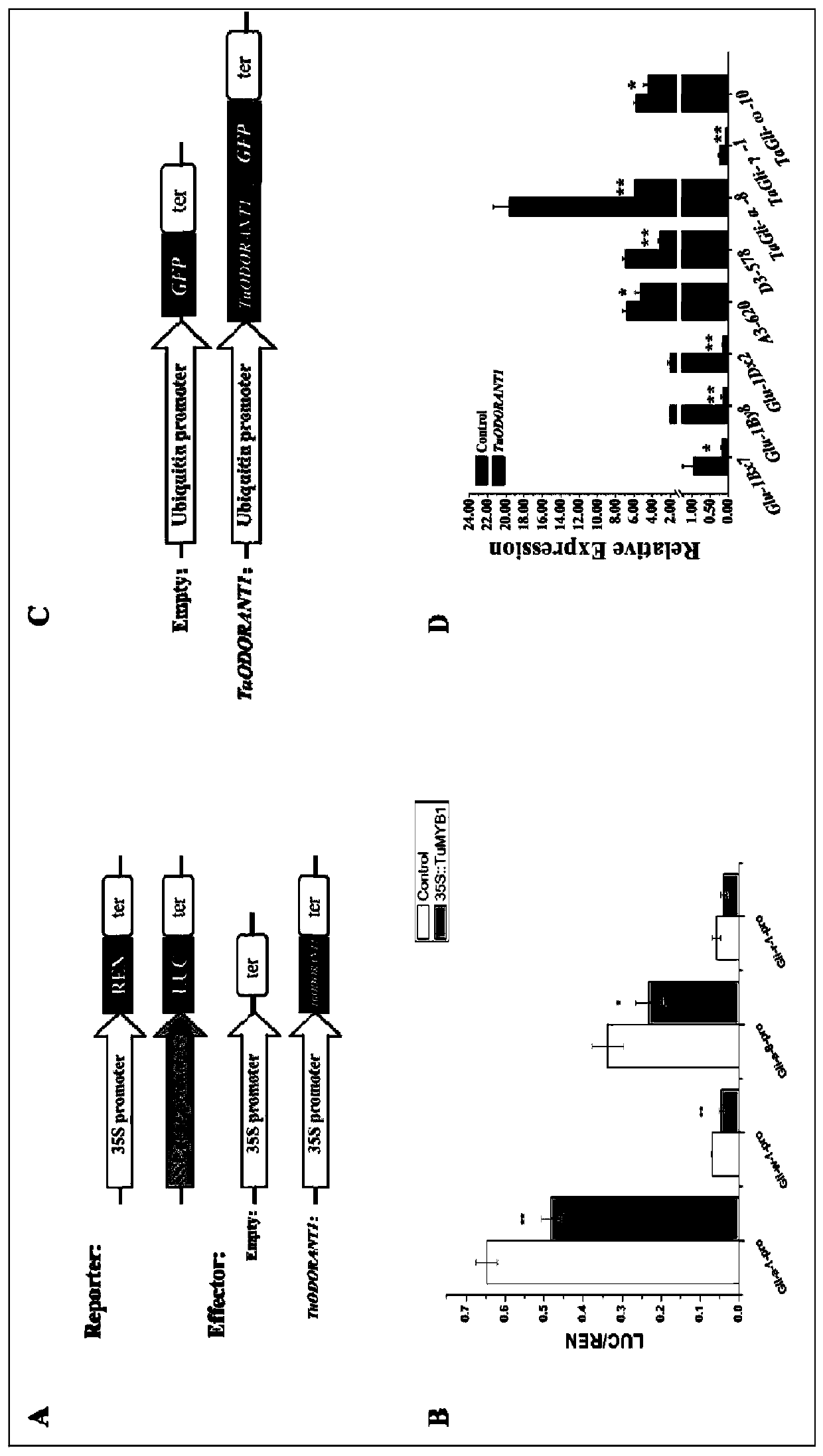
Figure 2 
Figure 3
Abstract
Description
technical field
[0001] The invention relates to the field of genetic engineering, in particular to a transcription factor for inhibiting the content of wheat grain storage protein and application thereof. Background technique
[0002] Common Wheat ( Triticum aestivum L., 2n=6x=42, AABBDD) is one of the three major crops in the world and is also the main food crop in human daily life. In addition to its strong adaptability and high yield, common wheat’s unique dough elasticity and extensibility enable flour to be processed into bread, steamed buns, noodles and other foods. This characteristic of wheat is mainly due to the storage protein (Seed storage protein, SSP) in its grain endows the dough with unique viscoelastic properties.
[0003] Storage proteins include glutenins and gliadins, whose subunit composition and protein content can affect the processing quality of wheat. Glutenins can be divided into high molecular weight glutenins (High-molecular-weight subunits, HM...
Examples
Embodiment 1
[0026] Embodiment 1 Urartu wheat TuODORANT1 common wheat homologue TaODORANT1 the acquisition
[0027] 1. Urartu Wheat TuODORANT1 The co-expression analysis with SSP gene specifically comprises the following steps:
[0028] (1) RNA-Seq analysis: The spikelets in the middle of the ears of Uraltu wheat G1812 that have been sequenced were selected, the seeds were stripped from the glume, the embryos were cut off, and the endosperms of 10 seeds were collected in a mortar frozen with liquid nitrogen. Add liquid nitrogen and grind to powder; use guanidine hydrochloride method to extract total RNA, use RNeasy Plant Mini Kit (Qiagen, Hilden, Germany) for preliminary purification and recovery; use ultra-micro spectrophotometer NanoDrop 2000 to detect the concentration and quality of RNA, and use 1.0% agarose gel electrophoresis verification, to ensure that each sample has at least 5 μg, and the concentration is above 100 ng / μL. The mRNA was further purified using the DynabeadsmR...
Embodiment 2
[0034] Embodiment 2 Urartu wheat TuODORANT1 common wheat homologue TaODORANT1 Analysis of the expression pattern of
[0035] 1. TuODORANT1 and TaODORANT1 With the SSP gene expression pattern, it specifically includes the following steps:
[0036] (1) Urartu Wheat TuODORANT1 and validation of SSP gene expression patterns: in Urartu wheat endosperm at grain filling stage, using TuODORANT1 and SSP gene-specific primers, and the expression patterns of the two were verified by RT-PCR. The result is as figure 1 As shown in E, TuODORANT1 The expression of the selected SSP genes started at 5 d after anthesis, reached a peak at 15 d after anthesis and then decreased, which was basically consistent with the results of RNA-Seq.
[0037] (2) Common wheat TaODORANT1 and SSP gene expression pattern: The total RNA of the endosperm of common wheat Chinese spring 5 days, 10 days, 15 days, 20 days and 25 days after flowering was extracted by the guanidine hydrochloride method,...
Embodiment 3
[0043] Example 3 Function of wheat ODORANT1 gene
[0044] 1. TuODORANT1 Direct regulation of SSP genes
[0045] (1) Dual luciferase reporter gene system detection TuODORANT1 Regulation of the SSP gene promoter: the TuODORANT1 Recombined into the pRT107 vector (provided by researcher Zhang Jinsong, Institute of Genetics and Development, Chinese Academy of Sciences), so that the 35S promoter in it drives TuODORANT1 For mass expression, replace the 35S promoter of the reporter gene vector with the promoter of the SSP gene (2,000 bp) to drive the expression of the firefly luciferase (Firefly luciferase) gene ( figure 2 A). The protoplast cells of Arabidopsis thaliana were co-transformed with two recombinant vectors, and Renilla luciferase (Renilla luciferase) was used as a control to detect TuODORANT1 The activation strength of the SSP gene promoter region. The fluorescence intensity was detected by Dual-Luciferase Reporter AssaySystem Kit (Promega, Madison, USA) and G...