
Semiconductor composite photo-anode, production method and application
A compound light and semiconductor technology, applied in the field of photoelectrochemistry, can solve the problems of high carrier recombination rate and limited photoresponse range of semiconductor materials, so as to improve utilization efficiency, improve photogenerated cathodic protection effect, and improve electron hole transport capacity Effect
- Summary
- Abstract
- Description
- Claims
- Application Information
AI Technical Summary
Problems solved by technology
Method used
Image

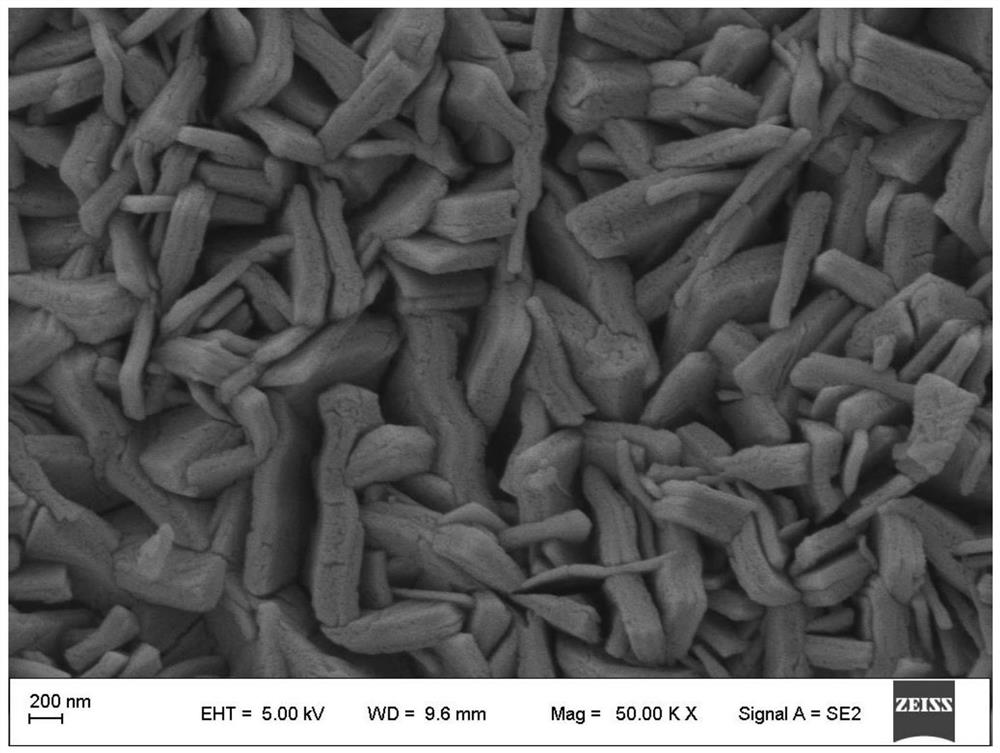
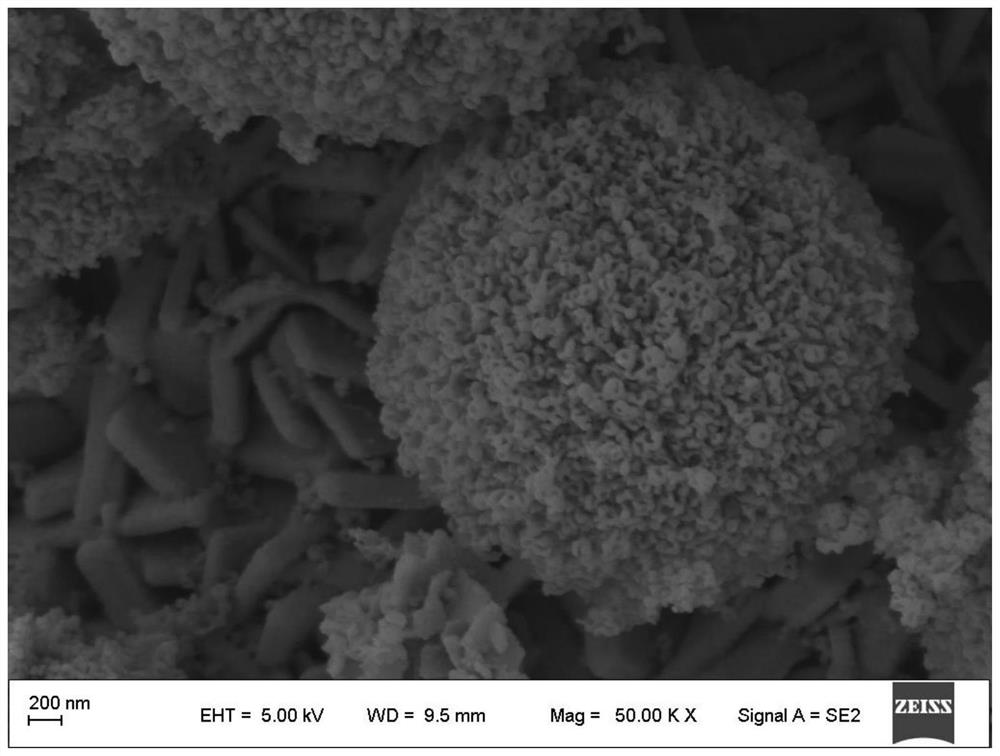
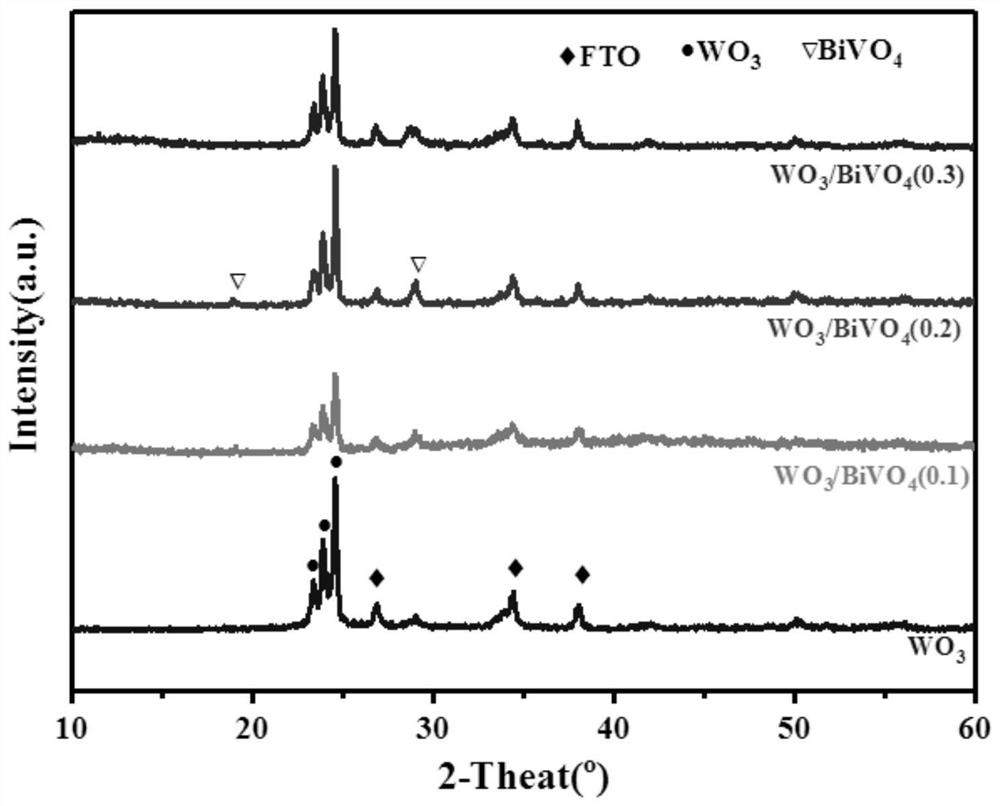
Examples
Embodiment 1
[0033] Example 1 Preparation of semiconductor composite photoanode and its performance testing
[0034] 1. Preparation method
[0035] (1) FTO (conductive glass) pretreatment
[0036] Cut the FTO into small pieces with a size of about 1.5×1cm, then put the FTO into a beaker, and ultrasonically clean it with acetone, ethanol, and distilled water for about 15 minutes for later use.
[0037] (2) WO 3 Preparation of the seed layer
[0038] 0.625 g of tungstic acid and 0.25 g of polyethylene glycol-8000 were dissolved in 10 mL of 30 wt % hydrogen peroxide to obtain a yellow solution. Use a pipette gun to drop-coat the solution onto the pretreated FTO, and put it on a homogenizer for spin-coating at a speed of 3000 rpm for 30 s. After the spin coating, the glass sheet was quickly heated in an oven at 100 °C for 10 min, and finally annealed at 500 °C for 2 h in a tube furnace with a heating rate of 3 °C / min, finally forming WO 3 seed layer.
[0039] (3) Preparation of WO-coated...
PUM
 Login to View More
 Abstract
Description
Claims
Application Information
 Login to View More