However, due to the serious
water pollution in the intertidal zone of tidal flats, high
water temperature, lack of
nutrition, small sea space, and the inability to
resist the influence of sudden weather and other factors, the harvest period of the cultured seafood is short and the yield is low. , easy to get sick,
poor quality, and easy to fail, this method has basically been eliminated;
[0009]2. The wind and
wave resistance is poor; The 14-meter, super-long
plunger or pillar is easy to break when used in the wind,
waves and tides of the
open sea, and the loss is large. If the seaweed laver cannot be lifted out of the water and dried in time to dry, it will lead to illness, reduced production, and
pollution from the overgrowth of
algae. In addition, it is broken The rod body brings new
pollution to the ocean;
[0010]3. When the
dew is dried in the sun, the effect is poor and the
drying is not thorough; The supporting load is connected by two floating support points. It is extremely unstable in the wind and
waves, and cannot be supported high, so the center of gravity is too low to dry out; it is close to the sea surface, and the
sea breeze blows the top of the
waves and sprays the water on the growth base net curtain, which is semi-dry. If it is not dry, it cannot completely remove
green algae, diatoms and other miscellaneous
algae and germs, which will reduce the quality of seaweed laver, less inorganic matter will be converted into
organic matter during growth, and the yield will be reduced, which is very easy to fail;
[0011]4. Production management relies heavily on manpower, high cost, and poor natural growth conditions. Therefore, the quality of farmed aquatic products is poor and the yield is low, and the entire growth process needs to be done manually Adjust management; more labor leads to high management costs, and general labor costs account for more than 70% of total revenue;
[0012]5. The risk is high; the farmers often say that the
seaweed farming industry is the same as gambling. Due to the defects in the breeding equipment and methods, it is greatly affected by natural factors and artificial If the management is not in place, it will be unable to
resist the natural influence, which will easily lead to the consequences of production reduction or
crop failure;
[0013]6. It is difficult to control the harvesting of vegetables; because the cultivated seaweed laver often grows in the subtidal zone environment in the above-mentioned method, it grows wildly after being soaked in
seawater for a long time. Festers, poor elasticity, difficult to reserve when harvesting, often appear laver seedlings are uprooted, that is, the phenomenon of "following the knife" often said by farmers, and eventually lead to no harvest in the later stage;
[0014]7. The above methods all have the phenomenon that when the seaweed (such as laver) grows long, it is heavy from the water and the strength of the dry
dew is insufficient, because the load performance of the device and method is poor; The above methods all adopt the method of "hanging" or "supporting" to drive the growth of the base
dew. For example, when the laver on the laver net curtain grows long, it will dry out of the water and bear a
heavy load. It is difficult to control the dynamic load, and there will be a slightly larger wave
impact It will cause the device to be unstable, damage the breeding equipment and other phenomena, so that the breeding will fail; therefore, when there are strong winds and waves in the forecast, the farmers will use the method of not hanging or not supporting the device to protect the device, and the cultured organisms will not be able to dry in time. , can only be placed in water all the time, soaked for a long time, and let it be washed by wind and waves;
[0015]8. In strong winds and waves, it is easy to rinse off the seaweed (such as seaweed, etc.) growing on the growth base (net curtain, etc.), resulting in reduced production or even no harvest; the reason One: It is determined by the growth mode of the cultured organisms provided by the above method, or it will be dry for several days, or even dehydrated to death due to weather or human factors; or it will grow in seawater for a long time, and the leaves will lose elasticity and poor
toughness due to expansion; the reason Two: The above method of cultivation device cannot follow or suppress the wave fluctuations synchronously, which is caused by passive
impact;
[0016]9. When the aquaculture device is in use, the resistance it receives is large, which hinders the exchange of water bodies, and the continuous aquaculture field, especially when the tide flows in, has been floating on the The aquaculture device on the sea affects the flow of water into the field, the organisms cannot absorb sufficient nutrients, and cannot take away metabolites in time, resulting in a vicious cycle of
ecology, and the resistance generated at the same time is easy to damage the aquaculture device;
[0017]10. The natural intertidal growth environment cannot be completely created, which will affect the healthy growth and normal evolution of cultured organisms for a long time; Growth in the
extreme environment of the subtidal zone cannot completely provide a healthy and vigorous growth environment for the original
ecology;
[0018]11. Unable to cope with or
resist extreme climate change, unable to meet the
normal growth of cultured organisms; the strong drop in temperature in
early winter caused the
air temperature on the sea surface to be suitable for seaweed (seaweed, etc.) However, the seawater temperature at this time is relatively high, which is not suitable for long-term immersion growth, and manual management cannot be done in time to dry dew in every tide. The cultivation device can only be soaked in high-temperature seawater for a long time, which is not conducive to the growth of aquaculture organisms. , especially in the
seedling stage, it is easy to be scalded to death; in deep winter, sometimes a strong cold wave suddenly occurs, causing the temperature to drop sharply. Manual management cannot be done in time, so we can only let it
frostbite, reduce production or fail;
[0019]12. Multi-trophic layer ecological cultivation cannot be realized, only single organisms can be cultivated (such as seaweed, wakame, small-leaf
kelp, etc.), and there is no complementary breeding function to purify
water quality , low space utilization, low efficiency,
low income, and easy to cause
ecological environment pollution in breeding sea areas;
[0020]13. It cannot be applied to offshore deep-water areas to realize seaweed cultivation. When the length of the rod-type cultivation reaches 23 meters, it cannot be used at a
water depth of 12 meters. It is used for aquaculture in muddy
seabed waters up to 13 meters; it is difficult to control the straightening of the super long
insertion rod, not only the resistance in the water increases, but also it is difficult to resist the wind and waves in the
deep water aquaculture sea area. Dry dew to dry, so that the breeding can not be carried out


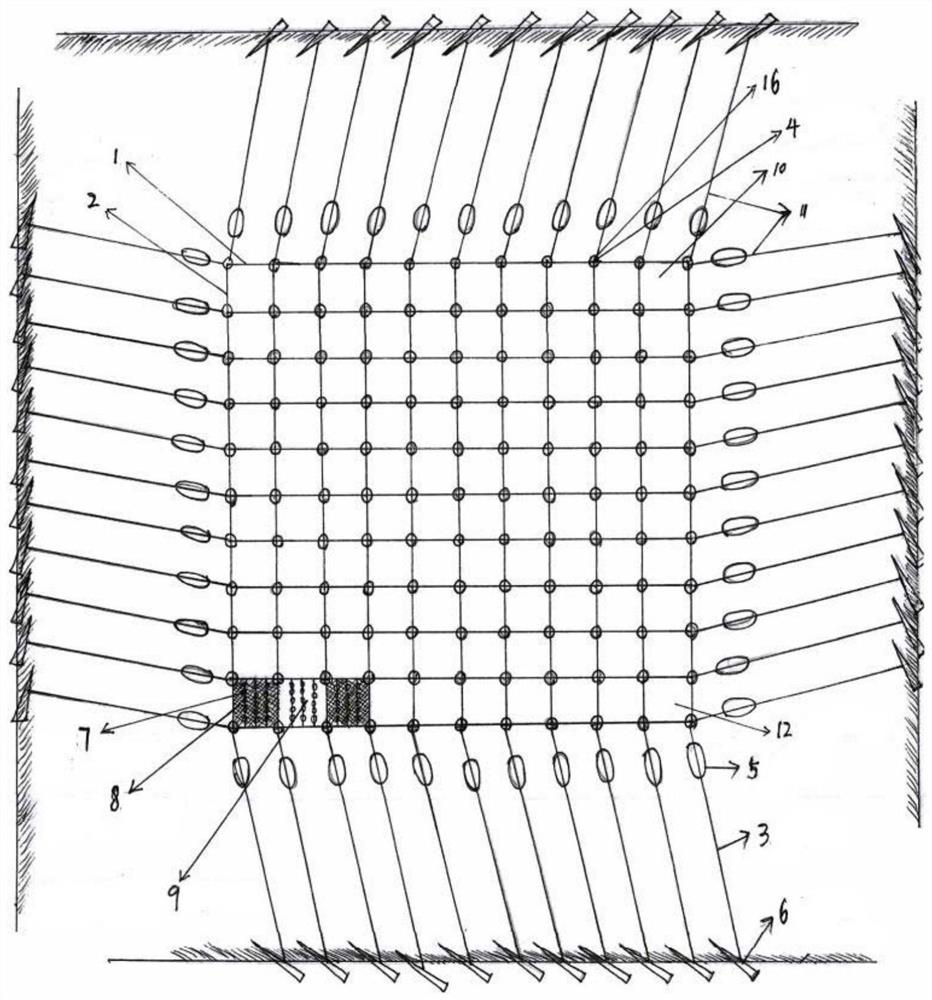
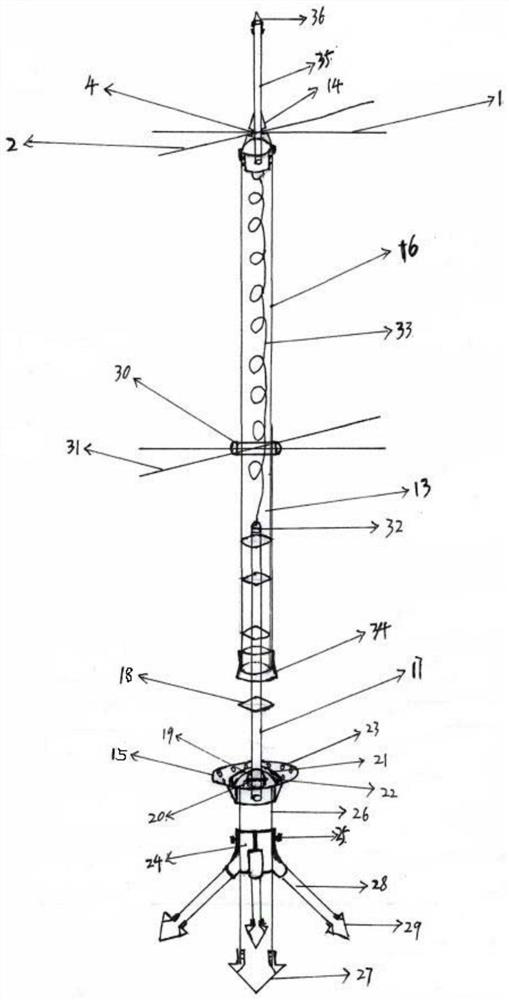
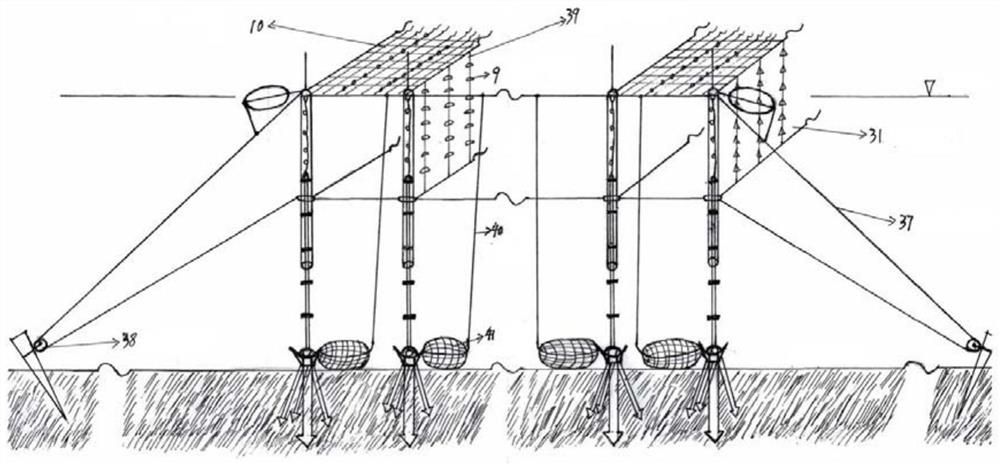
 Login to View More
  Login to View More