Advantages of the present invention includes an
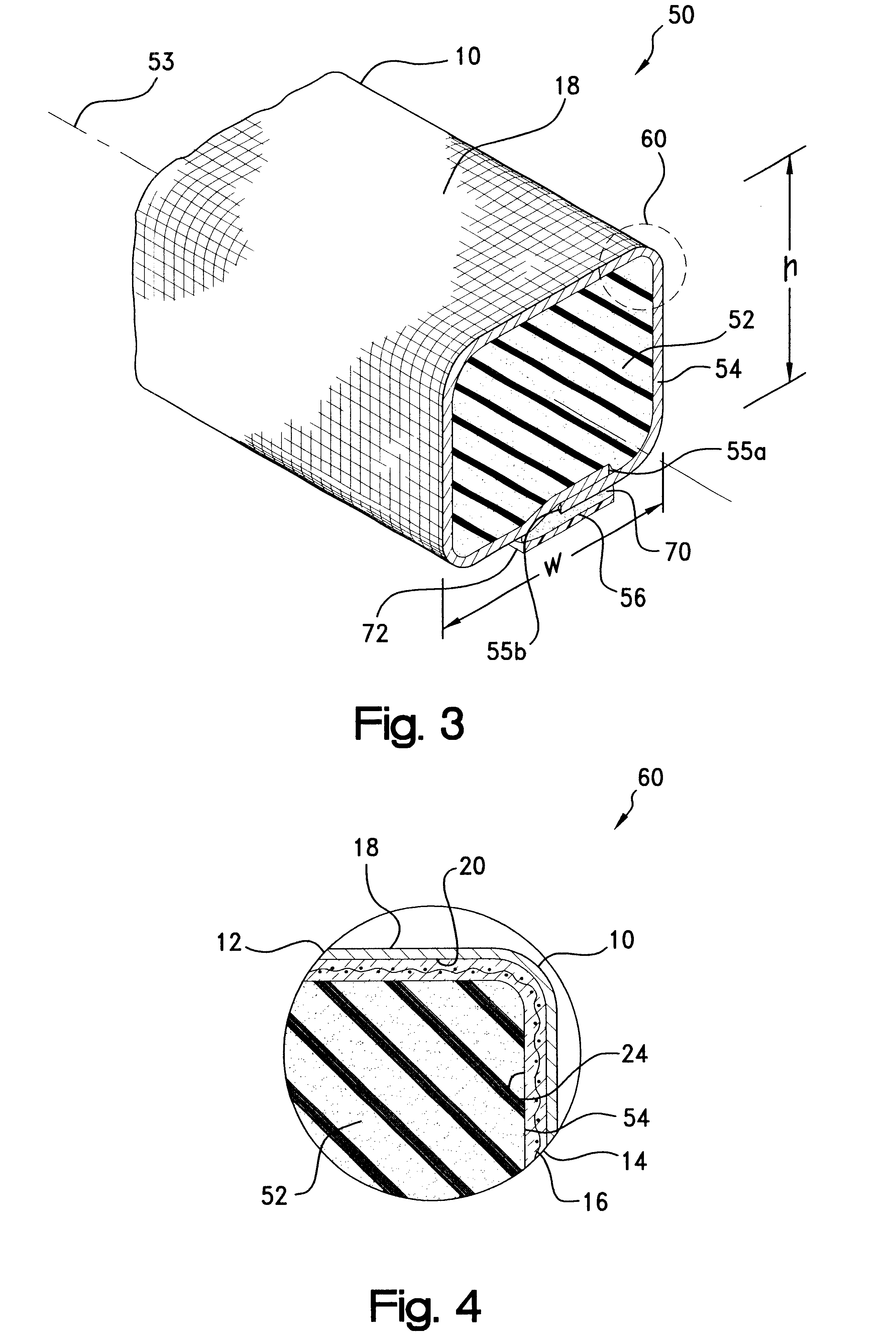
intumescent, flame retardant PSA composition which provides UL94 V-0 protection when used as an interlayer to bond a
metal foil or electrically-conductive fabric jacket to a
polyurethane or other foam core within an EMI shielding
gasket construction. Further advantages include a flame retardant, electrically-conductive EMI shielding tape for cable shielding applications. These and other advantages will be readily apparent to those skilled in the art based upon the disclosure contained herein.
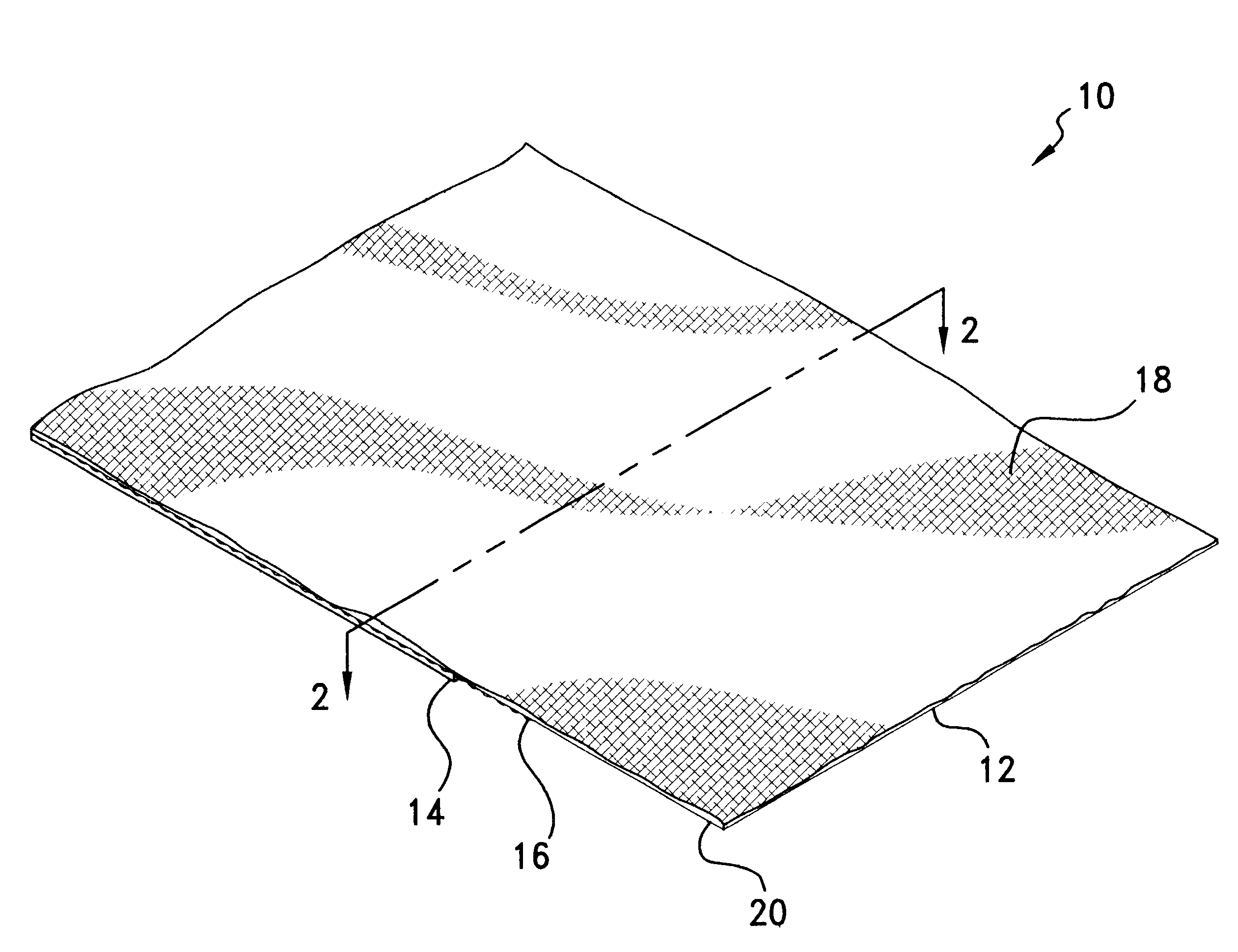
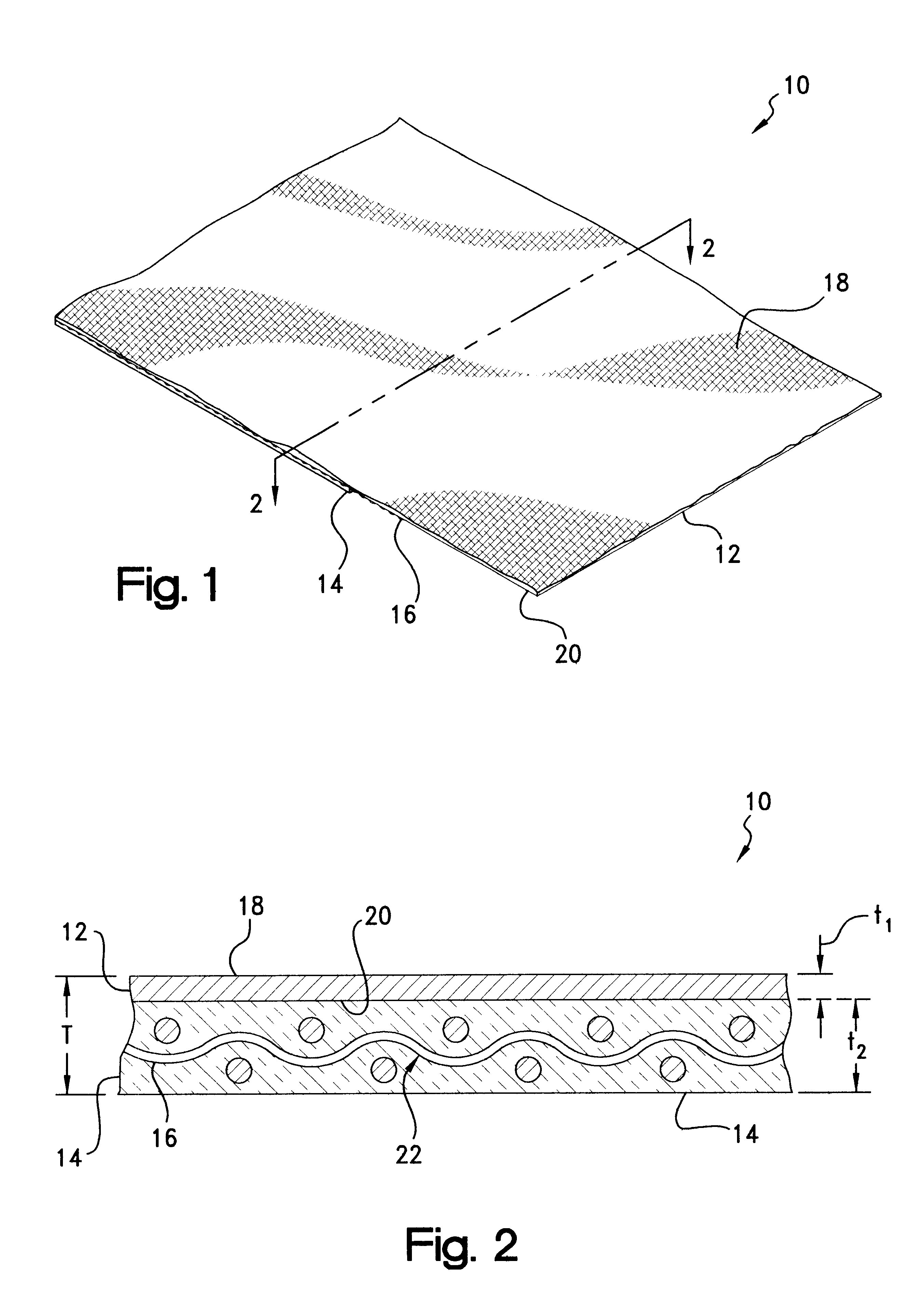
As may be seen best in the magnified cross-sectional view of material 10 depicted in FIG. 2, with electrically-conductive member 12 being provided as a layer of a
metal foil, interlayer 18 preferably is provided as a woven or other fabric which may be formed of an electrically non-conductive material such as
polyester, nylon, or fiberglass. Advantageously, interlayer 18 improves the
tear resistance and otherwise reinforces foil member 12 for easier handling and
cutting without deleteriously affecting the overall drapability of material 10. Interlayer 18 additionally improves the physical properties of material 10 when employed in EMI shielding
gasket constructions or other applications.
Advantageously, the acids liberated from the intercalated
graphite also are available for the catalytic
dehydration of an optional polyhydric
char promoter, which may be a
polyol such as
pentaerythritol or dipentaerythritol, or, alternatively, a
sugar, a polyhydric
phenol, or a
starch. That is, the acids further may react with the hydroxyl functional groups of the
char promoter in forming water,
carbon dioxide, and an intermediate species such as an ester. Advantageously, the intermediate species may be thermally decomposable to form additional carbonific
char which is rendered somewhat self-extinguishing via the liberation of
carbon dioxide during the
dehydration reaction. Moreover, the
latent heat of
evaporation of the water condensed by the
dehydration of the char
promoter endothermically contributes to the insulative effects of the
adhesive formulation.
Additional fillers and additives may be included in the formulation depending upon the requirements of the particular application envisioned and to the extent that the adhesive and intumescent properties of the formulation are not overly compromised. Such fillers and additives may include conventional
wetting, opacifying, or anti-foaming agents, chain extending oils, tackifiers, pigments, lubricants, and stabilizers. Other flame retardant additives, such as
titanium oxide or
zinc oxide, may be employed to provide additional gas
nucleation sites in promoting the formation of a finer
cell, lower density foam with improved
thermal insulation properties. Still other inorganic fillers, including
zirconium salts, borates, phosphates,
antimonate glass,
titanium dioxide, and
zirconium dioxide may be employed to form an
infrared reflective layer over the top of the foam layer. Silica microballoons and glass-forming materials such as silicates,
mica, glass fibers and the like, also may be added as
inert, char-reinforcing agents. A
solvent, such as methyl ethyl
ketone,
methyl isobutyl ketone,
naphtha, or a mixture thereof, or other
diluent may be employed during the compounding of the formulation to lower the
viscosity thereof for improved mixing and coatability.


 Login to View More