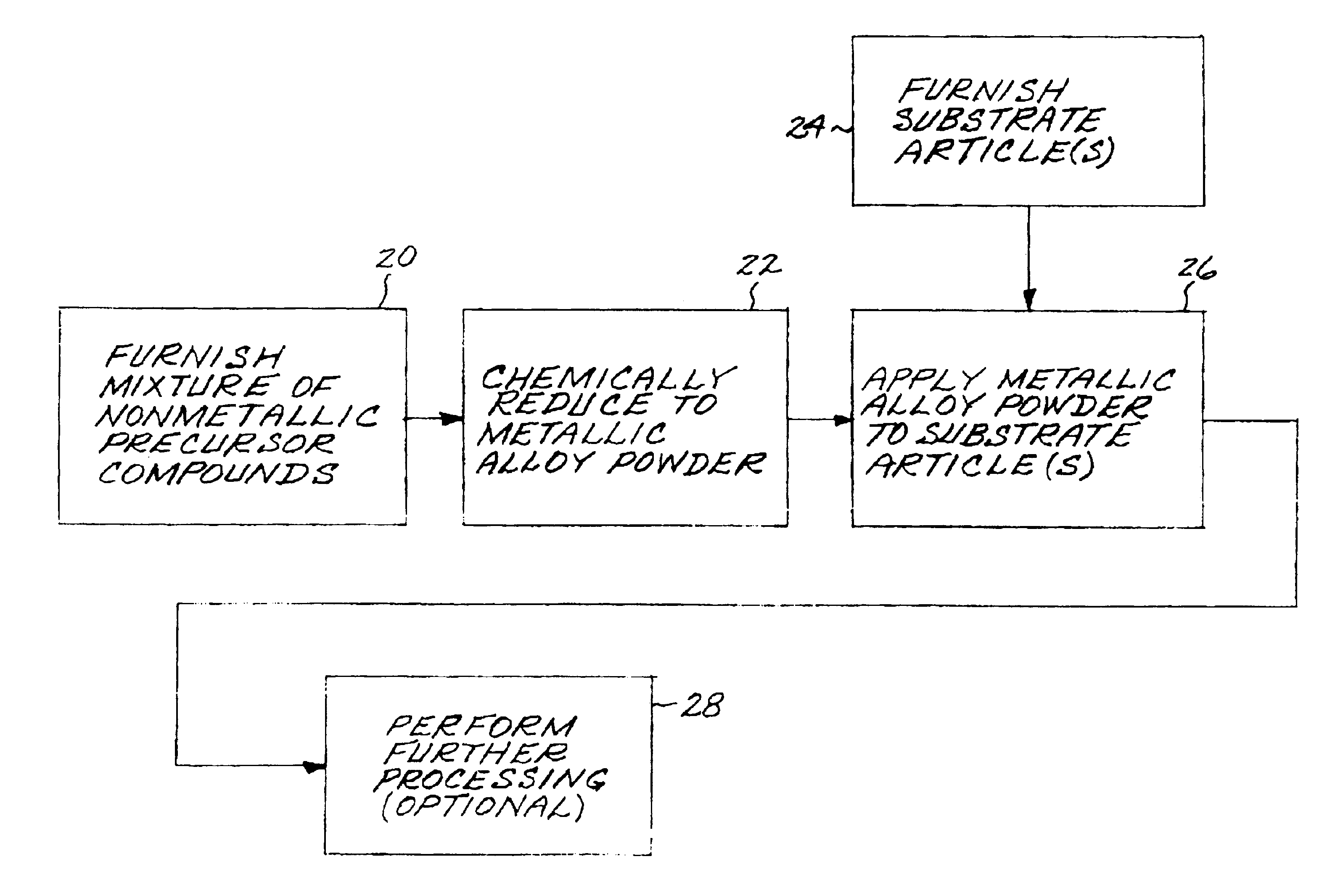
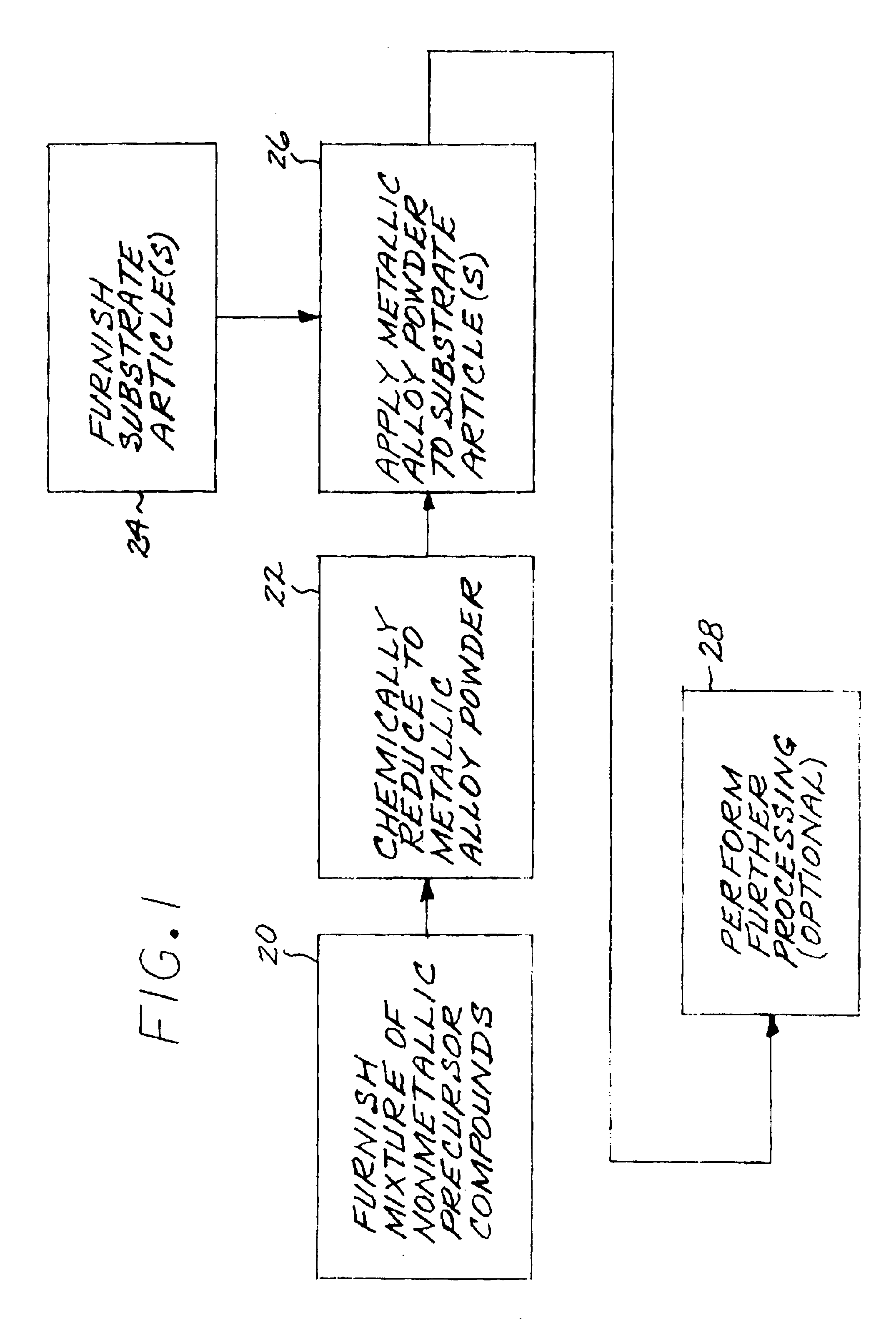
[0006]The present approach provides a method for fabricating and utilizing a metallic powder made of a metallic alloy. The metallic powder is prepared without melting the metal or the powder. This approach avoids problems associated with melt-produced powders, such as impurities associated with the ore source of the metal and the melting process, elemental segregation, and the inability to manufacture compositions that involve thermophysically melt incompatible elements. The metallic powder has a narrow size distribution, providing better utilization in some processes. The present approach is economical to use in both large-run and small-run sizes.
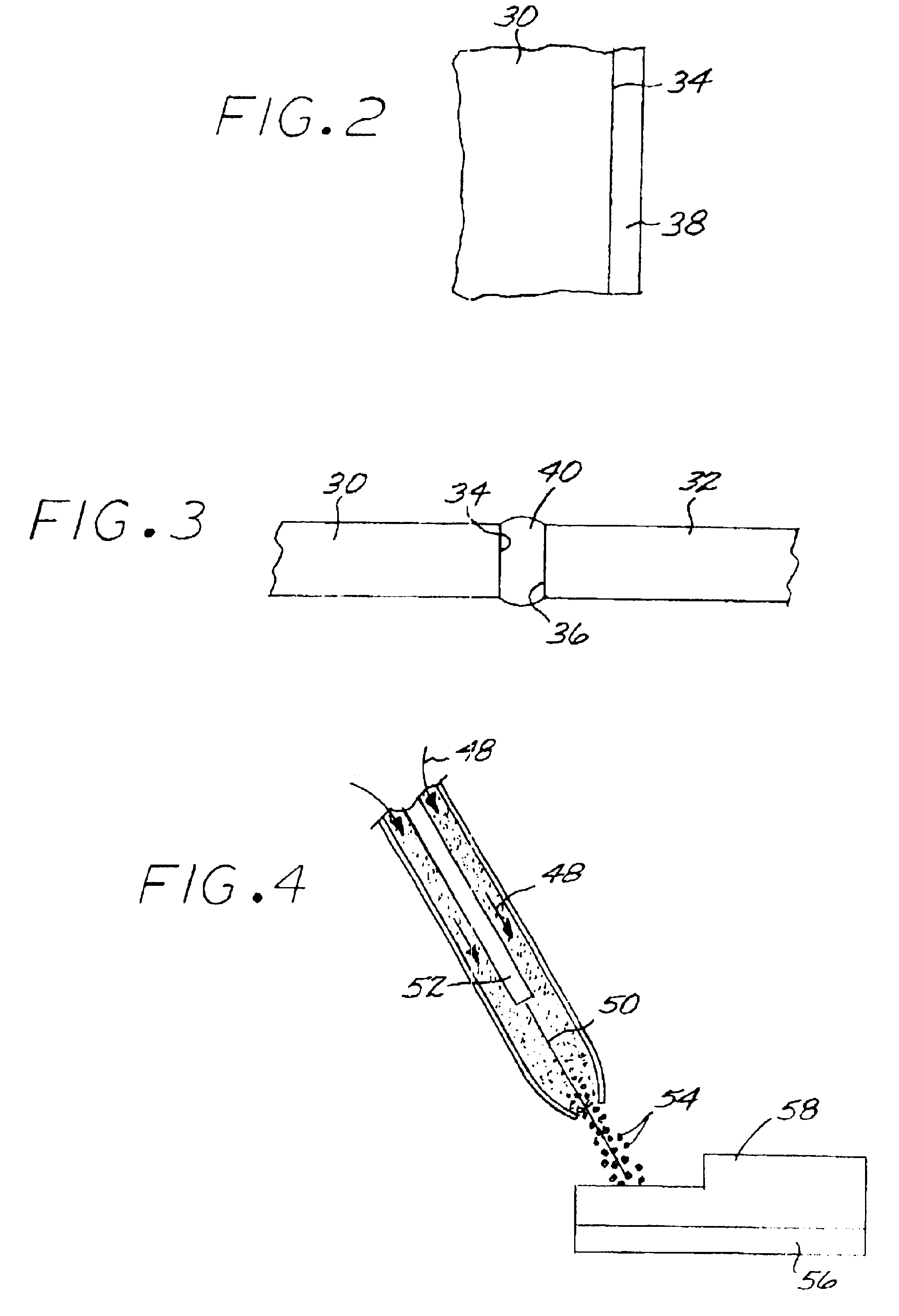
[0011]The metallic alloy powder may thereafter be utilized in any operable manner. In one class of approaches, the metallic alloy powder is applied with an associated melting of the metallic alloy powder. Some examples include
laser deposition,
plasma spray,
flame spray, or thermal spray of the powder, and
welding processes using the powder as the filler or
overlay material. The metallic alloy powder used in such subsequent-melting processes has the advantages that the powder has a well-defined composition without the impurities inherited from the ores and from subsequent
processing steps up to and including melting. The metallic alloy powder is free of
ceramic inclusions that are normally introduced into metallic melts from crucibles, and is free of trapped gas associated with gas-atomization powder-production processes. The process is highly economical, due to the reduction in the number and type of
processing steps to reach the powder stage, in the absence of loss of
skull material in
skull-melting processes, and in the ability to readily scale between small and large production runs. The composition of the powder may be precisely controlled, to achieve controllable compositions of major elements including elements that otherwise cannot be readily co-processed, to eliminate undesirable impurities that otherwise impose limitations on subsequent processing, and to add desirable innoculants that may be difficult or impossible to add in melt-based powder production. The powder itself is narrowly sized, an important consideration in the technical
operability of many application processes and which often requires powder-size classification and diversion of powder material in conventional processing. The powder may be readily graded in composition in production, so as to achieve controlled composition variations and / or
solidus and
liquidus temperature variations in the applied powder. Conversely, if desired, the composition may be maintained precisely the same throughout the material.
[0012]In a second class of approaches, the metallic alloy powder is applied with an associated brief melting of the metallic alloy powder. Some examples include
brazing using the metallic alloy powder as the source of the
brazing alloy, and transient
liquid phase bonding using the metallic alloy powder as the source of the material. In this case, the benefits include those benefits previously discussed for the first approach in which the metallic alloy powder is melted; enabling the selection, preparation, and use of new
brazing alloys with volatile components; the ability to introduce innoculants that are stable only for short melting times; and the incorporation of thermophysically melt incompatible gettering elements into the
braze alloy that
getter oxygen and other environmental contaminants during the brazing process.
[0013]In a third class of approaches, the metallic alloy powder is applied without melting the metallic alloy powder. Some examples of such processes include articles or coatings where the powder is suspended in a carrier to form a
slurry, formed to shape against a surface, and then sintered or baked; cold spray processes such as metal sprayed onto a
ceramic surface; co-spray processes wherein an unmelted metal and a particulate component such as
tungsten carbide are co-sprayed without melting; and
vapor phase coating processes in which the meltless metallic alloy powder is used as the feedstock, particularly aluminum and alloys of aluminum and other elements such as
chromium. In this case, the benefits of the meltless production of the powder, as set forth in the preceding
paragraph, are realized. Additionally, the
microstructure of the powder avoids the cast
microstructure associated with melting and solidifying, which in conventional processes either are unavoidable or can be altered only with additional expensive processing modifications. Powders which cannot be produced because the alloy is limited by thermophysical melt incompatibility can be used in this approach. The present approach reduces cost and avoids structures and defects associated with melting and
casting, to improve the mechanical properties of the final metallic article.


 Login to View More