
Preparation method for silver-loaded nano particle temperature stimuli responsiveness hybrid nanofiber membrane
A stimuli-responsive, nanofiber membrane technology, applied in spinning solution preparation, heating/cooling fabrics, textiles and papermaking, etc., to achieve the effect of simple process, uniform distribution and simple equipment
- Summary
- Abstract
- Description
- Claims
- Application Information
AI Technical Summary
Problems solved by technology
Method used
Image

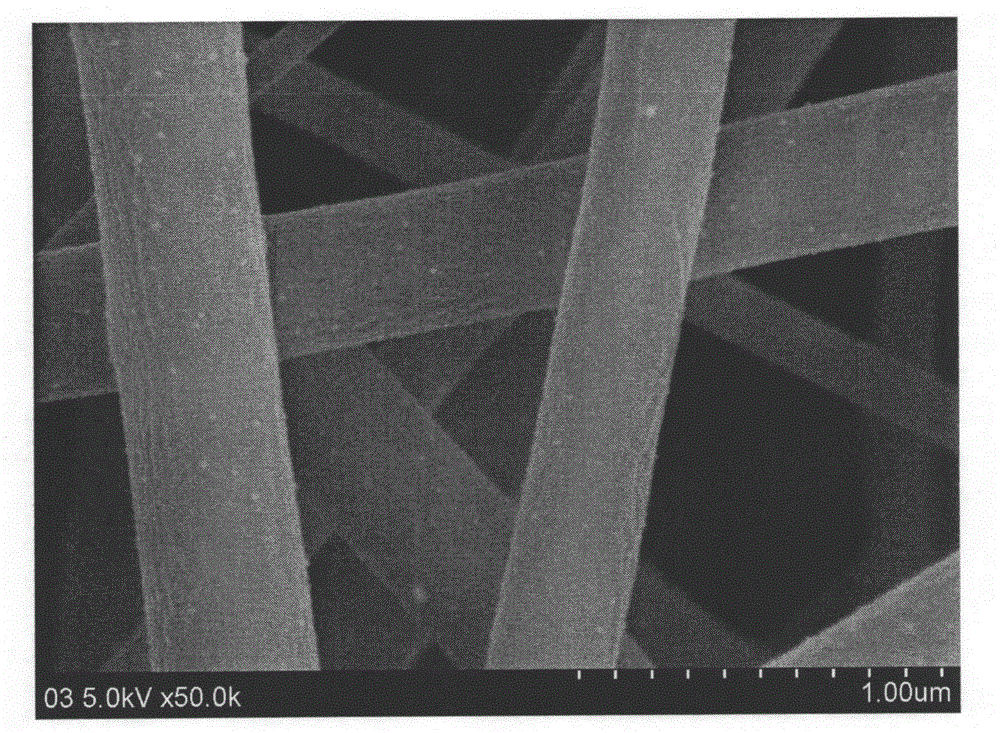
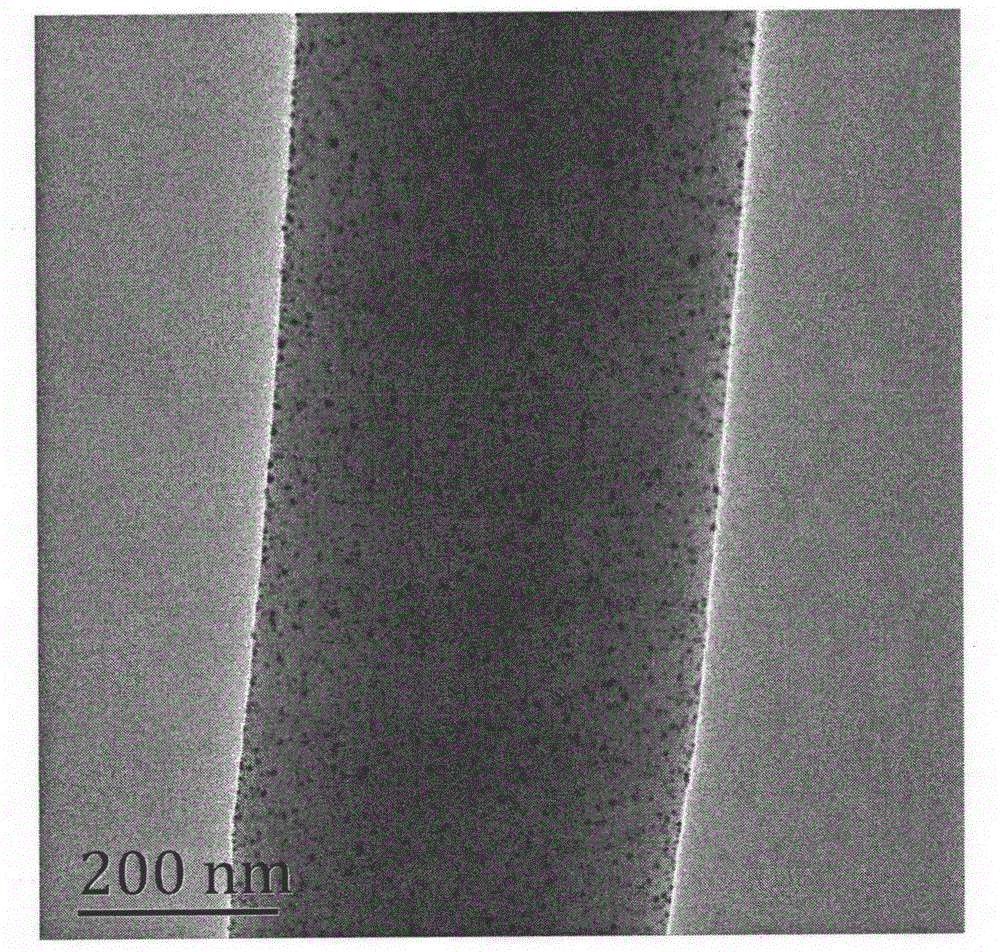
Examples
Embodiment 1
[0028] A method for preparing a silver-loaded nanoparticle temperature-stimuli-responsive hybrid nanofiber membrane:
[0029] (1) Add temperature stimulus responsive monomer N-isopropylacrylamide and another functional monomer N-methylolacrylamide with thermal reactive groups into ethanol at a molar ratio of 100:20 to prepare a single The reaction solution with a volume concentration of 38.4% was heated up to 60° C. while stirring while blowing nitrogen gas. The initiator azobisisobutyronitrile ethanol solution with a mass concentration of 0.4% was added to the above reaction solution, stirred while blowing nitrogen gas, and reacted at 60° C. for 48 hours. After the reaction is completed and the temperature is lowered to room temperature, an appropriate amount of n-hexane and ether is added to the polymer solution to form a white floc, which is vacuum-dried at room temperature after suction filtration to obtain a white temperature-stimuli-responsive polymer;
[0030](2) The t...
Embodiment 2
[0036] A method for preparing a silver-loaded nanoparticle temperature-stimuli-responsive hybrid nanofiber membrane:
[0037] (1) Add temperature stimulus responsive monomer N-isopropylacrylamide and another functional monomer N-methylolacrylamide with thermal reactive groups into ethanol at a molar ratio of 100:20 to prepare a single The reaction solution with a volume concentration of 38.4% was heated up to 60° C. while stirring while blowing nitrogen gas. The initiator azobisisobutyronitrile ethanol solution with a mass concentration of 0.4% was added to the above reaction solution, stirred while blowing nitrogen gas, and reacted at 60° C. for 48 hours. After the reaction is completed and the temperature is lowered to room temperature, an appropriate amount of n-hexane and ether is added to the polymer solution to form a white floc, which is vacuum-dried at room temperature after suction filtration to obtain a white temperature-stimuli-responsive polymer;
[0038] (2) The ...
Embodiment 3
[0043] A method for preparing a silver-loaded nanoparticle temperature-stimuli-responsive hybrid nanofiber membrane:
[0044] (1) The temperature stimulus responsive monomer N-isopropylacrylamide and another functional monomer N-methylolacrylamide with thermal reactive groups are added to ethanol at a molar ratio of 100:20 to prepare a single The reaction solution with a volume concentration of 38.42% was heated up to 60° C. while stirring while blowing nitrogen gas. The initiator azobisisobutyronitrile ethanol solution with a mass concentration of 0.43% was added to the above reaction solution, stirred while blowing nitrogen gas, and reacted at 60° C. for 48 hours. After the reaction is completed and the temperature is lowered to room temperature, an appropriate amount of n-hexane and ether is added to the polymer solution to form a white floc, which is vacuum-dried at room temperature after suction filtration to obtain a white temperature-stimuli-responsive polymer;
[0045...
PUM
| Property | Measurement | Unit |
|---|---|---|
| diameter | aaaaa | aaaaa |
| particle size | aaaaa | aaaaa |
| diameter | aaaaa | aaaaa |
Abstract
Description
Claims
Application Information
 Login to View More