
Preparation method of polysulfide/iodine liquid flow battery electrode based on COS2-CoS n-n semiconductor junctions
A cos2-cosn-n, semiconductor technology, applied in the direction of battery electrodes, circuits, electrical components, etc., can solve the problems of increased charge-discharge potential difference, side reactions of hydrogen evolution, and reduced current density, achieving high crystallinity, Low production cost and improved electrical conductivity
- Summary
- Abstract
- Description
- Claims
- Application Information
AI Technical Summary
Problems solved by technology
Method used
Image

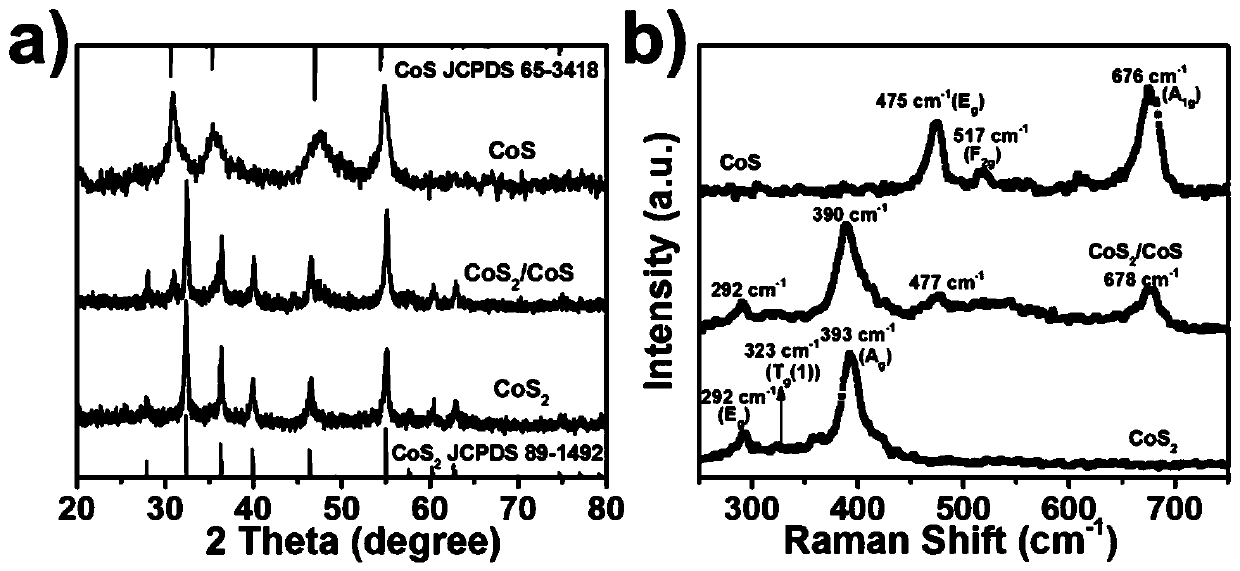
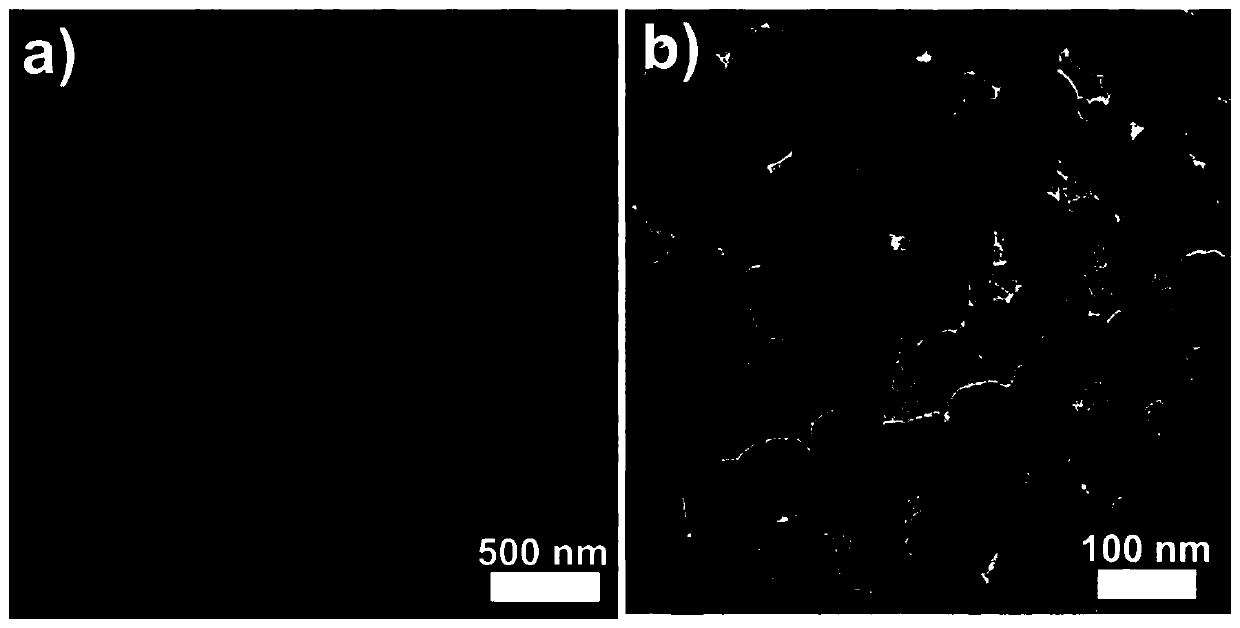
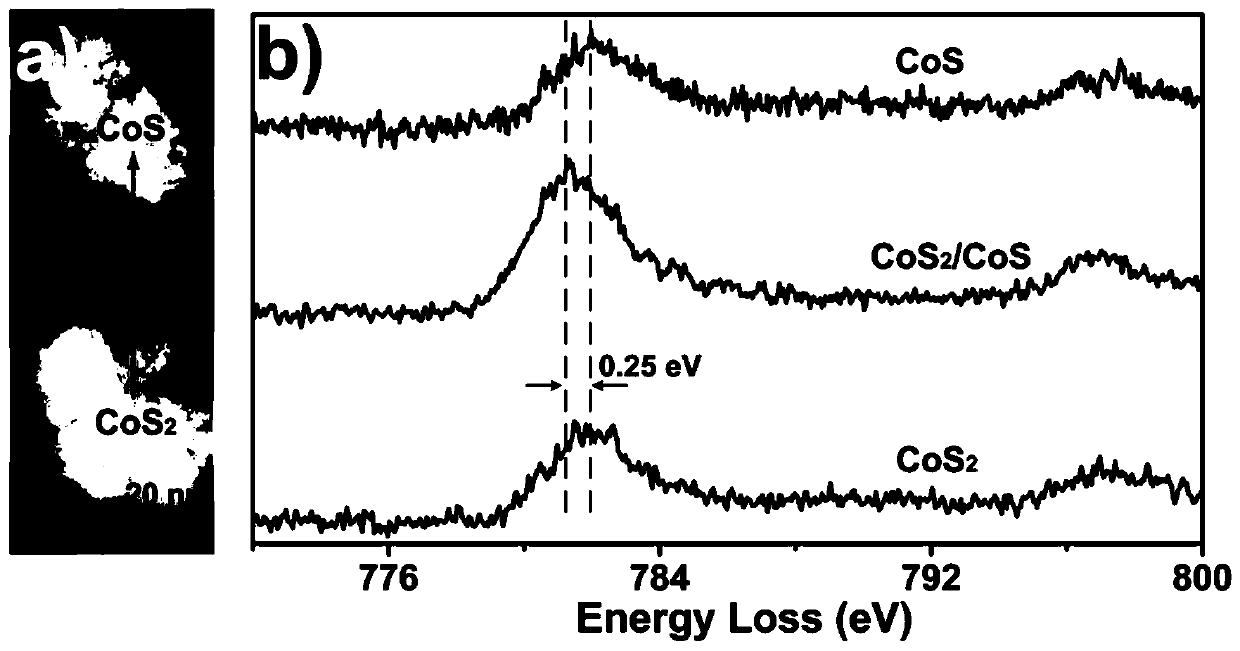
Examples
Embodiment 1
[0040] A CoS-based 2 -CoS n-n semiconductor junction polysulfide / iodine flow battery electrode preparation method:
[0041] (1) Using a one-step solvothermal method, 1mmol CoSO 4 ·7H 2 O, 10mmol urea and 25mmol sublimated sulfur were added to 70mL of a mixed solvent of ethylene glycol and N,N-dimethylformamide, the volume ratio of ethylene glycol and N,N-dimethylformamide was 0.9, and stirred at room temperature 1 hour;
[0042] (2) Transfer it to a 100mL autoclave and react at 180°C for 12h;
[0043] (3) After the reaction is finished, cool to room temperature, obtain the precipitate obtained by centrifugation at a speed of 7000rpm for 5min, wash the product twice with deionized water and once with absolute ethanol, and then dry the product under vacuum at 60°C for 6h, namely get black CoS 2 / CoS powder product. CoS was synthesized by a similar method 2 and CoS, adjust the volume ratio of ethylene glycol and N,N-dimethylformamide to 0.5 and 2, respectively, and stir at...
Embodiment 2
[0050] According to the method of embodiment 1, difference is that metal cobalt salt used is cobalt nitrate.
Embodiment 3
[0052] According to the method of embodiment 1, difference is that metal cobalt salt used is cobalt oxide.
PUM
 Login to View More
 Abstract
Description
Claims
Application Information
 Login to View More