Unlock instant, AI-driven research and patent intelligence for your innovation.
Synthetic method of bis-pyrrole fused boron naphthazine and derivatives of bis-pyrrole fused boron naphthazine
What is Al technical title?
Al technical title is built by PatSnap Al team. It summarizes the technical point description of the patent document.
A synthesis method and technology of bispyrrole, applied in the field of synthesis of bispyrrole-fused borazanthene and its derivatives
Inactive Publication Date: 2019-11-01
TIANJIN UNIVERSITY OF TECHNOLOGY
View PDF1 Cites 2 Cited by
Summary
Abstract
Description
Claims
Application Information

AI Technical Summary
This helps you quickly interpret patents by identifying the three key elements:
Problems solved by technology
Method used
Benefits of technology
Problems solved by technology
However, the synthesis of boron-nitrogen-doped polycyclic aromatic hydrocarbons with novel structures and their practical applications are still a great challenge.
Method used
the structure of the environmentally friendly knitted fabric provided by the present invention; figure 2 Flow chart of the yarn wrapping machine for environmentally friendly knitted fabrics and storage devices; image 3 Is the parameter map of the yarn covering machine
View more
Image
Smart Image Click on the blue labels to locate them in the text.
Viewing Examples
Smart Image
Click on the blue label to locate the original text in one second.
Reading with bidirectional positioning of images and text.
Smart Image
Examples
Experimental program
Comparison scheme
Effect test
preparation example Construction
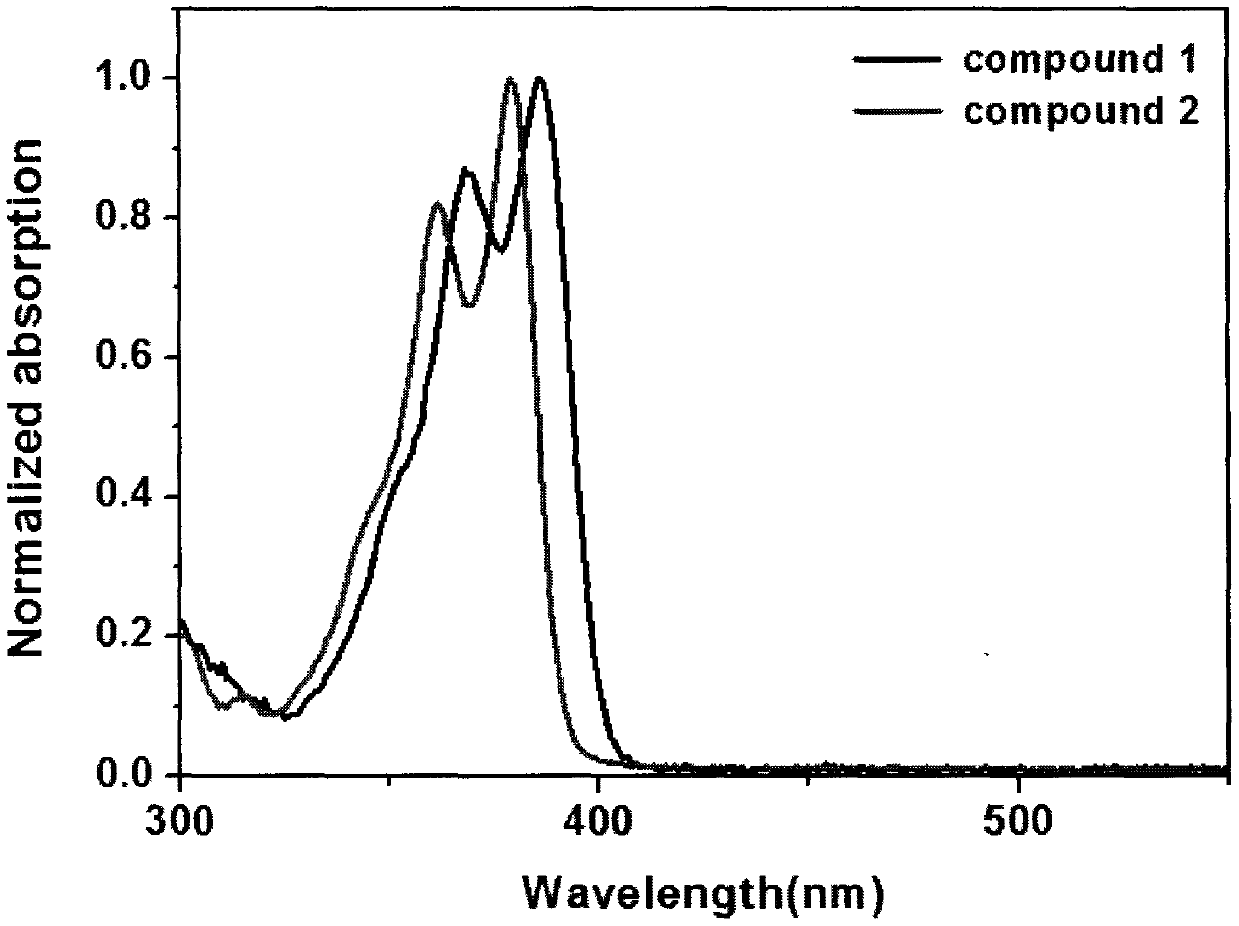
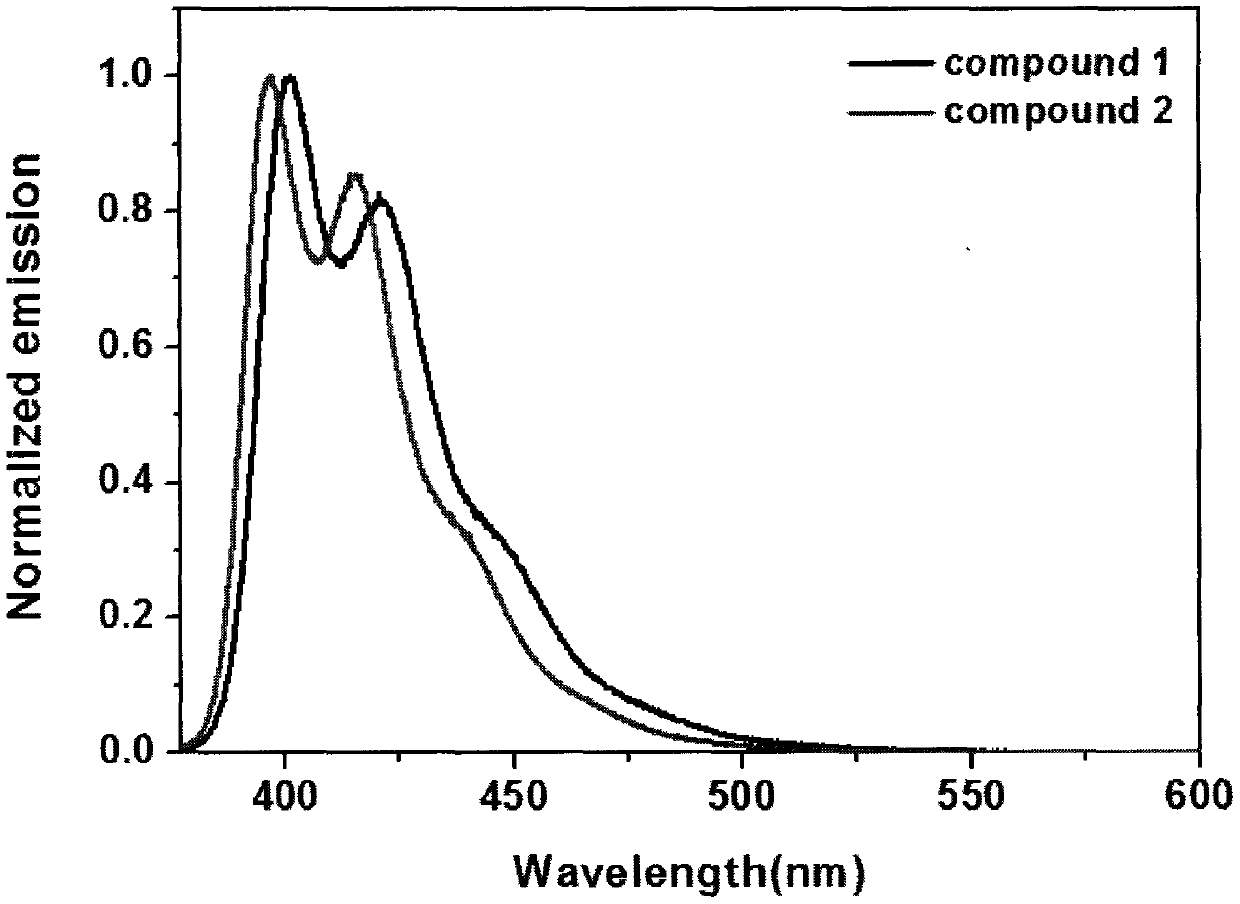
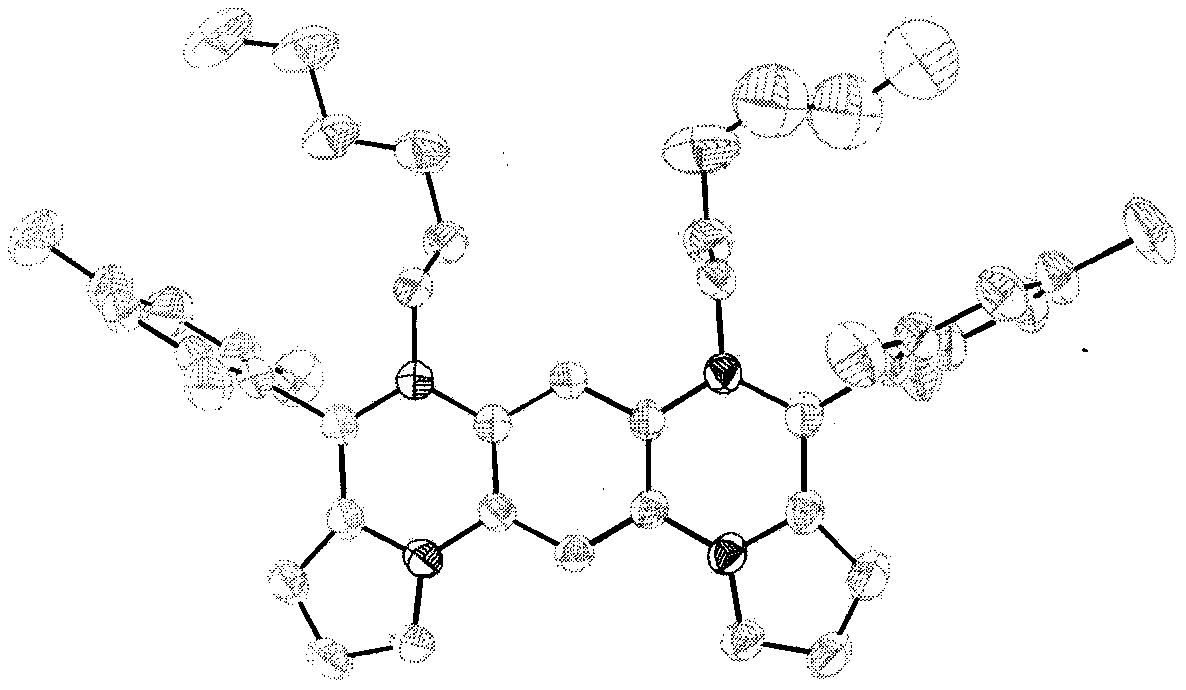
[0032] An overall synthesis method of bispyrrole-fused borazanthene and derivatives thereof of the present invention comprises the following synthesis route and steps:
[0033]
[0034] Some of the above-mentioned compounds are given examples, and the details are as follows:
Embodiment 1
[0035] Embodiment 1: the synthesis of compound 1
[0036] 1) Synthesis of Compound 4: Weigh 1,5-difluoro-2,4-dinitrobenzene (1.00equiv, 29.40mmol, 6.00g) and sodiumhydroxide (2.20equiv, 64.68mmol, 2.59g), The gas was exchanged three times, protected by nitrogen, and 50 mL of dimethyl sulfoxide solution was added, followed by pyrrole (2.20 equiv, 64.68 mmol, 4487 μl), and stirred at room temperature for 12 h. After the reaction was complete, water and ethyl acetate were added to extract, the organic layers were combined, dried over anhydrousmagnesiumsulfate, filtered, spin-dried, and quickly separated by column chromatography to obtain the yellow solid target compound 4 (5.75 g, yield 65%).
[0038] 2) Synthesis of compound 5: Weigh 1,5-dipyrrole-2,4-dinitrobenzene (1.0equiv, 1.97mmol, 586mg) and dissolve it in 20mL ethanol solution, add bismuth chlor...
Embodiment 2
[0042] Embodiment 2: the synthesis of compound 2
[0043] 5) Synthesis of compound 6: Weigh 1,5-dipyrrole-2,4-diaminobenzene (1.00equiv, 2.10mmol, 500mg), ventilate 3 times, protect with nitrogen, add 10mL of tetrahydrofuran solution, in -78 Add n-butyllithium (2.10equiv, 4.41mmol, 1.76mL, 2.5mol / L in hexane), 0.68mL) at ℃, stir at -78℃ for 1h, add hexyl bromide (4.00equiv, 8.40mmol, 1.39 g), then heated at 66°C under reflux for 4 hours, after the reaction was complete, the solvent was spin-dried, extracted with water and ethyl acetate, the organic layers were combined, dried with anhydrousmagnesiumsulfate, filtered, spin-dried, and quickly carried out column chromatography After separation, the target compound 6 (436 mg, yield 51%) was obtained as brown-red oily liquid.
the structure of the environmentally friendly knitted fabric provided by the present invention; figure 2 Flow chart of the yarn wrapping machine for environmentally friendly knitted fabrics and storage devices; image 3 Is the parameter map of the yarn covering machine
Login to View More
PUM
Login to View More
Abstract
The invention relates to a synthetic method of bis-pyrrole fused boron naphthazine and derivatives of bis-pyrrole fused boron naphthazine. The photoelectric physical properties of the compounds are tested and studied, and study on application value of the organic materials in preparation of OLED devices is carried out. The structure formula of the compounds is disclosed in the invention, wherein R1, R2, R4, and R5 are respectively used for representing independent substituent groups or non-substituent groups including alkyl, aryl (phenyl ring, thiophene ring, furan ring, pyrrole, pyridine, benzothiophene, benzofuran, benzopyrrole, quinoline, naphthalene ring, anthracenenucleus, phenalene, tetracene, pyrene, linear or angled pentacene, hexacene, indene, fluorine, and the like), and R3 is used for representing alkyl, acyl, nitro, sulfonic group, aldehyde group, diazo group, or single substitution halogen atom X, F, Cl, Br, and I.
Description
technical field [0001] The present invention relates to a synthesis method of bispyrrole-fused borazanthane and its derivatives. The commercially available 1,5-difluoro-2,4-dinitrobenzene is used as a raw material, through the nucleophilic substitution of pyrrole reaction, reduction, and Lewis base-directed electrophilic borocyclization to give a series of bispyrrole-fused borazanthene compounds. The synthesis method is simple and easy to operate, has mild reaction conditions, fast reaction rate and high yield, and the compound has potential application value in the field of organic photoelectric materials. Background technique [0002] Polycyclic aromatic hydrocarbons are rich in carbon atoms, have large conjugated systems and outstanding electronic properties, and have received more and more attention in new organic optoelectronic materials, such as organic light-emitting diodes, organic semiconductor materials, solar cells (OPVs) and Field effect transistors (OFETs) have...
Claims
the structure of the environmentally friendly knitted fabric provided by the present invention; figure 2 Flow chart of the yarn wrapping machine for environmentally friendly knitted fabrics and storage devices; image 3 Is the parameter map of the yarn covering machine
Login to View More
Application Information
Patent Timeline
Application Date:The date an application was filed.
Publication Date:The date a patent or application was officially published.
First Publication Date:The earliest publication date of a patent with the same application number.
Issue Date:Publication date of the patent grant document.
PCT Entry Date:The Entry date of PCT National Phase.
Estimated Expiry Date:The statutory expiry date of a patent right according to the Patent Law, and it is the longest term of protection that the patent right can achieve without the termination of the patent right due to other reasons(Term extension factor has been taken into account ).
Invalid Date:Actual expiry date is based on effective date or publication date of legal transaction data of invalid patent.