Primer, probe, kit and detection method for detecting cotton root rot bacteria
A detection method and technology of rot fungus, which is applied in the field of kits and detection, primers and probes for cotton root rot fungus detection, can solve the problem that the rapid and accurate detection of ports cannot meet the long time and limitations of inducing spore production and sclerotia production. Problems such as popularization and application of detection methods to achieve reliable detection results, short detection cycle and high sensitivity
- Summary
- Abstract
- Description
- Claims
- Application Information
AI Technical Summary
Problems solved by technology
Method used
Image

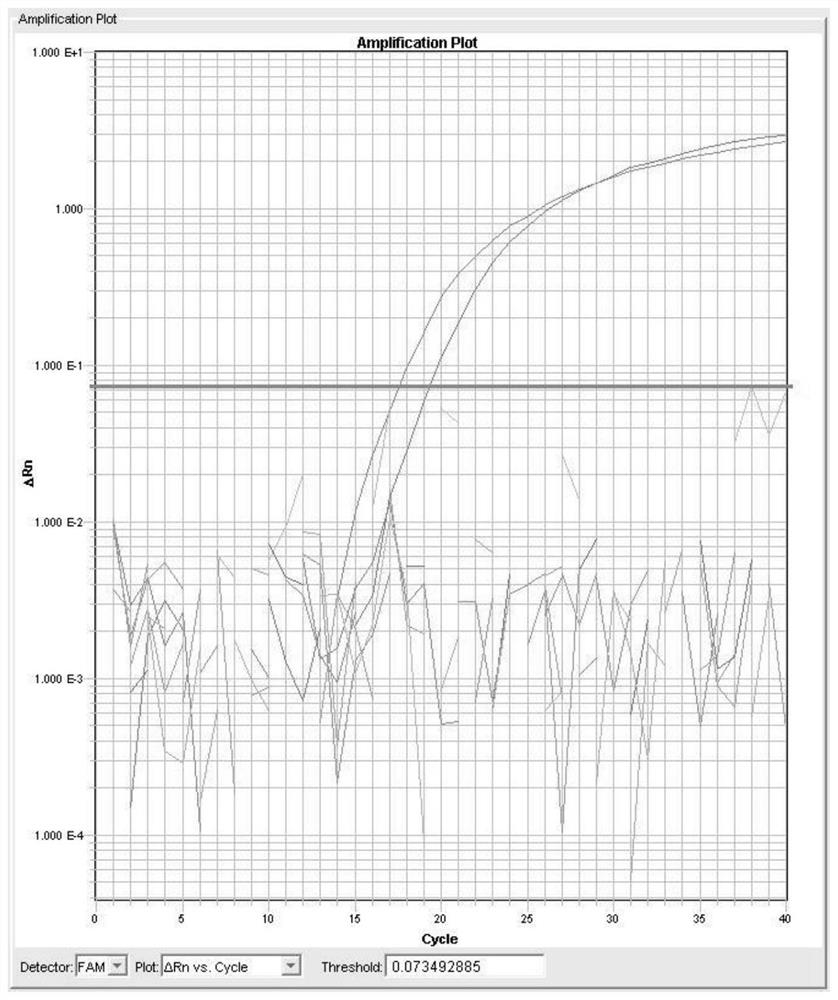
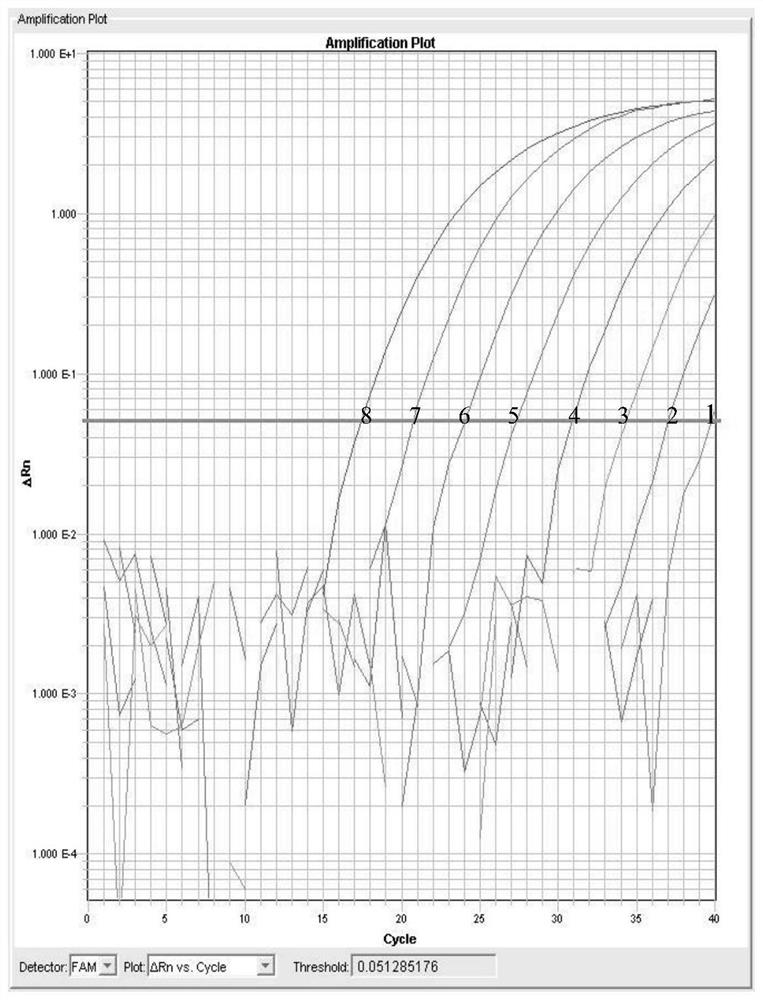
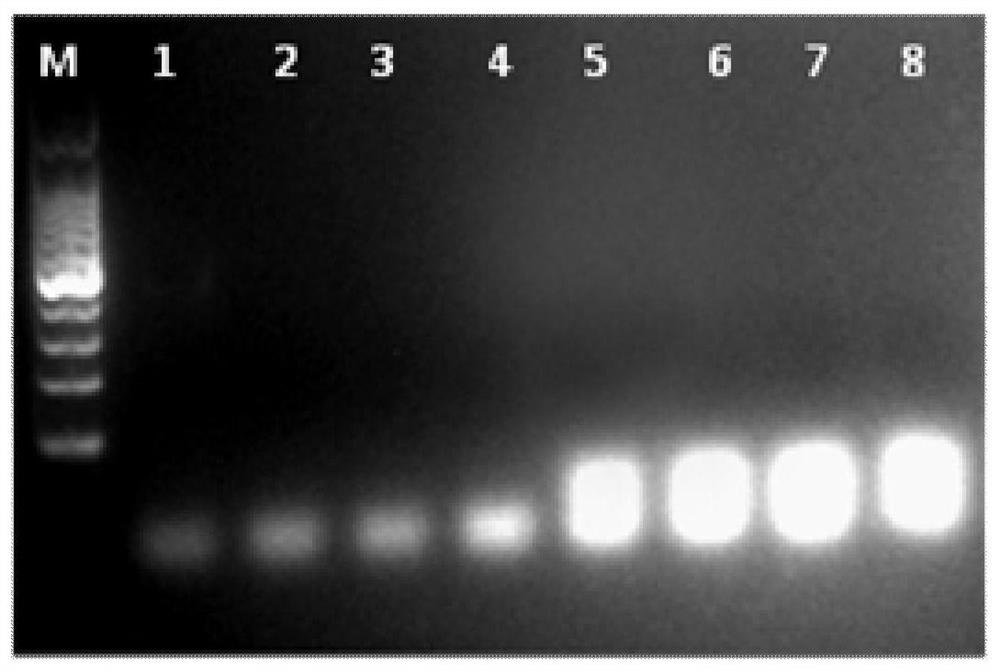
Examples
Embodiment 1
[0033] Embodiment 1: be used for the primer of cotton root rot pathogen detection, probe design
[0034] The sequence of the conserved fragment (ITS) in the cotton root rot fungus is as described in SEQ ID NO: 1, by amplifying this laboratory preserves the cotton root rot fungus ITS sequence, and uses Bioedit software in conjunction with the pathogenic bacteria in the Genbank gene bank and related The ITS sequences of different species were compared and analyzed, and the primers and probes of cotton root rot were designed by using Primer Express3.0 to determine the conserved fragments of the ITS region. Among them, the synthesis of primers and probes adopts the β-acetonitrile phosphate ammonium chemical synthesis method, and the synthesis of OligoDNA is carried out by using a fully automatic DNA synthesizer. In this embodiment, the primers and probes are synthesized by Bao Biological Engineering (Dalian) Co., Ltd. .
[0035] Wherein, the sequence of the primer used for cotton...
Embodiment 2
[0040] Embodiment 2: the kit that is used for cotton root rot pathogen detection
[0041] The kit in this example includes the primers and probes in Example 1, and also includes CTAB extract, Taq DNA polymerase, positive control solution and negative control solution, as shown in Table 1.
[0042] Table 1 Standardized kit composition (20 μL reaction × 100 times)
[0043] Solution I (CTAB extract) 30mL×2 bottles Solution II (Primer Probe) 1.25mL Solution III (Polymerase) 50μL Solution IV (deionized water) 1.25mL×2 sticks Solution V (positive control) 50μL Solution VI (negative control) 50μL Solution VII (quantitative standard solution) 25 μL
[0044]Wherein, the above solution I contains 0.7mol / L NaCl, 100mmol / L Tris-HC1, pH 8.0 and 20mmol / LEDTA, 10g / L PVP-360, 20g / L CTAB and a final concentration of 2% (V:V) β -Mercaptoethanol. The above solution II is a one-step fluorescence quantitative PCR buffer (purchased from TA...
Embodiment 3
[0045] Embodiment 3: the detection of cotton root rot pathogen
[0046] The detection process of cotton root rot pathogen is as follows:
[0047] Step 1: Take about 0.5g of dried mycelium, put it into a 1.5ml centrifuge tube submerged in liquid nitrogen, crush it with a plastic pestle, then add 600μL of CTAB extract, and bathe in water at 65°C for 30min, during the water bath process from time to time Mix by inversion.
[0048] The second step: centrifuge at 10000r / min for 5min, take the supernatant and add an equal volume of extract, and mix until it becomes milky; in this embodiment, the above extract is a mixture of chloroform and isoamyl alcohol, and the mixture The volume ratio of chloroform and isoamyl alcohol in the solution is 24:1.
[0049] The third step: 4 ℃ 10000rpm centrifugal 5min, take supernatant and add the sodium acetate solution (3mol / L, pH 6.0) of this 1 / 10 volume (being 1 / 10 of this supernatant volume) and 2.5 times of volume ( That is, 2.5 times the vo...
PUM
 Login to View More
 Abstract
Description
Claims
Application Information
 Login to View More