
Sulfonium salt, resist composition, and patterning process
a technology of resist composition and sulfonium salt, which is applied in the direction of photosensitive materials, instruments, photomechanical equipment, etc., can solve the problems of insufficient acid strength to scissor acid labile groups on resins, failure of resolution, and several retarded development of resins, etc., to facilitate efficient scission of acid labile groups, promote acid-catalyzed crosslinking reactions, and minimize the release of volatile matter
- Summary
- Abstract
- Description
- Claims
- Application Information
AI Technical Summary
Benefits of technology
Problems solved by technology
Method used
Image

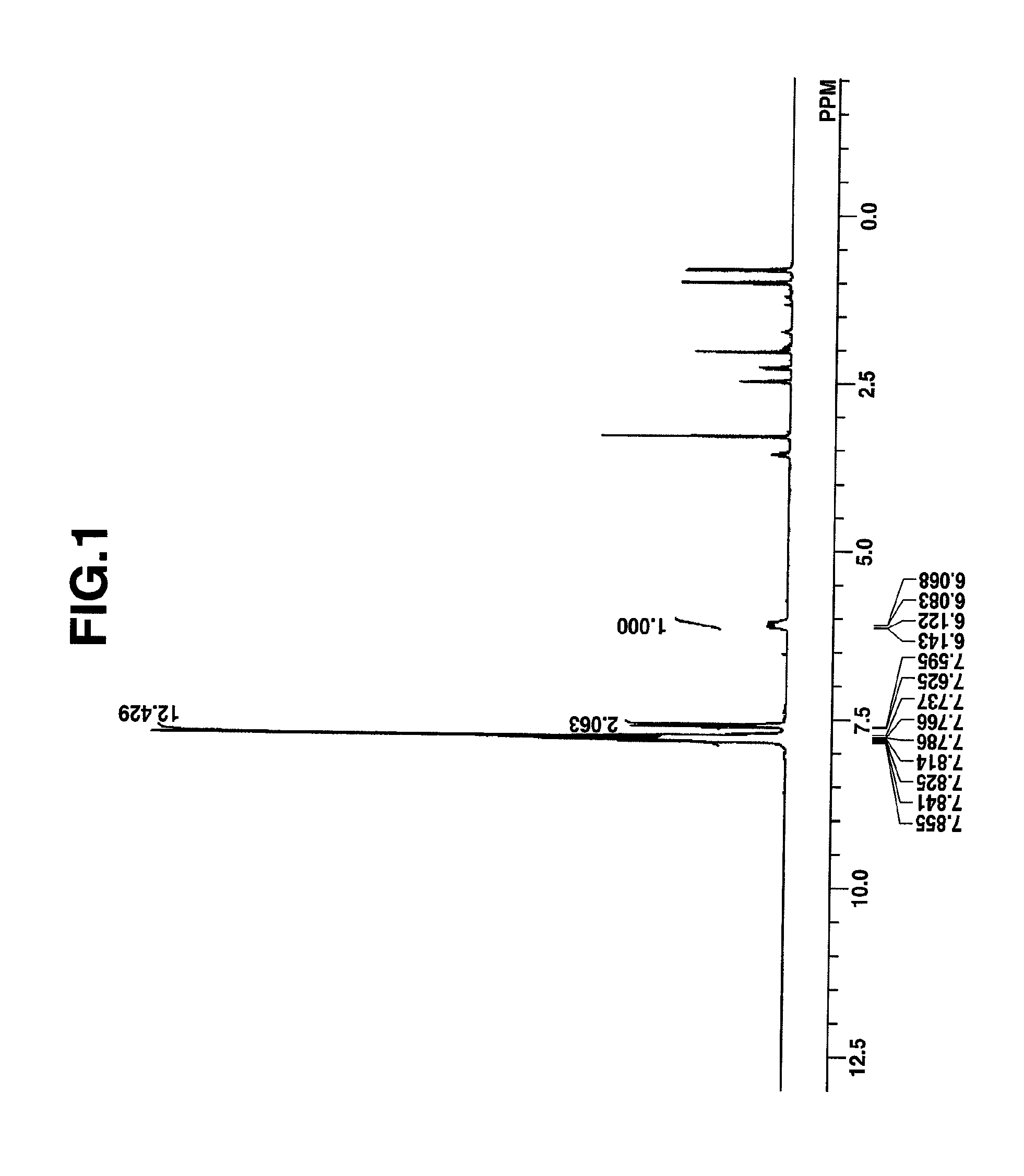
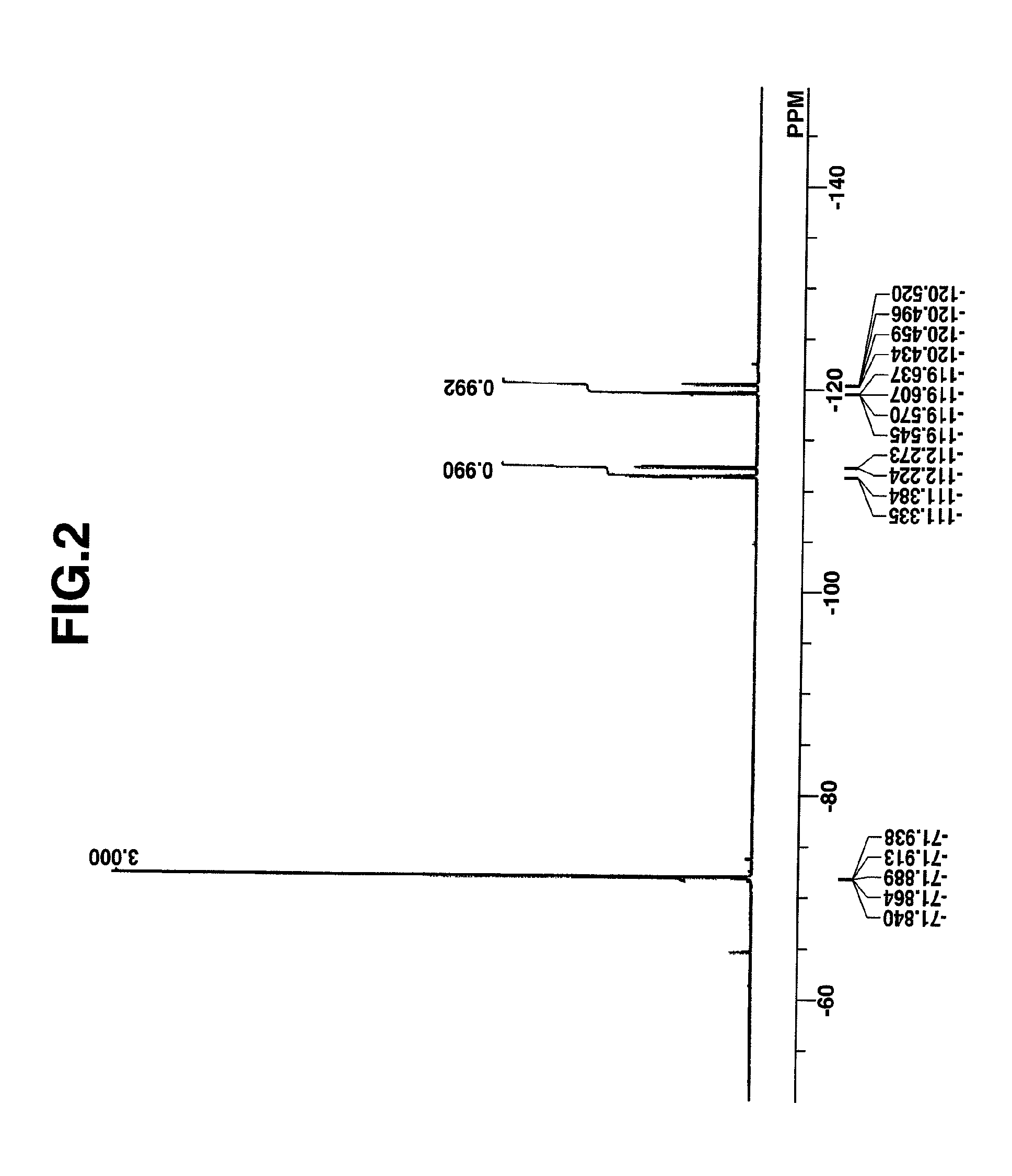
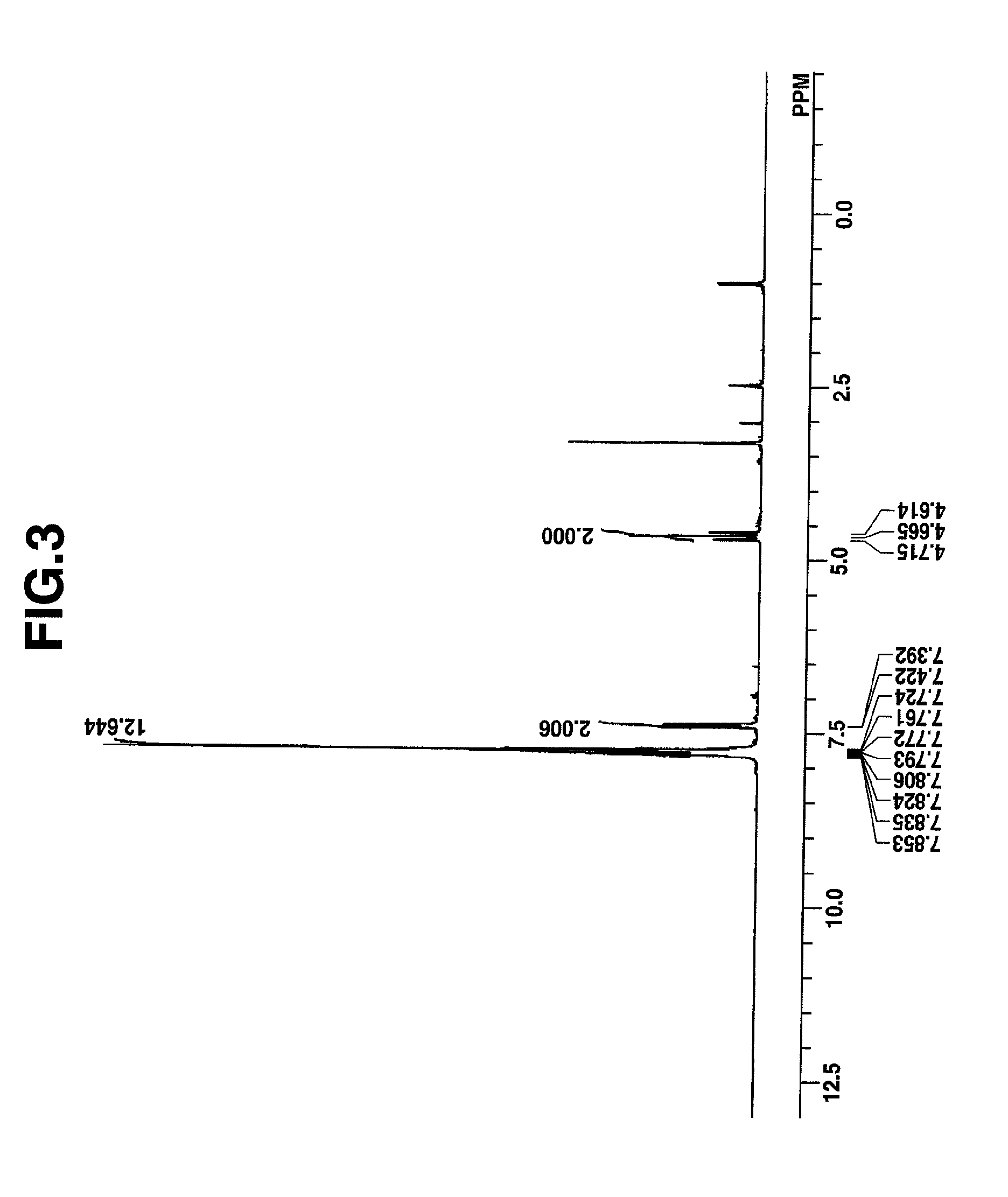
Examples
synthesis example 1
Synthesis of 4-fluorophenyldiphenylsulfonium chloride
[0172]Diphenyl sulfoxide, 40 g (0.2 mole), was dissolved in 400 g of dichloromethane, which was stirred under ice cooling. At a temperature below 20° C., 65 g (0.6 mole) of trimethylsilyl chloride was added dropwise to the solution, which was allowed to mature for 30 minutes at the temperature. Then, a Grignard reagent which had been prepared from 14.6 g (0.6 mole) of metallic magnesium, 78.3 g (0.6 mole) of 4-fluorochlorobenzene and 180 g of tetrahydrofuran (THF) was added dropwise at a temperature below 20° C. The reaction solution was allowed to mature for one hour, after which 50 g of water at a temperature below 20° C. was added to quench the reaction. To this solution, 150 g of water, 10 g of 12N hydrochloric acid, and 200 g of diethyl ether were further added. The water layer was separated and washed with 100 g of diethyl ether, yielding an aqueous solution of 4-fluorophenyldiphenylsulfonium chloride. The compound in aqueou...
synthesis example 2
Synthesis of sodium 1,1,3,3,3-pentafluoro-2-hydroxy-propanesulfonate
[0173]Ester hydrolysis reaction was effected using sodium 1,1,3,3,3-pentafluoro-2-(pivaloyloxy)propanesulfonate, which was prepared according to the formulation described in JP-A 2007-145797, and a sodium hydroxide aqueous solution in methanol. After the completion of reaction, hydrochloric acid was added to turn the reaction system from neutral to weakly acidic. The aqueous solution was directly used in the subsequent reaction.
synthesis example 3
Synthesis of 4-fluorophenyldiphenylsulfonium 1,1,3,3,3-pentafluoro-2-hydroxypropanesulfonate
[0174]An amount (0.2 mole) of the 4-fluorophenyldiphenyl-sulfonium chloride aqueous solution in Synthesis Example 1 was combined with an amount (0.2 mole) of the sodium 1,1,3,3,3-pentafluoro-2-hydroxypropanesulfonate aqueous solution in Synthesis Example 2, followed by twice extraction with 500 g of dichloromethane. Through the steps of washing the organic layer with water, distilling off the solvent in vacuum, adding isopropyl ether for crystallization, filtration and drying, the target compound was obtained. White crystals, 71.5 g, yield 70% (based on diphenyl sulfoxide).
PUM
| Property | Measurement | Unit |
|---|---|---|
| feature size | aaaaa | aaaaa |
| wavelength | aaaaa | aaaaa |
| wavelength | aaaaa | aaaaa |
Abstract
Description
Claims
Application Information
 Login to View More