
Carbonaceous Nanocomposite Having Novel Structure And Fabrication Method Thereof
一种制造方法、碳纳米的技术,应用在纳米结构制造、碳纳米管、纳米碳等方向,能够解决碳纳米管没有得到广泛的应用、导电率等电特性降低、不能呈现效率、亮度等问题,达到加快氧化还原反应、电阻抗减小、粘结力良好的效果
- Summary
- Abstract
- Description
- Claims
- Application Information
AI Technical Summary
Problems solved by technology
Method used
Image

Examples
Embodiment 1
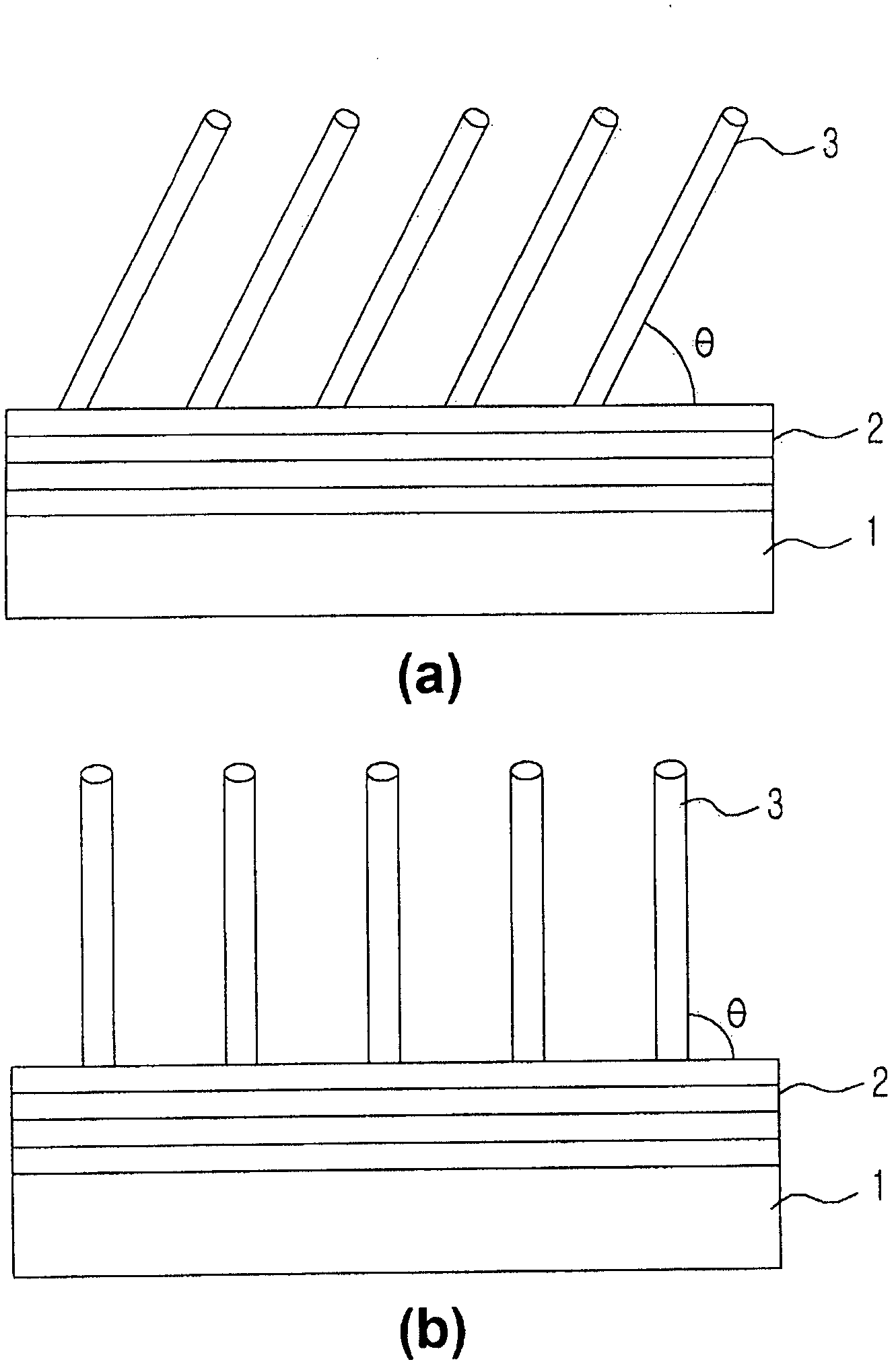
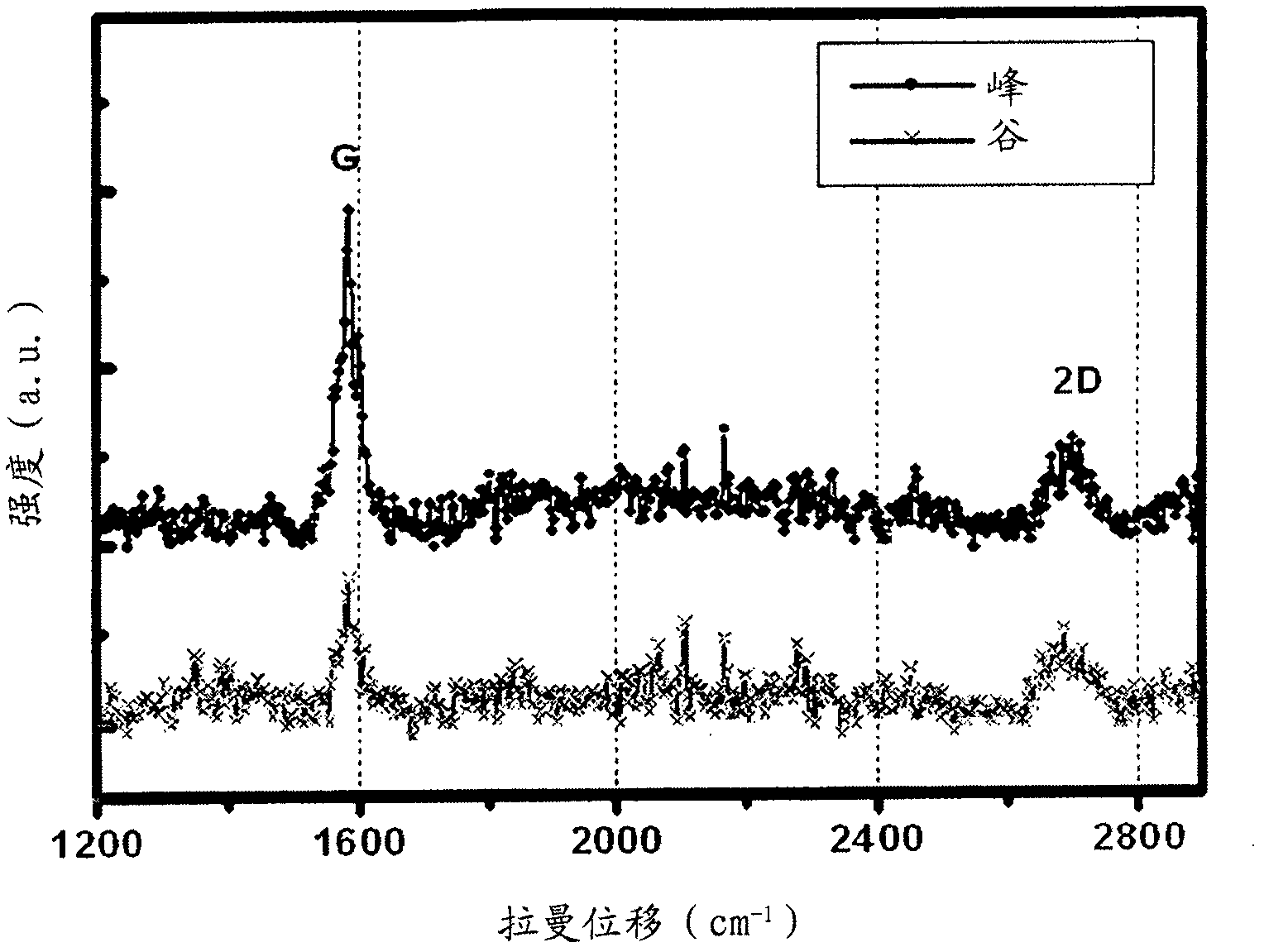
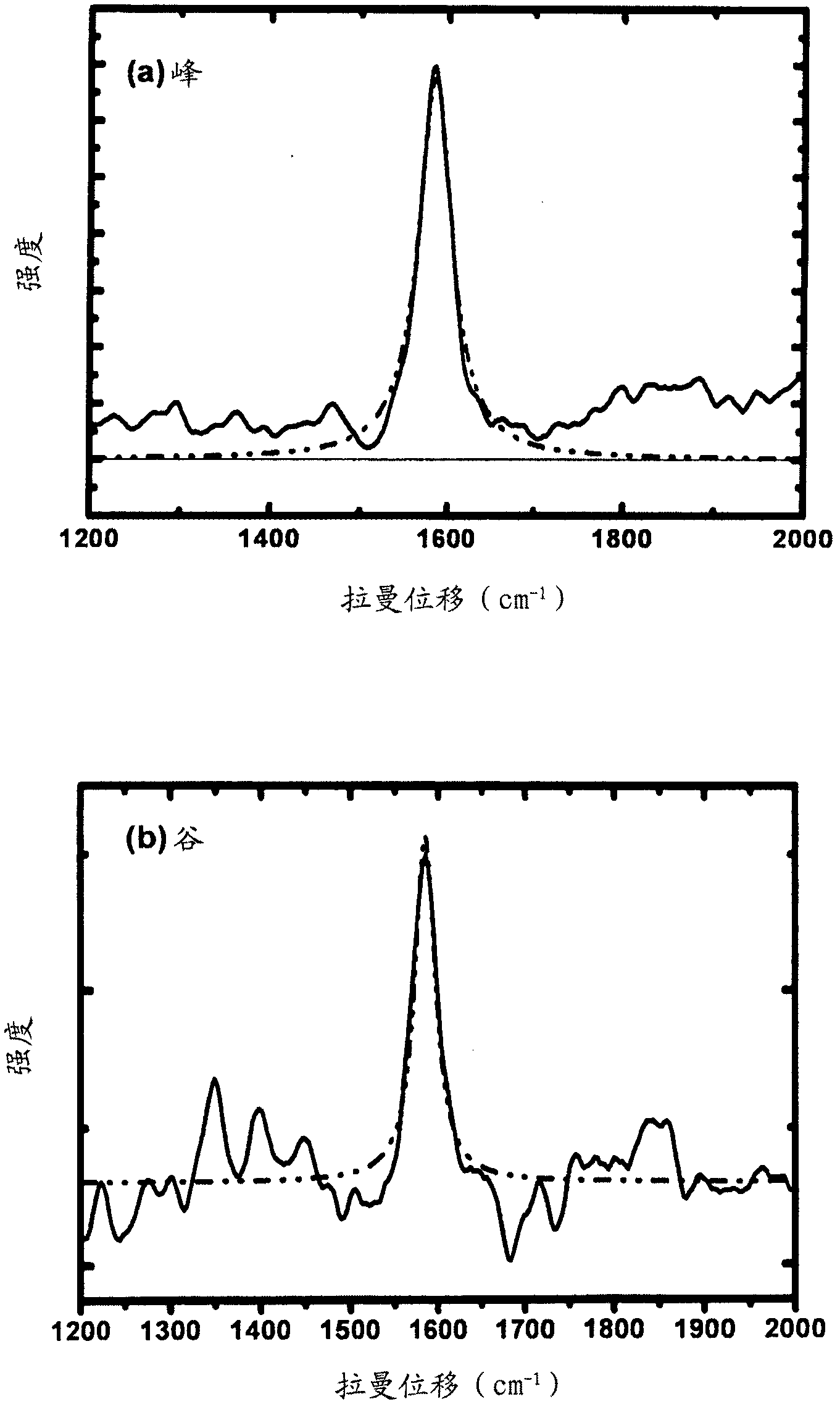
[0069] Silicon wafers were organically cleaned, and Fe catalysts were deposited with a thickness of 100 nm by radio frequency (RF) and ion sputtering. Next, the argon (Ar) gas was set to 500 sccm, and it heated for 30 minutes under the pressure of 60 torr so that the temperature might become 900 degreeC. Maintain at 900°C for 5 minutes, then set the methane gas at 25 sccm to grow carbon nanotubes for 10 minutes, then set the hydrogen gas at 500 sccm, cool for 50 minutes, and grow several layers of graphene on the silicon wafer.
Embodiment 2
[0071] Place a vial (Vial) on a hot plate and put 6ml of H in it 2 SO 4 , and then heated to 80°C. Using an electronic scale, measure 2g of K 2 S 2 o 8 and P 2 o 5 , and then slowly put in, put in 4g of graphite powder. Confirm that the color of the reactant is dark blue. After completion of the reaction, it was cooled at room temperature (25° C.) for 6 hours, and after 6 hours passed, the graphite powder was filtered with filter paper. Sprinkle deionized water on the filtered graphite powder to perform washing, and continue until the pH reaches 7.
[0072] The graphite powder that had been filtered and washed was dried overnight at room temperature (25° C.) to produce graphite oxide. Prepare a mechanical stirrer, place a Teflon beaker on top of it, add an ice box with ice and salt. Put concentrated H in a Teflon beaker 2 SO 4 (92ml) and graphite oxide (G.O).
[0073] Keep the internal temperature of the PTFE beaker below 20°C, while adding KMnO little by little ...
Embodiment 3
[0075] In order to remove the oxide groups in the graphite oxide, dip the coated substrate in the graphite oxide solution, heat it in a heating furnace at 300°C for 5 hours, and anneal to reduce oxygen to obtain graphene. Outside, carry out identically with embodiment 2.
PUM
| Property | Measurement | Unit |
|---|---|---|
| diameter | aaaaa | aaaaa |
| length | aaaaa | aaaaa |
| diameter | aaaaa | aaaaa |
Abstract
Description
Claims
Application Information
 Login to View More