
Peptide type tree-shaped macromolecule self-assembly body as well as preparation method and application thereof
A dendrimer self-assembly technology, applied in the field of biomedical materials, can solve the problems of limited self-assembly strategies, lack of driving force for self-assembly, and difficult synthesis
Patent Information
- Authority / Receiving Office
- CN · China
- Current Assignee / Owner
- Publication Date
- 2014-02-05
- Estimated Expiration
- Not applicable · inactive patent
Smart Images
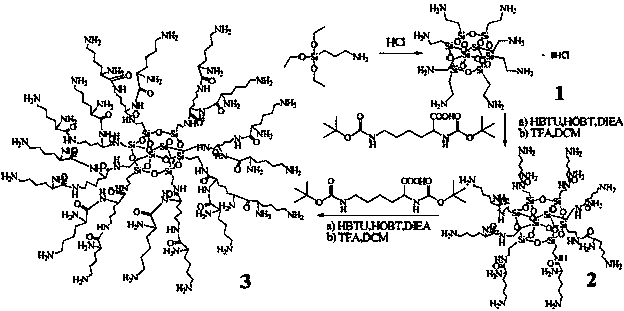
Figure 1 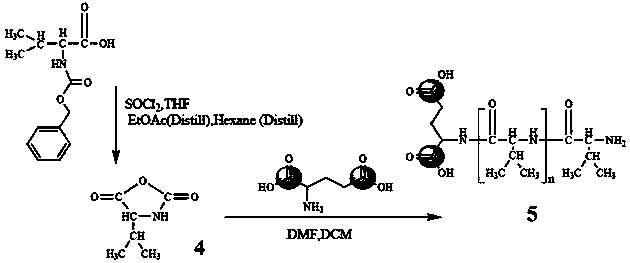
Figure 2 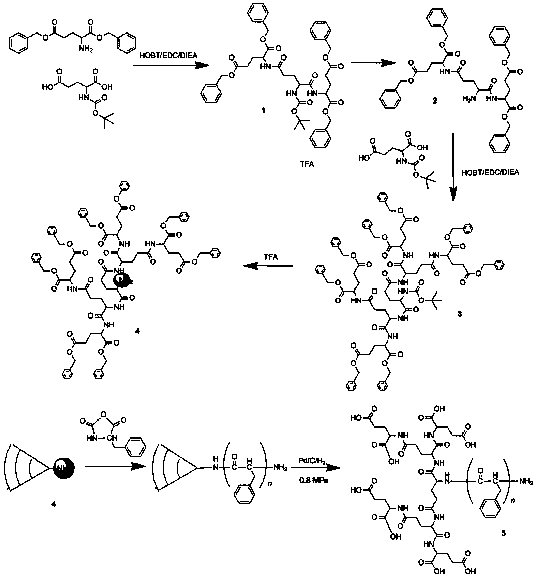
Figure 3
Abstract
Description
technical field
[0001] The invention belongs to the field of biomedical materials, in particular to a peptide dendrimer self-assembly body. Background technique
[0002] Self-assembly refers to the process in which basic components spontaneously form a stable and ordered whole through weak interactions, and is a phenomenon that exists widely in nature. With the gradual understanding and revelation of the essential laws of supramolecular self-assembly, self-assembly is integrated with chemistry, biology, physics, nanoscience and other fields, leading to many new major research directions. Through self-assembly, self-assembled bodies with various scales, different morphological structures, and various properties and functions have been successfully constructed; and are widely used in chemical engineering, energy materials, biomedicine and other fields.
[0003] In recent years, significant progress has been made in the self-assembly of amphiphilic small molecules and linear m...
Examples
Embodiment 1
[0069] Example 1: Preparation of Peptide Dendrimers
[0070] a) Protect the functional group of the amino acid: protect the amino acid according to the difference of the surface functional group of the core molecule of the peptide dendrimer to be prepared. If the surface functional group of the core molecule is an amino group or a hydroxyl group, protect the amino group of the amino acid. If the surface functional group is a carboxyl group, the carboxyl group of the amino acid is protected;
[0071] b) Preparation of first-generation dendrimers: Weigh branched cores (functionality n, n>1), amino acids containing protective groups (1.5n equivalents), condensing agents (1.5n equivalents), catalysts (1.5 n equivalent) and organic base (4n equivalent), at 0 ℃, under the condition of nitrogen protection, add a solvent for dehydration condensation reaction; then react at room temperature, after the reaction, the resulting solution is washed, dried, concentrated under reduced press...
Embodiment 2
[0077] Example 2: Concrete synthetic examples of peptide dendrimers (synthetic route such as figure 1 )
[0078] Synthesis of a new generation of peptide dendrimers (G1-Poss-Lys-Boc)
[0079] Weigh 2.0g of cage-type octamer (3-aminopropyl) silsesquioxane hydrochloride (OAS·HCl) (compound 1, synthesized in this subject), 8.0g of HBTU and 2.5g of HOBT into a 100ml single-neck bottle , Add 5.0g Boc-lys(Boc)-OH into a 50ml constant pressure dropping funnel, vacuumize and fill with nitrogen. Add about 40ml of distilled DMF solvent with a syringe, add 3ml of DIEA under ice bath stirring, continue stirring for half an hour, remove the ice bath, and react at room temperature for 48h. After the solvent was removed under reduced pressure, chloroform was added to dissolve, followed by saturated NaHCO 3 , NaHSO 4 , NaCl washing. with anhydrous MgSO 4 After drying, spin off the solvent and recrystallize in acetonitrile to obtain G1-Poss-Lys-Boc as a white powdery solid. 1HNMR (4...
Embodiment 3
[0087] Example 3: Preparation of terminal functionalized short peptides
[0088] a) Synthesis of intermediate N-carboxy ring anhydride:
[0089] b) Ring-opening polymerization: Amino acids or fan-shaped dendrimers are used to initiate the ring-opening polymerization of the N-carboxyl intracyclic anhydrides prepared in step a).
[0090] A series of terminal functionalized short peptides as shown in Formula 3 or Formula 4 are prepared by adjusting the types of amino acids in the reaction raw materials. In formula 3 and formula 4, Gm represents the dendritic molecule of generation m, m can be 0, 1, 2, 3 or 4, and its branch unit is an amino acid, and in formula 3 it is an anionic branch unit, which can be glutamic acid Or aspartic acid etc., be cationic branch unit in formula 4, can be lysine and arginine or histidine etc.; R represents the side group of main chain amino acid, n represents polymerization degree, and described main chain When the amino acid is aliphatic amino...