
Flame retardation cladding adhesive for polystyrene prefoamed beads, and product thereof
A technology of polystyrene and pre-foaming, which is applied in the field of modified polystyrene flame-retardant foam boards, can solve the problems of reducing cohesive energy, reducing the degree of crosslinking, and reducing production efficiency, and achieves excellent flame-retardant properties, Effect of improving flame retardancy
- Summary
- Abstract
- Description
- Claims
- Application Information
AI Technical Summary
Problems solved by technology
Method used
Image

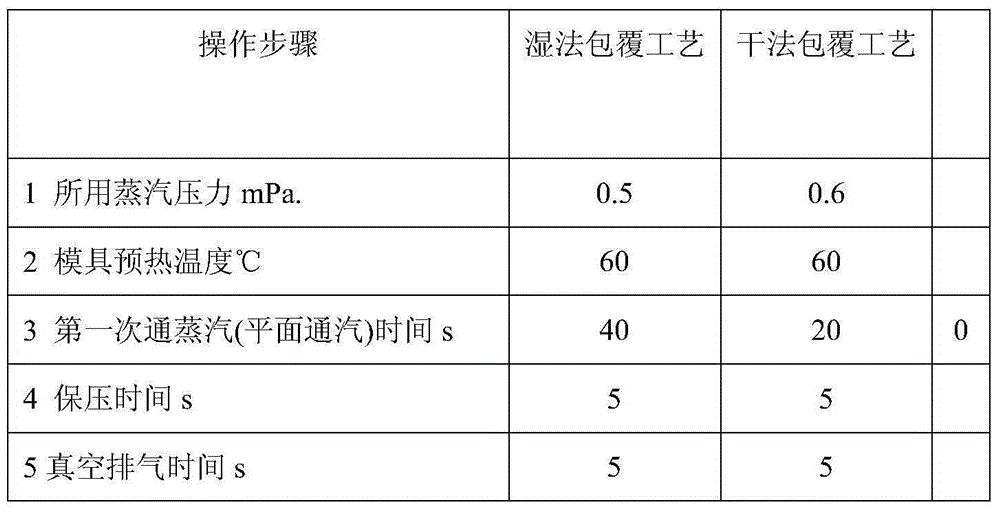
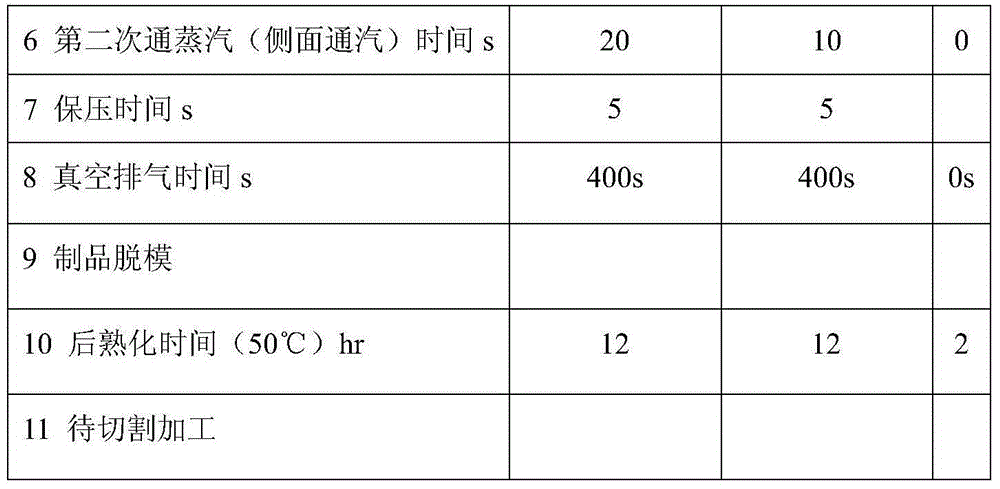
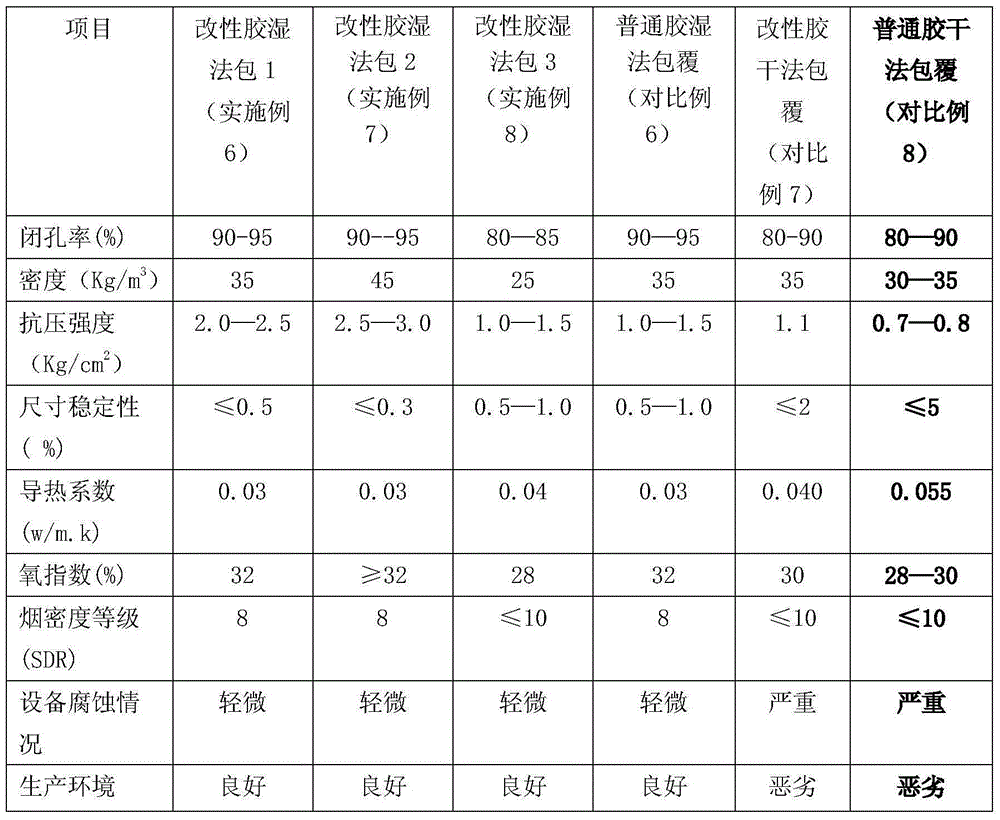
Examples
Embodiment 1
[0040] Example 1 Synthesis of modified urea-formaldehyde resin characterized by toughening and film-forming properties
[0041] First add 100 kg of formaldehyde (37%) to the reaction kettle, use 30% sodium hydroxide solution to adjust the pH value of the formaldehyde solution to 8-8.5, then add 18.5 kg of urea (industrial grade), 11 kg of melamine (industrial one grade), 1.2 kg of polyvinyl alcohol, 3 kg of diethanolamine and 5.5 kg of resorcinol, start stirring and heat up to 85°C, and keep the temperature for 35 minutes. Then add 30% acetic acid solution, adjust the pH value of the reaction solution to about 5-6, then add 17 kg of urea, keep at 80°C to continue the reaction for 15-25 minutes, when the reaction solution appears fog point, immediately use 30% hydrogen The sodium oxide solution makes the pH of the reaction solution reach 7-7.5 to terminate the polycondensation reaction. Add 1.8 kilograms of urea, 5 kilograms of polyvinyl acetate emulsion (solid content of 50% ...
Embodiment 2
[0044] Embodiment 2 Preparation of modified flame retardant coating glue
[0045] In a 200L cylinder, add 60 kilograms of modified urea-aldehyde resins characterized by toughening and film-forming properties obtained in Example 1, then add 0.6 kilograms of BYK-W909 and 3 kilograms of dodecyl Sodium sulfonate, then add 0.18 kg of KH-550 and stir at a high speed of 800-1000r / m for 3 minutes. Then, under stirring, slowly add 19 kg of ammonium polyphosphate, 5 kg of zinc borate, 5 kg of calcium carbonate powder, 3.5 kg of fly ash, 0.5 kg of bentonite and 2,32 kg of iron oxide red. Then use a high-speed disperser to disperse at a high speed of 1000-1500r / m for 15 minutes. Finally, add 1.8kg of a mixture of ammonium chloride and phosphoric acid (1:1 by weight) and stir for 2 minutes at a speed of 800-1000r / m to obtain a uniform and fine iron-red flame-retardant coating glue with a solid content of 82-83%, the viscosity (25°C) is 2000-3000mPa.s.
Embodiment 4
[0049] Embodiment 4 Wet coating of modified flame retardant glue 2
[0050] Add 3.6M 3 (about 53.4 kilograms) of polystyrene pre-expanded beads (diameter is 3-4mm), slowly and evenly add 104 kilograms of modified flame-retardant coating glues made by embodiment 2 under stirring state, continuously stir 10 minutes ,stand-by.
PUM
 Login to View More
 Abstract
Description
Claims
Application Information
 Login to View More